
Perissomyrmex fissus
- Sci. Name
- Perissomyrmex fissus
- Tribe
- Crematogastrini
- Subfamily
- Myrmicinae
- Author
- Xu & Wang, 2004
- Distribution
- Found in 1 countries
Introduction
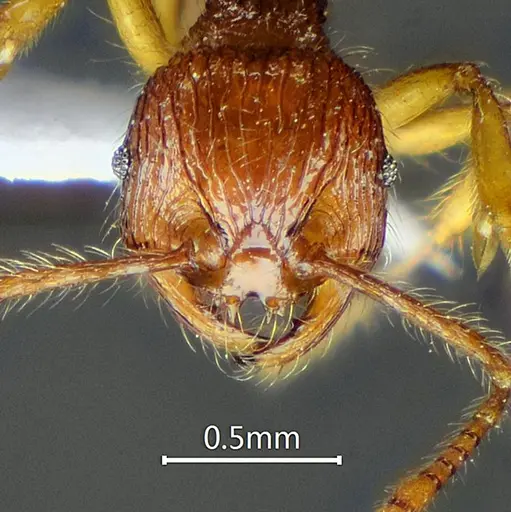
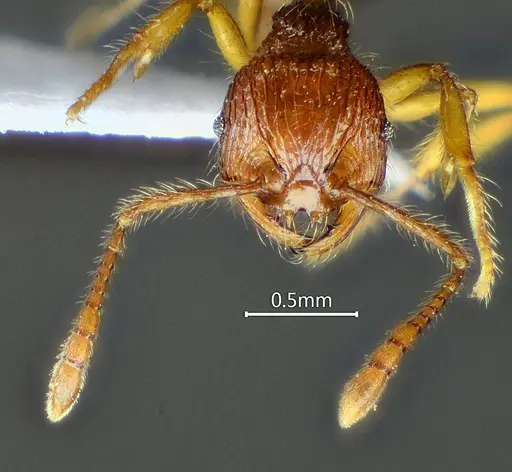
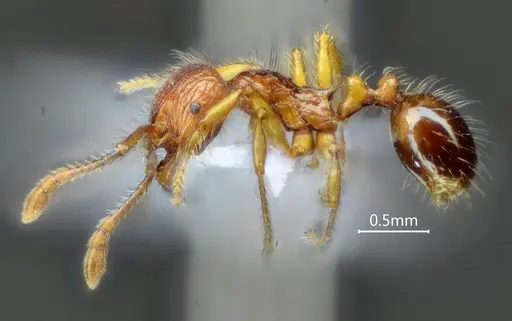
Perissomyrmex fissus is a small ant species from Yunnan Province, China. Workers are 3.1 mm in total length . They have a nearly square head,9-segmented antennae, strong propodeal spines, and a black gaster with brown head and alitrunk . The species was found at 2500 m elevation in the Ailao Mountain Nature Reserve, in sub-alpine moist evergreen broadleaf forest . This is the third species described in the genus Perissomyrmex, making it rare in both wild and captivity .
Quick Summary
- Difficulty: Expert
- Origin & Habitat: Yunnan Province, China at 2500 m elevation in sub-alpine moist evergreen broadleaf forest [1].
- Colony Type: Colony structure is unconfirmed, no biological studies have been published [1].
- Size & Growth:
- Antkeeping:
- Temperature: Inferred from high-altitude habitat to prefer cool conditions, roughly 15-22°C. Start at room temperature and observe colony activity [1].
- Humidity: Inferred from moist forest habitat, requires high humidity. Keep substrate consistently moist but not waterlogged [1].
- Diapause: Unknown, likely required given temperate location, but no direct studies exist.
- Nesting: Ground-nesting species collected from soil sample. In captivity, use test tube setup or small nest with high humidity [1].
- Behavior: Behavior is unstudied. Based on small size, they are likely docile. Escape risk is high due to 3.1 mm size, use fine mesh or barriers [1].
- Common Issues: complete lack of biological data makes captive care challenging., only known from a single specimen, no captive colonies exist., hibernation requirements unknown but likely needed., tiny size creates escape risk., diet acceptance unknown.
Discovery and Rarity
Perissomyrmex fissus was described in 2004 from a single worker specimen in Yunnan, China [1]. The genus has only four species worldwide, making this ant rare [2][3]. No biological studies exist, so care is experimental.
Housing and Escape Prevention
Workers are 3.1 mm long, so escape prevention is critical [1]. Use fine mesh or fluon barriers. Test tube setups work for founding colonies, mimicking ground-nesting behavior [1].
Temperature and Humidity Management
From habitat at 2500 m, prefer cool 15-22°C [1]. Humidity should be high, with moist substrate [1].
Feeding Strategy
Diet is unknown, no studies exist on feeding habits [1]. Based on Myrmicinae patterns, they might eat small prey, but this is speculative. Offer springtails, fruit flies, and sugar water, but acceptance is unknown.
Legal and Ethical Considerations
This species has never been exported from China. Collection from wild could harm rare populations [1].
Frequently Asked Questions
Can I keep Perissomyrmex fissus as a pet ant?
No, this species is unavailable in the hobby. It was described from a single specimen, and no captive populations exist [1].
How big do Perissomyrmex fissus colonies get?
Unknown, only one worker has been collected [1].
What do Perissomyrmex fissus eat?
Diet is completely unconfirmed. No studies exist on their feeding habits [1].
Do Perissomyrmex fissus ants sting?
Unknown, no studies on sting potency. Given their small size, any sting would likely be negligible [1].
What temperature do Perissomyrmex fissus need?
Inferred from their high-altitude habitat to prefer cool conditions around 15-22°C [1].
Do Perissomyrmex fissus need hibernation?
Likely yes given their temperate mountain origin, but this is unconfirmed [1].
How long does it take for Perissomyrmex fissus to develop from egg to worker?
Unknown, no development data exists for this species [1].
Are Perissomyrmex fissus good for beginners?
No, this is an expert-only species due to rarity and lack of data [1].
Can I keep multiple Perissomyrmex fissus queens together?
Unknown, colony structure has never been studied [1].
Where does Perissomyrmex fissus live in the wild?
Ailao Mountain Nature Reserve, Yunnan, China at 2500 m elevation [1].
Report an Issue
The current care sheet is based fully on literature. See inconsistencies, or something that's incorrect? Please , it will be resolved after review from an admin. Contributing to the blogs tab also helps providing information, to make us be able to further improve the caresheets. Thank you for your support!
References

This caresheet is licensed under CC BY-SA 4.0 .
Community Blogs
ANTWEB1060566
View on AntWeb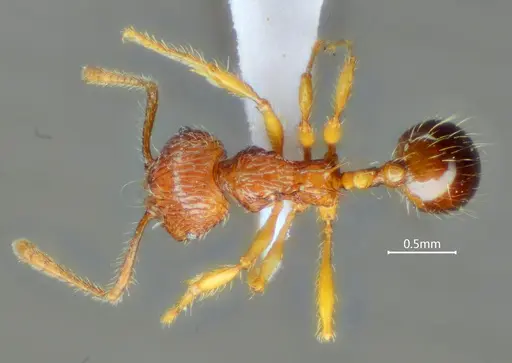
Literature
Loading distribution map...Loading products...