
Paratrechina antsingy
- Sci. Name
- Paratrechina antsingy
- Tribe
- Lasiini
- Subfamily
- Formicinae
- Author
- LaPolla & Fisher, 2014
- Distribution
- Found in 1 countries
Introduction
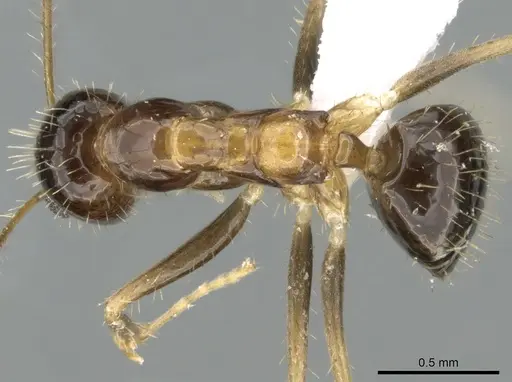
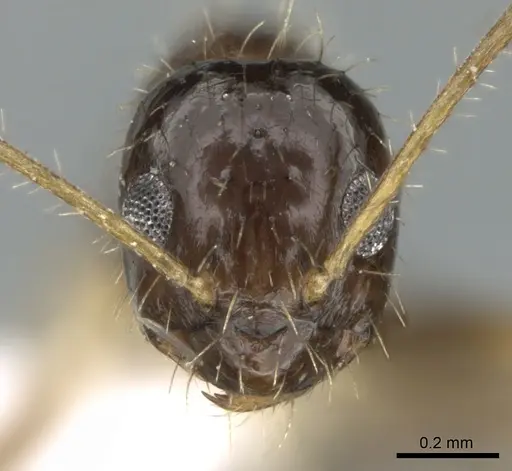
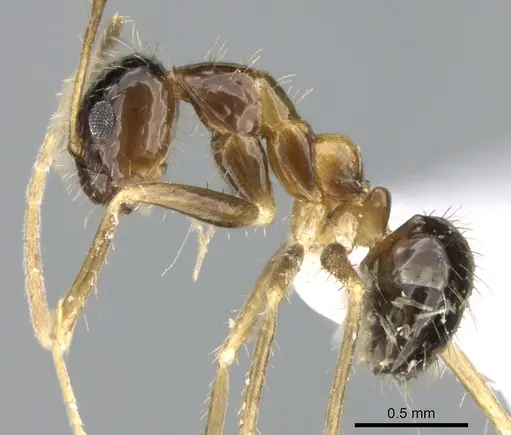
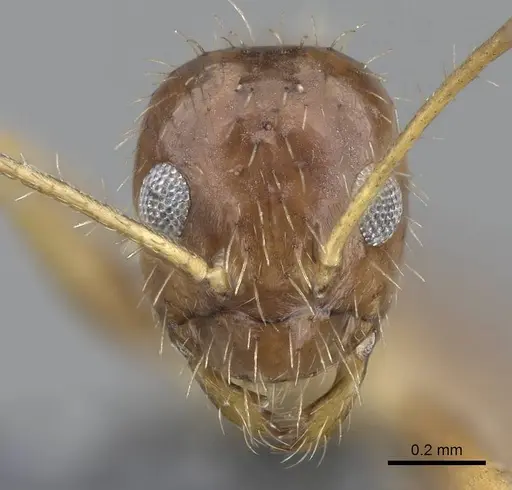
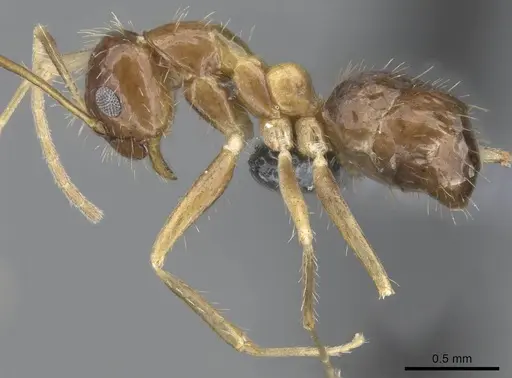
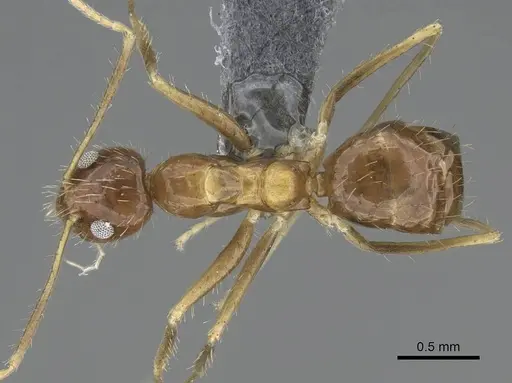
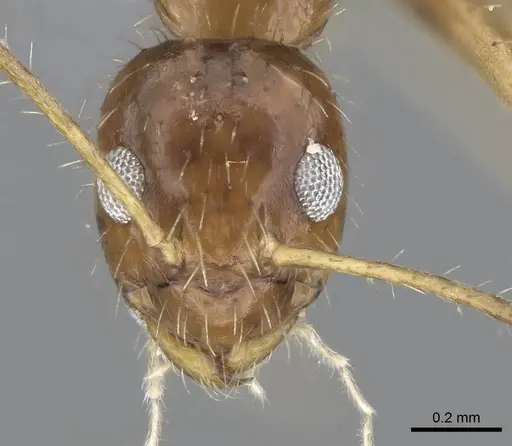
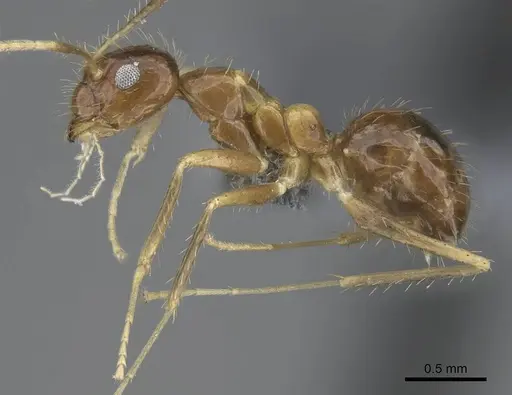
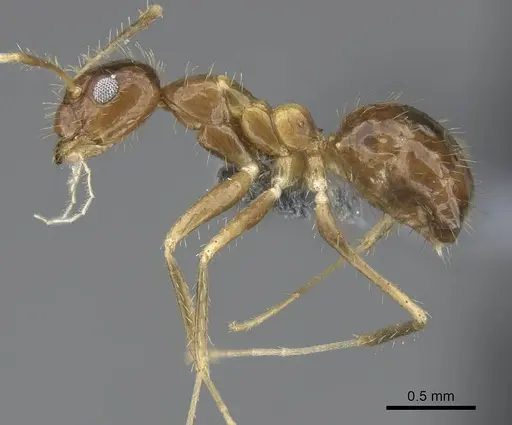
Paratrechina antsingy is a tiny ant species native to Madagascar, measuring just 2.07-2.69 mm in total length . Workers have a mottled brown appearance with patches of lighter cuticle across the body . Their cuticle is smooth and very shiny, though the mesonotum, metanotal area, and propodeum are slightly rugose . This species belongs to the Prenolepis genus group within the Formicinae subfamily and was described in 2014. This species is only known from Montagne Français in northern Madagascar, where it inhabits dry forest ecosystems on limestone outcrops . Its extremely restricted distribution makes it a rare find for antkeepers.
Quick Summary
- Difficulty: Unknown, likely Easy to Medium based on genus patterns
- Origin & Habitat: Madagascar, Province Antsiranna, Montagne Français. Found in dry forest habitats on limestone outcrops at low elevation (around 180 m) [1].
- Colony Type: Unconfirmed, colony structure has not been documented for this species.
- Size & Growth:
- Queen: Size data unavailable, no total length measurements documented for queens
- Worker: 2.07-2.69 mm total length [1]
- Colony: Unknown, estimated to be up to several hundred workers based on genus patterns
- Growth: Unknown, likely fast based on small size and tropical origin
- Development: Unconfirmed, estimated 4-6 weeks based on related species at warm temperatures (Development speed depends on temperature, warmer conditions may accelerate growth.)
- Antkeeping:
- Temperature: Based on tropical dry forest origin, temperatures around 22-26°C are likely suitable. Room temperature is often adequate.
- Humidity: Provide a humidity gradient, mostly dry nest chamber with one small moist area, as they are adapted to dry forests [1].
- Diapause: Likely no true hibernation required, as they are from tropical Madagascar.
- Nesting: In captivity, they likely prefer test tubes or small Y-tong nests with tight chambers. Their tiny size requires excellent escape prevention.
- Behavior: These are tiny, fast-moving ants [1]. They are likely generalist foragers and not aggressive, but may bite if threatened. Escape risk is high due to their small size.
- Common Issues: escape prevention is critical due to their very small size, they can squeeze through tiny gaps [1], colony founding may be difficult as queen behavior is unconfirmed, humidity balance is tricky, they need a gradient matching dry forest habitats, limited availability as a newly described species, may be difficult to acquire, care requirements are largely inferred from genus, not specifically studied for this species
Appearance and Identification
Paratrechina antsingy workers are among the smallest ants, measuring 2.07-2.69 mm total length [1]. Their mottled brown appearance with lighter patches is distinctive [1]. The cuticle is smooth and very shiny, except for slightly rugose areas on the mesonotum, metanotal area, and propodeum [1]. Workers have five teeth on their mandibles, with the apical tooth longest [1]. This species can be identified by its scape index less than 195 and mottled gastral tergite.
Natural Habitat and Distribution
This species is only known from Montagne Français in northern Madagascar, at around 180 m elevation [1]. It inhabits dry forest ecosystems on limestone outcrops [1]. The restricted distribution suggests adaptation to specific dry conditions.
Housing and Escape Prevention
Due to their tiny size, excellent escape prevention is critical. Use test tubes for founding colonies with tightly packed cotton plugs. For larger colonies, small Y-tong or plaster nests with tight chambers are appropriate. Use fine mesh (0.5 mm or smaller) on ventilation holes and barrier methods for connections [1].
Feeding and Diet
Based on genus patterns, these ants are likely generalist foragers. Offer sugar water or honey as a constant energy source. For protein, provide small live prey like fruit flies or pinhead crickets. Remove uneaten food promptly to prevent mold.
Temperature and Seasonal Care
Temperatures around 22-26°C are likely suitable based on their tropical origin. Room temperature is often adequate. Avoid prolonged temperatures below 18°C. A temperature gradient can help ants choose their preferred spot.
Colony Establishment
Founding behavior is unconfirmed for this species. Colony growth is likely relatively fast once established, as common with small tropical ants. Be patient during the founding stage and avoid unnecessary disturbance.
Frequently Asked Questions
How long does it take for Paratrechina antsingy to go from egg to worker?
The exact timeline is unconfirmed. Based on related species, expect approximately 4-6 weeks at warm temperatures (around 24-26°C).
Are Paratrechina antsingy ants good for beginners?
This species has not been widely kept, so difficulty is unknown. Based on genus patterns, they may be manageable if escape prevention is handled properly due to their tiny size [1].
What do Paratrechina antsingy ants eat?
They are likely generalist foragers. Offer sugar water or honey, and small live prey like fruit flies or crickets for protein.
How big do Paratrechina antsingy colonies get?
Colony size is unknown, but estimated to be up to several hundred workers based on genus patterns.
Can I keep multiple Paratrechina antsingy queens together?
Colony structure is unconfirmed. Most Paratrechina species are monogyne, so combining queens is not recommended without specific information.
What temperature do Paratrechina antsingy ants need?
Temperatures around 22-26°C are likely suitable based on their tropical origin. Room temperature is often adequate.
Do Paratrechina antsingy ants need hibernation?
Likely no true hibernation is required, as they are from tropical Madagascar.
Why are my Paratrechina antsingy escaping?
Their tiny size (2.07-2.69 mm) makes them excellent escape artists. Use fluon on rims, tight lids, and fine mesh on ventilation [1].
Where can I get Paratrechina antsingy ants?
This species is newly described and restricted to Madagascar [1]. It may not be readily available, sourcing from specialized breeders is recommended.
Report an Issue
The current care sheet is based fully on literature. See inconsistencies, or something that's incorrect? Please , it will be resolved after review from an admin. Contributing to the blogs tab also helps providing information, to make us be able to further improve the caresheets. Thank you for your support!
References

This caresheet is licensed under CC BY-SA 4.0 .
Community Blogs
Literature
Loading distribution map...Loading products...