
Paratopula longispina
- Sci. Name
- Paratopula longispina
- Tribe
- Crematogastrini
- Subfamily
- Myrmicinae
- Author
- Stitz, 1938
- Distribution
- Found in 0 countries
Introduction
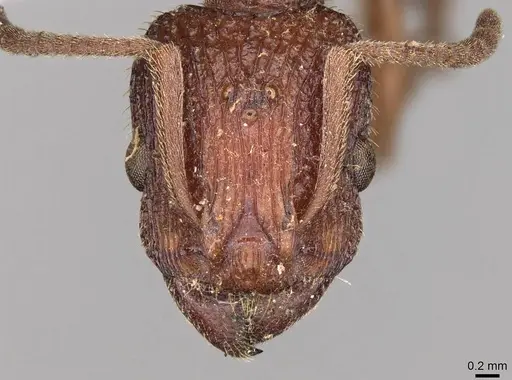
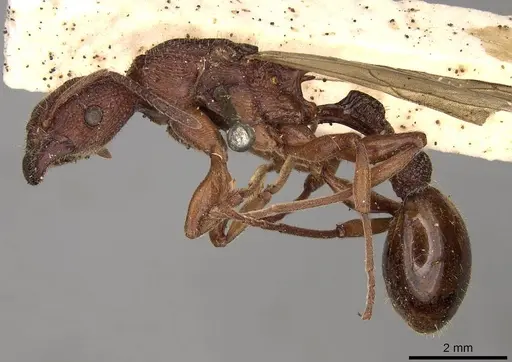
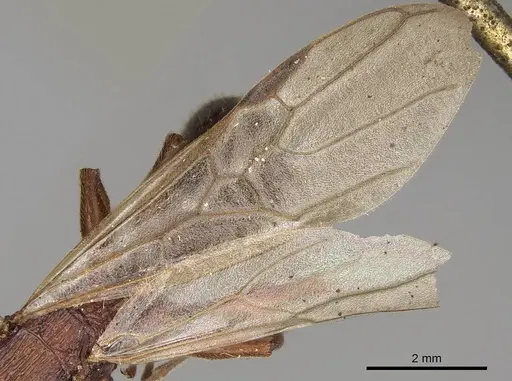
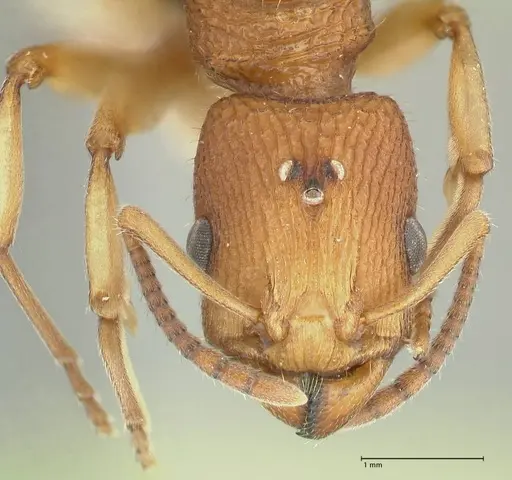
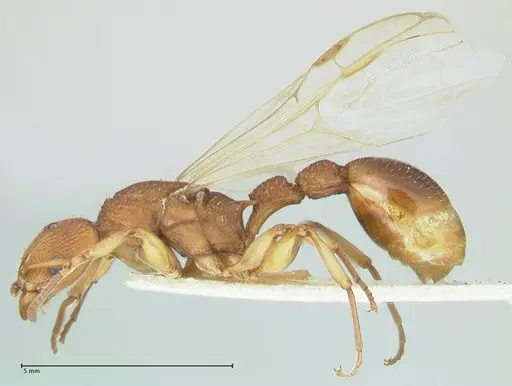
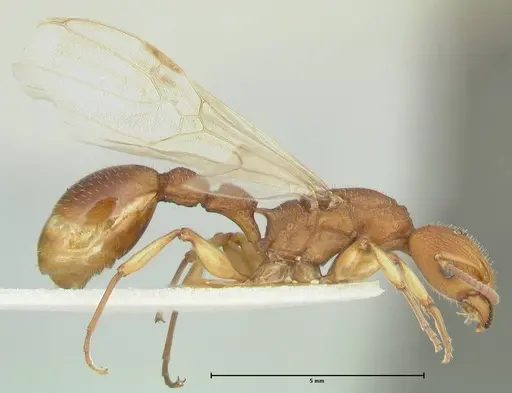
Paratopula longispina is an extremely rare arboreal ant species from the rainforests of Borneo and eastern Malaysia. Only the queen has ever been scientifically described - the worker caste remains completely unknown. Queens have distinctive long spines protruding from the mesosoma. The genus Paratopula belongs to the Crematogastrini tribe and contains only a handful of rarely collected species. These ants inhabit the Indomalaya region, specifically Borneo (Sabah), Indonesia, and Malaysia . This species is one of the most obscure ant genera in the world, with most species known only from single queen specimens collected decades ago .
Quick Summary
- Difficulty: Expert
- Origin & Habitat: Borneo and eastern Malaysia (Sabah) in tropical rainforest habitats. The genus Paratopula is arboreal, meaning these ants likely live in trees or elevated locations in humid forest environments [2][3].
- Colony Type: Unknown, only queens have been described. No worker caste has ever been documented, making colony structure and social organization entirely unconfirmed [1][2].
- Size & Growth:
- Queen: Unknown, size data unavailable
- Worker: Unknown, worker caste never described
- Colony: Unknown
- Growth: Unknown
- Development: Unknown, worker caste undescribed (No development data exists because workers have never been observed.)
- Antkeeping:
- Temperature: Unknown, no captive observations. Based on tropical rainforest origin in Borneo, they likely require warm conditions (roughly 24-28°C).
- Humidity: Unknown, no captive data. Tropical arboreal ants typically require high humidity with good ventilation to prevent mold.
- Diapause: Unknown, no data on seasonal behavior. Borneo has minimal temperature variation year-round, so they may not require a diapause period.
- Nesting: Unknown in captivity. In the wild, Paratopula species are believed to be arboreal, possibly nesting in hollow twigs, tree cavities, or under bark in the rainforest canopy [1].
- Behavior: Completely unstudied. Based on genus-level inference, they are likely relatively docile like other Crematogastrini ants. Escape risk cannot be assessed without worker observations. Foraging behavior, aggression levels, and defensive responses are all unknown. Defense mechanism: Based on subfamily Myrmicinae and tribe Crematogastrini, they likely have a smear defense mechanism with a modified stinger.
- Common Issues: this species cannot be kept in captivity, only queens have been described, with no workers ever documented., no established care protocols exist for this species., wild-caught colonies are essentially impossible to obtain since workers have never been found., even if queens were obtained, their founding and dietary requirements are completely unknown., the species is so rare that most antkeepers will never encounter it.
Why This Species Cannot Be Kept
Paratopula longispina is not a species you can keep in captivity. This is not a matter of difficulty, it is a fundamental biological limitation. The worker caste has never been scientifically described. Every ant colony requires workers to function: they forage for food, care for brood, maintain the nest, and support the queen. Without workers, a queen cannot establish a functioning colony. Even if you somehow obtained a founding queen, there is no documented information about what she eats, how she founds her colony, or what conditions she needs. The scientific literature consists of a single queen description from 1938 and a few taxonomic notes since then. No researcher has ever observed a living colony of this species [1][2].
The Mystery of Paratopula
Paratopula is one of the most poorly known ant genera in the world. The genus was established by Wheeler in 1919 but was largely forgotten until Bolton revived it in 1988. Of the handful of described species, most are known only from single queen specimens collected decades ago. Workers have been described for only a couple of species. The genus is arboreal and appears to be restricted to old-growth tropical rainforests. Their rarity may be due to their arboreal lifestyle, they nest high in the canopy and rarely come to the ground where entomologists collect. This makes them extremely difficult to study and virtually impossible to acquire for the antkeeping hobby [2][3].
Related Species as Alternatives
If you are interested in rare, arboreal Myrmicinae ants from Southeast Asia, several related species in the Crematogastrini tribe are available in the antkeeping hobby and offer similar aesthetics. Consider exploring species in the genus Crematogaster (commonly called acrobat ants), they are arboreal, have interesting behaviors, and are well-established in captivity. Other rare arboreal genera like Rotastruma may also be more accessible. These species have documented care requirements, known colony structures, and can actually be kept successfully. Paratopula longispina remains strictly a species for taxonomists and researchers, not antkeepers.
Frequently Asked Questions
Can I keep Paratopula longispina ants?
No. This species cannot be kept because only the queen has ever been described, no workers exist in scientific literature. Without workers, a colony cannot function. Even if you obtained a queen, there is no information about what she eats or how to care for her [1][2].
Where does Paratopula longispina live?
This species is known only from Borneo and eastern Malaysia (Sabah). The type locality is North Borneo (Sabah), Malaysia. They are believed to be arboreal, living in tropical rainforest environments [1][2].
What do Paratopula longispina workers look like?
We do not know. The worker caste has never been scientifically described. This is one of the most poorly known ant species in the world, with only queens documented in over 80 years of research [1].
Are there similar ants I can keep instead?
Yes. Consider arboreal Myrmicinae like Crematogaster species, or look into other rare genera that are actually kept in captivity. Paratopula remains strictly a scientific curiosity, not a captive species.
How big is the Paratopula longispina queen?
Size data is unavailable for this species. No total length measurements have been published, and the worker caste is unknown [1].
Why is Paratopula longispina so rare?
The genus Paratopula appears to be genuinely rare in the wild, possibly due to their arboreal lifestyle in the rainforest canopy. They may also have very restricted distributions. Additionally, their extreme rarity in scientific collections suggests low population densities in their natural habitat [2][3].
Do Paratopula longispina ants sting?
Unknown. Without workers, we cannot assess their defensive abilities or whether they possess a functional stinger. Based on subfamily Myrmicinae and tribe Crematogastrini, they likely have a smear defense mechanism with a modified stinger, but this is not confirmed for this species.
What is the colony structure of Paratopula longispina?
Unconfirmed. Only queens have been documented, so colony structure (monogyne vs polygyne) is entirely unknown. No observations of established colonies exist in scientific literature [1].
Report an Issue
The current care sheet is based fully on literature. See inconsistencies, or something that's incorrect? Please , it will be resolved after review from an admin. Contributing to the blogs tab also helps providing information, to make us be able to further improve the caresheets. Thank you for your support!
References

This caresheet is licensed under CC BY-SA 4.0 .
Community Blogs
CASENT0914166
View on AntWeb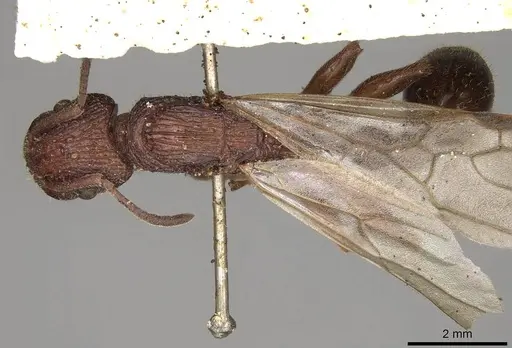
FOCOL1967
View on AntWeb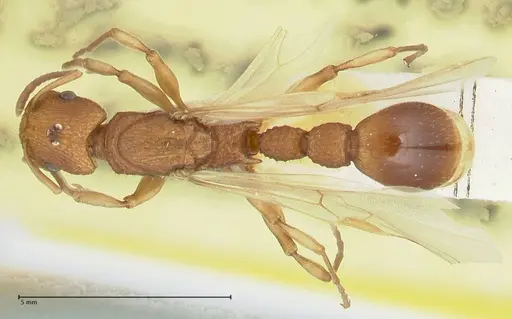
Literature
Loading distribution map...Loading products...