
Golden Tree Ant
Paratopula bauhinia
- Sci. Name
- Paratopula bauhinia
- Tribe
- Crematogastrini
- Subfamily
- Myrmicinae
- Author
- Luo & Guénard, 2017
- Common Name
- Golden Tree Ant
- Distribution
- Found in 1 countries
Introduction
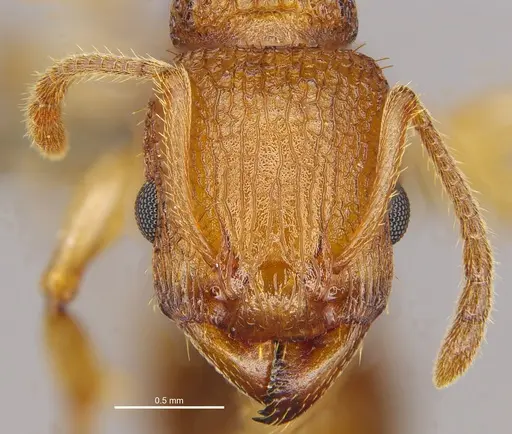
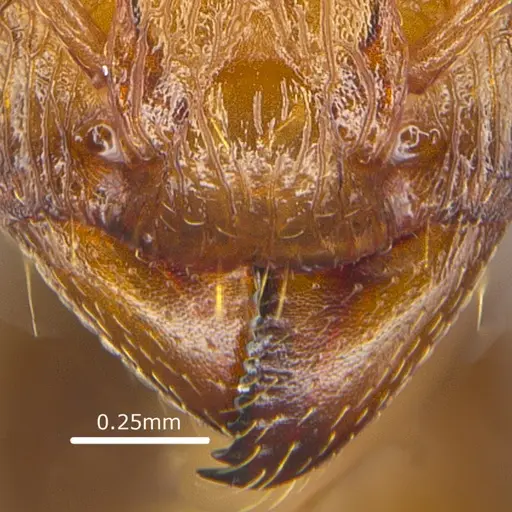
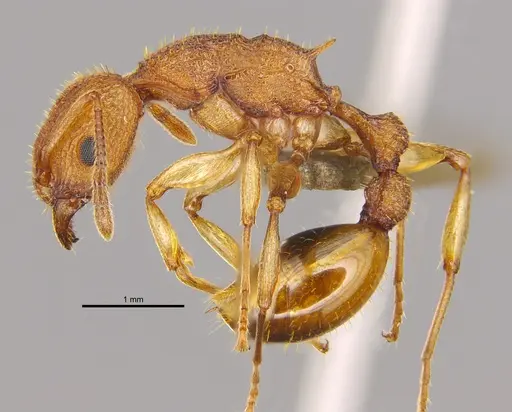
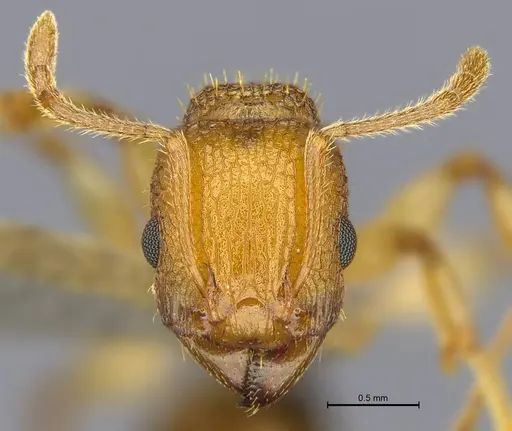
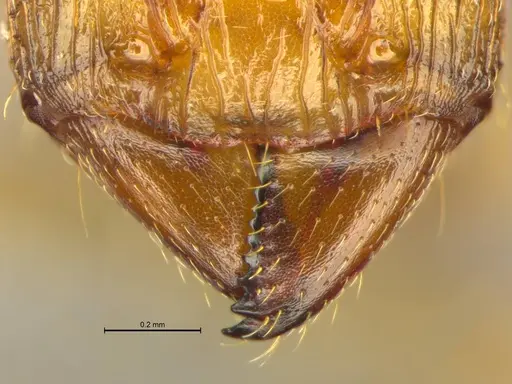
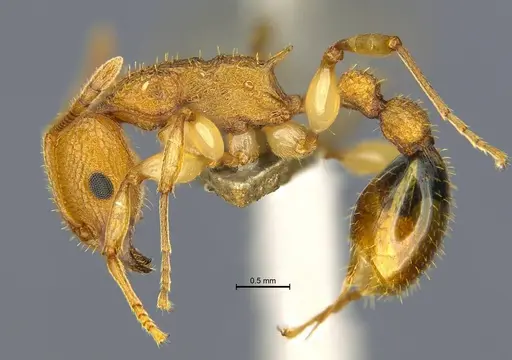
Paratopula bauhinia is a rare ant species discovered in 2016 in Hong Kong's Lung Fu Shan Country Park. Workers measure 6.21-6.78 mm in total length . They have golden-brown coloration with strongly sculptured cuticle and short, erect golden hairs. Key features include large triangular mandibles with 10 teeth, blunt propodeal spines, and a 3-segmented antennal club. This is the first record of Paratopula in Hong Kong and only the third for China . The species is named after the Hong Kong Orchid Tree, suggesting arboreal habits . P. bauhinia is found in disturbed young forest habitats near hiking trails, and all specimens were collected in the evening, indicating crepuscular or nocturnal foraging behavior . This adaptation may help avoid competition with dominant diurnal ant species.
Quick Summary
- Difficulty: Expert
- Origin & Habitat: Known only from Lung Fu Shan Country Park on Hong Kong Island, China. Found in young secondary forest edges and disturbed areas near hiking trails, at elevations of 147-273 m [1][2].
- Colony Type: Unknown. Only workers have been collected, no queen or male described. Colony structure is unconfirmed.
- Size & Growth:
- Antkeeping:
- Temperature: Inferred from Hong Kong's subtropical climate: aim for 22-26°C with a gradient. Workers were active in September and January, suggesting tolerance to variation [1].
- Humidity: Inferred: Hong Kong has high humidity. Keep nest substrate moist but not waterlogged, with some drier areas for self-regulation.
- Diapause: Unconfirmed. Hong Kong's mild winters may not require diapause, consider a cool period of 2-3 months.
- Nesting: Arboreal or sub-arboreal lifestyle inferred. Provide elevated nest options like Y-tong nests or twigs [1][2].
- Behavior: Workers are crepuscular or nocturnal foragers [1][2]. Escape risk is moderate due to size (6+ mm). Temperament is unknown but likely not aggressive. Defense mechanism: based on subfamily Myrmicinae, they have a smear defense with modified stinger.
- Common Issues: no captive husbandry information exists, this species has never been kept in captivity, so all care is speculative, extremely limited range makes wild collection nearly impossible and ethically questionable, no established feeding protocols, diet is unknown, queen has never been described, making captive breeding impossible from wild-caught, slow adaptation to captive conditions expected due to unknown natural history
Discovery and Rarity
Paratopula bauhinia was discovered in 2016 and only three workers have been collected [1][2]. This makes it one of the rarest ant species known. The species is named after the Hong Kong Orchid Tree, referencing both the type locality and suspected arboreal habits [1][2].
Natural Habitat and Foraging
All specimens were found in disturbed habitats along hiking trails in young secondary forest edges [1][2]. The holotype was foraging on a concrete structure 1.8 m above ground, and paratypes were on railings in a monoculture plantation [1][2]. Collection times between 20:30 and 21:00 h indicate crepuscular or nocturnal foraging behavior [1][2].
Identification and Distinguishing Features
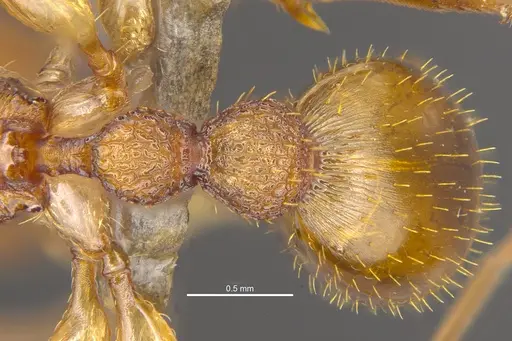
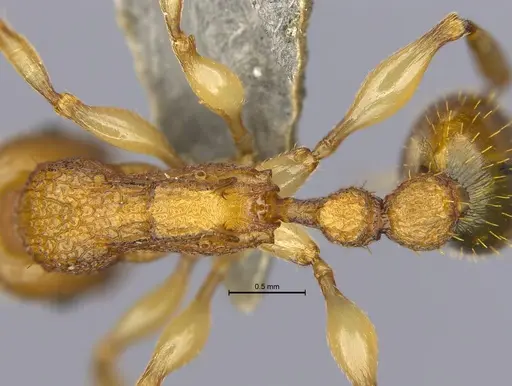
Workers can be identified by large triangular mandibles with 10 teeth, short erect hairs that are apically acute, a rounded median portion of the pronotum, a postpetiole broader than long, and straight blunt propodeal spines [1][2]. The body is golden-brown with lighter legs and darker reddish mandible tips [1][2].
Captive Care - What We Know
There is no established captive husbandry for this species. All care recommendations are speculative based on related genera and habitat. If obtained, treat it as an expert-level species requiring elevated nest sites, warm temperatures (22-26°C), moderate humidity, and a varied diet [1][2]. Ethical considerations should be given due to extreme rarity [1][2].
Related Species and Genus Information
Paratopula is a rare genus with arboreal or sub-arboreal lifestyle, distributed in Southeast Asia and southern China [1][2]. P. bauhinia differs from related species in mandible teeth count, spine shape, and postpetiole structure [1][2].
Frequently Asked Questions
Can I keep Paratopula bauhinia in captivity?
This species has never been kept in captivity and no established husbandry exists. It is extremely difficult to obtain due to only three workers ever collected from a protected area [1][2].
What do Paratopula bauhinia ants eat?
The diet is unstudied. Based on related Crematogastrini genera, they may accept small insects and sugar sources [1].
How big do Paratopula bauhinia colonies get?
Unknown. Only three workers have ever been collected, suggesting small colonies [1][2].
Do Paratopula bauhinia ants sting?
Unknown. Most Myrmicinae have stingers, but no documented stings exist for this species.
What temperature do Paratopula bauhinia ants need?
No specific requirements documented. Inferred from Hong Kong habitat: aim for 22-26°C, with tolerance to 15-28°C based on collection times [1].
Are Paratopula bauhinia good for beginners?
No. This is an expert-level species with zero captive husbandry information and no known queens [1][2].
Where does Paratopula bauhinia live?
Only from Lung Fu Shan Country Park on Hong Kong Island, China [1][2].
Do Paratopula bauhinia need hibernation?
Unconfirmed. Hong Kong's mild winters may not require diapause, consider a cool period of 2-3 months [1].
What nest type is best for Paratopula bauhinia?
Arboreal nests are inferred. Provide elevated options like Y-tong nests or twigs based on collection data [1][2].
How long does it take for Paratopula bauhinia to develop from egg to worker?
Unconfirmed. No development data exists for this species.
Can I find Paratopula bauhinia in the wild?
Extremely unlikely. Only three workers have ever been collected from a protected area, and wild collection is unethical [1][2].
Why is Paratopula bauhinia so rare?
The species was only discovered in 2016 and may have small populations, specialized habitat, or cryptic behavior [1][2].
Report an Issue
The current care sheet is based fully on literature. See inconsistencies, or something that's incorrect? Please , it will be resolved after review from an admin. Contributing to the blogs tab also helps providing information, to make us be able to further improve the caresheets. Thank you for your support!
References

This caresheet is licensed under CC BY-SA 4.0 .
Community Blogs
ANTWEB1009012
View on AntWeb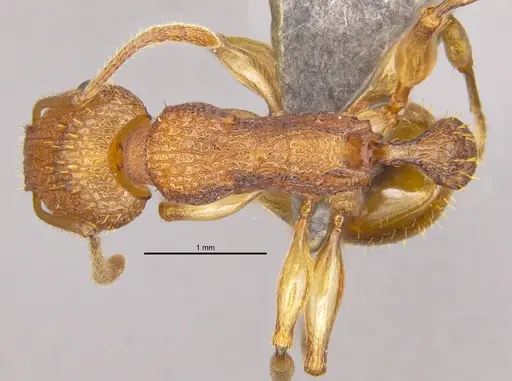
ANTWEB1009013
View on AntWeb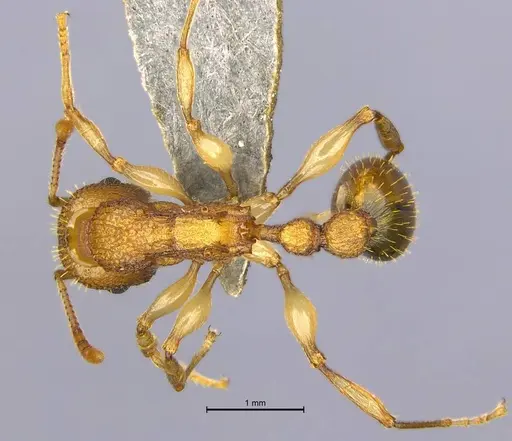
Literature
Loading distribution map...Loading products...