
Parasyscia zimmermani
- Sci. Name
- Parasyscia zimmermani
- Subfamily
- Dorylinae
- Author
- Wilson, 1959
- Distribution
- Found in 1 countries
Introduction
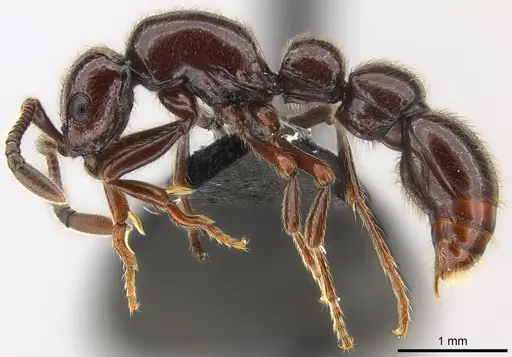
Parasyscia zimmermani is a small ant endemic to Fiji, with workers that have 12-segmented antennae, large eyes, and a petiole longer than broad. They entirely lack foveae and are the largest and least sculptured member of the lindrothi complex in Fiji . This species is found only on Viti Levu and Kadavu islands at elevations between 400-850 meters . It is the only arboreal species in the Parasyscia genus, nesting in hollow twigs in trees .
Quick Summary
- Difficulty: Hard
- Origin & Habitat: Endemic to Fiji islands, specifically Viti Levu (Mt. Korombamba 400m, Navai Mill near Nadarivatu 850m, Korobaba) and Kadavu (Mt. Washington 760m). They live in tropical forest habitats and are arboreal, nesting in hollow twigs in trees [1][2].
- Colony Type: Colony structure is unconfirmed. No data on queen number or social structure in wild colonies.
- Size & Growth:
- Queen: size data unavailable
- Worker: size data unavailable
- Colony: Unknown, no colony size data available
- Growth: Unknown
- Development: Unknown, no development data available for this species (Based on related Dorylinae species, estimated 4-8 weeks at tropical temperatures, but unconfirmed)
- Antkeeping:
- Temperature: Estimated warm conditions around 24-28°C based on Fiji habitat [1]
- Humidity: Keep substrate consistently moist but not waterlogged, based on tropical forest habitat [1]
- Diapause: Unknown, likely no diapause for tropical species, but not studied
- Nesting: Arboreal, provide vertical setups with woody material such as cork or twigs, avoid horizontal soil nests [1][3]
- Behavior: Based on genus behavior, likely predatory on small invertebrates. Escape risk is moderate due to small size. Arboreal nature means they explore vertical spaces more than ground-level areas.
- Common Issues: limited data means care requirements are largely inferred, expect some trial and error, arboreal nesting is unusual, standard formicariums may not suit them, no information on founding behavior or colony development timeline, queen has not been described in scientific literature, obtaining a founding colony may be difficult, endemic to Fiji, may have specific climate needs tied to island habitat
Natural History
Parasyscia zimmermani is endemic to the Fiji islands, found only on Viti Levu and Kadavu. It was originally described as Parasyscia zimmermani by Wilson in 1959 and later reclassified into Parasyscia. This species is part of the lindrothi complex and is the largest and least sculptured Fijian member. It is arboreal, nesting in hollow twigs in trees, as confirmed by collections made by beating shrubs and a nest found in a hollow twig on Kadavu [1][3].
Identification
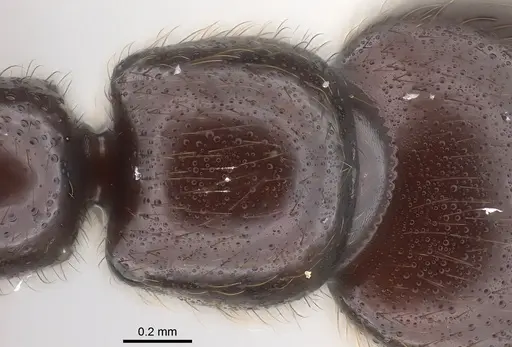
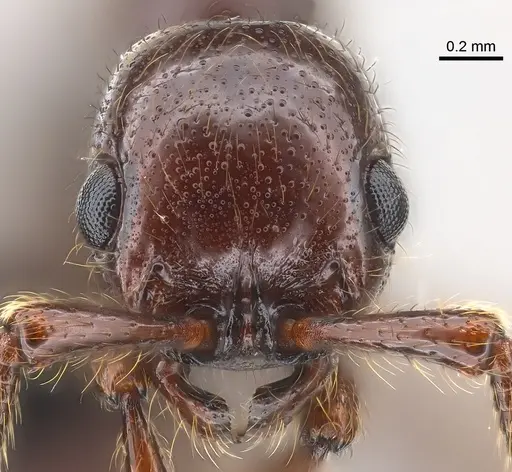
Workers of Parasyscia zimmermani can be identified by 12-segmented antennae, large eyes, and a petiole that is longer than broad. They entirely lack foveae and have a thin carinula separating the anepisternum from the katepisternum. The species is the largest in the Fijian Parasyscia genus with relatively smooth surfaces [1].
Housing and Nesting
As an arboreal species, Parasyscia zimmermani requires vertical setups. Provide natural woody material such as cork, twigs, or branches with small hollow cavities similar to their natural nesting in tree twigs. Avoid standard horizontal soil nests or acrylic formicariums, instead, use 3D-printed nests or naturalistic arboreal designs [1][3].
Temperature and Humidity
Based on their tropical Fijian habitat, aim for temperatures around 24-28°C and maintain humidity through moist substrate without waterlogging. Create a gentle temperature gradient if room temperature falls below 24°C [1].
Feeding and Diet
Diet is not specified in research for this species. Based on related Dorylinae ants, they may be predatory on small invertebrates like springtails or mites. Offer small live prey and observe acceptance, sugar sources are uncertain [5].
Challenges and Limitations
Parasyscia zimmermani is rare in antkeeping due to its endemic status in Fiji, arboreal nesting habits, and lack of data on queen description and colony development. This species is not recommended for beginners and requires careful observation and adaptation [1][2].
Frequently Asked Questions
How do I house Parasyscia zimmermani ants?
Provide a vertical arboreal setup with woody material like cork or twigs, avoiding horizontal soil nests. Use 3D-printed or natural designs [1][3].
What do Parasyscia zimmermani ants eat?
Diet is unknown, based on related Dorylinae, they may eat small live prey like fruit flies or springtails [5].
What temperature do Parasyscia zimmermani ants need?
Estimated 24-28°C based on their Fiji habitat [1].
Are Parasyscia zimmermani good for beginners?
No, due to limited data, arboreal housing needs, and rarity [1][2].
Where is Parasyscia zimmermani found?
Endemic to Fiji, on Viti Levu and Kadavu islands at 400-850 meters elevation [1][2].
Do Parasyscia zimmermani ants sting?
Dorylinae ants have stingers, but given their small size, stings are unlikely to penetrate human skin [5].
How big do Parasyscia zimmermani colonies get?
Unknown, no colony size data is available [1].
Can I keep multiple queens together?
Unknown, colony structure has not been studied for this species [1].
Do Parasyscia zimmermani need hibernation?
Unknown, as a tropical species, hibernation is unlikely but not studied [1].
How long does it take for eggs to develop into workers?
Unknown, no development data exists, estimated 4-8 weeks based on related Dorylinae, but unconfirmed [1].
Report an Issue
The current care sheet is based fully on literature. See inconsistencies, or something that's incorrect? Please , it will be resolved after review from an admin. Contributing to the blogs tab also helps providing information, to make us be able to further improve the caresheets. Thank you for your support!
References

This caresheet is licensed under CC BY-SA 4.0 .
Community Blogs
CASENT0175759
View on AntWeb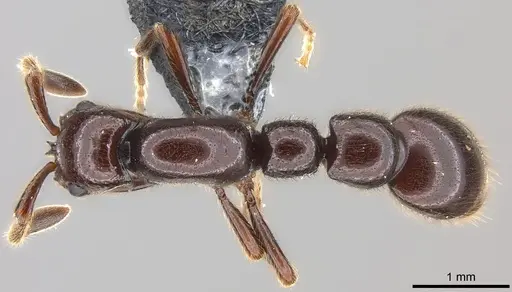
Literature
Loading distribution map...Loading products...