
Parasyscia sylvicola
- Sci. Name
- Parasyscia sylvicola
- Subfamily
- Dorylinae
- Author
- Arnold, 1955
- Distribution
- Found in 1 countries
Introduction
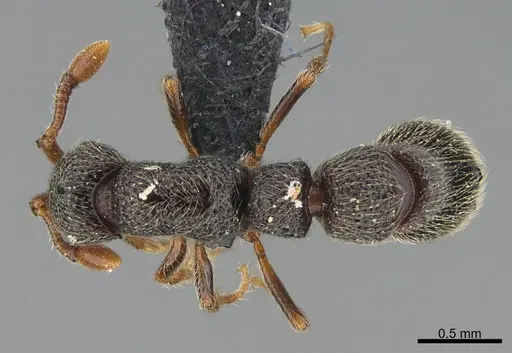
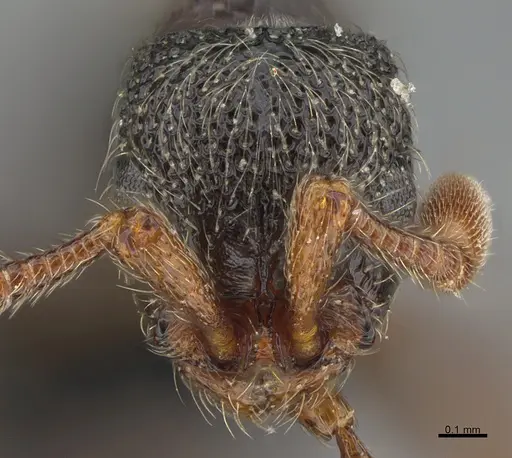
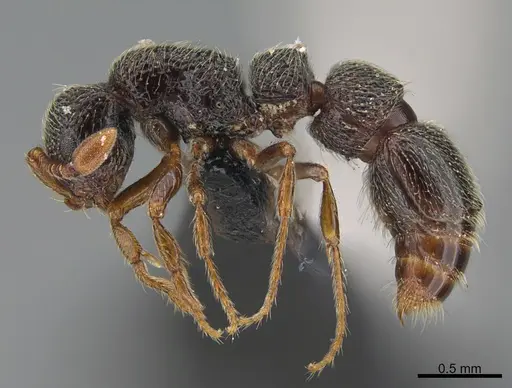
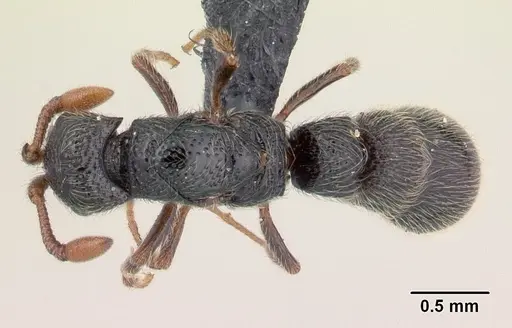
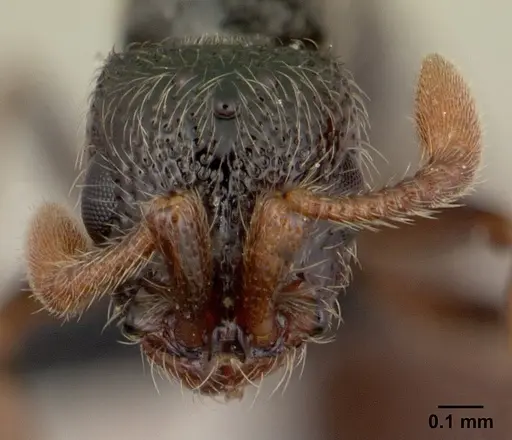
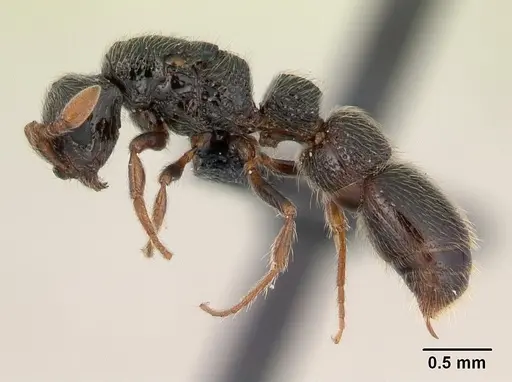
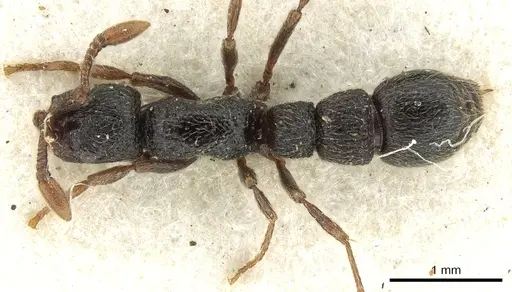
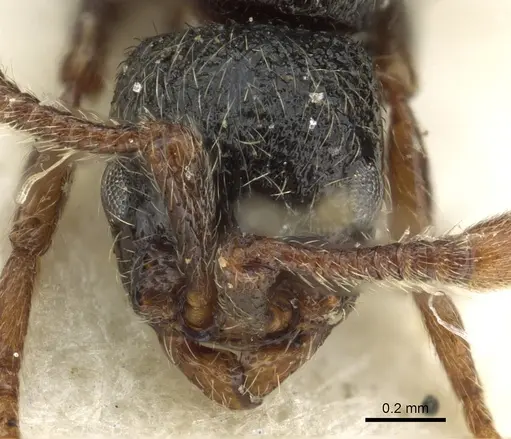
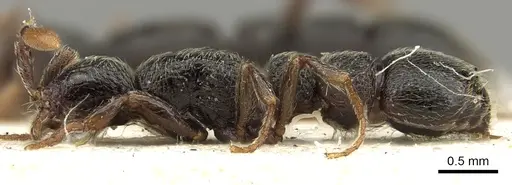
Parasyscia sylvicola is a small ant in the Dorylinae subfamily, which includes army ants. Originally described as Cerapachys sylvicola, it belongs to the Old World Sphinctomyrmex/Eusphinctus clade . Worker size is unknown but inferred from genus patterns to be around 2-4 mm . The species is found in the Afrotropical region, specifically sub-Saharan Africa . These ants nest in soil, under stones, or in rotting wood in forest habitats and prey on small arthropods using coordinated hunting. As a member of an ancient predatory lineage, P. sylvicola has a cryptic lifestyle with specialized hunting behaviors, making it a unique subject for antkeepers interested in Dorylinae ants.
Quick Summary
- Difficulty: Unknown, limited captive data available
- Origin & Habitat: Afrotropical region (sub-Saharan Africa), forest floor habitats [3]
- Colony Type: Unconfirmed, Dorylinae ants typically have single-queen colonies, but this is not documented for P. sylvicola [2]
- Size & Growth:
- Queen: ~4-5 mm, inferred from Parasyscia genus patterns [2]
- Worker: ~2-4 mm, inferred from Parasyscia genus patterns [2]
- Colony: Up to a few hundred workers, estimated based on Dorylinae patterns [2]
- Growth: Unknown, estimated moderate [2]
- Development: Estimated 6-10 weeks at tropical temperatures [2] (Development timeline is inferred from related Dorylinae species)
- Antkeeping:
- Behavior: Workers are small and cryptic, likely defensive when threatened but not aggressive toward humans. Escape risk is high due to tiny size [2].
- Common Issues: limited species-specific care information makes proper husbandry challenging, escape prevention is critical due to tiny worker size, predatory diet requirements may be difficult to meet consistently, humidity control is essential but can be tricky in captive setups, wild-caught colonies may contain parasites that can devastate captive populations
Taxonomy and Classification
Parasyscia sylvicola was originally described as Parasyscia sylvicola before being reclassified into the genus Parasyscia. This species belongs to the Dorylinae subfamily, which contains army ants and their specialized predatory relatives [1]. Phylogenetic analysis places P. sylvicola within the Old World Sphinctomyrmex/Eusphinctus clade, representing a distinct evolutionary branch of Dorylinae ants [1]. The genus Parasyscia contains approximately 40 described species distributed across tropical regions.
Natural History and Habitat
Parasyscia sylvicola occurs throughout the Afrotropical region, specifically sub-Saharan Africa [3]. In the wild, these ants inhabit forest floor environments where they nest in soil, under stones, or within decaying wood. As predators, they hunt small arthropods including springtails, mites, and other small ants using coordinated colony efforts.
Housing and Nesting
Due to their small size and cryptic nature, Parasyscia sylvicola requires careful housing. Provide a moist substrate setup such as a test tube with water reservoir, a plaster nest, or a naturalistic soil setup. Nest chambers should be small and tight-fitting, as these ants prefer dark, confined spaces. Ensure high humidity retention without waterlogging. Use fine mesh on any openings to prevent escapes, as workers are tiny [2].
Feeding and Diet
As predatory Dorylinae ants, Parasyscia sylvicola requires a protein-rich diet of small live prey. Offer fruit flies, pinhead crickets, small mealworms, or springtails, which are ideal for their size. Sugar sources may be accepted occasionally but should not be primary food sources. Feed small prey every 2-3 days and remove uneaten items promptly to prevent mold [2].
Temperature and Humidity Requirements
Parasyscia sylvicola requires warm, humid conditions reflecting its Afrotropical distribution. Maintain temperatures between 24-28°C [3]. Humidity should be kept high with moist substrate conditions, as forest floor species are adapted to damp environments [2]. No true diapause is needed due to tropical origins [2].
Behavior and Colony Dynamics
Parasyscia sylvicola workers are small and cryptic, exhibiting secretive behaviors. As Dorylinae ants, they likely use coordinated hunting strategies to overwhelm prey. Colonies are probably small, reaching up to a few hundred workers at maturity. Workers are not aggressive toward humans but may defend the nest if threatened. Escape risk is high due to tiny size, so fine mesh barriers are essential [2].
Frequently Asked Questions
How long does it take for Parasyscia sylvicola to produce first workers?
The egg-to-worker timeline is estimated at 6-10 weeks at tropical temperatures, based on general Dorylinae patterns [2].
What do Parasyscia sylvicola ants eat?
They are predatory ants that require small live prey such as fruit flies, springtails, or pinhead crickets. Remove uneaten prey promptly [2].
Are Parasyscia sylvicola ants good for beginners?
This species is not recommended for beginners due to limited species-specific care information. Their small size, high humidity needs, and predatory diet make them challenging [2].
How big do Parasyscia sylvicola colonies get?
Colony size is estimated to reach up to a few hundred workers, based on Dorylinae patterns [2].
What temperature do Parasyscia sylvicola ants need?
Keep them at 24-28°C, based on their Afrotropical distribution [3].
Do Parasyscia sylvicola ants need hibernation?
No true hibernation is required, as the species is tropical and should remain active year-round if kept warm [2].
Can I keep multiple Parasyscia sylvicola queens together?
Colony structure is unconfirmed for this species. Combining unrelated queens is not recommended, as it could result in aggression [2].
Why are my Parasyscia sylvicola ants dying?
Common causes include low humidity, temperatures below 22°C, insufficient live prey, or escape through tiny gaps. Also consider parasites from wild-caught colonies [2].
What type of nest is best for Parasyscia sylvicola?
Use moist substrate nests such as test tubes with water reservoirs, plaster nests, or naturalistic soil setups with small chambers [2].
Report an Issue
The current care sheet is based fully on literature. See inconsistencies, or something that's incorrect? Please , it will be resolved after review from an admin. Contributing to the blogs tab also helps providing information, to make us be able to further improve the caresheets. Thank you for your support!
References

This caresheet is licensed under CC BY-SA 4.0 .
Community Blogs
Literature
Loading distribution map...Loading products...