
Parasyscia rifati
- Sci. Name
- Parasyscia rifati
- Subfamily
- Dorylinae
- Author
- Sharaf & Akbar, 2018
- Distribution
- Found in 1 countries
Introduction
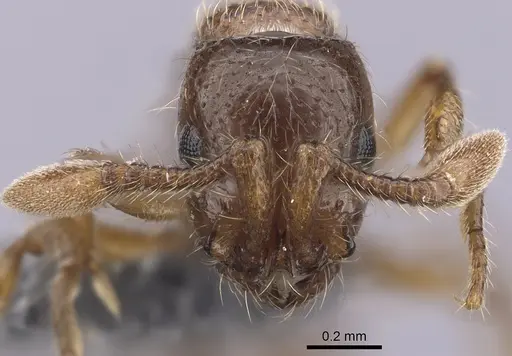
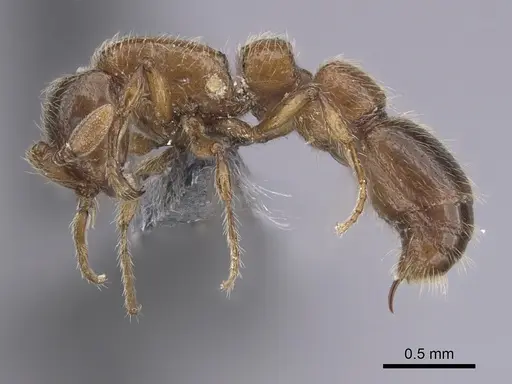
Parasyscia rifati is a tiny army ant species from the Dorylinae subfamily, discovered in 2018 in the Asir Mountains of Saudi Arabia. Workers measure 2.50-3.47 mm with a distinctive two-tone coloration: the head and rear of the abdomen are brown, while the middle body sections, legs, antennae, and front of the abdomen are yellow to yellow-brown . This species has ergatoid queens - wingless queens that develop from workers rather than typical winged queens . Almost nothing is known about its biology in the wild. Workers have been found foraging in moist leaf litter under fig trees at elevations between 741-1772 meters in the southwestern Arabian Peninsula . As a Dorylinae species, they likely share traits with related army ants, but no specific diet observations exist for this species yet.
Quick Summary
- Difficulty: Hard
- Origin & Habitat: Asir Mountains, Saudi Arabia, found at 741-1772m elevation in moist leaf litter under fig trees [1]
- Colony Type: Ergatoid queen system documented, wingless queens develop from workers and can serve as replacement reproductives [1]
- Size & Growth:
- Antkeeping:
- Temperature: Unconfirmed, extrapolate from habitat (mountainous, subtropical). Start around 22-26°C and observe colony activity. Provide a gentle temperature gradient [1]
- Humidity: Based on collection from moist leaf litter, keep substrate consistently damp but not waterlogged [1]
- Diapause: Unknown, no seasonal data exists for this species
- Nesting: No nesting data exists. Based on habitat (leaf litter), a naturalistic setup with moist substrate or a Y-tong/plaster nest with good humidity retention would be appropriate starting points [1]
- Behavior: No behavioral observations exist in scientific literature. As a Dorylinae species, they likely exhibit some army ant traits, but this is speculative. Their small size (under 3.5mm) means escape prevention is critical, they can squeeze through very small gaps [1]
- Common Issues: escape risk due to very small size, ensure tight seals on outworld and nest to prevent losses, diet is unconfirmed, must be determined through experimentation to avoid starvation, temperature and humidity requirements are inferred, monitor colony behavior closely and adjust as needed, no data on colony growth or development, keepers must observe and adapt care based on colony response
Discovery and Naming
Parasyscia rifati was described in 2018 by Sharaf and Akbar. The species name honors Sheikh Muhammad Rifat (1882-1950), a famous Egyptian Quran reader. Type specimens were collected from Al Bahah Province in southwestern Saudi Arabia, specifically from the Dhi Ayn Archaeological Village area at about 741m elevation, and from the Asir Province mountains at higher elevations up to 1772m [1].
Identification and Appearance
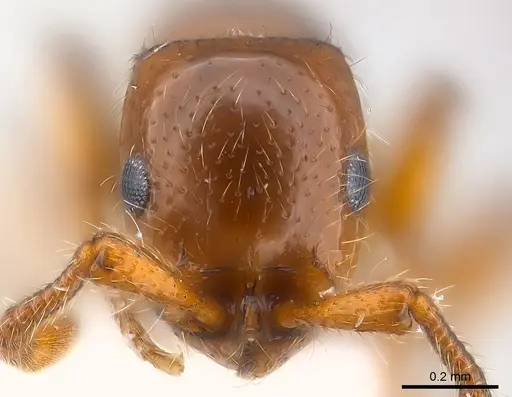
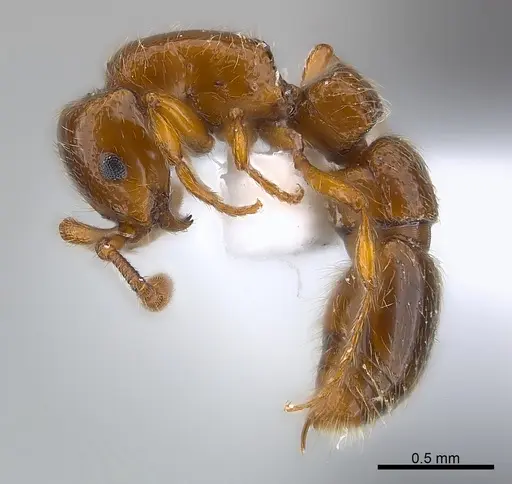
This species can be identified by its small size and distinctive coloration pattern. The head and rear abdominal segments are brown, while the mesosoma, petiole, legs, antennae, and first gastral segment are yellow to yellow-brown. Workers have moderately large eyes with 11-12 ommatidia, and their antennae have 11 segments. The petiole appears trapezoidal when viewed from above, with sharp corner angles. This combination separates it from related species like Parasyscia kenyensis and Parasyscia wittmeri [1].
The Ergatoid Queen System
Parasyscia rifati has an ergatoid queen system. Unlike most ant species where queens are large and develop wings, ergatoid queens are wingless and develop from worker larvae. The type series includes an ergatoid queen measuring 2.92 mm in body length, similar to the worker size range. This system allows colonies to replace their queen if she dies without waiting for nuptial flights. The ergatoid queen has 12 antennae segments, larger eyes, and well-developed ocelli [1]. For antkeepers, this means colonies may be able to produce replacement reproductives if the founding queen is lost.
Habitat and Distribution
All known specimens come from the Asir Mountains in southwestern Saudi Arabia, a region with a subtropical climate. Workers have been found foraging in moist leaf litter under a large fig tree, suggesting they prefer shaded, humid microhabitats. Other specimens were collected using pitfall traps at elevations between 741-1772 meters. The species appears to be endemic to this region [1].
Keeping This Species - What We Don't Know
There is no captive husbandry information for Parasyscia rifati. This species was described in 2018 and has never been kept in captivity. Everything below is educated inference from related species and habitat data. Start with standard setups for small Dorylinae: a test tube setup for founding colonies, transitioning to a naturalistic or Y-tong nest as the colony grows. Keep humidity moderate to high based on leaf litter habitat. Temperature around 22-26°C is a reasonable starting point. For feeding, Dorylinae are typically predatory, offer small live prey like fruit flies or pinhead crickets, along with sugar water or honey. Document your observations carefully. [1]
Frequently Asked Questions
How long do Parasyscia rifati workers live?
No data exists on worker longevity for this species. In general, ant workers live weeks to months depending on species and role.
What do Parasyscia rifati eat?
Unconfirmed. As Dorylinae (army ants), they are likely predatory on small invertebrates. Start with small live prey like fruit flies, springtails, or tiny crickets. Sugar sources may or may not be accepted, offer occasionally but don't rely on them.
How big do Parasyscia rifati colonies get?
Unknown, no colony size data exists. Related Dorylinae species can reach thousands of workers, but this species may be smaller.
Do Parasyscia rifati queens have wings?
No, this species has ergatoid (wingless) queens that develop from workers. They cannot fly and disperse by walking [1].
Can I keep multiple Parasyscia rifati queens together?
Not documented. The ergatoid system suggests colonies can replace queens internally, but whether multiple unrelated foundresses will cooperate is unknown.
What temperature should I keep Parasyscia rifati at?
Unconfirmed. Start around 22-26°C and observe colony behavior. If workers cluster together excessively, they may want more warmth, if they avoid heated areas, reduce temperature.
How long does it take for Parasyscia rifati eggs to become workers?
Unknown, no development data exists. Based on typical Dorylinae patterns, expect 4-8 weeks at warm temperatures, but this is entirely estimated.
Is Parasyscia rifati good for beginners?
No, this species has no established husbandry information. Keeping it would be experimental and requires willingness to document failures and successes.
Where is Parasyscia rifati found in the wild?
Only in the Asir Mountains of Saudi Arabia, at elevations between 741-1772 meters. It appears to be endemic to this region [1].
Why is it called Parasyscia rifati?
The species name honors Sheikh Muhammad Rifat (1882-1950), a famous Egyptian Quran reader. This is called a patronymic naming, the species is named after a person [1].
Report an Issue
The current care sheet is based fully on literature. See inconsistencies, or something that's incorrect? Please , it will be resolved after review from an admin. Contributing to the blogs tab also helps providing information, to make us be able to further improve the caresheets. Thank you for your support!
References

This caresheet is licensed under CC BY-SA 4.0 .
Community Blogs
CASENT0217369
View on AntWeb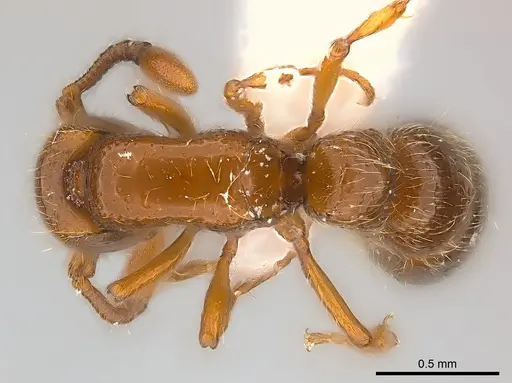
CASENT0263910
View on AntWeb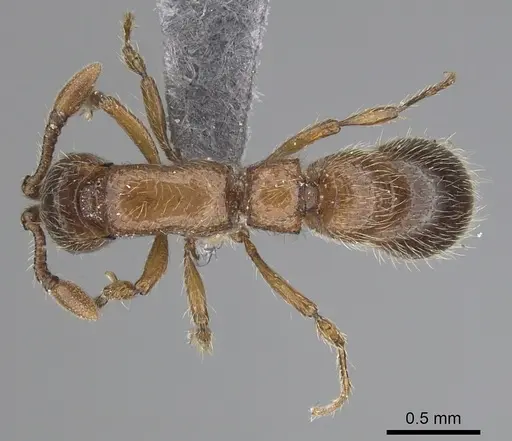
Literature
Loading distribution map...Loading products...