
Parasyscia opaca
- Sci. Name
- Parasyscia opaca
- Subfamily
- Dorylinae
- Author
- Emery, 1901
- Distribution
- Found in 2 countries
Introduction
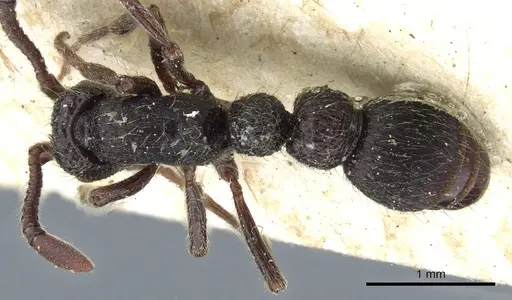
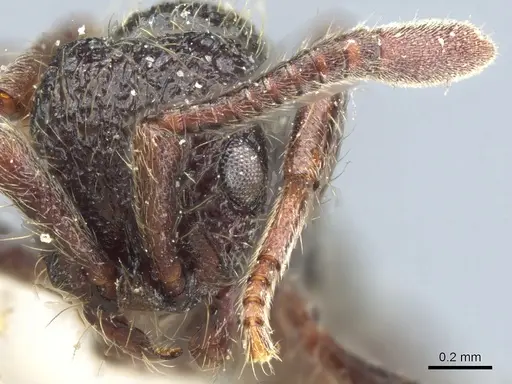
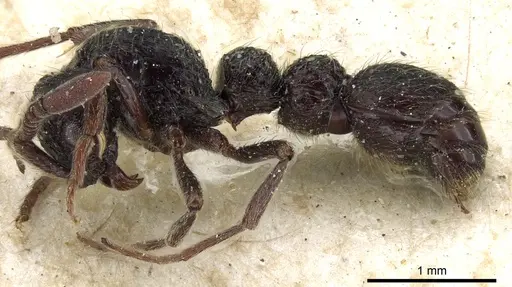
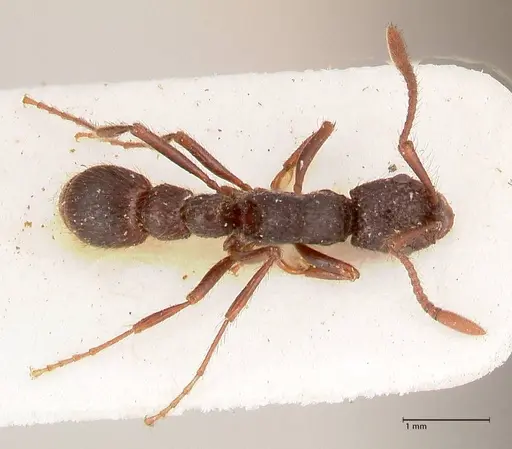
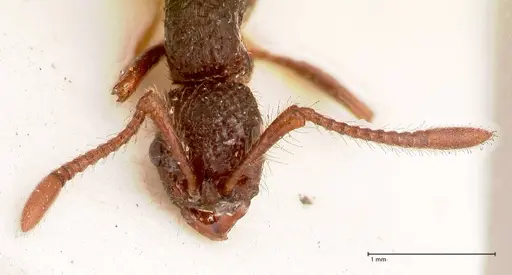
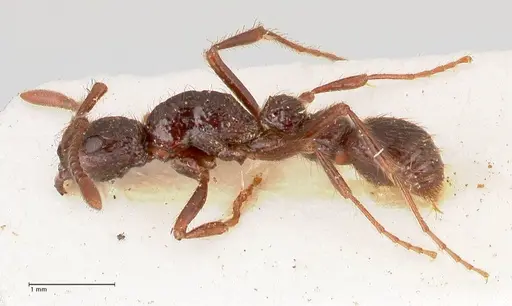
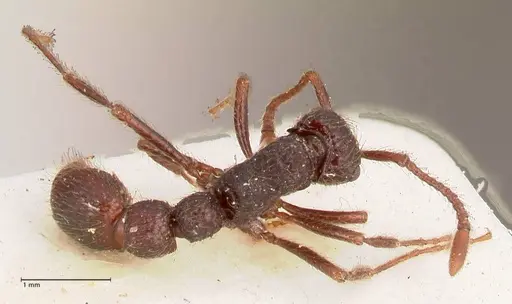
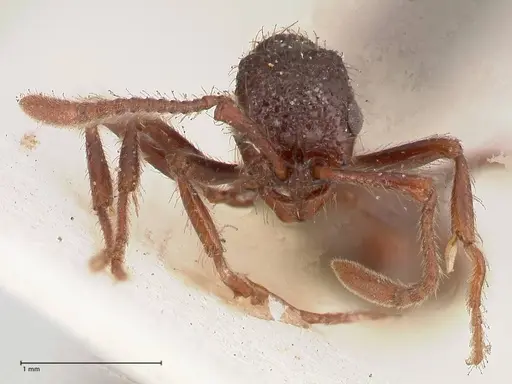
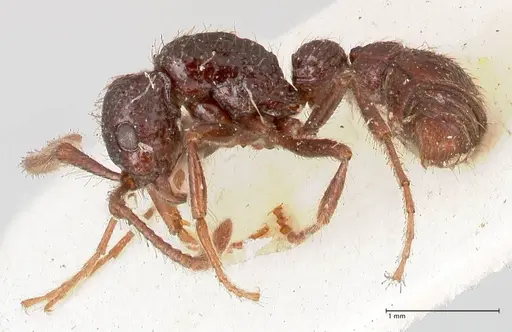
Parasyscia opaca is a small predatory ant in the Dorylinae subfamily, formerly classified as Cerapachys opacus. Workers are small with dark reddish-brown coloration, and the species was described by Emery in 1901 from Papua New Guinea . This species shows synchronous brood production, where larvae develop in batches, as observed in related colonies . It is part of a non-army ant doryline genus that hunts small invertebrates on the forest floor.
Quick Summary
- Difficulty: Medium
- Origin & Habitat: Papua New Guinea, specifically the Sattelberg region in Morobe Province, inhabiting tropical rainforest environments [1].
- Colony Type: Based on Dorylinae patterns, likely single-queen colonies, but unconfirmed for this species.
- Size & Growth:
- Queen: Size data unavailable, no total length measurements provided. Inferred from Parasyscia genus ~4-5 mm.
- Worker: Size data unavailable, no total length measurements provided. Inferred from Parasyscia genus ~2-3 mm.
- Colony: Up to approximately 100 workers (estimated from related Parasyscia species) [1].
- Growth: Moderate, phasic reproduction suggests seasonal growth bursts [2].
- Development: Estimated 6-8 weeks based on related Dorylinae species (inferred). (Phasic reproduction means brood develops in seasonal batches rather than continuously.)
- Antkeeping:
- Temperature: Keep warm, roughly 24-28°C, as inferred for tropical species [1].
- Humidity: Keep nest substrate consistently moist but not waterlogged, as forest floor ants need damp conditions [1].
- Diapause: No, as a tropical species from Papua New Guinea (inferred).
- Nesting: Y-tong or plaster nests with tight chambers scaled to small size, inferred from genus preferences [1].
- Behavior: Predatory ants that hunt small invertebrates. Not aggressive toward keepers but defend their nest. Small size requires strict escape prevention due to high risk of squeezing through gaps.
- Common Issues: small colony size means losses have bigger impact on population., tropical species are sensitive to temperature drops., predatory diet requires live prey, cannot survive on sugar alone., limited availability makes this species difficult to acquire., escape prevention is critical due to tiny size.
Housing and Nest Setup
Parasyscia opaca needs appropriately scaled housing due to its small size. Use Y-tong or plaster nests with tight chambers and narrow passages, as these ants prefer dark, humid environments [1]. For the outworld, a simple container with a small foraging area works well. Start with a test tube setup for founding queens, then transition to a small formicarium once the colony reaches 20-30 workers. Escape prevention is critical, apply Fluon or use fine mesh on all openings [1].
Feeding and Diet
As predatory ants, Parasyscia opaca requires a protein-based diet of small live invertebrates like fruit flies, crickets, or mealworms [1]. Offer prey once or twice per week, adjusting for colony size, and remove uneaten items after 24-48 hours to prevent mold. Sugar sources are unlikely to be accepted, ensure fresh water is always available.
Temperature and Humidity
Maintain warm conditions around 24-28°C for this tropical species [1]. Use a heating cable on one side of the nest to create a gradient. Humidity should be high, keep the nest substrate consistently moist but not waterlogged, mimicking forest floor conditions [1].
Colony Dynamics and Growth
Colonies are small, with up to approximately 100 workers estimated from related species [1]. They exhibit phasic reproduction, meaning brood develops in seasonal batches [2]. Growth is moderate, and the queen is the sole reproductive in monogyne colonies, though this is unconfirmed for this species.
Frequently Asked Questions
How long does it take for Parasyscia opaca to produce first workers?
Based on related Dorylinae species, expect approximately 6-8 weeks from egg to first worker at optimal temperature (inferred).
Can I keep Parasyscia opaca in a test tube setup?
Yes, test tubes work well for founding colonies. Keep the water reservoir filled and maintain warm, humid conditions [1].
What do Parasyscia opaca eat?
They are predatory ants that need live protein, such as fruit flies or small crickets. Remove uneaten prey after a day or two [1].
How big do Parasyscia opaca colonies get?
Colonies reach up to approximately 100 workers at maturity, based on estimates from related species [1].
Do Parasyscia opaca need hibernation?
No, as a tropical species from Papua New Guinea, they do not require hibernation (inferred).
Are Parasyscia opaca good for beginners?
This species is rated as Medium difficulty due to predatory diet and humidity needs, making it better for keepers with some experience.
When should I move my colony to a formicarium?
Move to a small formicarium or Y-tong nest once the colony reaches 20-30 workers to avoid cramped conditions.
Why are my Parasyscia opaca dying?
Common causes include temperature drops, dry conditions, insufficient protein, or mold from uneaten prey. Check husbandry parameters and remove uneaten food promptly.
Can I keep multiple queens together?
This species is likely monogyne, but unconfirmed. Combining unrelated queens is not recommended and has not been documented.
Report an Issue
The current care sheet is based fully on literature. See inconsistencies, or something that's incorrect? Please , it will be resolved after review from an admin. Contributing to the blogs tab also helps providing information, to make us be able to further improve the caresheets. Thank you for your support!
References

This caresheet is licensed under CC BY-SA 4.0 .
Community Blogs
Literature
Loading distribution map...Loading products...