
Parasyscia cribrinodis
- Sci. Name
- Parasyscia cribrinodis
- Subfamily
- Dorylinae
- Author
- Emery, 1899
- Distribution
- Found in 2 countries
Introduction
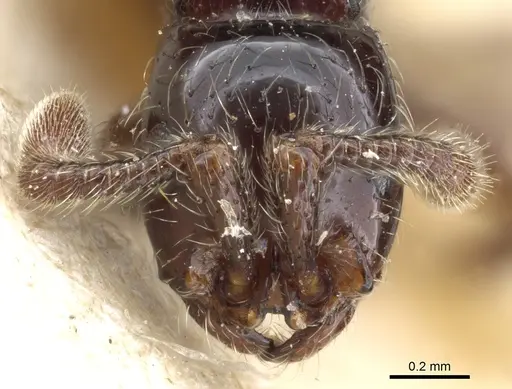
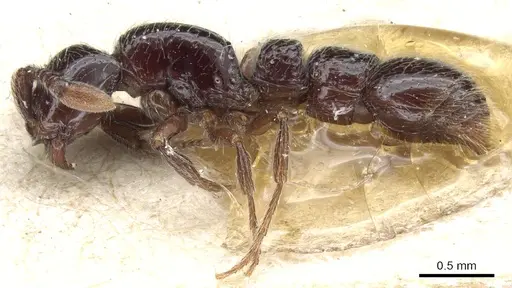
Parasyscia cribrinodis is a small predatory ant in the subfamily Dorylinae, formerly classified as Cerapachys. It is native to West and Central Africa, with records from Cameroon, Guinea, Nigeria, and the Democratic Republic of Congo . Size data is unavailable from current literature. This species is known for its predaceous behavior, with evidence of being found in the stomach of a toad in Congo, indicating active foraging .
Quick Summary
- Difficulty: Hard
- Origin & Habitat: Afrotropical region, Cameroon, Guinea, Nigeria, and Democratic Republic of Congo. Found in tropical forest environments [1][2].
- Colony Type: Unconfirmed. Dorylinae ants can have various colony structures, but specific data for Parasyscia cribrinodis is lacking.
- Size & Growth:
- Queen: size data unavailable
- Worker: size data unavailable
- Colony: Unknown, no data available
- Growth: Unknown
- Development: Unknown, no data available. Based on typical Dorylinae patterns in warm conditions, expect around 6-10 weeks, but this is an estimate. (Development is likely temperature-dependent.)
- Antkeeping:
- Temperature: Keep warm and stable, roughly 24-28°C, based on tropical habitat [2].
- Humidity: Maintain moderate to high humidity. Keep the nest substrate consistently moist but not waterlogged.
- Diapause: No, as a tropical species, they do not require hibernation.
- Nesting: Natural nesting habits are unconfirmed. Based on Dorylinae patterns, they may nest in soil or under debris. For captivity, use a naturalistic setup with moist substrate or a Y-tong/plaster nest.
- Behavior: Workers are likely aggressive foragers that hunt small invertebrates. Escape prevention is critical due to their small size. Do not keep with other ant species as they may prey on them.
- Common Issues: predatory diet requires live prey, which can be challenging to provide regularly., limited information means care is largely experimental., escape prevention is critical due to tiny size., tropical temperature requirements mean they cannot tolerate cool conditions., keeping with other invertebrates is risky as they may prey on tankmates.
Housing and Nest Setup
Set up a naturalistic enclosure with moist substrate or a Y-tong/plaster nest. Ensure chambers are scaled to small ant size. Use fine mesh for escape prevention, as their tiny size allows them to slip through gaps [4].
Feeding and Diet
Feed live prey such as fruit flies or small insects. Predation evidence supports this diet [3]. Remove uneaten prey after 24 hours to prevent mold.
Temperature and Humidity
Keep temperatures around 24-28°C based on tropical habitat [2]. Maintain humidity by keeping the nest substrate consistently moist but not waterlogged.
Behavior and Colony Dynamics
Dorylinae ants are predatory and may raid other colonies. Workers are likely nocturnal foragers. Handle with care as they may bite if threatened [4].
Frequently Asked Questions
How long does it take for Parasyscia cribrinodis to produce first workers?
The egg-to-worker timeline is unconfirmed. Based on typical Dorylinae patterns in warm conditions, expect around 6-10 weeks, but this is an estimate [2].
Can I keep Parasyscia cribrinodis with other ant species?
No. This is a predatory species that will likely prey on other ants. Keep them in a separate enclosure away from all other ant species and small invertebrates [4].
What do Parasyscia cribrinodis eat?
They require live prey. Feed small live insects like fruit flies or crickets. Remove uneaten prey after 24 hours [3].
Are Parasyscia cribrinodis good for beginners?
No. This is an advanced species due to their predatory diet requirements and lack of established care protocols. They are not recommended for beginners [4].
Do Parasyscia cribrinodis need hibernation?
No. As a tropical African species, they do not require hibernation or diapause. Keep temperatures stable year-round [2].
How big do Parasyscia cribrinodis colonies get?
Colony size is unconfirmed for this species. No data is available on maximum colony size [4].
When should I move Parasyscia cribrinodis to a formicarium?
Wait until the colony is actively foraging and has outgrown the test tube setup. Move to a naturalistic or Y-tong nest once the colony is stable [4].
Why are my Parasyscia cribrinodis dying?
Common causes include temperatures below 22°C, low humidity, lack of live prey, mold from overwatering, or escape through small gaps. Review environmental parameters and ensure consistent access to live prey [4].
Report an Issue
The current care sheet is based fully on literature. See inconsistencies, or something that's incorrect? Please , it will be resolved after review from an admin. Contributing to the blogs tab also helps providing information, to make us be able to further improve the caresheets. Thank you for your support!
References

This caresheet is licensed under CC BY-SA 4.0 .
Community Blogs
CASENT0903777
View on AntWeb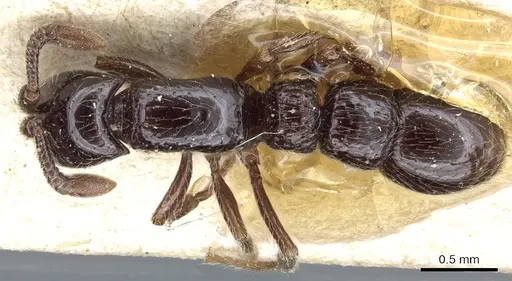
Literature
Loading distribution map...Loading products...