
Paraparatrechina pallida
- Sci. Name
- Paraparatrechina pallida
- Tribe
- Lasiini
- Subfamily
- Formicinae
- Author
- Donisthorpe, 1947
- Distribution
- Found in 2 countries
Introduction
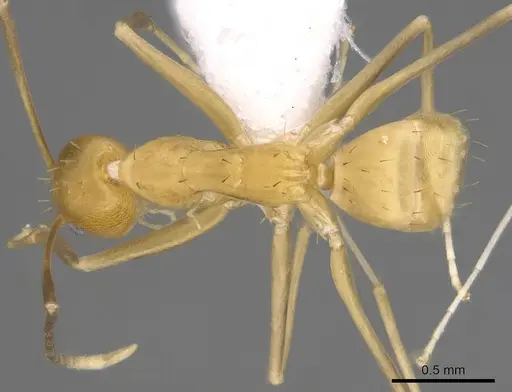
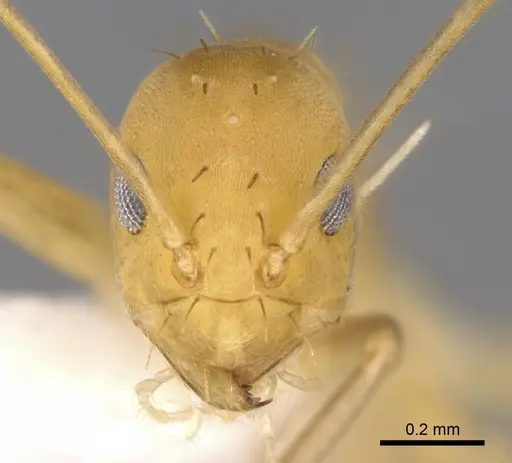
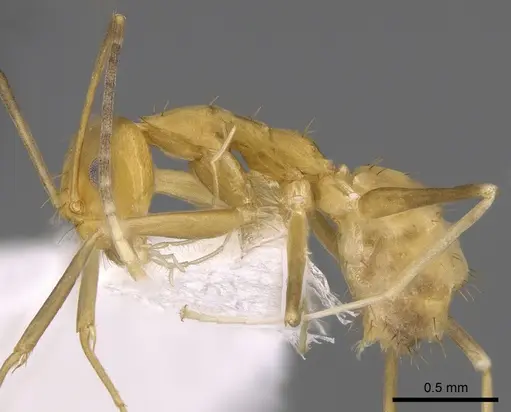
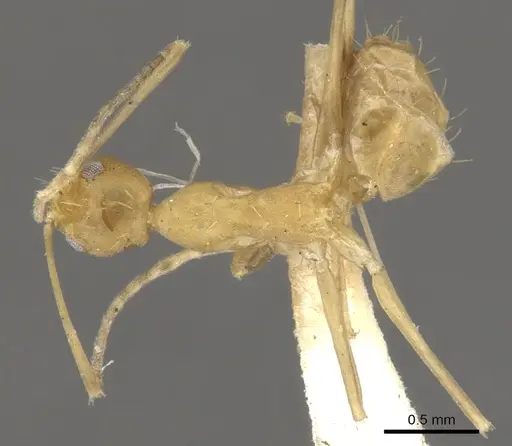
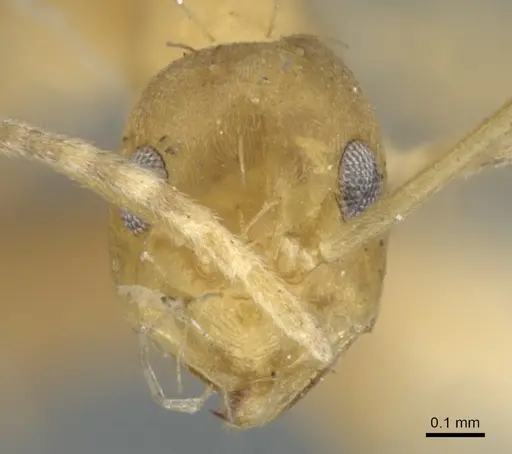
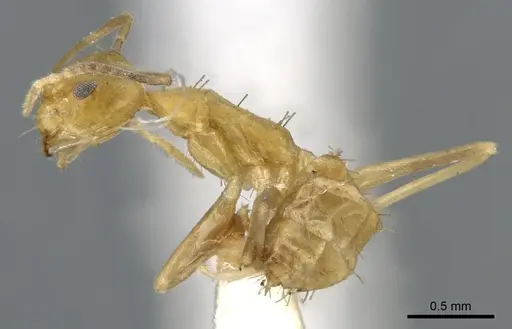
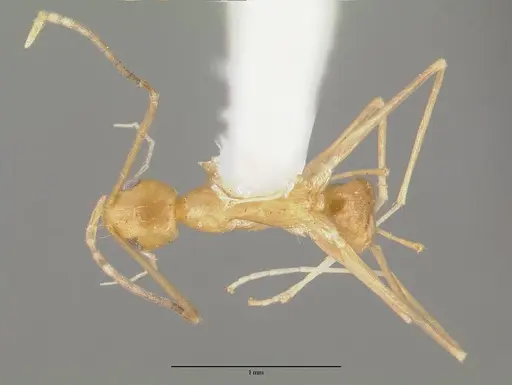
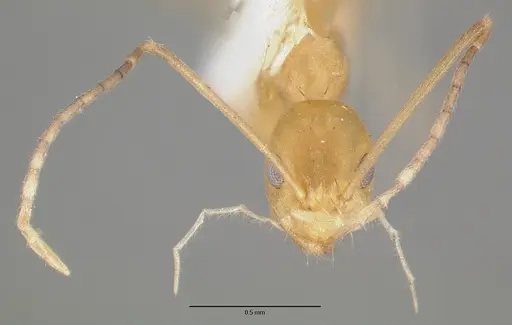
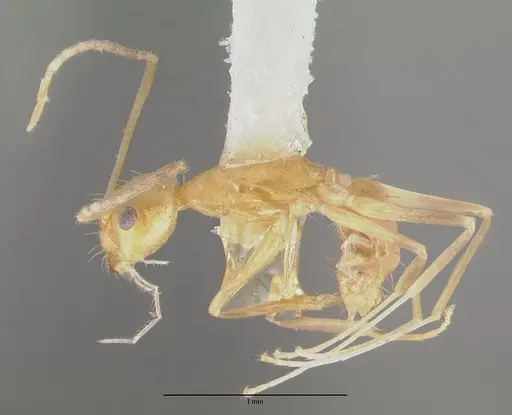
Paraparatrechina pallida is a tiny arboreal ant species native to New Guinea and the Australasian region . Workers are slender with pale coloration, but exact body size data is unavailable . The genus Paraparatrechina belongs to the Formicinae subfamily and has an elongated, slender body shape . These ants nest exclusively in the canopy of tropical rainforests, typically in hollow twigs, under bark, or in tree cavities . They are common across elevations from 200m to 900m in primary and disturbed forests . Paraparatrechina pallida is notable for its ecological flexibility, being one of only five ant species found at multiple elevation zones in New Guinea rainforests . This adaptability allows them to thrive in various canopy conditions.
Quick Summary
- Difficulty: Medium
- Origin & Habitat: Native to New Guinea in the Australasian region. This is a strictly arboreal species that nests in the canopy of tropical rainforests, typically in hollow twigs, under bark, or in tree cavities. Found at elevations between 200-900m in primary and disturbed forest canopies [1][2][4].
- Colony Type: Colony structure is unconfirmed in available research. No specific data on queen number or social structure is documented.
- Size & Growth:
- Queen: Size data unavailable [3]
- Worker: Size data unavailable [3]
- Colony: Colonies observed with up to 59 individuals per tree based on occurrence data [4]
- Growth: Moderate, inferred from tropical arboreal ant patterns
- Development: Estimated 6-8 weeks at optimal tropical temperatures based on Formicinae patterns [3] (Development time inferred from genus-level data, direct measurements unavailable for this species)
- Antkeeping:
- Temperature: Keep warm, roughly 24-28°C, based on tropical species patterns [3]
- Humidity: Keep substrate consistently moist but not waterlogged, based on arboreal habitat [2][4]
- Diapause: No, as a tropical species, they do not require hibernation [3]
- Nesting: Arboreal setup essential with vertical space and climbing opportunities. Use naturalistic setups with cork bark, twigs, or Y-tong nests connected to outworlds [2][4]
- Behavior: Workers are active foragers that search for honeydew, small insects, and nectar in the canopy [4]. They are excellent climbers and generally peaceful. Their tiny size makes escape prevention critical [2].
- Common Issues: escape prevention is critical due to their tiny size, use fine mesh and seal all gaps., tropical humidity requirements can lead to mold problems if ventilation is inadequate., they may reject ground-level food sources, offer food in elevated positions., wild-caught colonies may carry parasites that can devastate captive colonies., slow founding phase means colonies need patience, queens may take months to raise first workers.
Housing and Nest Setup
You need an arboreal setup that mimics their natural canopy habitat. Provide vertical space and climbing structures using cork bark, live plants, or twigs [2][4]. Alternatively, use a Y-tong nest connected to multiple outworlds via tubes for climbing. Nest chambers should be small and tight-fitting to their body size. Keep the nest substrate consistently moist but not waterlogged [2][4].
Feeding and Diet
In the wild, they forage for honeydew, small insects, and nectar [4]. In captivity, offer sugar water or honey constantly, along with small live prey like fruit flies 2-3 times per week. Place food at elevated positions to mimic canopy foraging [4]. Remove uneaten food within 24 hours to prevent mold.
Temperature and Humidity
Maintain warm conditions around 24-28°C, as they are tropical species [3]. Humidity should be kept moist but not waterlogged, based on their arboreal habitat [2][4]. Use a moisture reservoir and ensure good ventilation to prevent mold.
Behavior and Colony Dynamics
Workers are active foragers that search for food in the canopy layer [4]. They are excellent climbers and generally peaceful. Colonies establish central nest areas and send foragers out using chemical trails [2][4]. Their small size allows access to tiny nesting spaces.
Frequently Asked Questions
Can I keep Paraparatrechina pallida in a test tube?
Test tubes are not ideal. They need vertical space and climbing opportunities. Use a naturalistic setup with plants and branches or a Y-tong nest with multiple tubes to outworlds [1].
How long does it take for Paraparatrechina pallida to raise first workers?
Based on Formicinae patterns, expect approximately 6-8 weeks from egg to first worker at optimal temperatures [3]. Be patient during the founding phase.
Are Paraparatrechina pallida ants good for beginners?
This species is rated medium difficulty. It requires specific arboreal setups with proper humidity and temperature control. Beginners might find the setup requirements challenging [3].
What do Paraparatrechina pallida eat?
They are omnivores that forage for honeydew, nectar, and small insects [4]. In captivity, offer sugar water and small live prey regularly.
When should I move Paraparatrechina pallida to a formicarium?
Start in a simple setup with damp substrate and twigs. Once the colony is established with several workers, move to an arboreal setup. They often do better in naturalistic vivariums [3].
Do Paraparatrechina pallida need hibernation?
No, they do not hibernate as a tropical species. Maintain consistent warmth year-round [3].
Why are my Paraparatrechina pallida dying?
Common causes include temperature too cold, humidity issues, escape due to inadequate barriers, parasites from wild-caught colonies, or mold from poor ventilation. Review these parameters and adjust accordingly [3].
How big do Paraparatrechina pallida colonies get?
Based on occurrence data, colonies can have up to 59 workers per tree [4]. With optimal care, colonies may grow to several hundred workers over time.
Can I keep multiple Paraparatrechina pallida queens together?
This is not recommended, as colony structure is unconfirmed. Combining queens often leads to fighting and colony failure. Start with one queen [3].
Report an Issue
The current care sheet is based fully on literature. See inconsistencies, or something that's incorrect? Please , it will be resolved after review from an admin. Contributing to the blogs tab also helps providing information, to make us be able to further improve the caresheets. Thank you for your support!
References

This caresheet is licensed under CC BY-SA 4.0 .
Community Blogs
Literature
Loading distribution map...Loading products...