
Paraparatrechina oreias
- Sci. Name
- Paraparatrechina oreias
- Tribe
- Lasiini
- Subfamily
- Formicinae
- Author
- LaPolla & Cheng, 2010
- Distribution
- Found in 1 countries
Introduction
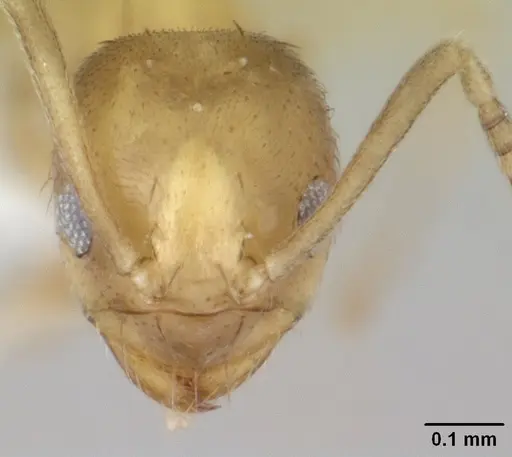
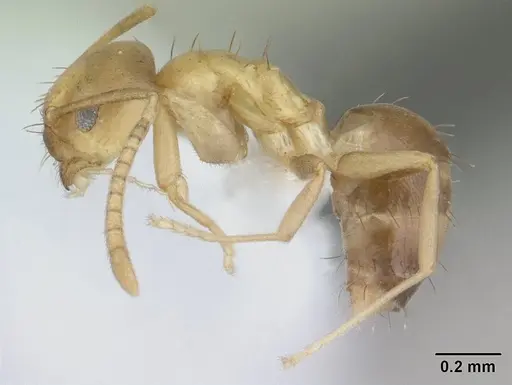
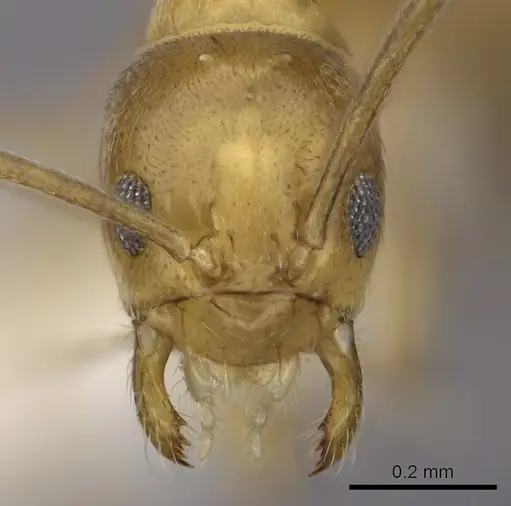
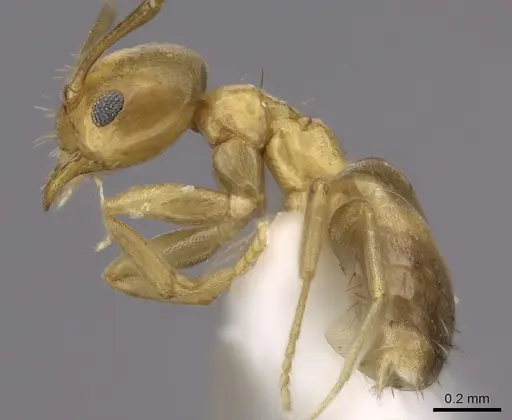
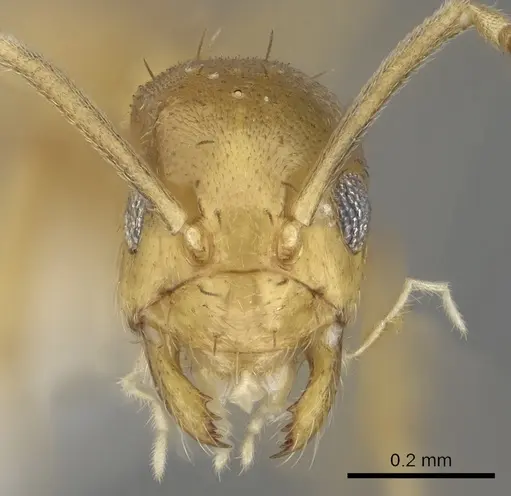
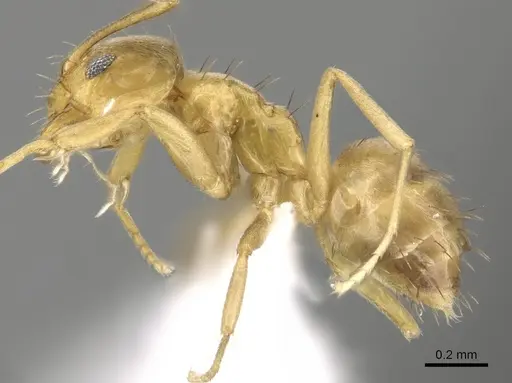
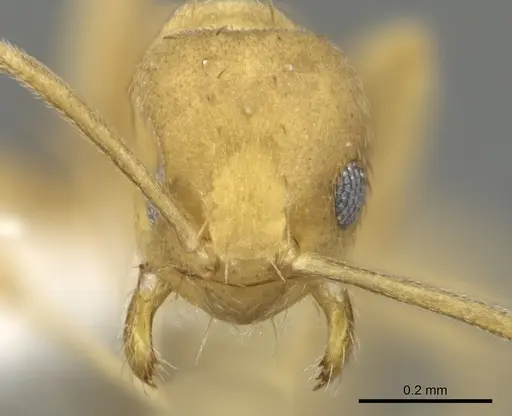
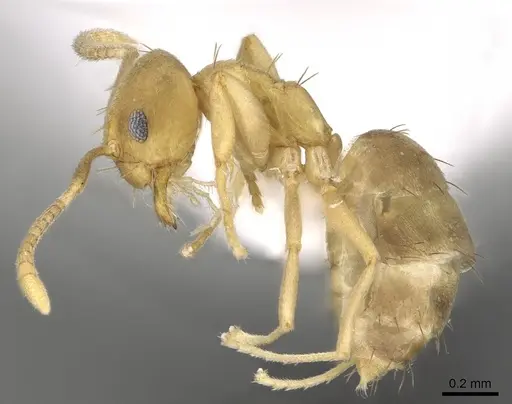
Paraparatrechina oreias is a tiny ant species native to the montane rainforests of Cameroon. Workers measure around 1.4 to 1.75 mm in total length . They feature a yellow head with darker margins, a compact yellow to brownish-yellow mesosoma, and a brownish-yellow gaster that lightens near the segment edges. A fine layer of short, appressed pubescence covers their head and scapes, which separates them from similar species like Paraparatrechina subtilis . The colony type, founding behavior, and queen caste remain completely unknown since only workers have been described . Based on typical Formicinae patterns, these ants likely nest in soil or rotting wood in highland forests . Keepers should expect a very small, slow-growing colony that requires meticulous escape prevention due to their minute size.
Quick Summary
- Difficulty: Hard
- Origin & Habitat: Montane rainforest in Cameroon (Mt. Cameroon region) at 1440 meters elevation [1][2].
- Colony Type: Single-queen colonies are likely based on typical Paraparatrechina patterns, but this remains unconfirmed since queens are unknown.
- Size & Growth:
- Queen: Unknown, queen caste has not been described [1]
- Worker: ~1.4-1.75 mm [1][2]
- Colony: Up to a few hundred workers [3], exact maximum is unknown.
- Growth: Slow, tiny workers typically develop slowly.
- Development: Unknown, no direct data exists. (Development speed is unconfirmed. Expect slow progress.)
- Antkeeping:
- Temperature: Keep stable, roughly low-to-mid 20s°C. Montane habitat suggests they prefer cooler conditions than lowland tropical ants [1].
- Humidity: Keep the nest substrate consistently moist but not waterlogged. Montane rainforest environments are naturally humid [1].
- Diapause: Unknown, seasonal patterns in their highland habitat are unconfirmed.
- Nesting: Use small Y-tong, plaster, soil nests, or 3D-printed nests. Avoid acrylic nests. Provide tight-fitting barriers because these tiny ants can slip through standard gaps.
- Behavior: Likely generalist foragers that accept small insects and honeydew. They are fast-moving and non-aggressive. Escape risk is high due to their tiny size. Formicinae typically have mild stingers, but their small size makes them harmless to humans.
- Common Issues: escape prevention is critical due to their very small 1.4-1.75mm size, use fine mesh and tight-fitting lids, wild-caught colonies are nearly impossible to obtain since only workers are known, high humidity requirements can lead to mold if ventilation is poor, slow colony growth requires patience and stable conditions
Housing and Setup
Because Paraparatrechina oreias workers measure only 1.4 to 1.75 mm, housing requires careful attention to scale [1]. Test tubes work well for founding colonies. Pack cotton plugs firmly to prevent escapes. For established colonies, use small Y-tong, plaster, soil nests, or 3D-printed nests [3]. Avoid acrylic nests entirely. The nest material should retain moisture well since these ants come from humid montane rainforest [1]. Outworld space can be simple. A small foraging area works fine for small colonies. Escape prevention is critical. Standard test tube stoppers often have gaps these tiny ants can slip through. Wrap parafilm around stopper edges or use fine mesh barriers on all openings.
Temperature and Humidity
This species comes from Mt. Cameroon at 1440 meters elevation [1]. Montane rainforest environments stay cool and damp. Keep your setup stable, roughly low-to-mid 20s°C. They likely tolerate temperatures in the low 20s well but may struggle above 30°C [1]. For humidity, keep the nest substrate consistently moist but not waterlogged [1]. A water tube attached to the nest provides drinking access. Avoid placing the setup near heating vents or in direct sunlight that could cause overheating. Stable conditions matter more than exact numbers.
Feeding and Diet
Like most Formicinae, Paraparatrechina oreias likely accepts both sugar and protein foods. Offer sugar water or honey water in a shallow container. These tiny ants need small feeding stations they can access easily. For protein, offer small prey items like fruit flies, pinhead crickets, or tiny mealworms. They may also tend aphids or scale insects for honeydew if you include a plant section in the outworld. Feed small amounts several times per week. Remove uneaten food after 24 to 48 hours to prevent mold. A constant sugar source works best for established colonies. [3]
Colony Establishment
This is a challenging species to keep because only the worker caste has been scientifically described [1]. No queens or males are known. This means wild-caught colonies are essentially impossible to obtain since you would need to find a queen. If available in the antkeeping hobby, they likely come from established captive colonies. Growth will be slow due to their tiny size. Expect small colony numbers even in established setups. Patience is essential with this species. If you obtain a colony, focus on maintaining stable conditions and providing consistent food.
Behavior and Temperament
Specific behavior is not well documented, but Paraparatrechina species are generally non-aggressive and quick-moving. Workers likely search for small insects and honeydew. Their tiny size makes them appear nervous and fast. Formicinae typically have mild stingers, but their small size makes them harmless to humans. The main behavioral consideration is escape risk. Their small size means they can exploit the smallest gaps. Always check that lid seals are tight and that any ventilation holes are covered with fine mesh. [3]
Frequently Asked Questions
How long does it take for Paraparatrechina oreias to produce first workers?
The egg-to-worker timeline is unconfirmed for this species. No direct data exists. Expect slow progress and maintain stable conditions.
What temperature do Paraparatrechina oreias ants need?
Keep them stable, roughly low-to-mid 20s°C. Being from montane rainforest at 1440 meters elevation, they prefer cooler conditions than typical tropical ants [1]. Avoid temperatures above 30°C.
How big do Paraparatrechina oreias colonies get?
Colony size is not well documented. Based on related Paraparatrechina species, colonies likely reach up to a few hundred workers [3]. They remain small colonies even when established.
Can I keep Paraparatrechina oreias in a test tube?
Yes, test tubes work well for this species, but escape prevention is critical. Use tightly packed cotton or wrap parafilm around the stopper because these tiny 1.4 mm ants can squeeze through standard gaps. Check barriers regularly.
What do Paraparatrechina oreias eat?
Like most Formicinae, they likely accept sugar water or honey water and small protein sources like fruit flies or tiny mealworms. They are probably generalist feeders.
Are Paraparatrechina oreias good for beginners?
This is not an ideal beginner species. Only the worker caste is described, making wild collection impossible. They require careful attention to escape prevention due to their tiny 1.4 mm size, and specific humidity needs from their montane rainforest origin.
Do Paraparatrechina oreias need hibernation?
Diapause requirements are unconfirmed. Seasonal patterns in their highland habitat are unconfirmed. Maintain stable conditions and observe colony activity.
Why are my Paraparatrechina oreias escaping?
Their extremely small 1.4 to 1.75 mm size means they can slip through tiny gaps. Check all barriers. Standard test tube plugs, lid seams, and ventilation holes need fine mesh and sealed edges with parafilm or tape.
Where is Paraparatrechina oreias found in the wild?
They are known only from Mt. Cameroon in southwestern Cameroon at 1440 meters elevation. The type locality is in montane rainforest,3.8 km NNW of Mapanja [1].
Report an Issue
The current care sheet is based fully on literature. See inconsistencies, or something that's incorrect? Please , it will be resolved after review from an admin. Contributing to the blogs tab also helps providing information, to make us be able to further improve the caresheets. Thank you for your support!
References

This caresheet is licensed under CC BY-SA 4.0 .
Community Blogs
CASENT0178762
View on AntWeb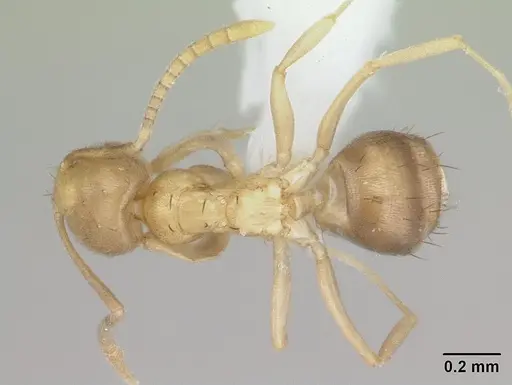
CASENT0192279
View on AntWeb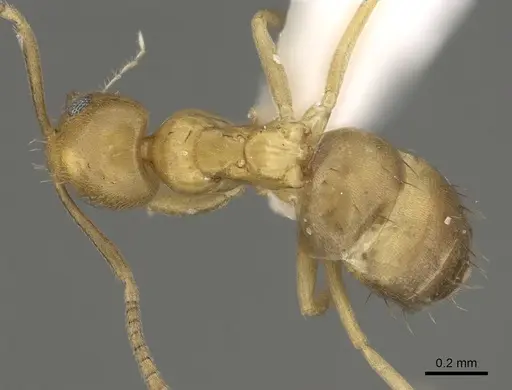
CASENT0317047
View on AntWeb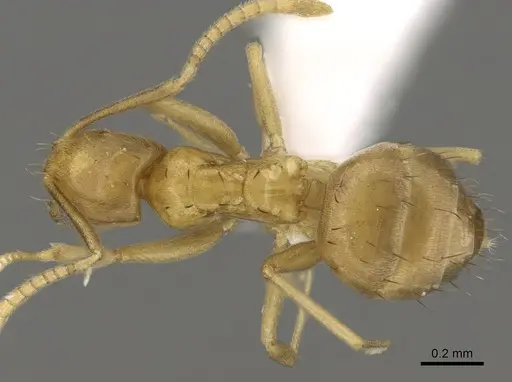
CASENT0317048
View on AntWeb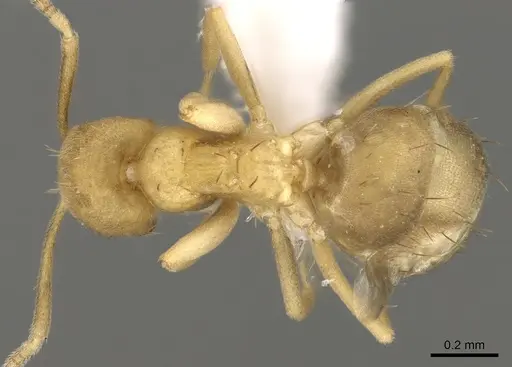
Literature
Loading distribution map...Loading products...