
Paraparatrechina gnoma
- Sci. Name
- Paraparatrechina gnoma
- Tribe
- Lasiini
- Subfamily
- Formicinae
- Author
- LaPolla & Cheng, 2010
- Distribution
- Found in 1 countries
Introduction
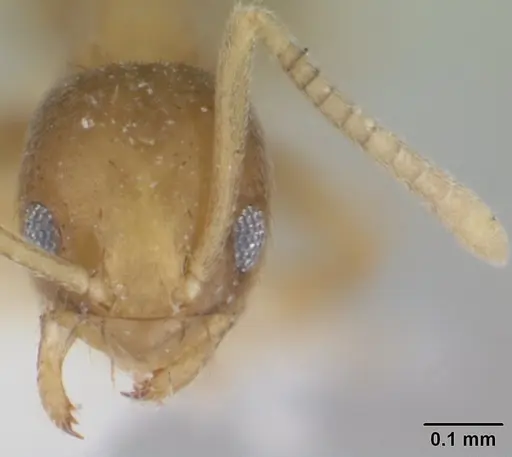
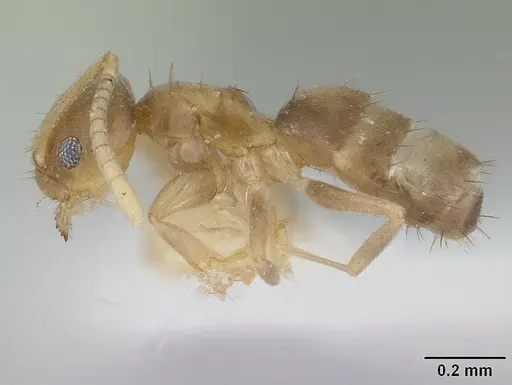
Paraparatrechina gnoma is a tiny ant species from West African forests in Ghana and Nigeria. Workers measure only 1.2-1.44mm in total length, making this the smallest known Paraparatrechina in the Afrotropical region – its name comes from the Latin word for 'dwarf' . These ants are brownish-yellow with lighter yellow markings on the clypeus, mandibles, and antennae. Their body is covered with fine short hairs, and the mesosoma is compact with a steep pronotum and a propodeum that has a short angular top face and a long sloping back face . Only the worker caste has been described, and the species is known from just a few collections in forested habitats .
Quick Summary
- Difficulty: Expert
- Origin & Habitat: West African forests in Ghana and Nigeria [1][2][3]. Known only from forested habitat.
- Colony Type: Unknown – only the worker caste has been described. Colony structure (single-queen or multi-queen) has not been documented.
- Size & Growth:
- Queen: Unknown – only workers have been described [1]
- Worker: 1.2-1.44mm total length [1][2]
- Colony: Unknown – no colony size data exists for this species
- Growth: Unknown
- Development: Unknown – development has not been studied for this species (No data exists on egg-to-worker development. Related small Formicinae species typically develop in 4-8 weeks at warm temperatures, but this is a rough estimate.)
- Antkeeping:
- Temperature: Unconfirmed – likely needs warm, humid conditions typical of West African forests. Based on the species' origin in Ghana and Nigeria, aim for 24-28°C. Monitor colony activity and adjust accordingly.
- Humidity: Unconfirmed – forest species likely require higher humidity. Keep nest substrate consistently moist but not waterlogged, with some drier areas available for the ants to regulate their own moisture exposure.
- Diapause: Unknown – no data on seasonal behavior. West African forest ants may not undergo true hibernation, but might show reduced activity during cooler or drier periods.
- Nesting: Natural nesting behavior unconfirmed. In captivity, these extremely small ants will need very tight chambers and narrow passages scaled to their tiny size. Test tube setups with very small water reservoirs or fine-scale plaster nests work best. Avoid any gaps that these minute ants could squeeze through.
- Behavior: Behavior is largely unstudied. Based on genus placement in Lasiini (related to Prenolepis), these are likely generalist foragers that may tend honeydew-producing insects and scavenge for small food items. Their tiny size means escape prevention is absolutely critical – these ants can squeeze through the smallest gaps. Handle with extreme care as they are nearly microscopic and easily lost or crushed.
- Common Issues: escape prevention is critical – at 1.2-1.44mm, these ants can squeeze through gaps invisible to the naked eye and require fine mesh barriers, almost no biological data exists – keepers will be pioneering care with minimal guidance, extreme small size makes feeding difficult – food items must be appropriately sized, risk of crushing or losing ants during colony maintenance due to their minute size, difficulty observing and monitoring colony health due to their microscopic scale
Why Paraparatrechina gnoma is a Challenge
This species represents one of the most challenging ants to keep in captivity simply because almost nothing is known about its biology. Described only in 2010,Paraparatrechina gnoma has been collected from just a few locations in Ghana and Nigeria, and only the worker caste has ever been documented [1][2]. There are no scientific papers on its colony structure, queen biology, founding behavior, diet preferences, temperature requirements, or development timeline. This means you will essentially be a pioneer, discovering and documenting its care requirements through careful observation and experimentation. The extremely small size (1.2-1.44mm) adds another layer of difficulty – these ants are among the smallest kept in captivity, requiring specialized setups and exceptional attention to escape prevention. Only experienced antkeepers willing to document their findings should attempt this species.
Housing and Escape Prevention
Housing Paraparatrechina gnoma requires thinking on a microscopic scale. Workers are only 1.2-1.44mm long – about the size of a grain of sand – which means standard ant keeping equipment will have gaps that these ants can easily squeeze through [1][2]. Use test tubes with very small water reservoirs, or custom plaster nests with chambers and tunnels scaled to their tiny size. All connections must be sealed with cotton or fine mesh barriers. The outworld should also have escape-proof barriers – fluon applied to container rims is essential. Because they are so small, you may need a magnifying glass or macro lens to observe them properly. Do not use any setup with gaps larger than 0.5mm anywhere in the enclosure. These ants are essentially invisible when moving and can disappear into the smallest crevices, so every precaution must be taken before opening the colony setup.
Feeding and Diet
Diet for this species is entirely speculative since no feeding observations exist in the scientific literature. Based on its placement in the tribe Lasiini (which includes Prenolepis and other small Formicinae), these ants likely function as generalist foragers that accept sugar sources and small protein items. In captivity, you should offer tiny droplets of sugar water or honey diluted with water, placed directly in the nest area where the ants can access them easily. For protein, offer appropriately sized prey – this is challenging given their minute size. Very small insects like springtails, fruit fly pieces, or tiny mealworm fragments may be accepted. Start with sugar sources and observe for acceptance before introducing protein. Remove any uneaten food promptly to prevent mold in the small enclosure. Given their tiny size, even small fruit flies may be too large – you may need to cut prey into microscopic pieces.
Temperature and Humidity
Since this species comes from Ghana and Nigeria in West Africa, it likely requires warm and humid conditions typical of tropical forests. Based on the climate of its native range, aim for temperatures in the 24-28°C range with humidity on the higher side. Use a heating cable on one side of the nest to create a temperature gradient, allowing the ants to self-regulate by moving between warmer and cooler areas. For humidity, keep the nest substrate consistently moist – these forest ants likely evolved in environments with constant moisture. However, avoid waterlogging as this can kill small colonies. A small water tube in the outworld can help maintain humidity. Monitor the colony closely – if workers seem sluggish or cluster together excessively, try adjusting temperature slightly upward. If they avoid the heated area, reduce temperature.
Observation and Documentation
One of the most important aspects of keeping Paraparatrechina gnoma is documenting your observations. Since so little is known about this species, your experiences are scientifically valuable. Take detailed notes on: when workers accept different foods, what temperatures they are most active at, how they respond to humidity levels, colony growth (or decline) over time, and any unusual behaviors you observe. Photograph and video the colony regularly – their tiny size means you'll need good macro photography equipment to capture useful images. Consider joining ant keeper forums and sharing your findings. You are essentially building the foundational knowledge for this species in captivity, which could help future keepers and contribute to our understanding of this poorly known ant group.
Frequently Asked Questions
How small is Paraparatrechina gnoma compared to other ants?
Paraparatrechina gnoma is exceptionally tiny, measuring only 1.2-1.44mm in total length. This makes it one of the smallest ant species kept in captivity and the smallest known Paraparatrechina species in the Afrotropical region. For reference, a typical Lasius niger queen is about 15-20mm – over ten times larger.
Can beginners keep Paraparatrechina gnoma?
No – this species is not recommended for beginners. Almost no biological data exists for this species, meaning you will be discovering care requirements through experimentation. Their extreme small size (1.2-1.44mm) makes escape prevention extremely difficult and colony maintenance risky. Only expert antkeepers with experience with very small species should attempt this ant.
What do Paraparatrechina gnoma eat?
Diet is unconfirmed for this species. Based on genus placement in Lasiini, they likely accept sugar sources (honey, sugar water) and small protein items. Start with diluted honey or sugar water offered in tiny droplets. For protein, offer very small prey items like springtails, tiny fruit fly pieces, or microscopic insect fragments. Remove uneaten food promptly to prevent mold.
What temperature should I keep Paraparatrechina gnoma at?
Temperature requirements are unconfirmed. Based on the species originating from Ghana and Nigeria (West African forests), aim for 24-28°C. Use a heating cable on one side of the nest to create a gradient, allowing ants to self-regulate. Monitor colony activity – if they cluster near heat, increase slightly, if they avoid heated areas, reduce temperature.
How do I prevent Paraparatrechina gnoma from escaping?
Escape prevention is absolutely critical. At 1.2-1.44mm, these ants can squeeze through gaps invisible to the naked eye. Use test tubes with cotton barriers, fine mesh on all openings, and apply fluon to container rims. Check all connections and seals regularly. The outworld must also be escape-proof. Have a magnifying glass ready – you will need it to spot these tiny ants.
Where is Paraparatrechina gnoma found in the wild?
This species is known only from West Africa, specifically Ghana and Nigeria. It has been collected from forested habitats in these countries. The original specimens were found in Ghana's Mankrang Forest Reserve [1].
How long does it take for Paraparatrechina gnoma to develop from egg to worker?
Development timeline is completely unknown – no scientific data exists on egg-to-worker development for this species. Related small Formicinae species typically develop in 4-8 weeks at warm temperatures, but this is a rough estimate with low confidence. You will need to document this yourself if you successfully raise a colony.
Do Paraparatrechina gnoma queens need hibernation?
Diapause requirements are unknown. As a West African forest species from Ghana and Nigeria, true hibernation is unlikely. The ants may show reduced activity during cooler or drier periods, but probably do not need a cold winter rest like temperate species do. Monitor for natural seasonal activity changes.
Can I keep multiple Paraparatrechina gnoma queens together?
Unknown – colony structure has not been documented for this species. Only workers have been collected, so we do not know whether they are single-queen (monogyne) or multi-queen (polygyne) colonies. Do not attempt combining unrelated foundress queens until more is known about their natural colony structure.
Report an Issue
The current care sheet is based fully on literature. See inconsistencies, or something that's incorrect? Please , it will be resolved after review from an admin. Contributing to the blogs tab also helps providing information, to make us be able to further improve the caresheets. Thank you for your support!
References

This caresheet is licensed under CC BY-SA 4.0 .
Community Blogs
CASENT0178758
View on AntWeb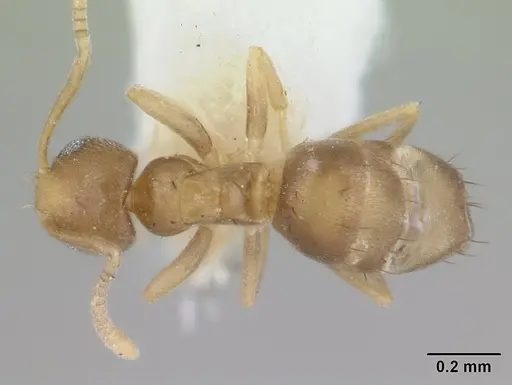
Literature
Loading distribution map...Loading products...