
Paraparatrechina brunnella
- Sci. Name
- Paraparatrechina brunnella
- Tribe
- Lasiini
- Subfamily
- Formicinae
- Author
- LaPolla & Cheng, 2010
- Distribution
- Found in 2 countries
Introduction
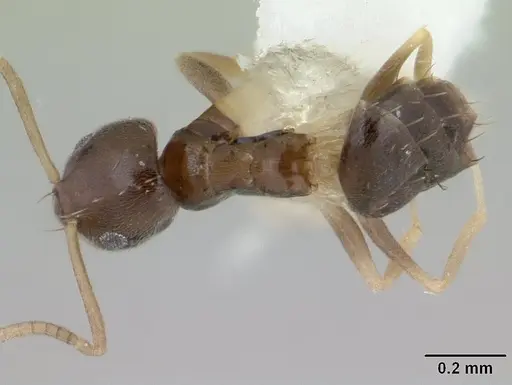
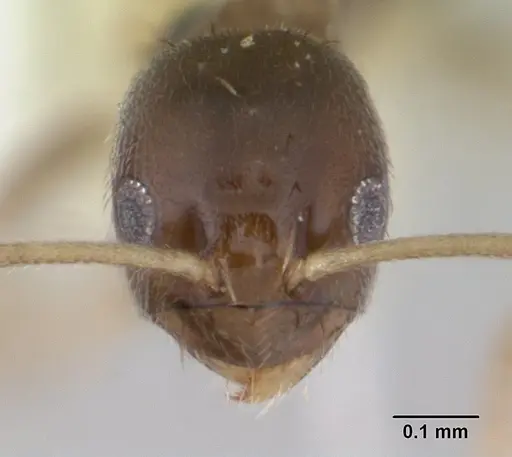
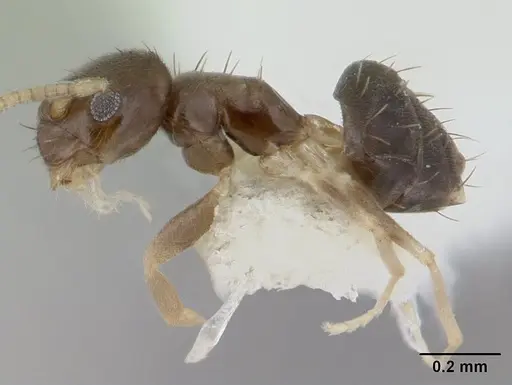
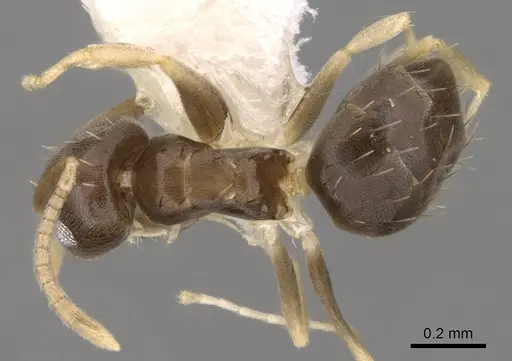
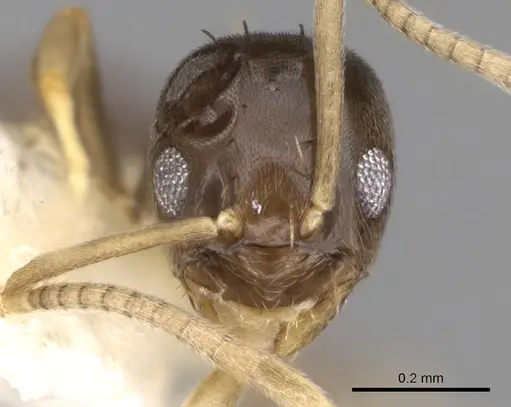
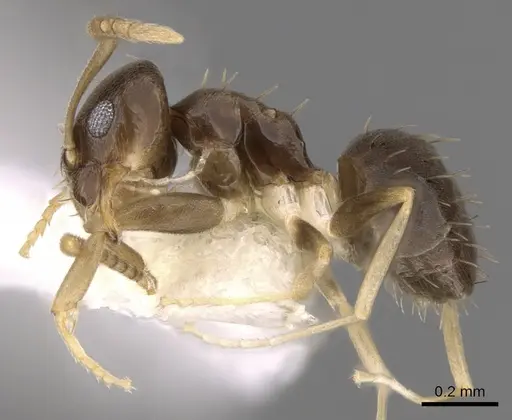
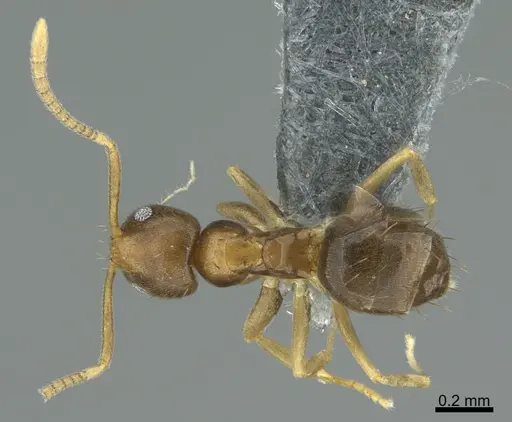
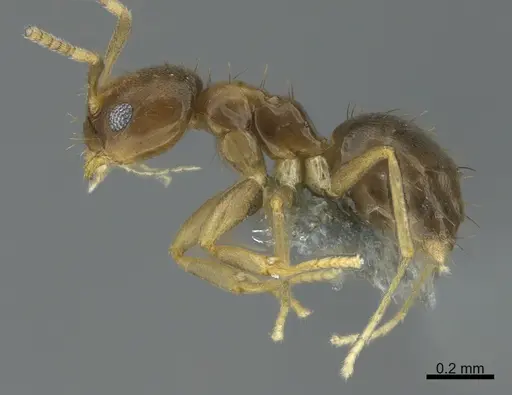
Paraparatrechina brunnella is a tiny rainforest ant measuring just 1.2-1.6 mm in total length . Workers have a brown head, mesosoma, and gaster, contrasting with yellowish-brown antennae and mandibles . A fine golden pubescence covers their body, giving a slightly fuzzy appearance . This species was described in 2010 and is known only from the worker caste - queens and males have not been described . The name 'brunnella' means 'brown and small' in Latin, reflecting their color and size . These ants are found in Central and East Africa, including Cameroon, Gabon, Ghana, Kenya, Rwanda, and Uganda, in rainforest and moist evergreen forests . They nest in leaf-litter or rotting wood and are generalistic feeders that form relationships with honeydew-producing insects . This species is suited for advanced antkeepers interested in rarely kept African rainforest ants.
Quick Summary
- Difficulty: Expert
- Origin & Habitat: Afrotropical region (Cameroon, Gabon, Ghana, Kenya, Rwanda, Uganda) in rainforest and moist evergreen forest [1][3]
- Colony Type: Colony structure unconfirmed, only worker caste has been described, queens and males are unknown [2]
- Size & Growth:
- Antkeeping:
- Temperature: Keep warm, roughly 24-28°C, based on tropical rainforest habitat [1][3]
- Humidity: Keep nest substrate consistently moist but not waterlogged, mimicking rainforest floor conditions [3]
- Diapause: Unknown
- Nesting: Provide moist leaf-litter material, rotting wood fragments, or a humid plaster nest. They naturally nest in decomposing wood and forest floor debris [3]
- Behavior: These ants are tiny and fast-moving. They are generalistic feeders that exploit honeydew and small prey [3]. Their small size makes them excellent escape artists, use fine mesh barriers. As Formicinae, they likely use formic acid for defense. Activity level is high as they forage in leaf-litter.
- Common Issues: tiny size means escapes are likely without fine mesh barriers, only worker caste known, finding a queen for captive breeding may be impossible, no captive husbandry information exists, all care is experimental, high humidity needs make mold control challenging, tropical species may not tolerate temperature drops
Appearance and Identification
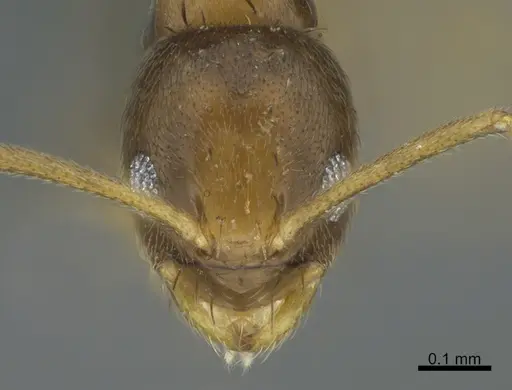
Paraparatrechina brunnella is one of the smallest ants you can keep, workers measure just 1.2-1.6 mm in total length [1]. Their head, mesosoma, and gaster are brown, while antennae and mandibles are yellowish-brown [1]. A covering of fine golden pubescence gives a slightly fuzzy appearance, especially on the head [1]. The scapes extend past the back of the head by about the length of the first funicular segment [2]. The propodeum is low with a short angular top and long sloped face [1]. These ants are distinguished from similar P. albipes by shorter scapes and denser pubescence [2].
Natural History and Habitat
This species is found in Central and East Africa, with records from Cameroon, Gabon, Ghana, Kenya, Rwanda, and Uganda [1]. They inhabit rainforest and moist evergreen forests, nesting in leaf-litter or rotting wood [3]. As generalistic feeders, they consume honeydew from hemipterans and small arthropods [3]. They often form trophobiotic relationships with honeydew-producing insects [3]. Only the worker caste is known, queens, males, or dealate queens have not been described [2].
Housing and Nesting
Provide a humid setup that mimics the damp rainforest floor [3]. Use a plaster nest with a water reservoir or naturalistic setups with damp leaf-litter and small wood fragments. Chambers should be small to fit their tiny size. Keep the nest substrate consistently moist but not waterlogged. Always use excellent escape prevention, these tiny ants can squeeze through small gaps. Use tight-fitting lids, fine mesh (0.5mm or smaller), and barrier coatings like fluon on container rims. A small outworld connected to the nest allows feeding while maintaining humidity.
Feeding and Diet
Paraparatrechina brunnella is a generalistic feeder [3]. Offer small protein sources like fruit flies, pinhead crickets, or tiny arthropods. They accept sugar water or honey as a substitute for honeydew [3]. Prey items must be appropriately sized due to their tiny size. Feed small prey 2-3 times per week and keep a constant sugar source available. Remove uneaten prey after 24-48 hours to prevent mold.
Temperature and Humidity
As tropical rainforest ants, they require warm and humid conditions. Maintain temperatures around 24-28°C, avoiding drops below 22°C [1][3]. Humidity should be high, keep the nest substrate moist but not waterlogged, mimicking rainforest floor conditions [3]. Use a water reservoir in plaster nests to maintain humidity. Mist occasionally, but avoid standing water. Good ventilation prevents mold while maintaining humidity.
Challenges and Considerations
This is an expert-level species because no captive husbandry information exists, all care is experimental [2]. The biggest challenge is that only the worker caste has been described [2]. Finding a queen may be impossible. Their tiny size creates significant escape prevention challenges. They require high humidity, which increases mold risk. They likely do not tolerate temperature fluctuations. This species is best for advanced antkeepers who can provide precise conditions.
Frequently Asked Questions
How big are Paraparatrechina brunnella ants?
Workers are tiny, measuring just 1.2-1.6 mm in total length [1].
What do Paraparatrechina brunnella ants eat?
They are generalistic feeders that accept sugar sources like honeydew or sugar water, and small protein prey like fruit flies [3].
What temperature do Paraparatrechina brunnella ants need?
Keep them warm, roughly 24-28°C, based on their tropical rainforest habitat [1][3].
What humidity do Paraparatrechina brunnella ants need?
Keep the nest substrate consistently moist but not waterlogged, mimicking rainforest floor conditions [3].
Are Paraparatrechina brunnella ants good for beginners?
No. This is an expert-level species because no captive husbandry information exists, only the worker caste has been described, and their tiny size creates significant escape and humidity management challenges [2].
Where is Paraparatrechina brunnella found?
They are found in Cameroon, Gabon, Ghana, Kenya, Rwanda, and Uganda in rainforest and moist evergreen forest habitats [1][3].
Can I keep multiple Paraparatrechina brunnella queens together?
Unknown, the queen caste has never been described, so colony structure is unconfirmed [2].
How long does it take for Paraparatrechina brunnella to develop from egg to worker?
Unknown, no development data exists for this species.
How big do Paraparatrechina brunnella colonies get?
Unknown, colony size has not been documented.
What type of nest should I use for Paraparatrechina brunnella?
Use a small, humid plaster nest with chambers scaled to their tiny size. Naturalistic setups with damp leaf-litter and rotting wood fragments also work well [3].
Why are my Paraparatrechina brunnella ants escaping?
Their extremely small size (1.2-1.6 mm) makes them excellent escape artists. Use fine mesh (0.5mm or smaller), tight-fitting lids, and barriers like fluon to prevent escapes [1].
Report an Issue
The current care sheet is based fully on literature. See inconsistencies, or something that's incorrect? Please , it will be resolved after review from an admin. Contributing to the blogs tab also helps providing information, to make us be able to further improve the caresheets. Thank you for your support!
References

This caresheet is licensed under CC BY-SA 4.0 .
Community Blogs
Literature
Loading distribution map...Loading products...