
Paraparatrechina albipes
- Sci. Name
- Paraparatrechina albipes
- Tribe
- Lasiini
- Subfamily
- Formicinae
- Author
- Emery, 1899
- Distribution
- Found in 7 countries
Introduction
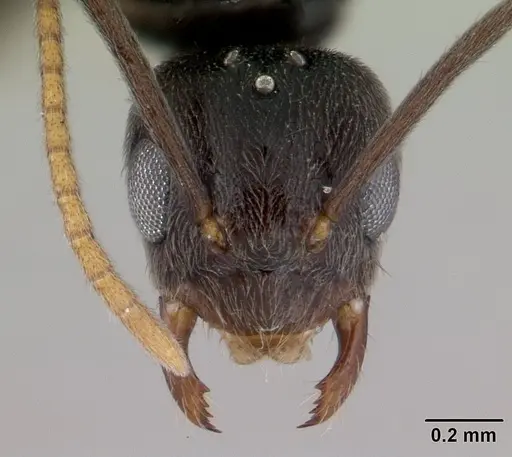
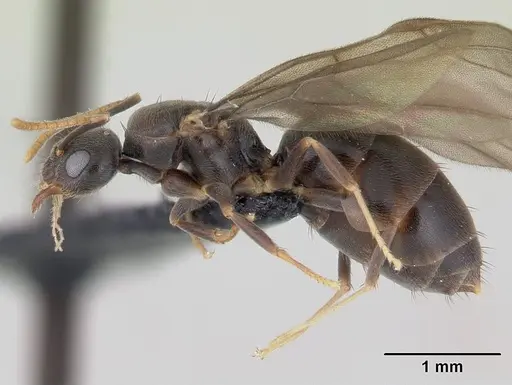
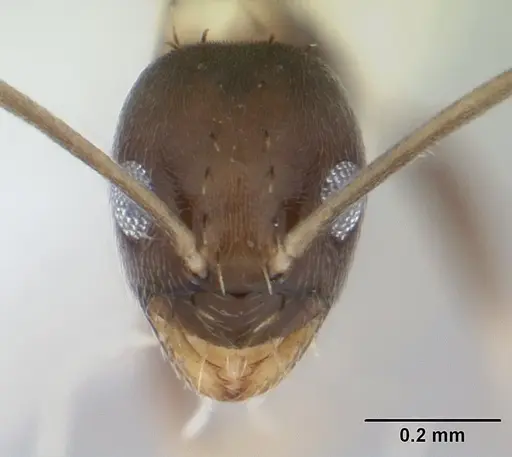
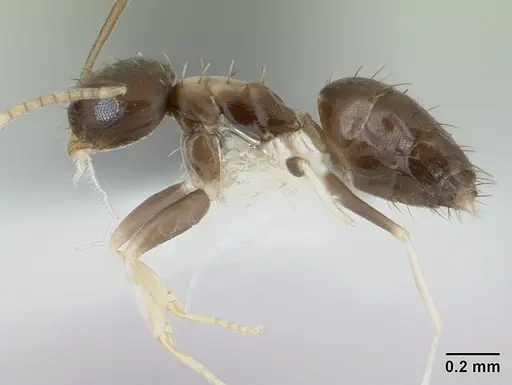
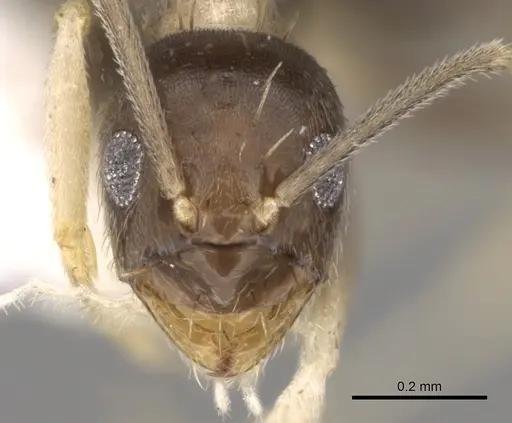
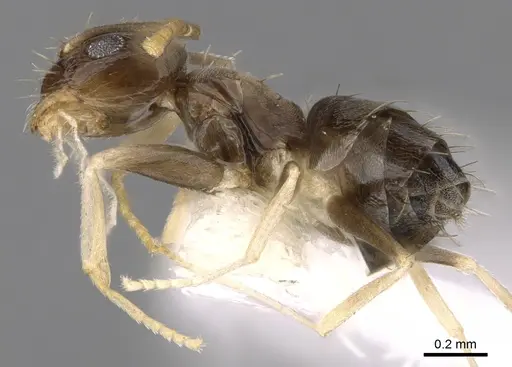
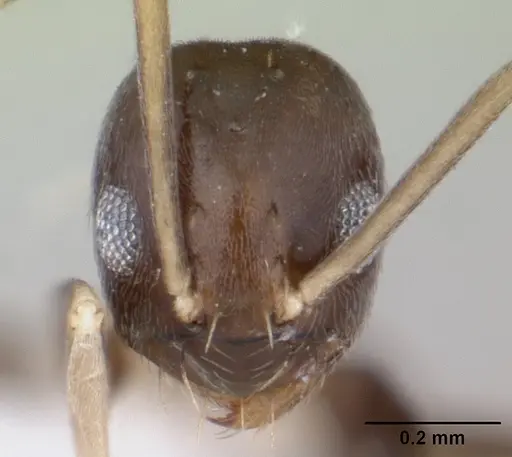
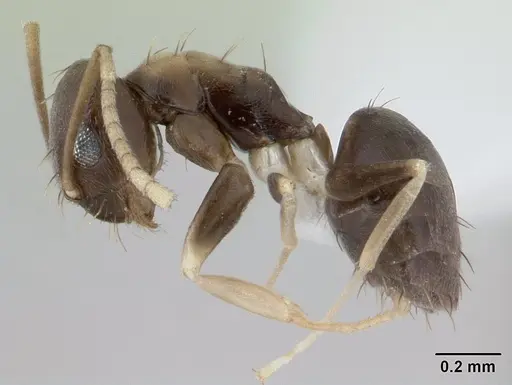
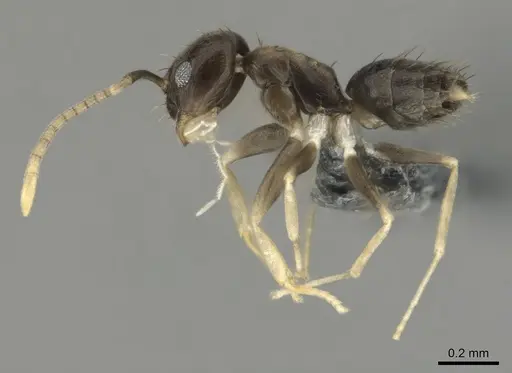
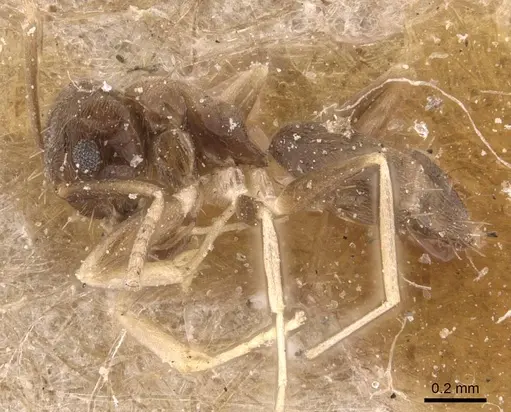
Paraparatrechina albipes is a tiny rainforest ant native to West Africa, found in Cameroon, Central African Republic, Gabon, Ghana, Nigeria, and Togo . Workers measure 1.41-1.89 mm in total length, and queens are about 4.28 mm . Their most striking feature is a white to yellowish patch on the pronotum and mesonotum that contrasts with their dark brown head and gaster, covered in white pubescence . This species is visually distinctive due to its bold coloration and tiny size, making it a unique choice for antkeepers. As a rainforest species, it thrives in warm, humid conditions, and its small size requires careful escape prevention.
Quick Summary
- Difficulty: Medium
- Origin & Habitat: West African rainforests, including Cameroon, Central African Republic, Gabon, Ghana, Nigeria, and Togo [1][2]. They also inhabit timber plantations in Ghana [3].
- Colony Type: Colony structure is unconfirmed. No published data on whether they are single-queen (monogyne) or multi-queen (polygyne) colonies.
- Size & Growth:
- Queen: 4.28 mm [1][2]
- Worker: 1.41-1.89 mm [1][2]
- Colony: Unknown, no published data on colony size.
- Growth: Unknown, growth rate has not been documented.
- Development: Unknown, no direct data exists for this species. Based on related Formicinae ants, it may take 6-8 weeks at optimal temperature, but this is an estimate. (Development time is inferred from related species and may vary.)
- Antkeeping:
- Temperature: Keep warm, roughly 24-28°C, based on their rainforest habitat [3]. Use a heating cable to create a gradient, but avoid extremes below 22°C or above 32°C.
- Humidity: Keep the nest substrate consistently moist but not waterlogged, as they are adapted to humid rainforest conditions [3].
- Diapause: Unknown, no published data on overwintering. As a tropical species, they likely do not require diapause.
- Nesting: In the wild, they likely nest in rotting wood, leaf litter, or soil [3]. In captivity, use small test tubes for founding colonies, and for established colonies, use Y-tong, plaster, or 3D-printed nests with tight chambers scaled to their tiny size.
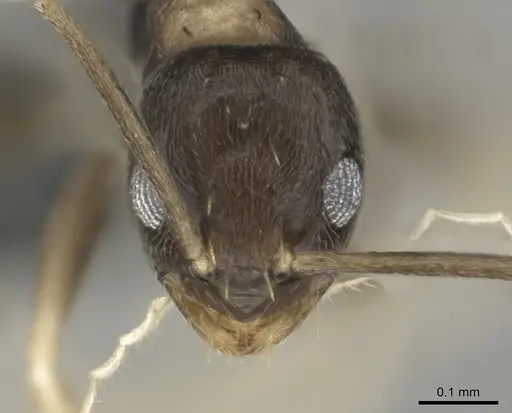
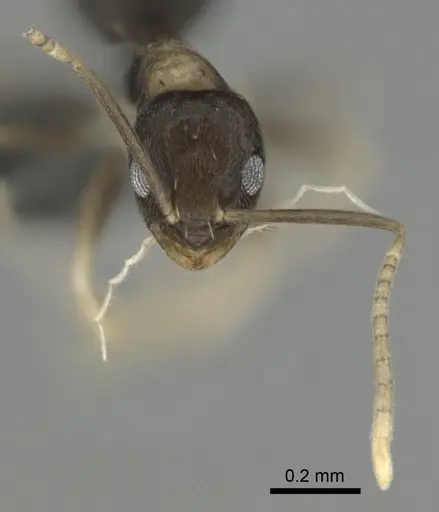
- Behavior: These ants are small and generally non-aggressive. Their large eyes suggest they may forage at night or in low light. Escape prevention is critical due to their tiny size, they can slip through gaps as small as 0.5 mm. They do not sting and are harmless to keepers.
- Common Issues: escape prevention is critical, their tiny size means they can squeeze through very small gaps., high humidity must be maintained to prevent desiccation., slow growth can be frustrating, be patient with founding colonies., wild-caught colonies may carry parasites that are hard to treat., test tube setups must have appropriately sized water reservoirs to avoid drowning or drying out.
Housing and Setup
Because of their extremely small size, Paraparatrechina albipes requires careful housing. For founding colonies, use a standard test tube setup with a cotton barrier and a small water reservoir. For established colonies, use small Y-tong, plaster, or 3D-printed nests with narrow passages. Escape prevention is essential: use fine mesh (0.5 mm or finer), seal all gaps, and apply barrier compounds like Fluon. Place the nest in a quiet, dark area to minimize disturbance [1][2].
Temperature and Humidity
As a rainforest species, keep temperatures warm around 24-28°C with a slight gradient using a heating cable [3]. Humidity should be high, keep the nest substrate moist but not waterlogged [3]. Check water levels regularly in test tube setups and mist the outworld occasionally to maintain humidity.
Feeding and Diet
Offer sugar water or honey water constantly. For protein, provide small prey like fruit flies, pinhead crickets, or tiny mealworms 2-3 times per week [3]. Remove uneaten prey after 24 hours to avoid mold.
Growth and Development
Development timeline is unknown. Based on related Formicinae ants, egg-to-worker development may take 6-8 weeks at optimal temperature, but this is an estimate [1][2]. Founding colonies may appear slow-growing, patience is key. Once workers emerge, growth may accelerate.
Behavior and Temperament
Workers are docile and non-aggressive. Their large eyes suggest nocturnal foraging. They use chemical trails to find food and likely establish multiple chambers in the nest for brood, food, and waste [1][2]. Escape risk is high due to their size.
Colony Maintenance
Maintain humidity by checking water levels and misting as needed. Inspect escape barriers weekly. Feed based on consumption, not a strict schedule. Avoid disturbing the nest unnecessarily. Monitor for mold and improve ventilation if needed.
Frequently Asked Questions
How long does it take for Paraparatrechina albipes to produce first workers?
No direct data exists. Based on related species, it may take 6-8 weeks at optimal temperature, but this is an estimate [1][2]. Founding colonies often appear slow-growing.
What do Paraparatrechina albipes eat?
They accept sugar sources like honey water and small protein prey such as fruit flies or pinhead crickets [3].
Are Paraparatrechina albipes dangerous?
No, they are harmless and do not sting. Their tiny size means they cannot penetrate human skin.
What temperature do Paraparatrechina albipes need?
Keep them warm around 24-28°C, based on their rainforest habitat [3].
How big do Paraparatrechina albipes colonies get?
Colony size is unknown, no published data exists.
Can I keep multiple queens together?
Colony structure is unconfirmed. It is not recommended to combine unrelated queens, as this has not been studied.
Why are my Paraparatrechina albipes escaping?
Their tiny size (1.41-1.9 mm) allows them to slip through small gaps. Use fine mesh (0.5 mm or finer) and seal all connections [1][2].
Do Paraparatrechina albipes need hibernation?
Hibernation requirements are unknown. As a tropical species, they likely do not require diapause.
What makes Paraparatrechina albipes special?
Their white dorsal patch contrasts with their dark body, making them visually striking under magnification [1][2]. They are also among the smallest ants kept in captivity.
Are Paraparatrechina albipes good for beginners?
They are rated medium difficulty due to escape prevention and humidity needs. Experienced keepers may have more success.
Report an Issue
The current care sheet is based fully on literature. See inconsistencies, or something that's incorrect? Please , it will be resolved after review from an admin. Contributing to the blogs tab also helps providing information, to make us be able to further improve the caresheets. Thank you for your support!
References

This caresheet is licensed under CC BY-SA 4.0 .
Community Blogs
CASENT0088326
View on AntWeb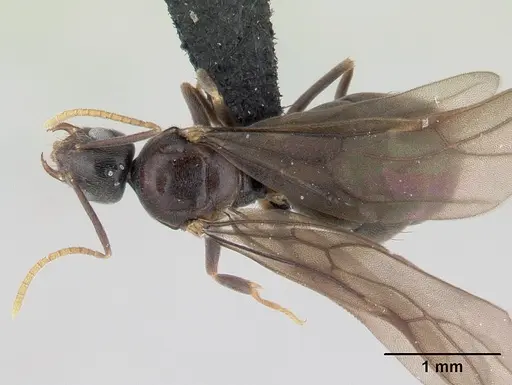
CASENT0178759
View on AntWeb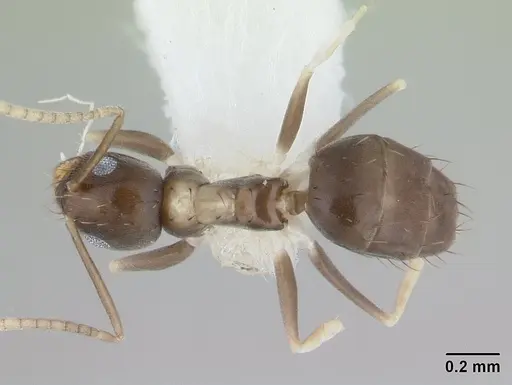
CASENT0281152
View on AntWeb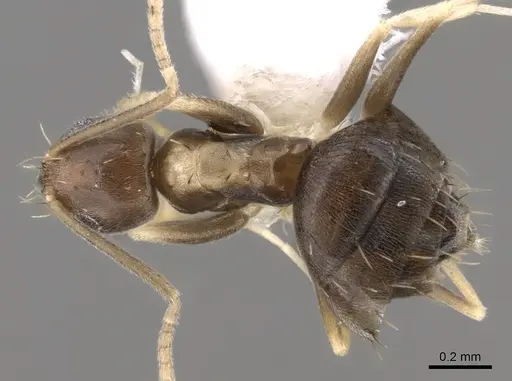
CASENT0400632
View on AntWeb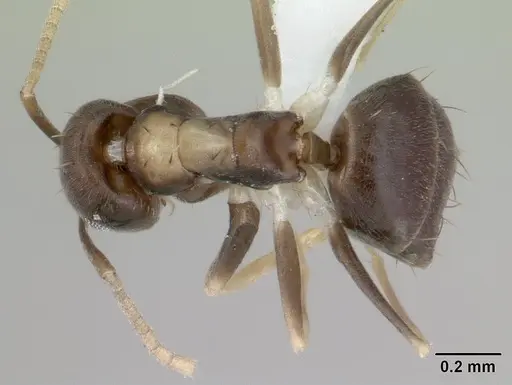
CASENT0815684
View on AntWeb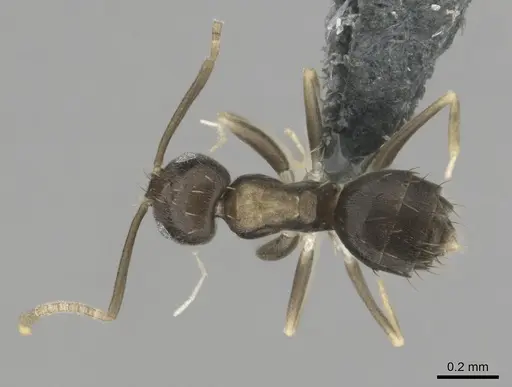
CASENT0905663
View on AntWeb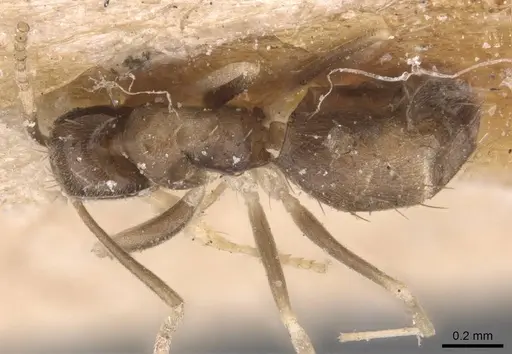
Literature
Loading distribution map...Loading products...