Pachycondyla crassinoda shows a February to December activity window. Peak activity occurs in October, with queen sightings distributed across 4 months.
Pachycondyla crassinoda
- Sci. Name
- Pachycondyla crassinoda
- Tribe
- Ponerini
- Subfamily
- Ponerinae
- Author
- Latreille, 1802
- Distribution
- Found in 8 countries
- Queen Activity
- From February to December
- Peak Time
- 13:00
AI Identifiable
try →
Introduction
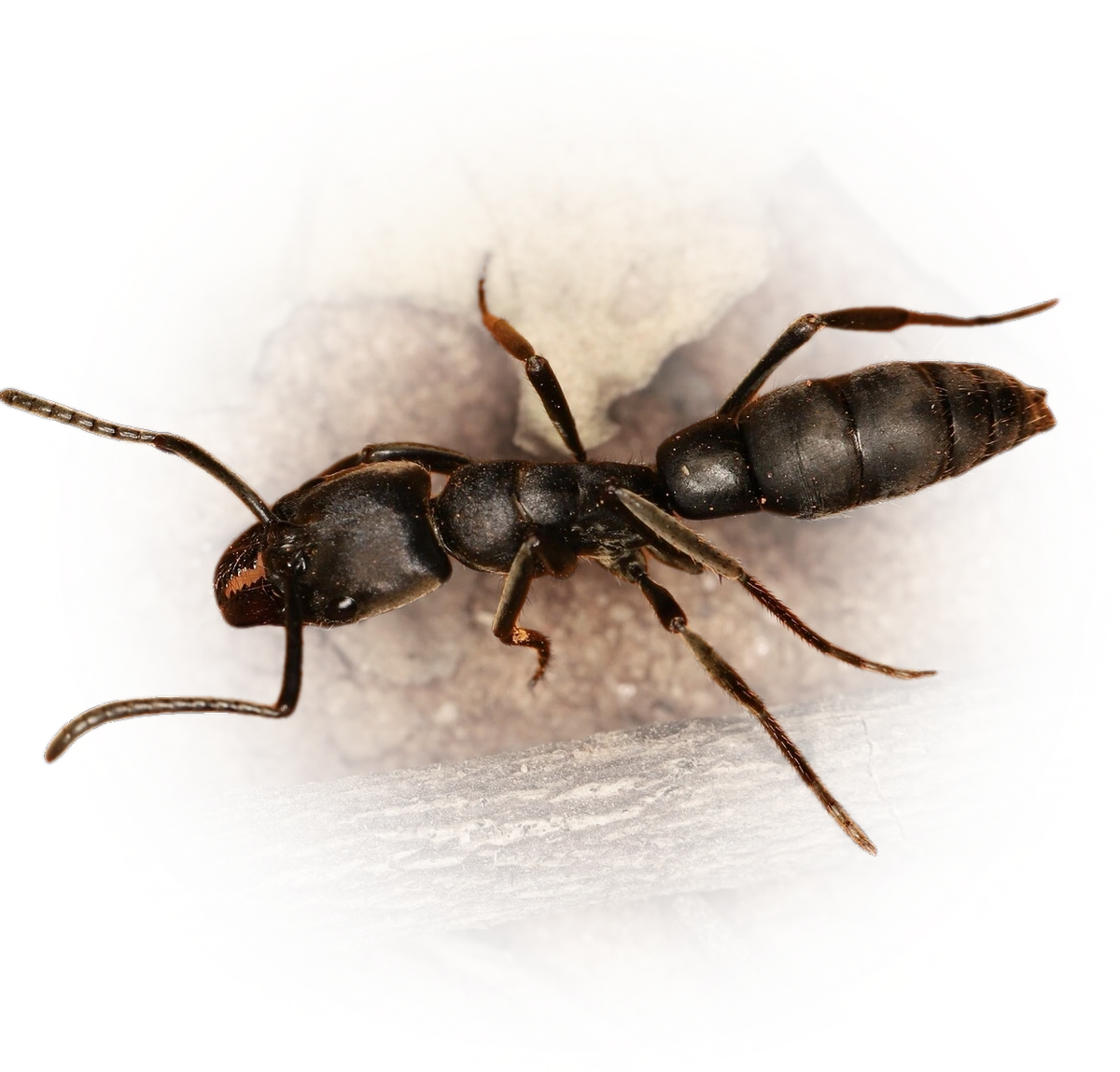
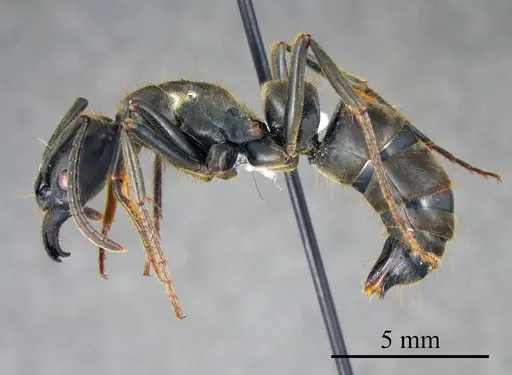
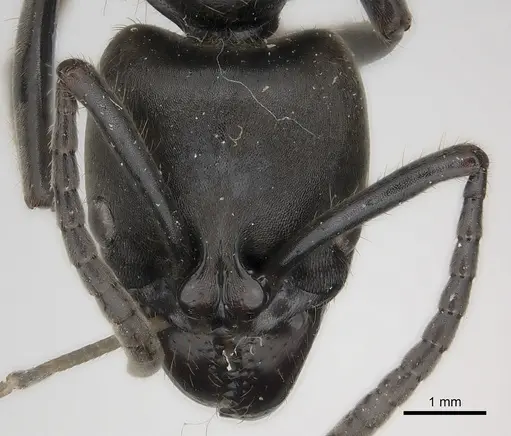
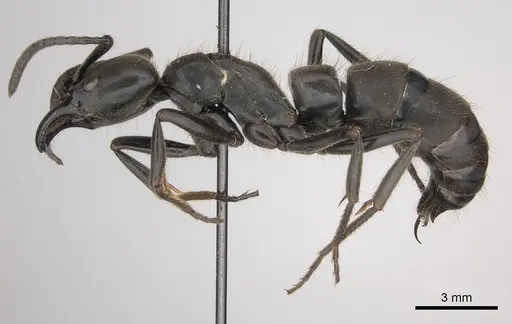
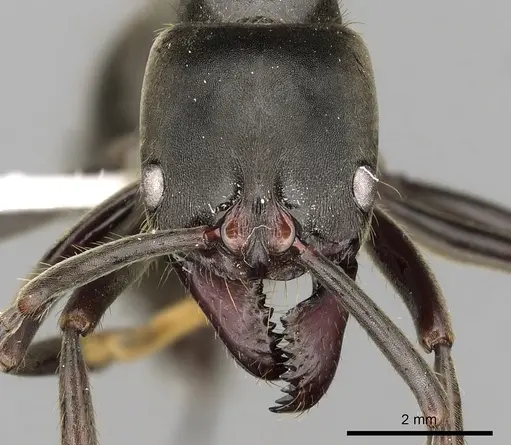
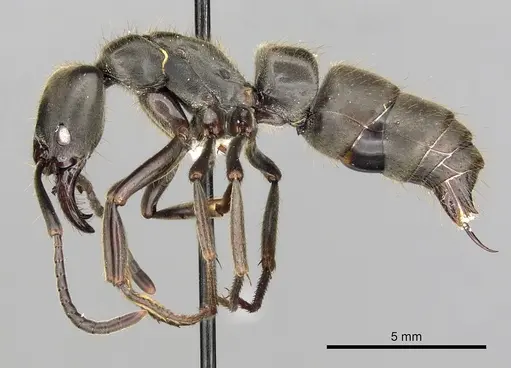
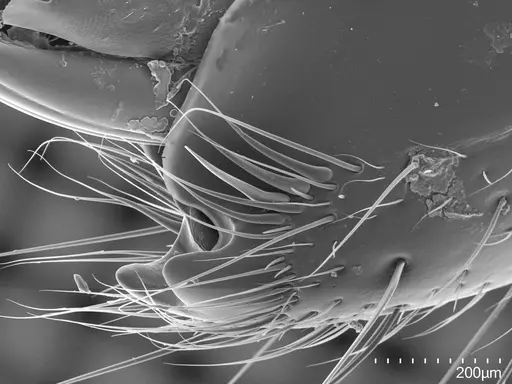
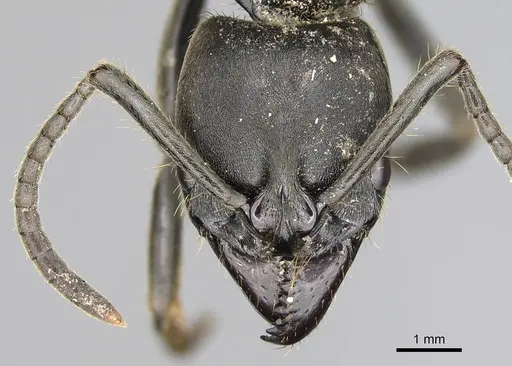
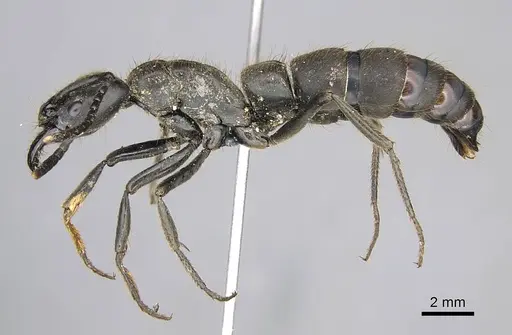
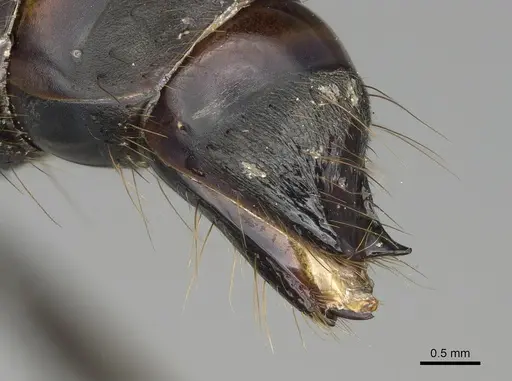
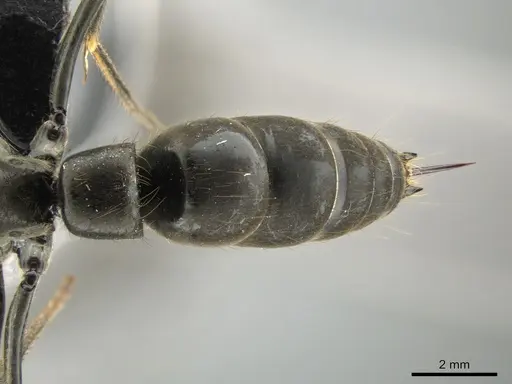
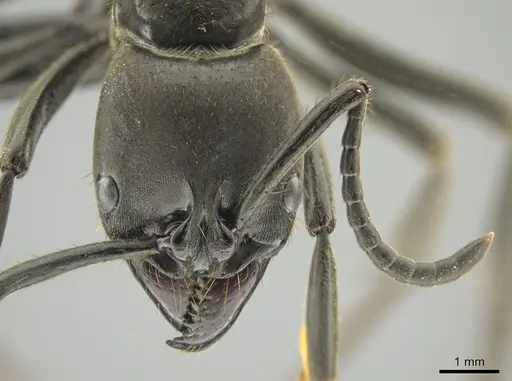
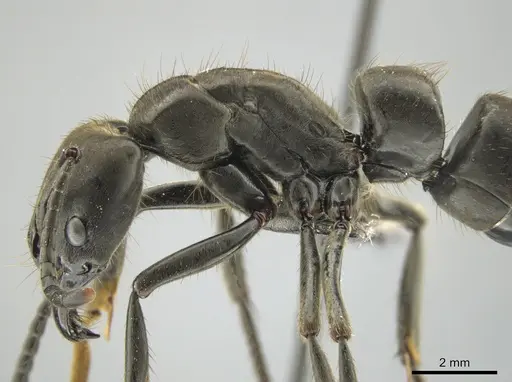
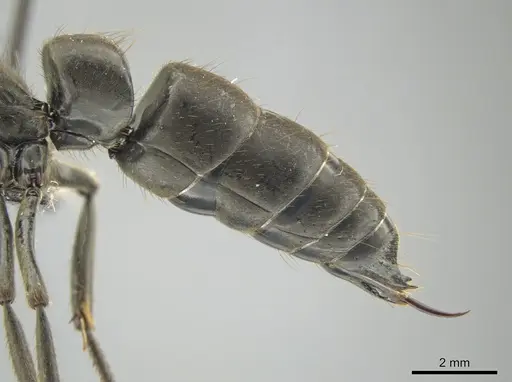
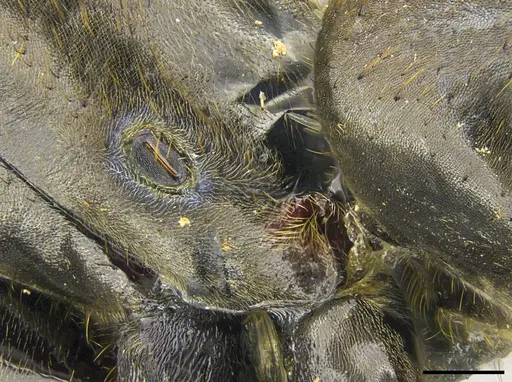
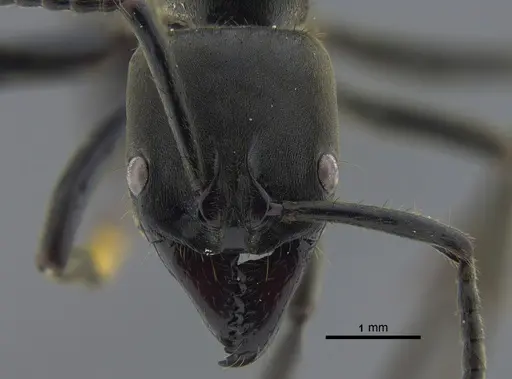
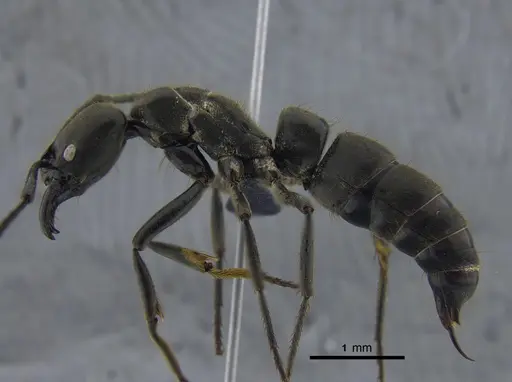
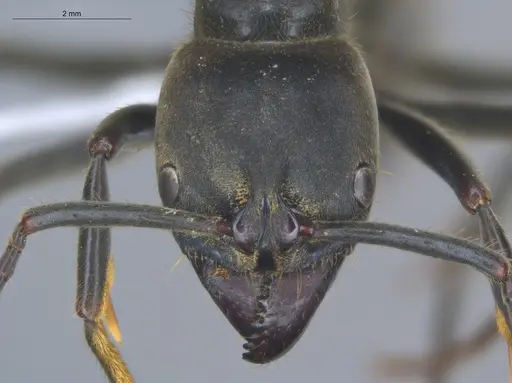
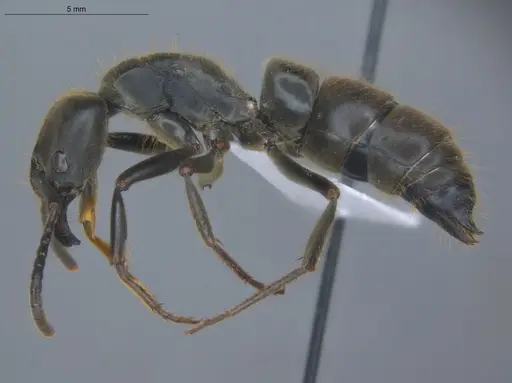
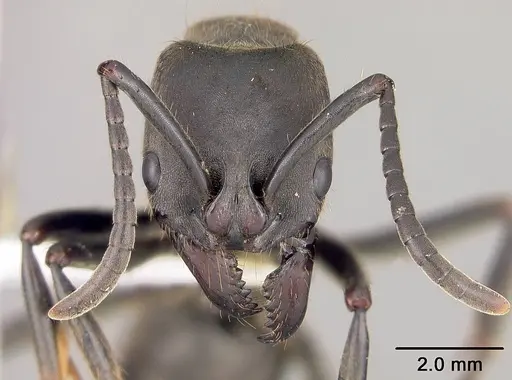
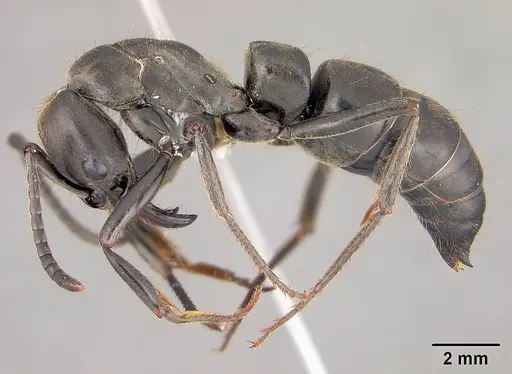
Pachycondyla crassinoda is the largest Pachycondyla species in the New World, with workers reaching nearly 20 mm in total length and queens up to 23 mm . These are chunky, nearly completely black ants with a distinctive feature: two stout, upturned triangular teeth on the pygidium that frame the sting . The petiolar node is unusually large and nearly cuboid, giving them a robust appearance. They are found across northern South America, from French Guiana through Brazil to Paraguay, most commonly in Amazon Forest, Caatinga, and northern Atlantic Forest regions . What makes P. crassinoda stand out is their social structure - they are polygynous (multiple queens in one colony) and use tandem-running recruitment to food sources . They are specialized termite predators but will also scavenge and accept other small arthropods. Their colonies can be quite large with simple nest structures underground, and they adapt well to both forested and open areas including pastures and human-modified landscapes .
Quick Summary
- Difficulty: Medium
- Origin & Habitat: Northern South America (French Guiana to Paraguay). Found in tropical rain forest, seasonal rain forest, secondary forest, gallery forest, often at forest edges and gap areas. Most common in Amazon Forest, Caatinga, northern Cerrado, and northern Atlantic Forest at elevations between 200-750 meters [3][4].
- Colony Type: Polygynous (multiple queens per colony). Simple nest structure in soil between tree roots or under fallen trunks, with main chamber at 5-10 cm depth and single tunnel opening [5]. Ergatoid (wingless) females occur in this species [1].
- Size & Growth:
- Antkeeping:
- Temperature: Keep at 24-28°C. Based on tropical habitat, provide a temperature gradient for self-regulation [4].
- Humidity: Moderate to high humidity. Keep nest substrate consistently moist but not waterlogged, as they adjust foraging to higher humidity periods [7][1].
- Diapause: No, as a tropical species, they do not require hibernation. Activity may reduce slightly during cooler periods [4].
- Nesting: Y-tong (AAC) or plaster nests work well. Provide a nest chamber with damp substrate at 5-10 cm depth, as they naturally nest in soil under rotting logs [5]. Outworld should be escape-proof and spacious.
- Behavior: These ants are aggressive defenders with a potent sting rated 2 on the Schmidt pain scale (venom LD50: 2.8 mg/kg) [8]. They show clear aggressive responses to disturbance [9]. Foragers are recruited by tandem running, one worker leads another to food sources [5]. They are primarily nocturnal and diurnal, becoming more active when the ground is drier [1]. Escape risk is moderate due to their large size, but they are strong and determined. They adapt to human-modified environments and forage in pastures [4].
- Common Issues: colonies can be slow to establish, the 90-day development means beginners may lose patience, queenright colonies are polygynous, multiple queens are normal, do not remove them, their potent sting means handling requires care, use caution when servicing the nest, they are specialized termite predators, may reject unsuitable prey items, pupae can be parasitized by wasps, wild-caught colonies may have parasites
Queen Ant Activity Analysis 63 observations
Queen Activity by Hour 63 observations
Pachycondyla crassinoda queen activity peaks around 13:00 during the late morning to early afternoon. Activity is spread across a 16-hour window (07:00–22:00). A secondary activity peak occurs around 16:00. Times may be influenced by human observation patterns.
Housing and Nest Setup
Pachycondyla crassinoda needs a spacious setup due to their large size. A Y-tong (AAC) nest or plaster formicarium works well, these provide chambers that can hold moisture while giving workers room to move. The nest should have a water reservoir or be connected to a hydration setup to maintain substrate moisture. Because they naturally nest in soil at 5-10 cm depth, include a layer of damp soil or substrate in the nest chamber [5]. The outworld should be large enough for their foraging activities and escape-proof, while not as prone to escaping as tiny ants, their strong mandibles can still find weaknesses in setup seals. Provide a shallow water dish and ensure the outworld has some vertical space for them to explore.
Feeding and Diet
In the wild, P. crassinoda is a specialized predator on termites, particularly the genera Cornitermes, Labiotermes, and Syntermes [10]. They prefer live or freshly killed arthropods smaller than their own size and will sometimes take vegetable matter [1]. In captivity, offer a variety of protein sources: live or frozen crickets, mealworms, roaches, and other appropriately-sized insects. Since they are specialized predators, live prey is ideal, they may reject dead prey initially. They also accept sugar sources like honey or sugar water, though protein should form the bulk of their diet. Feed them 2-3 times per week, removing uneaten prey after 24 hours. Their large size means they can take down prey that would be too big for smaller ant species.
Temperature and Seasonal Care
As a tropical species from northern South America, P. crassinoda requires warm conditions. Keep the nest at 24-28°C with a slight gradient if possible, this allows workers to move between temperatures as needed. Room temperature in most homes (around 22-24°C) is acceptable, but you may need a heating cable or mat in cooler environments. They do not require hibernation or diapause, these ants are active year-round. However, they do adjust their foraging behavior based on conditions: in the wild they are more active when ground is drier and will shift their foraging to cooler parts of the day when temperatures are lower and humidity higher [7][1]. Monitor your colony's activity levels and adjust temperature accordingly.
Behavior and Colony Dynamics
P. crassinoda has fascinating social behavior. Their colonies are polygynous, meaning multiple queens live together in the same nest, this is unusual among ants and you should not remove extra queens [5]. Queens actively participate in brood care, performing behaviors like carrying and licking eggs [5]. Workers are recruited to food sources through tandem running, where one worker leads another to the food [5]. They show aggressive defensive behavior, when disturbed, they mount a vigorous response and will sting [9]. The sting pain rating is 2 on the Schmidt scale, indicating a moderately painful but not severe sting. Workers can also lay eggs in queenless colonies, which develop into males [5]. This species is also known to be preyed upon by army ants (Eciton rapax) [11].
Growth and Development
The development from egg to worker takes approximately 90 days (about 12-13 weeks), this is slower than many common ant species [6]. This means colonies grow gradually and require patience from keepers. Brood care is extensive: workers spend about 38% of their activities on brood care, including licking eggs and larvae, carrying brood, and feeding larvae through trophallaxis (mouth-to-mouth contact) [5]. Queens also participate in parental care, with about 5.4% of queen acts involving carrying eggs and 0.9% licking eggs [5]. The pupal stage lasts about one month from pupation to adult emergence [5]. Given this slow development, establishing a colony requires commitment, expect several months before you see significant colony growth.
Frequently Asked Questions
How long does it take for Pachycondyla crassinoda to produce first workers?
Development takes approximately 90 days (about 12-13 weeks) from egg to worker at optimal temperature. This is slower than many common ant species, so patience is required when establishing a colony.
What do Pachycondyla crassinoda eat?
They are specialized termite predators in the wild, targeting Cornitermes, Labiotermes, and Syntermes. In captivity, offer live or freshly killed insects (crickets, mealworms, roaches) appropriately sized for their large bodies. They may also accept sugar sources like honey water.
Can I keep multiple queens together in one colony?
Yes, P. crassinoda is naturally polygynous, meaning multiple queens live together in the same colony. This is normal for this species and you should not remove extra queens.
What temperature do Pachycondyla crassinoda need?
Keep them at 24-28°C. As tropical ants from northern South America, they prefer warm conditions. A slight temperature gradient in the nest allows workers to self-regulate.
Are Pachycondyla crassinoda good for beginners?
They are rated as medium difficulty. While their large size makes them visually impressive, the 90-day development time requires patience. Their potent sting also means they are not ideal for keepers who want to handle their ants frequently.
Do Pachycondyla crassinoda need hibernation?
No, as a tropical species, they do not require hibernation or diapause. They remain active year-round, though activity may decrease slightly during cooler periods.
What size colony do Pachycondyla crassinoda reach?
Exact colony size is not well documented, but their polygynous (multi-queen) structure supports moderate to large colonies. Workers are among the largest in the genus at nearly 20 mm.
How do Pachycondyla crassinoda recruit nestmates to food?
They use tandem running recruitment, where one worker leads another to food sources. This is an efficient recruitment method where a knowledgeable forager guides an uninitiated worker to the food location.
What is the best nest type for Pachycondyla crassinoda?
Y-tong (AAC) or plaster nests work well. Provide a nest chamber with damp substrate that can hold moisture, as they naturally nest in soil under rotting logs or tree roots at 5-10 cm depth. Ensure the outworld is spacious enough for their large workers.
When do Pachycondyla crassinoda queens forage?
Queen activity of Pachycondyla crassinoda typically occurs From February to December. Times may be influenced by human observation patterns.
What time of day are Pachycondyla crassinoda queens most active?
Queen activity of Pachycondyla crassinoda peaks around 13:00 during the late morning to early afternoon, with most activity between 07:00 and 22:00. Times may be influenced by human observation patterns.
Report an Issue
The current care sheet is based fully on literature. See inconsistencies, or something that's incorrect? Please , it will be resolved after review from an admin. Contributing to the blogs tab also helps providing information, to make us be able to further improve the caresheets. Thank you for your support!
References

This caresheet is licensed under CC BY-SA 4.0 .
Community Blogs
ANTWEB1008563
View on AntWeb
ANTWEB1041405
View on AntWeb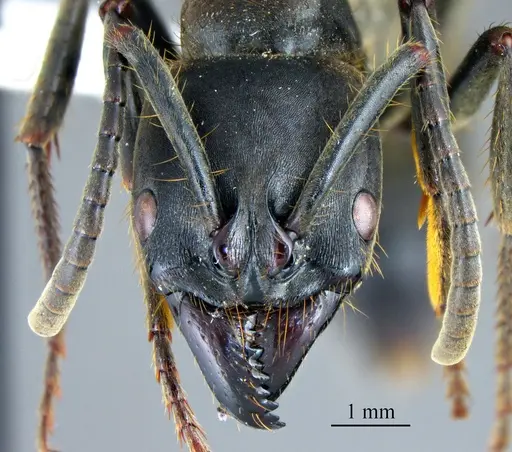
CASENT0217556
View on AntWeb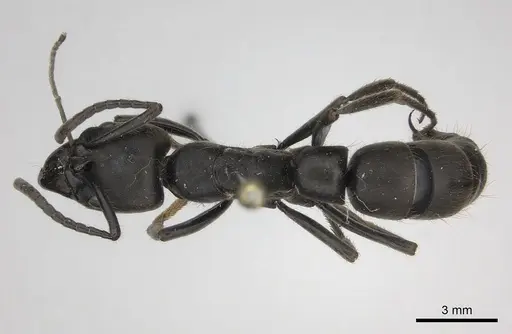
CASENT0249138
View on AntWeb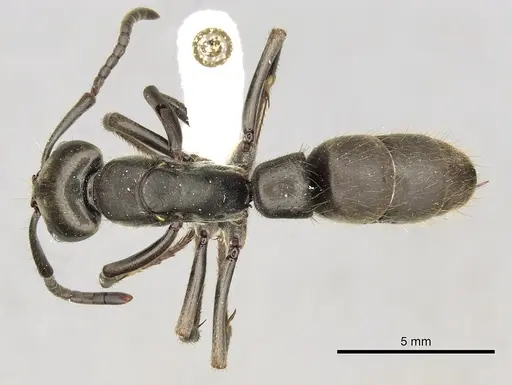
CASENT0370917
View on AntWeb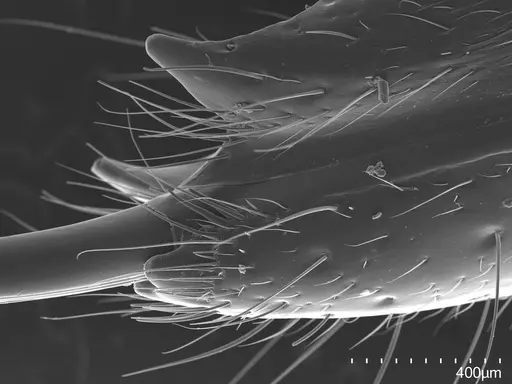
CASENT0372235
View on AntWeb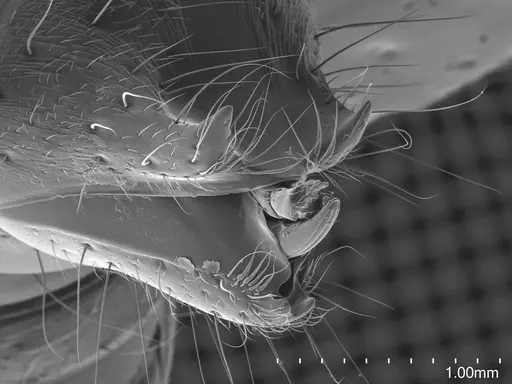
CASENT0372239
View on AntWeb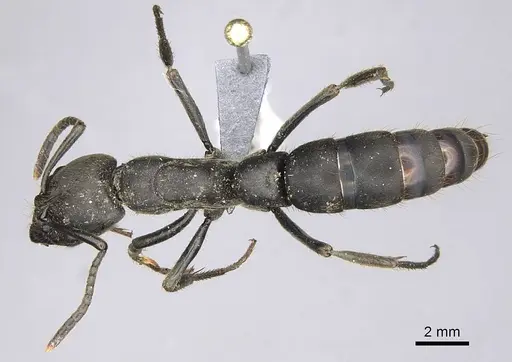
CASENT0649087
View on AntWeb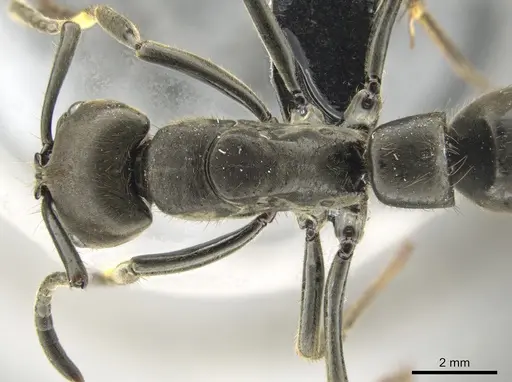
CASENT0830390
View on AntWeb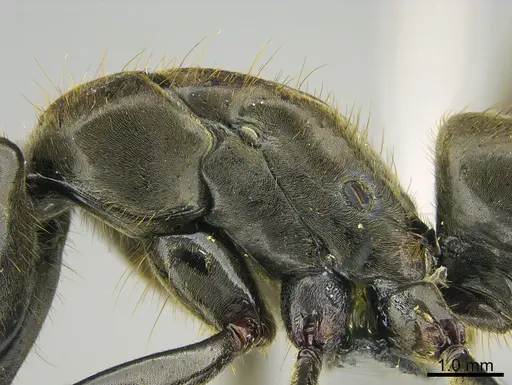
CBUMAGENT41730
View on AntWeb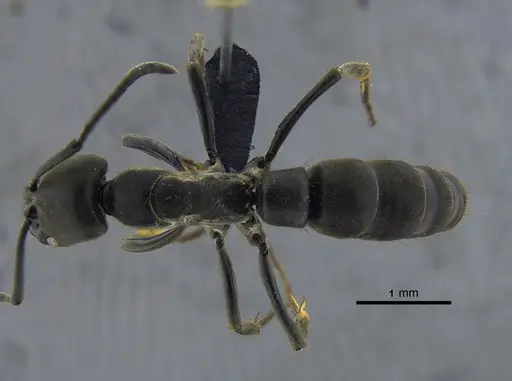
ECOFOG-SL13-0960-04
View on AntWeb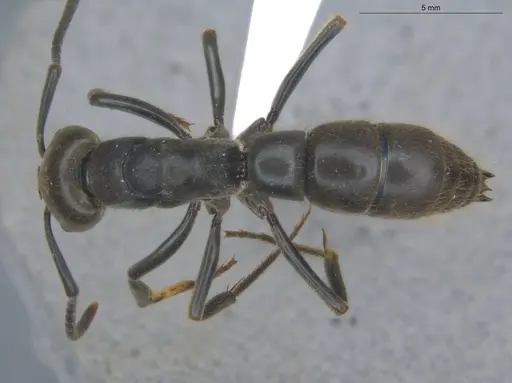
USNMENT00414071
View on AntWeb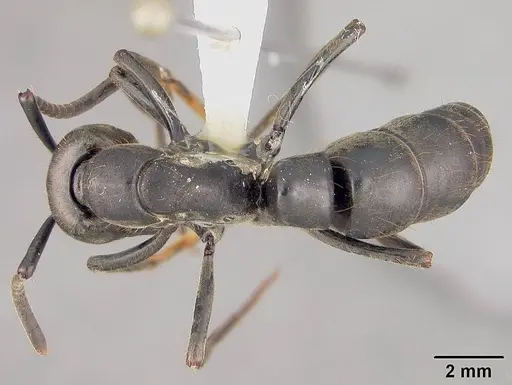
Literature
Loading distribution map...Loading products...