
Oxyopomyrmex oculatus
- Sci. Name
- Oxyopomyrmex oculatus
- Tribe
- Stenammini
- Subfamily
- Myrmicinae
- Author
- André, 1881
- Distribution
- Found in 1 countries
Introduction
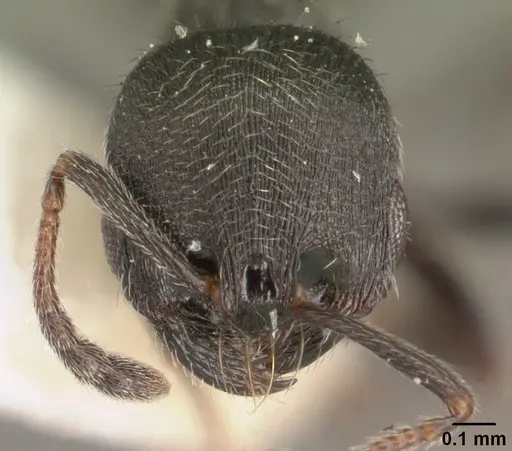
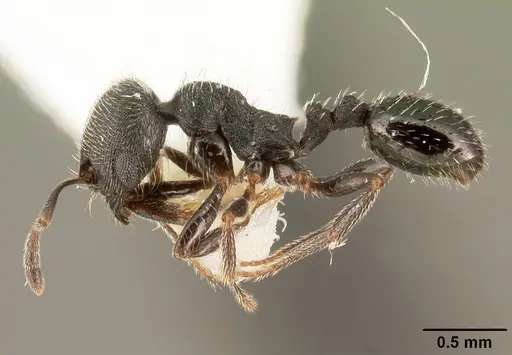
Oxyopomyrmex oculatus is a tiny ant in the Myrmicinae subfamily, belonging to the Stenammini tribe. Workers have a brown body with yellowish-brown antennae and a total length of about 0.5 mm, while queens are black to dark brown with a total length of about 0.6 mm . This species is found in Lebanon, Israel, Palestine, Syria, and Turkey, often in Mediterranean habitats . Workers are commonly found under olive tree bark or on olive trees, suggesting an association with arboreal environments .
Quick Summary
- Difficulty: Medium
- Origin & Habitat: Mediterranean region, including Lebanon, Israel, Palestine, Syria, and Turkey. Found in coastal plains, Dead Sea areas, and parts of the Negev, often around olive trees [3][1][2].
- Colony Type: Colony structure is unconfirmed. No data available on queen number or social structure in wild colonies.
- Size & Growth:
- Queen: ~0.6 mm total length [1]
- Worker: ~0.5 mm total length [1]
- Colony: Unknown, no wild colony size data available
- Growth: Unknown, no development data available for this species
- Development: Estimated 6-10 weeks based on typical Myrmicinae patterns, but unconfirmed for this species (No direct development data exists, estimate is inferred from related small Myrmicinae ants)
- Antkeeping:
- Temperature: Keep at room temperature around 20-26°C, based on Mediterranean origin [1][2]. Provide a gentle temperature gradient if possible.
- Humidity: Provide a humidity gradient, mostly dry nest chamber with one small moist area, as they are found under olive tree bark which can be dry [1][4].
- Diapause: Unknown, no specific data on overwintering requirements
- Nesting: Prefer enclosed spaces like under bark, use Y-tong, plaster, soil, or 3D-printed nests with tight chambers scaled to their tiny size [1]
- Behavior: These are very small, slow-moving ants that are not aggressive. Their tiny size means escape prevention is critical, they can squeeze through small gaps. Use fine mesh barriers and ensure all openings are sealed.
- Common Issues: tiny size makes escape likely without fine mesh barriers, no published care information exists, all advice is based on inference, colony growth rate is unknown, making development hard to track, humidity requirements are not well documented, difficulty finding established colonies for sale, rarely kept in captivity
Housing and Nest Setup
Given their tiny size and natural association with olive tree bark, these ants need carefully scaled housing. A small test tube setup works well for founding colonies, use a narrow diameter tube to prevent the queen from wandering while allowing proper humidity control. For established colonies, use Y-tong, plaster, soil, or 3D-printed nests with tight chambers suited to their tiny worker size. Avoid large, open spaces that can stress small colonies. Escape prevention is critical because they can squeeze through gaps that seem sealed. Use fine mesh on any ventilation holes and check connections regularly [1][4].
Feeding and Diet
No specific dietary studies exist for Oxyopomyrmex oculatus. Based on their small size and occurrence on olive trees, they likely are generalist foragers. Offer sugar water or honey for energy, and small protein sources like fruit flies or pinhead crickets. They may collect honeydew from aphids, you could offer diluted honey water as a substitute. Feed small amounts and remove uneaten protein after 24-48 hours to prevent mold [1].
Temperature and Seasonal Care
As a Mediterranean species, they likely tolerate a range of temperatures. Keep the nest area around 20-26°C for optimal activity. They can likely tolerate room temperature without additional heating. No specific data exists on diapause requirements. Based on their distribution, they may experience cooler winters but probably do not require true hibernation. If you reduce temperature in winter, do so gradually and reduce feeding [2][1].
Behavior and Observation
These are subtle, small ants that move slowly and are not aggressive. They form quiet colonies that are interesting to observe. Their tiny size makes them difficult to photograph but fascinating to watch. Expect modest colony growth, they likely never reach large numbers. Handle gently during transfers as their small size makes them fragile [1].
Frequently Asked Questions
How long does it take for Oxyopomyrmex oculatus to produce first workers?
The egg-to-worker timeline is unconfirmed. Based on typical small Myrmicinae development patterns, expect 6-10 weeks from egg to first worker at warm room temperature (around 24-26°C) [1].
Can I keep Oxyopomyrmex oculatus in a test tube?
Yes, a test tube setup is appropriate for this tiny species. Use a small-diameter tube to prevent the queen from wandering, and ensure proper humidity with a water reservoir. The small chamber size suits their tiny workers [1].
What do Oxyopomyrmex oculatus ants eat?
They likely accept a generalist diet similar to other small Myrmicinae. Offer sugar water or honey for energy, and small protein sources like fruit flies or tiny crickets. Their association with olive trees suggests they may collect honeydew [1].
Are Oxyopomyrmex oculatus good for beginners?
This species is not ideal for complete beginners because no captive care information exists, all advice is based on inference. Additionally, their tiny size makes them fragile and escape-prone. However, experienced antkeepers may find them rewarding [1].
How big do Oxyopomyrmex oculatus colonies get?
Colony size is unknown, no wild colony data exists for this species. Based on their tiny worker size, colonies likely remain relatively small [1].
Do Oxyopomyrmex oculatus ants sting?
Given their extremely small size, any sting would likely be imperceptible to humans. Myrmicinae ants have stingers, but these tiny ants would struggle to penetrate human skin [1].
Do Oxyopomyrmex oculatus need hibernation?
Diapause requirements are unconfirmed. As a Mediterranean species, they may tolerate cooler winter temperatures but probably do not require a true hibernation period. If you reduce temperature in winter, do so gradually and reduce feeding [2].
Why are my Oxyopomyrmex oculatus dying?
Common issues include escape through tiny gaps (use fine mesh), improper humidity (keep a gradient with one moist area), and stress from overly large enclosures. Their small size makes them vulnerable, ensure the nest setup is appropriately scaled and secure [1].
Report an Issue
The current care sheet is based fully on literature. See inconsistencies, or something that's incorrect? Please , it will be resolved after review from an admin. Contributing to the blogs tab also helps providing information, to make us be able to further improve the caresheets. Thank you for your support!
References

This caresheet is licensed under CC BY-SA 4.0 .
Community Blogs
CASENT0101775
View on AntWeb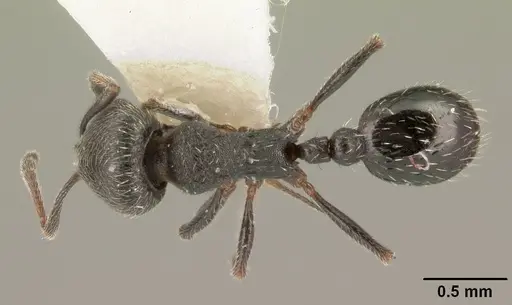
Literature
Loading distribution map...Loading products...