
Oxyopomyrmex nigripes
- Sci. Name
- Oxyopomyrmex nigripes
- Tribe
- Stenammini
- Subfamily
- Myrmicinae
- Author
- Santschi, 1907
- Distribution
- Found in 1 countries
Introduction
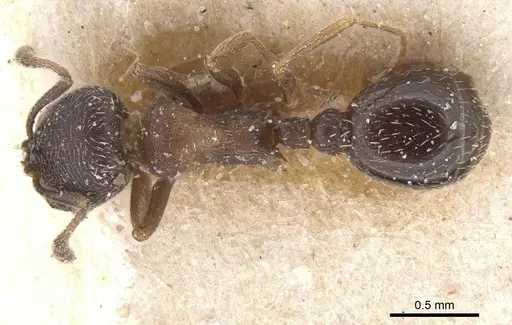
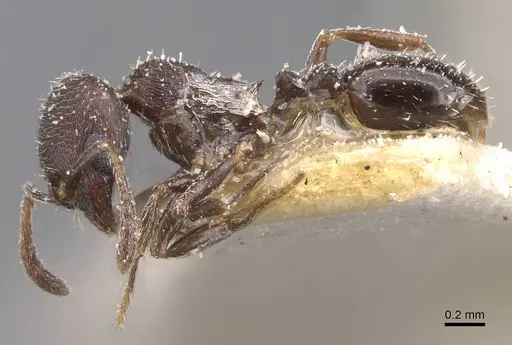
Oxyopomyrmex nigripes is a small ant native to Tunisia in North Africa. Workers are approximately 4.7 mm long and dark brown, with pale brown antennal scapes. Queens are about 7.5 mm long and uniformly dark brown. The species nests in clay soil, creating round entrances with crater-like mounds that can become cylindrical after rain . This species is notable for its restricted distribution in the Palearctic region and its unique nesting behavior in arid habitats .
Quick Summary
- Difficulty: Hard
- Origin & Habitat: Tunisia (Palaearctic region). Nests in clay soil in arid to semi-arid habitats [2][1].
- Colony Type: Unconfirmed. Colony structure has not been documented in scientific literature.
- Size & Growth:
- Antkeeping:
- Temperature: Keep at room temperature or slightly warm, around 22-28°C, based on Tunisia distribution [2][1].
- Humidity: Keep nest substrate mostly dry with a small moist area for brood, based on arid habitat [1].
- Diapause: Unknown, may require winter rest, but unconfirmed [2].
- Nesting: Use soil-based or Y-tong nests with low humidity, mimicking natural clay soil nests [1].
- Behavior: Behavior is unstudied. Based on genus patterns, likely docile with moderate escape risk due to small size, use fine barriers [3].
- Common Issues: escape prevention is important due to small size, use fine mesh barriers, no captive husbandry information exists, this is an experimental species, colony founding may be difficult as founding behavior is unconfirmed, growth rate is unknown so patience will be required, winter requirements are unclear, do not hibernate until more is known
Natural History and Distribution
Oxyopomyrmex nigripes is endemic to Tunisia in North Africa, making it one of the more restricted ant species in the hobby. It was originally described by Santschi in 1907 and later revised by Salata and Borowiec in 2015. The species nests in clay soil, creating characteristic round entrances surrounded by small crater-like mounds. These crater entrances can become cylindrical, especially after rainfall, which may help with drainage or ventilation in their underground nests [1].
Identification and Morphology
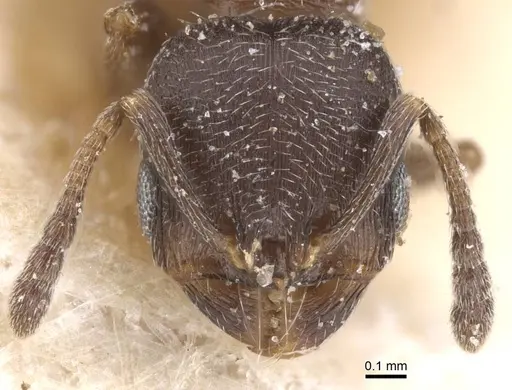
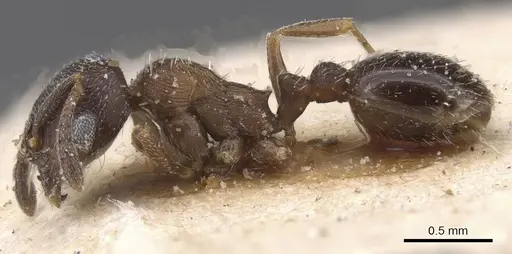
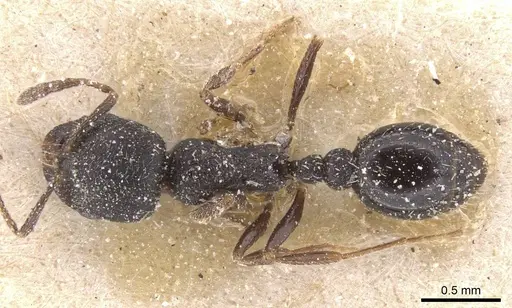
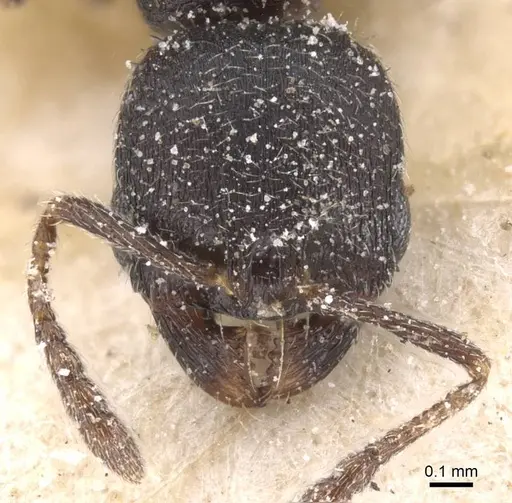
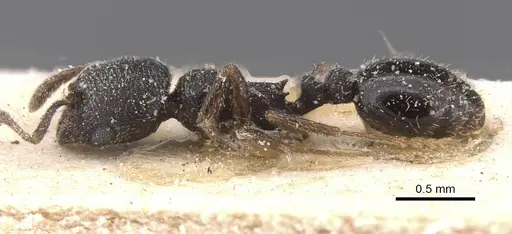
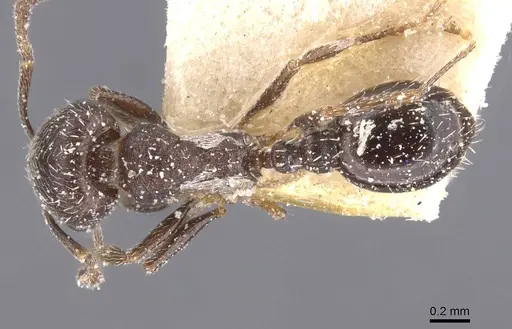
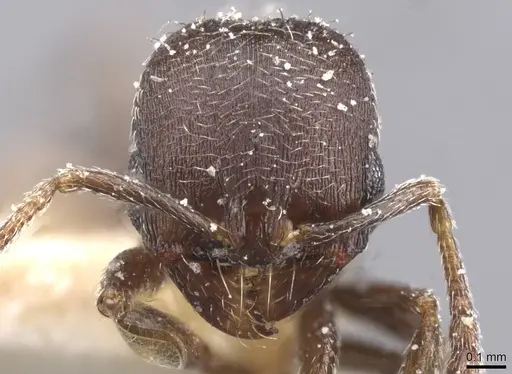
Workers are small at approximately 4.7 mm with a distinctive rectangular head that is slightly longer than wide. The eyes are unusually large and longitudinal, strongly narrowing downward and reaching the anteroventral margin of the head. The scapes are short, about 0.7 times the head width. The promesonotum is flat in profile view, which helps distinguish this species from similar Oxyopomyrmex. The propodeal spines are very short and triangular. Workers are dark brown to brown with pale brown antennal scapes and yellowish-brown funiculus tips. Queens are larger at about 7.5 mm and are uniformly dark brown throughout [1].
Housing and Nesting
In nature, O. nigripes nests in clay soil, so a naturalistic setup with compacted soil or a Y-tong/plaster nest would likely suit them well. They prefer tight chambers and narrow passages scaled to their small worker size. Based on the natural nesting in clay soil and the North African climate, they likely prefer drier conditions with low to moderate humidity. Provide a small moist area for brood development but keep most of the nest relatively dry. Escape prevention is important due to their small size, use fine mesh and tight-fitting barriers. A test tube setup can work for founding colonies but monitor for drying [1].
Feeding and Diet
The diet of Oxyopomyrmex nigripes has not been studied, but based on their placement in the Stenammini tribe, they may be granivorous. Offer a mix of seeds and protein sources. Sugar water or honey may also be accepted. Start with small amounts and observe what they take. As with all ants, remove uneaten food to prevent mold [3].
Temperature and Seasonal Care
As a species from Tunisia (approximately 35°N latitude), O. nigripes likely experiences hot summers and mild winters. They probably prefer warm conditions, aim for room temperature (22-26°C) with possible slight warming. No direct data exists on diapause requirements, but based on the temperate climate of their range, they may benefit from a cool winter period (15-18°C) for several months. However, until more is known, avoid forced hibernation. Monitor colony activity and adjust temperature based on their behavior [2].
Challenges and Experimental Status
Oxyopomyrmex nigripes is an extremely rare species in the antkeeping hobby and almost no captive husbandry information exists. This caresheet is largely experimental, much of the care advice is inferred from related Stenammini ants and the species' natural history. Be prepared to experiment and adjust based on your colony's response. Key challenges include: no confirmed colony structure, unknown founding behavior, unknown development timeline, and unclear winter requirements. This species is best suited for experienced antkeepers who enjoy the experimental process [1].
Frequently Asked Questions
How long does it take for Oxyopomyrmex nigripes to produce first workers?
The development timeline is unknown, no scientific data exists for this species. Based on typical Stenammini patterns, expect 6-12 weeks from egg to worker at optimal temperature. This is an estimate only [3].
Can I keep Oxyopomyrmex nigripes in a test tube?
Yes, test tubes work for founding colonies. Ensure the water reservoir is not too large to prevent flooding, and monitor humidity carefully as they likely prefer drier conditions. Transfer to a proper nest setup once the colony grows [1].
What do Oxyopomyrmex nigripes ants eat?
Diet is unconfirmed but likely similar to related Stenammini, granivorous with protein scavenging. Offer seeds (millet, grass seeds) and protein (small insects, mealworms). Sugar water or honey may also be accepted. Remove uneaten food promptly [3].
Do Oxyopomyrmex nigripes ants sting?
Sting capability is unknown. Most small Myrmicinae have stingers but they are typically too small to penetrate human skin. Handle with care regardless [3].
Are Oxyopomyrmex nigripes good for beginners?
No, this is an experimental species with no captive husbandry information. Almost nothing is known about their care requirements in captivity. This species is best for experienced antkeepers who can experiment with care conditions [1].
How big do Oxyopomyrmex nigripes colonies get?
Colony size is unknown, no colony size data exists in scientific literature. Based on related Stenammini, they likely form small to moderate colonies [3].
Do Oxyopomyrmex nigripes need hibernation?
Diapause requirements are unconfirmed. Based on the temperate climate of Tunisia, they may benefit from a cool winter period (15-18°C), but this has not been documented. Do not force hibernation until more is known [2].
Can I keep multiple Oxyopomyrmex nigripes queens together?
Colony structure is unconfirmed. Whether they are monogyne (single queen) or polygyne (multiple queens) is unknown. Combining unrelated queens is not recommended given the lack of information [3].
What temperature should I keep Oxyopomyrmex nigripes at?
No specific data exists. Based on Tunisia distribution, suggest 22-28°C. Room temperature is likely suitable. Observe colony activity and adjust, if they cluster near heat, increase slightly, if they avoid it, reduce [2][1].
Why are my Oxyopomyrmex nigripes dying?
Without captive data, causes of mortality are speculative. Common issues may include: incorrect humidity (likely too wet), temperature stress, starvation, or stress from captivity. Document your conditions and experiment with adjustments [3].
Report an Issue
The current care sheet is based fully on literature. See inconsistencies, or something that's incorrect? Please , it will be resolved after review from an admin. Contributing to the blogs tab also helps providing information, to make us be able to further improve the caresheets. Thank you for your support!
References

This caresheet is licensed under CC BY-SA 4.0 .
Community Blogs
Literature
Loading distribution map...Loading products...