
Oxyopomyrmex krueperi
- Sci. Name
- Oxyopomyrmex krueperi
- Tribe
- Stenammini
- Subfamily
- Myrmicinae
- Author
- Forel, 1911
- Distribution
- Found in 1 countries
Introduction
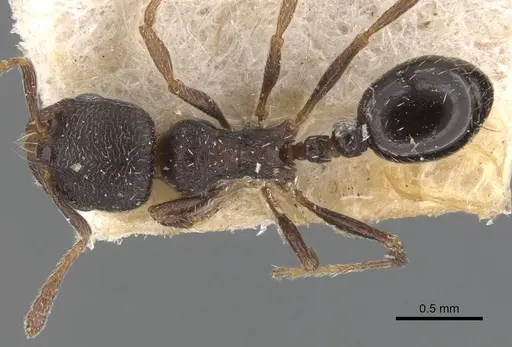
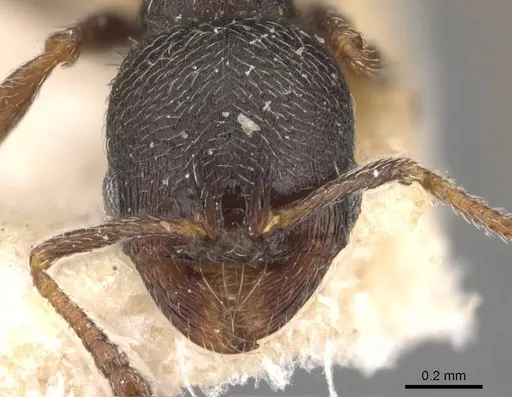
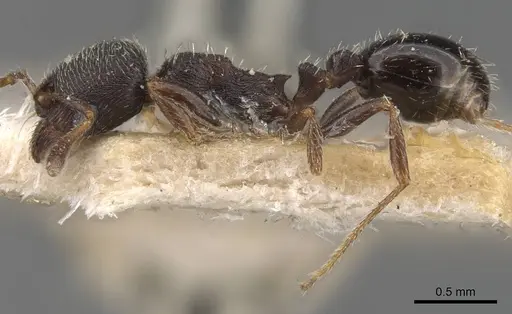
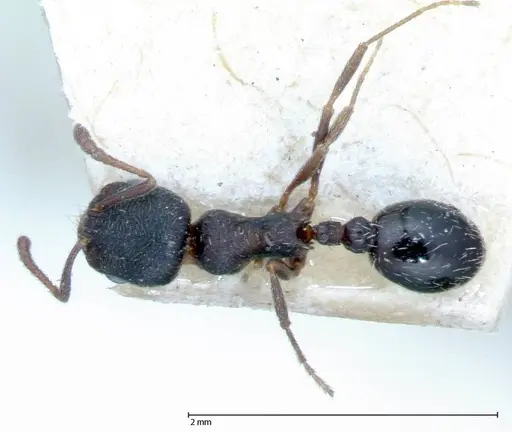
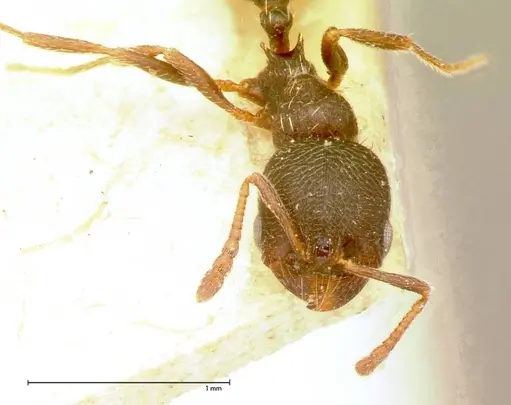
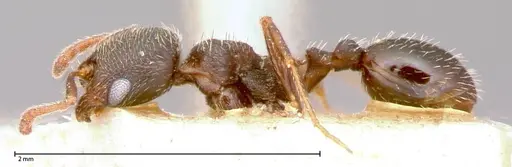
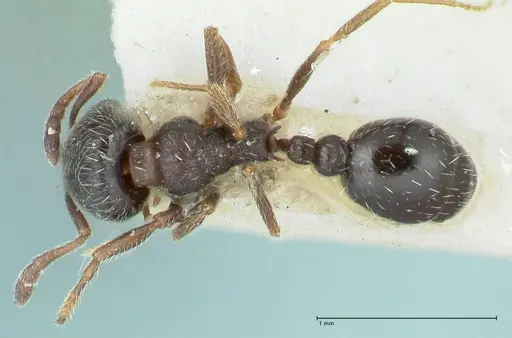
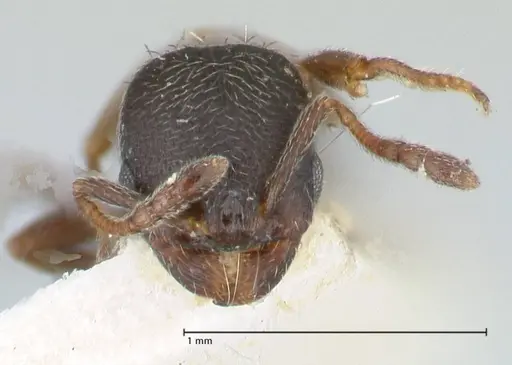
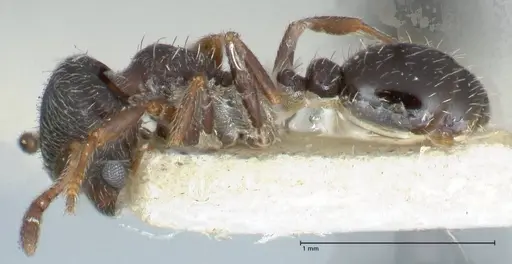
Oxyopomyrmex krueperi is a dark ant species native to arid grasslands in the northeastern Mediterranean Basin . Workers are black with reddish-brown markings on antennae and promesonotum, and have a sharply curved border between dorsal and posterior surfaces of the promesonotum . This thermophilous species inhabits sunny, dry locations in Greece, Turkey, Bulgaria, Iran, and North Macedonia, nesting under stones in sandy soil at elevations up to 578m . Colonies are monogynous, with a single queen, and are rarely found in the wild .
Quick Summary
- Difficulty: Medium
- Origin & Habitat: Northeastern Mediterranean Basin, Greece, Turkey, Bulgaria, Iran, North Macedonia. Found in arid grasslands, sunny hillsides, agricultural fields, and Mediterranean shrubland with olive trees. Nests under stones in sandy soil [1][3].
- Colony Type: Monogyne, colonies have a single queen. This is a rare species with limited documented colony data [3].
- Size & Growth:
- Queen: size data unavailable
- Worker: size data unavailable
- Colony: Unknown, no colony size data available.
- Growth: Unknown
- Development: Unconfirmed, no direct development timing studies exist for this species. (Development timeline has not been directly studied.)
- Antkeeping:
- Temperature: Keep them warm at 24-28°C with a gradient, as they are thermophilous [1].
- Humidity: Keep nesting area relatively dry with occasional moisture access, as they inhabit arid conditions [1].
- Diapause: Unknown, no specific hibernation data exists [1][2].
- Nesting: Naturally nest under stones in sandy soil [1][3]. In captivity, provide a sandy substrate with flat stones or a Y-tong nest with good drainage.
- Behavior: Workers are docile and non-aggressive, foraging individually on the ground [1]. Their tiny size requires excellent escape prevention.
- Common Issues: tiny size makes escape likely, use fine mesh barriers and tight-fitting lids, limited availability in the antkeeping hobby due to rare distribution, no established captive breeding protocols, wild colonies are the primary source, sensitive to excessive humidity which can cause fungal problems, slow colony growth may lead to keeper impatience and overfeeding
Housing and Nest Setup
Oxyopomyrmex krueperi naturally nests under stones in sandy, well-drained soil in sunny Mediterranean locations [1][3]. For captivity, create a naturalistic setup with a sandy substrate and flat stones or slate pieces [1]. Alternatively, a Y-tong or plaster nest with sand-filled chambers works well [1]. Ensure good drainage to avoid waterlogged substrates [1].
Temperature and Heating
As a thermophilous species from the Mediterranean, these ants need warmth. Maintain nest temperatures between 24-28°C [1]. A heating cable or mat on one side of the nest creates a temperature gradient that allows ants to regulate their own exposure [1].
Feeding and Diet
Based on their Mediterranean habitat, these ants likely have an omnivorous diet, collecting seeds, small insects, and honeydew [1][4]. In captivity, offer small protein sources like fruit flies or pinhead crickets, and occasional sugar water or honey [1].
Colony Establishment
This is a rare species with limited availability in the antkeeping hobby. Wild colonies are the primary source [3]. If you acquire a founding queen, provide a small test tube setup with sandy substrate and keep her in a warm, dark, quiet location [1]. Colonies are monogyne, so only one queen per colony is normal [3].
Escape Prevention
With workers under 1mm in size, escape prevention is critical. Use fine mesh on ventilation holes and seal connections with fluon [1]. Check for escapes daily, especially in the first weeks [1].
Seasonal Care
Based on their Mediterranean distribution, these ants likely experience mild winters with reduced activity but may not require true hibernation [1][2]. In captivity, a cool period of 10-15°C for 2-3 months during winter may benefit established colonies [1].
Handling and Temperament
Oxyopomyrmex krueperi is a docile, non-aggressive species. Workers are small and slow-moving, with no documented stinging behavior [1]. They are ground-nesting ants that forage on soil surfaces rather than climbing extensively [1].
Frequently Asked Questions
How long does it take for Oxyopomyrmex krueperi to develop from egg to worker?
The exact development timeline has not been directly studied for this species [1]. No reliable estimates are available from research.
What temperature do Oxyopomyrmex krueperi ants need?
As a thermophilous Mediterranean species, keep them warm at 24-28°C [1]. A heating cable on one side of the nest creates a gradient for self-regulation [1].
Are Oxyopomyrmex krueperi ants good for beginners?
This species is rated as Medium difficulty. While docile, they are rare with limited availability and require excellent escape prevention due to their tiny size [3][1].
How big do Oxyopomyrmex krueperi colonies get?
Colony size data is not available from scientific literature [1][3].
Do Oxyopomyrmex krueperi ants sting?
No documented stinging behavior exists for this species [1]. They are small, docile ants that flee when disturbed.
Can I keep multiple Oxyopomyrmex krueperi queens together?
No, colonies are monogyne, meaning they have a single queen [3]. Multiple unrelated queens should not be combined.
What do Oxyopomyrmex krueperi ants eat?
Based on their habitat, they likely eat small insects, seeds, and honeydew [1][4]. In captivity, offer small protein sources and occasional sugar water.
Do Oxyopomyrmex krueperi need hibernation?
Hibernation requirements are unconfirmed. Given their Mediterranean distribution, they may experience reduced activity in winter but true hibernation is not documented [1][2].
What is the best nest type for Oxyopomyrmex krueperi?
A naturalistic setup with sandy substrate and flat stones works best, mimicking their natural nesting under stones [1][3]. A Y-tong or plaster nest with sand-filled chambers is also suitable.
Why are my Oxyopomyrmex krueperi escaping?
With workers under 1mm in size, escapes are common without excellent prevention. Use fine mesh barriers and seal all connections with fluon [1].
Where is Oxyopomyrmex krueperi found in the wild?
This species is native to the northeastern Mediterranean, Greece, Turkey, Bulgaria, Iran, and North Macedonia [1][2][4]. They inhabit arid grasslands and sunny hillsides.
Is Oxyopomyrmex krueperi a rare ant species?
Yes, it is described as a relatively rare species in scientific literature [3][1][5]. It is associated with open, arid habitats in the Mediterranean region.
Report an Issue
The current care sheet is based fully on literature. See inconsistencies, or something that's incorrect? Please , it will be resolved after review from an admin. Contributing to the blogs tab also helps providing information, to make us be able to further improve the caresheets. Thank you for your support!
References

This caresheet is licensed under CC BY-SA 4.0 .
Community Blogs
Literature
Loading distribution map...Loading products...