
Oxyopomyrmex insularis
- Sci. Name
- Oxyopomyrmex insularis
- Tribe
- Stenammini
- Subfamily
- Myrmicinae
- Author
- Santschi, 1908
- Distribution
- Found in 1 countries
Introduction
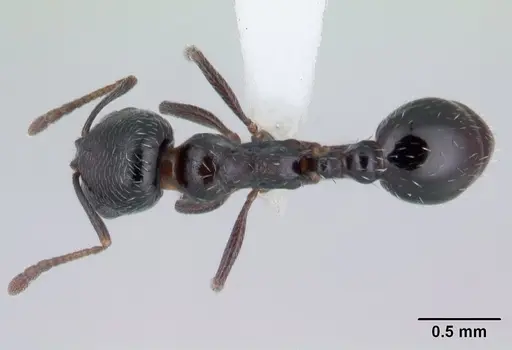
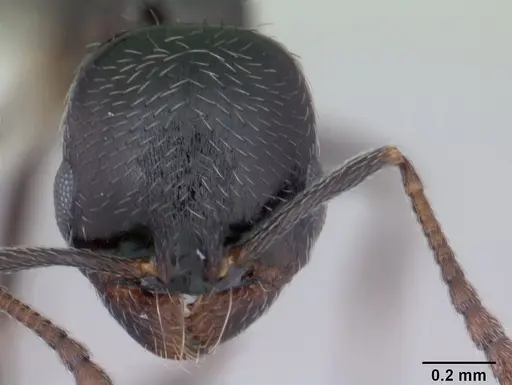
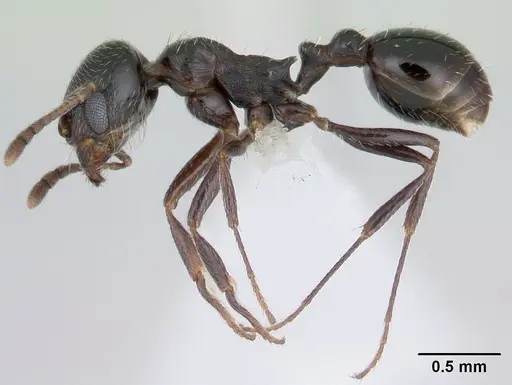
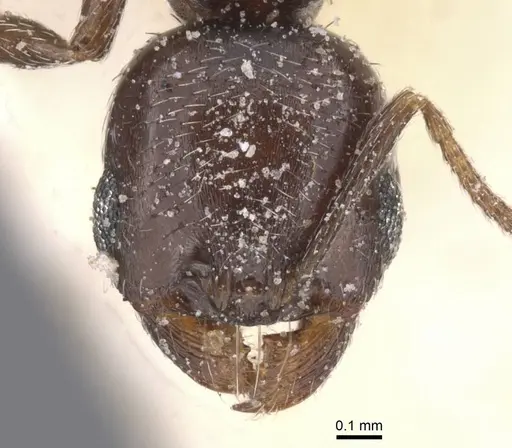
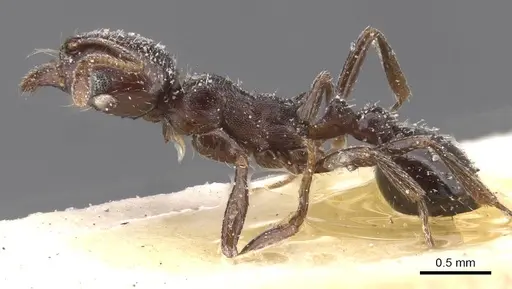
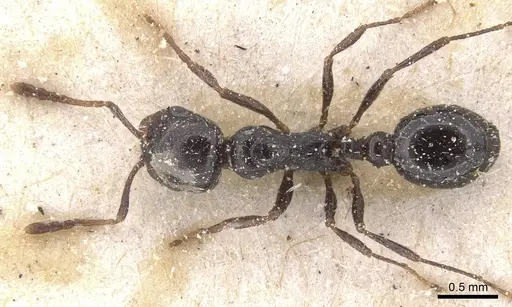
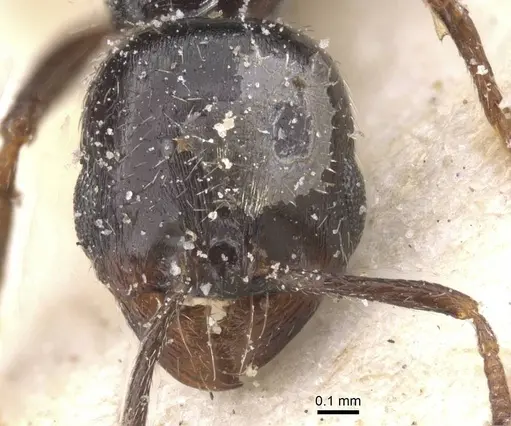
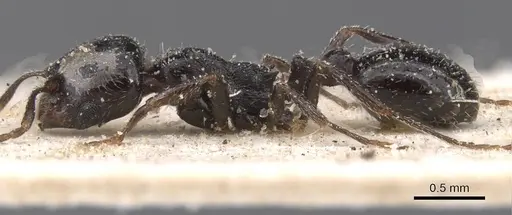
Oxyopomyrmex insularis is a tiny desert ant native to the Canary Islands. Workers have a total length of about 0.47-0.60 mm . They are predominantly black with a dark thorax, and have large, elongated eyes that reach the lower edge of the head . This species is found in arid desert wadis near El Médano, Tenerife, where they remain active at temperatures as low as 15°C in windy, dry conditions . Their most notable trait is extreme hardiness in harsh environments, making them resilient in conditions that stop most ants .
Quick Summary
- Difficulty: Medium
- Origin & Habitat: Canary Islands, Spain, specifically desert wadi areas near El Médano on Tenerife, in hot, dry, windy conditions with sparse halophilic vegetation [2][3].
- Colony Type: Unconfirmed colony structure. Only single workers have been observed in the wild, colony queen number has not been documented [2].
- Size & Growth:
- Queen: Size data unavailable, no measurements documented.
- Worker: ~0.47-0.60 mm total length [1]
- Colony: Unknown, no colony size data available
- Growth: Unknown, no development data available
- Development: Unknown, no direct data. Based on typical Myrmicinae patterns, estimated 6-8 weeks at optimal temperature. (This is an estimate based on genus-level patterns, not direct measurements.)
- Antkeeping:
- Temperature: Keep at 20-28°C. They remain active at 15°C in the wild, indicating tolerance for cooler conditions [2].
- Humidity: Low, desert species. Keep nest substrate relatively dry, with minimal moisture [2].
- Diapause: Unknown, no data on hibernation. Based on mild winters in Canary Islands, true hibernation may not be necessary.
- Nesting: Likely prefers dry, well-drained nesting areas. Use Y-tong or plaster nests with low humidity zones [1].
- Behavior: These are small, active ants that forage individually. They are not aggressive and have a tiny stinger that likely cannot penetrate human skin. Escape risk is high due to their size, so fine mesh barriers are essential [1][2].
- Common Issues: tiny size means escapes are likely without fine mesh barriers [1]., no documented colony founding behavior, unknown if claustral or semi-claustral [2]., no data on diet acceptance, likely seed-harvester but not confirmed [2]., winter care is unclear due to subtropical origin., slow growth or lack of development data makes troubleshooting difficult.
Natural History and Distribution
Oxyopomyrmex insularis is endemic to the Canary Islands, first described by Santschi in 1908 from Tenerife specimens [2]. It belongs to the Stenammini tribe, but its exact diet is not documented [2]. The type locality is El Médano, a coastal area with desert-like conditions. Workers are active in dry riverbeds (wadis) with sparse halophilic vegetation, even at 15°C in windy, arid climates [2]. This hardiness makes them interesting for antkeepers seeking resilient species.
Appearance and Identification
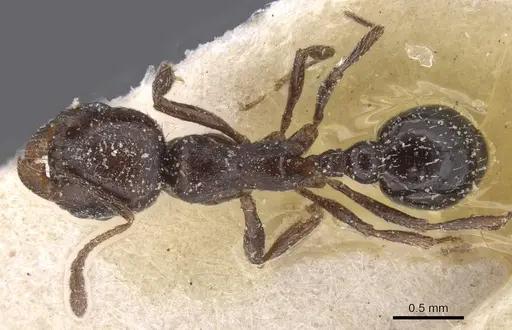
Workers are tiny, with a total length of about 0.47-0.60 mm [1]. They are predominantly black, with the head and abdomen black and the thorax black to dark brown [2]. Their large, elongated eyes extend to the lower head edge, and they have triangular propodeal spines that curve downward [2]. The body surface is finely rugulose with longitudinal striations. Males are uniformly brown [2].
Housing and Nest Setup
Due to their tiny size and desert origins, excellent escape prevention is essential. Use test tubes with tight cotton plugs or Y-tong nests with fine mesh barriers [1]. Provide a small outworld for foraging. Nest substrate should be relatively dry to match their arid habitat [2]. Avoid overly damp conditions to prevent mold.
Feeding and Diet
The diet of Oxyopomyrmex insularis is not documented in scientific literature [2]. Based on their tribe (Stenammini), they may collect seeds, but this is unconfirmed. Offer sugar water, honey, small insects, and experiment with tiny seeds. Monitor acceptance carefully.
Temperature and Seasonal Care
These ants tolerate a range of temperatures. Workers remain active at 15°C in the wild, so keep them at 20-28°C for captive care [2]. They handle heat well due to desert origins. Winter care is unclear, but reducing feeding and keeping slightly cooler may mimic natural slowdown.
Colony Development and Growth
No documented colony sizes or development timelines exist. Queens have not been described [2]. Based on small worker size, colonies likely remain small, but this is inferred. Growth rate is unknown. If claustral founding applies, queens would seal themselves in, but this is unconfirmed. Be patient with limited data.
Frequently Asked Questions
How long does it take for Oxyopomyrmex insularis to produce first workers?
The egg-to-worker timeline is unknown, no scientific data exists. Based on typical Myrmicinae patterns, estimated 6-8 weeks at warm temperatures.
Can I keep multiple Oxyopomyrmex insularis queens together?
Colony structure is unconfirmed, no data on monogyne vs polygyne [2]. Start with a single queen to avoid conflicts.
What do Oxyopomyrmex insularis ants eat?
Diet is not documented [2]. Based on tribe, they may accept seeds and insects, but this is unconfirmed. Offer varied foods and monitor acceptance.
Do Oxyopomyrmex insularis ants sting?
They likely have a stinger but it is too small to penetrate human skin, and they are not aggressive [2].
Are Oxyopomyrmex insularis good for beginners?
Rated Medium difficulty due to hardiness but lack of documented care [2]. Beginners may struggle with uncertainty.
Do Oxyopomyrmex insularis need hibernation?
Unknown, no data on hibernation. Based on mild winters in Canary Islands, true hibernation may not be necessary.
Why are my Oxyopomyrmex insularis escaping?
Their tiny size (under 1 mm) means they can squeeze through small gaps. Use fine mesh barriers and check all connections [1].
When should I move Oxyopomyrmex insularis to a formicarium?
Wait until the colony has at least 20-30 workers, but this is an estimate. Test tubes can work long-term for small species.
How big do Oxyopomyrmex insularis colonies get?
Colony size is unknown, no data available [2]. Based on tiny worker size, colonies likely remain small, but this is inferred.
What temperature is best for Oxyopomyrmex insularis?
Keep at 20-28°C. They remain active at 15°C in the wild, indicating tolerance for cooler conditions [2].
Report an Issue
The current care sheet is based fully on literature. See inconsistencies, or something that's incorrect? Please , it will be resolved after review from an admin. Contributing to the blogs tab also helps providing information, to make us be able to further improve the caresheets. Thank you for your support!
References

This caresheet is licensed under CC BY-SA 4.0 .
Community Blogs
Literature
Loading distribution map...Loading products...