
Oxyepoecus vezenyii
- Sci. Name
- Oxyepoecus vezenyii
- Tribe
- Solenopsidini
- Subfamily
- Myrmicinae
- Author
- Forel, 1907
- Distribution
- Found in 3 countries
Introduction
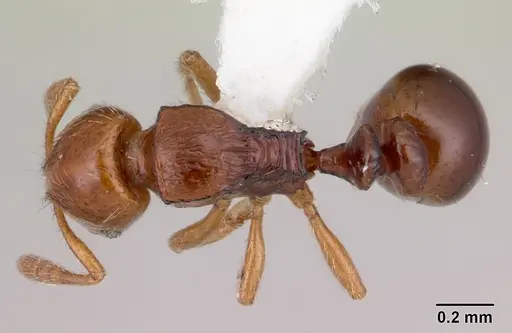
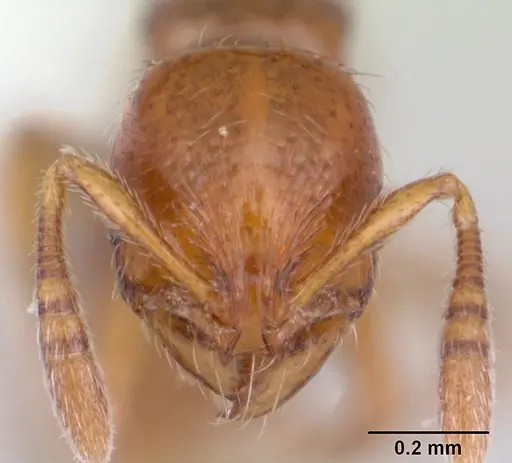
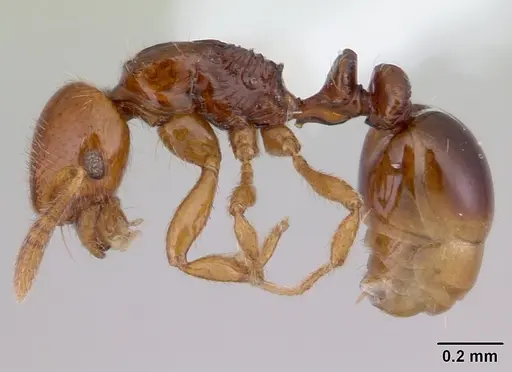
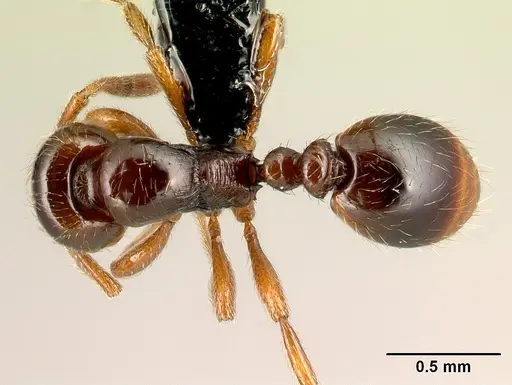
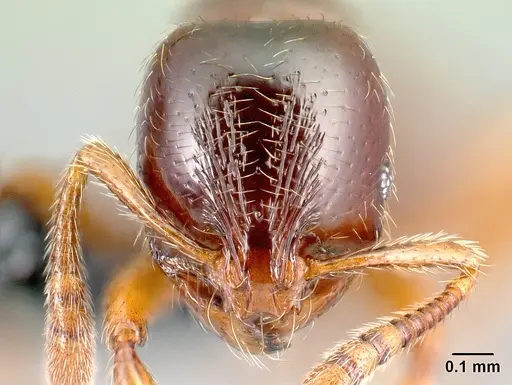
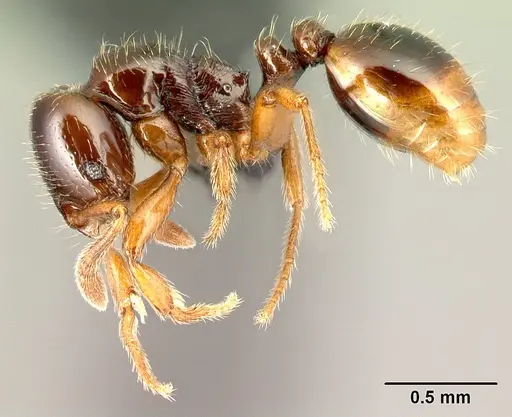
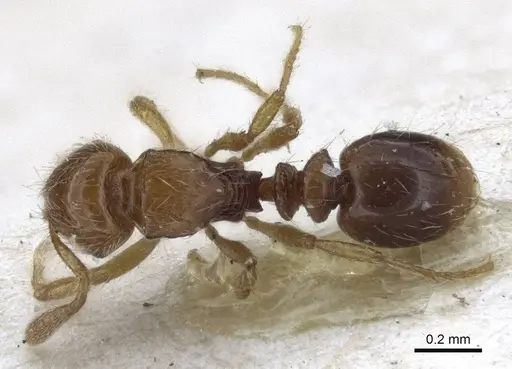
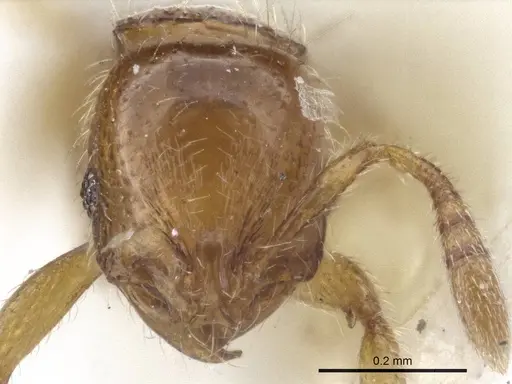
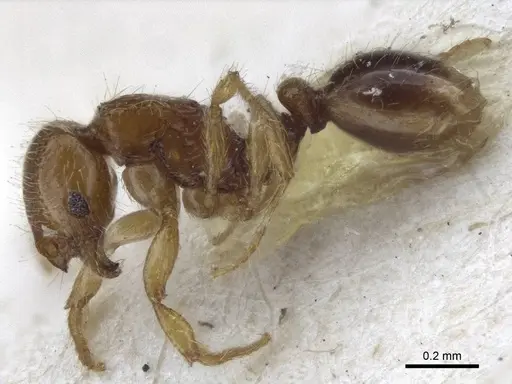
Oxyepoecus vezenyii is a small ant species native to South America. Workers are 2.4-3.0 mm long with a light ferruginous color and smooth body . They have elongated mandibles and small eyes with about 20 ommatidia . Queens are ergatomorphic, resembling workers but larger at 3.1 mm, with reduced eyes and no wings . This species belongs to the Solenopsidini tribe and the vezenyii species-group . It is found in Brazil, Paraguay, and Argentina in ecosystems like Cerrado, Atlantic Forest, and dry Chaco . Specimens are collected from leaf litter and pitfall traps, indicating a cryptic, ground-dwelling lifestyle . Males have never been collected . Little is known about its biology or care requirements .
Quick Summary
- Difficulty: Expert
- Origin & Habitat: Neotropical region, Brazil, Paraguay, and Argentina. Found in diverse ecosystems including Cerrado savanna, Atlantic Forest, and dry Chaco. Collected from leaf litter in tropical and subtropical areas [1][3][2].
- Colony Type: Unknown. Colony structure has not been documented. Ergatoid queens suggest possible replacement systems, but queen number is unconfirmed [1][2].
- Size & Growth:
- Antkeeping:
- Temperature: Unconfirmed. Based on Neotropical distribution, likely 22-28°C [1][3]. Start around 24-26°C and observe.
- Humidity: Unconfirmed. As a leaf-litter species, likely requires moderate humidity. Keep substrate moist but not waterlogged [3][4].
- Diapause: Unknown. Species from tropical/subtropical South America may not require hibernation [1].
- Nesting: Unconfirmed. Based on collection from leaf litter, a naturalistic setup with moist substrate is appropriate [3][4].
- Behavior: Behavior is unstudied. Based on genus patterns, likely cryptic and non-aggressive. Escape prevention is critical due to small size (under 3 mm) [1].
- Common Issues: completely unknown biology makes captive care extremely challenging, high risk of colony failure., tiny size means escapes are likely without fine mesh barriers and tight-fitting lids., no confirmed diet acceptance, risk of starvation if wrong foods offered., no documented founding behavior, introducing a queen may fail if species is semi-claustral., wild-caught colonies may have parasites or diseases that are untreatable without species-specific knowledge., slow or absent colony growth is expected given complete lack of captive breeding data.
Why This Species Is So Challenging
Oxyepoecus vezenyii is poorly documented. Despite being described in 1907,there is little scientific literature on its biology or care [1][3][2]. Specimens have been found across Brazil, Paraguay, and Argentina, but no live colonies have been observed [1][3][2]. This means keeping this species is experimental and carries high risk of failure. Only expert antkeepers should attempt it [1].
Identification and Key Features
Workers are 2.4-3.0 mm long with light ferruginous color and smooth body [1]. They have elongated mandibles and small eyes with about 20 ommatidia [1]. Queens are ergatomorphic at 3.1 mm, with reduced eyes and no wings [1][2]. Males have never been collected [1].
Distribution and Habitat
This species is found in Brazil, Paraguay, and Argentina in ecosystems like Cerrado, Atlantic Forest, and dry Chaco [1][3][2]. Specimens are collected from leaf litter and pitfall traps, indicating a cryptic, ground-dwelling lifestyle [3][4].
Taxonomy and Relatives
Oxyepoecus vezenyii belongs to the Solenopsidini tribe within Myrmicinae [1]. Phylogenetic analysis places it as sister to Monomorium denticulatum [5][6]. It is the type species of the subgenus Martia [1].
Experimental Care Approach
Since no captive care data exists, any husbandry is experimental. Based on Neotropical distribution and leaf-litter habitat, start with temperature around 24-26°C and moderate humidity [1][3][4]. Use small nests scaled to their size. Expect high failure rates and be prepared to experiment [1].
Conservation and Collection Status
Oxyepoecus vezenyii is not endangered but rarely encountered [1][3]. Its cryptic lifestyle makes it difficult to study, and no legal restrictions apply [1].
Frequently Asked Questions
How long do Oxyepoecus vezenyii workers live?
This is completely unknown, no research has studied worker lifespan.
What do Oxyepoecus vezenyii ants eat?
Diet is unconfirmed. Based on related Solenopsidini, they likely prey on small arthropods, but no data exists. Offer small live prey like fruit flies, but acceptance is speculative.
Can I keep multiple Oxyepoecus vezenyii queens together?
Unknown, colony structure has never been documented. Ergatoid queens suggest possible replacement systems, but combining queens is not recommended due to lack of data [1].
How fast do Oxyepoecus vezenyii colonies grow?
Unknown, no development data exists. Related small Myrmicinae may develop in 4-8 weeks, but this is speculative.
Are Oxyepoecus vezenyii good for beginners?
No. This species is not recommended for beginners due to unknown care requirements and high failure risk.
What is the best nest type for Oxyepoecus vezenyii?
Unconfirmed. Based on leaf-litter habitat, a naturalistic setup with moist substrate is reasonable [3][4].
Do Oxyepoecus vezenyii need hibernation?
Unknown. As a tropical species, they may not require hibernation [1].
Why are they so rarely collected?
Their cryptic lifestyle in leaf litter and tiny size make them hard to detect [1][3].
Report an Issue
The current care sheet is based fully on literature. See inconsistencies, or something that's incorrect? Please , it will be resolved after review from an admin. Contributing to the blogs tab also helps providing information, to make us be able to further improve the caresheets. Thank you for your support!
References

This caresheet is licensed under CC BY-SA 4.0 .
Community Blogs
Literature
Loading distribution map...Loading products...