
Oxyepoecus plaumanni
- Sci. Name
- Oxyepoecus plaumanni
- Tribe
- Solenopsidini
- Subfamily
- Myrmicinae
- Author
- Kempf, 1974
- Distribution
- Found in 1 countries
Introduction
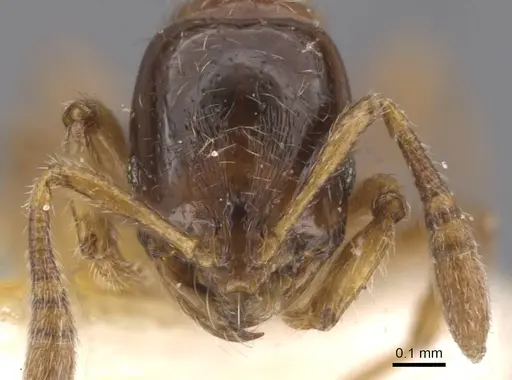
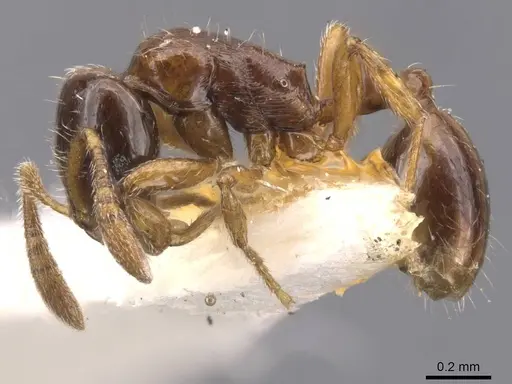
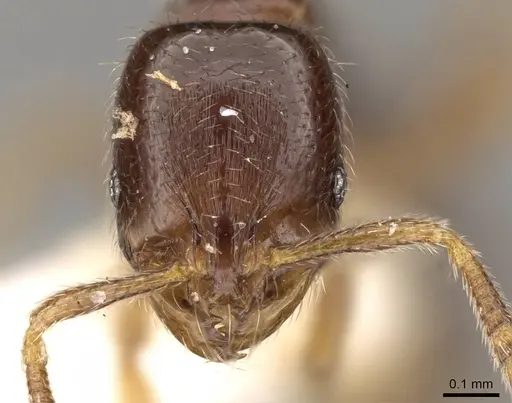
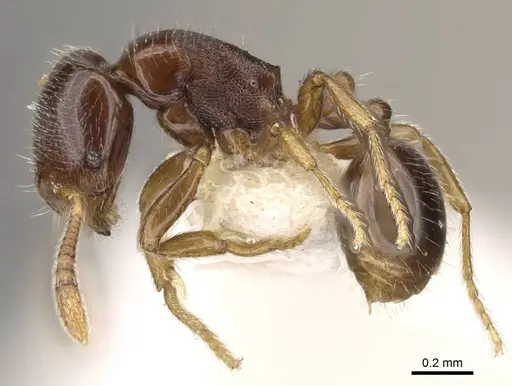
Oxyepoecus plaumanni is a very small ant species measuring just 1.9–2.2 mm for workers and 2.6–2.7 mm for queens. They have a chestnut brown coloration with smooth and shining body surfaces, marked with distinctive longitudinal costulae (grooves) on the head and thorax. Their eyes are extremely small, with only 5–6 facets in a row. This species belongs to the Solenopsidini tribe and is known only from southern Brazil (Rio Grande do Sul, Santa Catarina, and Paraná states). All specimens have been collected from leaf-litter in Araucaria forests and evergreen forests, making them true leaf-litter specialists . This ant is notable for being extremely habitat-specific – research shows they occur exclusively in primary forest and are never found in secondary growth or modified landscapes like rubber plantations. They live in the top 10 cm of soil and leaf-litter, making them a challenging species to locate and study. Their tiny size and ground-dwelling habits require very specific captive conditions .
Quick Summary
- Difficulty: Hard
- Origin & Habitat: Southern Brazil (Rio Grande do Sul, Santa Catarina, Paraná states) in Araucaria forests and evergreen forests at elevations of 600–1000 m. They live exclusively in leaf-litter on the forest floor of primary forests [1][2][3].
- Colony Type: Colony structure is unconfirmed. Males have never been collected [2], so the full life cycle remains unknown.
- Size & Growth:
- Queen: 2.6–2.7 mm [1]
- Worker: 1.9–2.2 mm [1]
- Colony: Unknown – likely under 100 workers based on collection data and related genus patterns.
- Growth: Unknown – likely slow to moderate given small colony sizes.
- Development: Unconfirmed – no direct data. Based on related Solenopsidini species, estimate 6–10 weeks at optimal temperature. (No published development timeline exists for this species. Related tiny myrmicines typically take 6–10 weeks from egg to worker.)
- Antkeeping:
- Temperature: Based on their subtropical forest habitat, keep around 20–24°C. Avoid temperatures above 28°C. They are adapted to cool, stable forest floor temperatures.
- Humidity: High humidity required – these are leaf-litter ants from humid forest floors. Keep substrate consistently moist but not waterlogged. Provide a gradient with damp areas and slightly drier spots.
- Diapause: Likely required – southern Brazil experiences mild winters (June–August). Reduce temperature to 15–18°C for 2–3 months during this period.
- Nesting: Y-tong (AAC) nests, plaster nests, or small formicaria with tight chambers work best. Use moist substrate (soil or plaster) to maintain humidity. Avoid open spaces larger than necessary for these tiny ants.
- Behavior: These ants are extremely small and likely shy. They are ground-dwelling leaf-litter specialists that probably forage slowly through the substrate rather than actively hunting on the surface. Their tiny eyes suggest limited visual capability – they likely rely on chemical cues and touch. Escape prevention is critical due to their minute size – they can squeeze through the tiniest gaps. Temperament is likely non-aggressive given their small size and ground-dwelling habits. They are probably nocturnal or active in low-light conditions within the leaf-litter layer [1].
- Common Issues: escape prevention is critical – workers are only ~2 mm and can squeeze through the smallest gaps., high humidity requirements are difficult to maintain without causing mold., they are primary forest specialists and may not tolerate captive conditions well., colony growth is likely very slow, which can be discouraging., no established captive breeding protocols exist – wild-caught colonies may struggle.
Natural History and Distribution
Oxyepoecus plaumanni is one of the most habitat-restricted ant species in southern Brazil. It is known only from the states of Rio Grande do Sul, Santa Catarina, and Paraná, with most specimens collected between 600–1000 m elevation. The species was discovered by Fritz Plaumann, who collected extensively in southern Brazil during the 1950s–1970s. All known specimens come from Berlesate collections – a method that involves sifting forest leaf-litter. This confirms they are true leaf-litter specialists living in the top 10 cm of the forest floor. They inhabit both dense evergreen forests and drier forest types within the Araucaria forest ecosystem. Critically, research shows this species is exclusive to primary forest – it has never been recorded in secondary growth, plantations, or grassland areas [1][4][3][2].
Identification and Morphology
Workers measure just 1.9–2.2 mm, making them among the smallest ants in the Solenopsidini tribe. They have a distinctive chestnut brown coloration with lighter mandibles, antennae, and legs. The most diagnostic feature is the longitudinal costulae (grooves) on the head between the frontal carinae – these do not reach the vertexal margin or laterally to the compound eyes. Their eyes are extremely small, with only 5–6 facets in the greatest diameter and fewer than 20 total ommatidia. The scape (first antennal segment) fails to reach the occipital corner by a distance greater than its own maximum thickness. The petiole is strongly pedunculate with a high, rounded node that is not compressed. Queens are larger at 2.6–2.7 mm and possess three ocelli of equal size. Males have never been collected, so the full life cycle is unknown [1][2].
Nest Preferences and Housing
In captivity, these tiny ants require carefully scaled housing. Y-tong (AAC) nests, plaster nests, or small formicaria with tight chambers work best. The chambers should be narrow – these ants will not use large open spaces. Use moist substrate to maintain high humidity – soil-filled test tubes or plaster nests with water reservoirs work well. Because they are so small, standard test tube setups may be too large, consider using smaller containers or modifying setups to create tight, humid chambers. The nesting material should remain consistently moist but never waterlogged. Given their extreme habitat specificity, providing a naturalistic setup with leaf-litter material may help them adjust. Escape prevention must be excellent – these 2 mm ants can slip through gaps that seem impossible. [1][2]
Feeding and Diet
No direct dietary data exists for Oxyepoecus plaumanni. Based on their tribe (Solenopsidini), they likely prey on tiny invertebrates such as springtails, fruit flies, and other micro-arthropods. In captivity, you can offer small live prey, but success is uncertain. Given their minute size, even small fruit fly pieces may be too large – consider chopping prey into very small portions. Sugar sources may be accepted but are not a primary food source for this group. Feed small amounts of protein 2–3 times per week and remove uneaten prey within 24 hours to prevent mold. Always provide access to fresh water. (All dietary suggestions are speculative due to lack of published data.)
Temperature and Seasonal Care
These ants come from southern Brazil where temperatures are mild. Based on their subtropical origin, keep the nest at 20–24°C, avoiding both extremes. They likely experience a cooler period during the southern hemisphere winter (June–August). Provide a diapause period of 2–3 months at 15–18°C during this time. Avoid temperatures above 28°C – they are cool-adapted forest floor ants. If you need to heat the nest, use a heating cable on one side only and always provide a temperature gradient so ants can move to cooler areas if needed. Place heating on top of the nest, not underneath, to avoid evaporating moisture too quickly.
Challenges and Common Problems
This species presents significant challenges for antkeepers. First, they are extremely habitat-specific – research confirms they only survive in primary forest conditions, suggesting they may be sensitive to captive environments. Second, their tiny size makes escape prevention critical and housing difficult. Third, no established captive breeding protocols exist, and wild-caught colonies may struggle. Fourth, their humidity requirements create a constant battle against mold. Fifth, colony growth appears to be slow based on collection data, which can be discouraging. Finally, the complete lack of information on their founding behavior and colony structure means keepers are essentially working with unverified assumptions. This species is best suited for experienced antkeepers who can maintain precise humidity and temperature conditions [3][4].
Frequently Asked Questions
How long does it take for Oxyepoecus plaumanni to produce first workers?
The egg-to-worker timeline is unconfirmed for this species. Based on related Solenopsidini ants, expect approximately 6–10 weeks at optimal temperature (around 22°C). However, no published development data exists specifically for this species.
Can I keep Oxyepoecus plaumanni in a test tube setup?
Standard test tubes may be too large for these tiny 2 mm ants. Consider using smaller containers or modified setups with tight chambers. The key is maintaining high humidity while preventing escapes through the tiny gaps this species can slip through.
Are Oxyepoecus plaumanni good for beginners?
No. This is an expert-level species due to their extreme habitat specificity, tiny size requiring excellent escape prevention, high humidity needs, and lack of established captive breeding protocols. They are primary forest specialists that may not adapt well to captivity.
What do Oxyepoecus plaumanni eat?
No direct dietary data exists. Based on their tribe (Solenopsidini), they likely prey on tiny invertebrates. If kept, offer small live prey such as springtails, fruit flies, and micro-arthropods. Chopping prey into very small pieces may help. Success is uncertain.
Do Oxyepoecus plaumanni need hibernation?
Yes, a mild diapause is likely required. Southern Brazil experiences cooler winters (June–August). Reduce temperatures to 15–18°C for 2–3 months during this period.
How big do Oxyepoecus plaumanni colonies get?
Colony size is unknown but likely remains small. Based on collection data and related species patterns, colonies probably remain under 100 workers. They are not known for large colony sizes.
Why are my Oxyepoecus plaumanni dying?
Common causes include: improper humidity (too dry or too wet causing mold), temperatures outside their preferred 20–24°C range, escapes through tiny gaps, stress from wild-caught collection, and inability to adapt to captive conditions. They are primary forest specialists highly sensitive to environmental changes.
Can I keep multiple Oxyepoecus plaumanni queens together?
Colony structure is unconfirmed. No data exists on whether they are monogyne (single queen) or polygyne (multiple queens). Combining unrelated queens is not recommended given the lack of information.
Where is Oxyepoecus plaumanni found in the wild?
They are endemic to southern Brazil, specifically Rio Grande do Sul, Santa Catarina, and Paraná states. They live exclusively in primary forest leaf-litter at elevations of 600–1000 m. This species has never been found in secondary forest or modified landscapes.
Report an Issue
The current care sheet is based fully on literature. See inconsistencies, or something that's incorrect? Please , it will be resolved after review from an admin. Contributing to the blogs tab also helps providing information, to make us be able to further improve the caresheets. Thank you for your support!
References

This caresheet is licensed under CC BY-SA 4.0 .
Community Blogs
CASENT0911210
View on AntWeb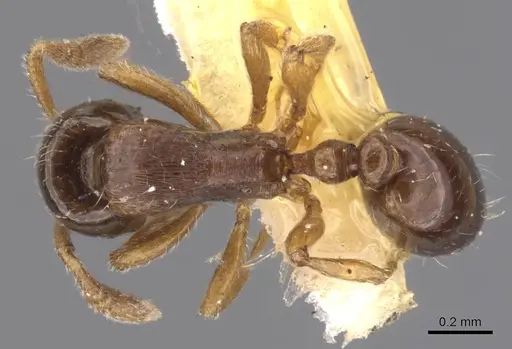
CASENT0914064
View on AntWeb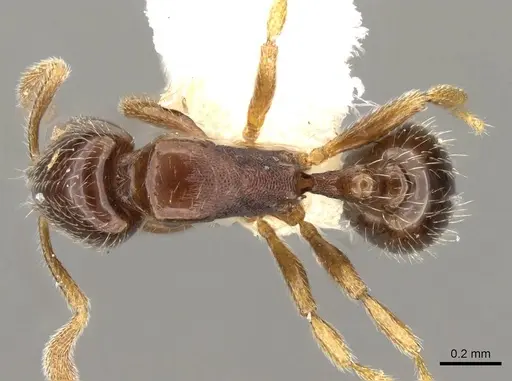
Literature
Loading distribution map...Loading products...