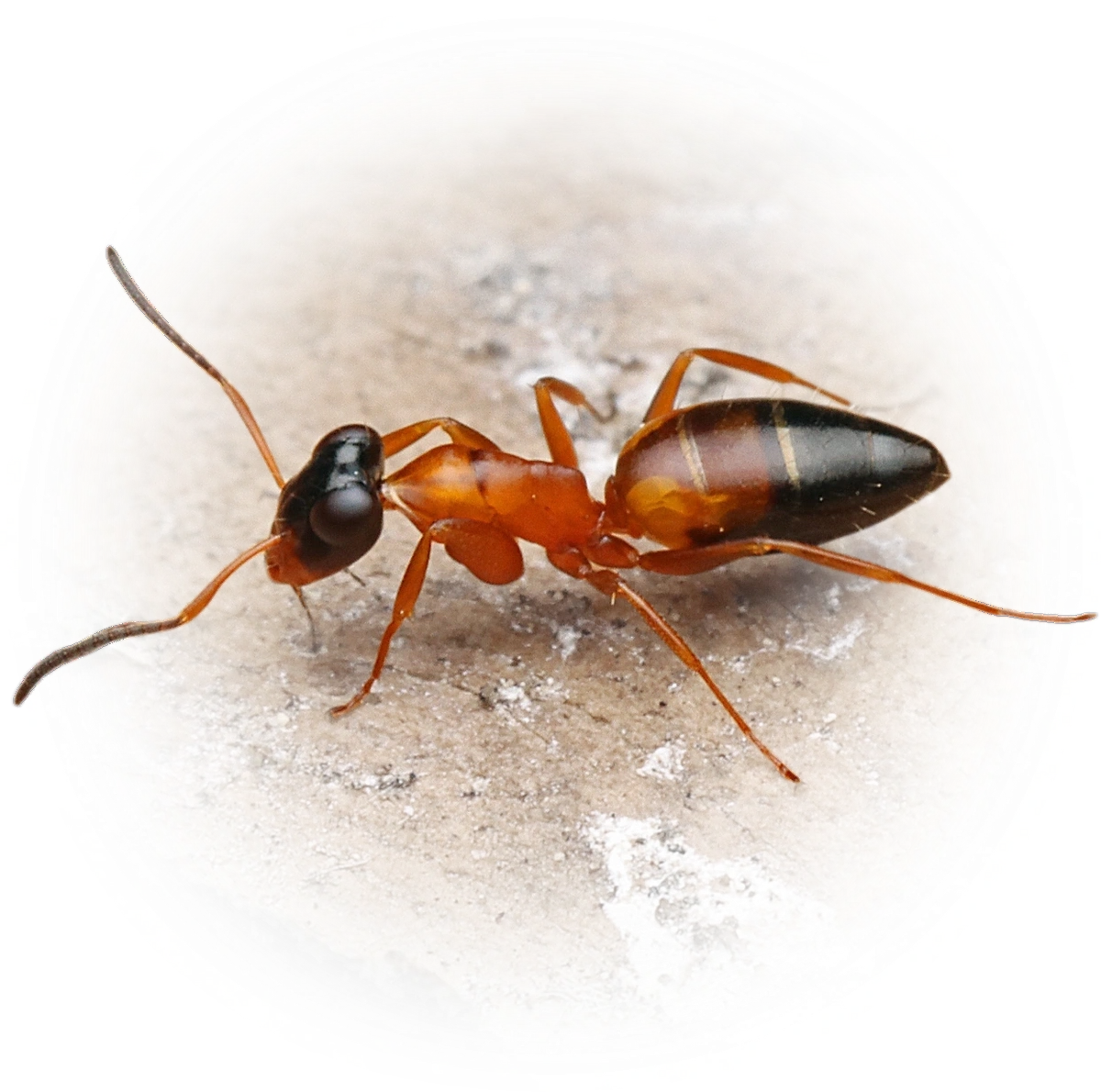
black-headed strobe ant
Opisthopsis rufithorax
- Sci. Name
- Opisthopsis rufithorax
- Tribe
- Camponotini
- Subfamily
- Formicinae
- Author
- Emery, 1895
- Common Name
- black-headed strobe ant
- Distribution
- Found in 1 countries
Introduction
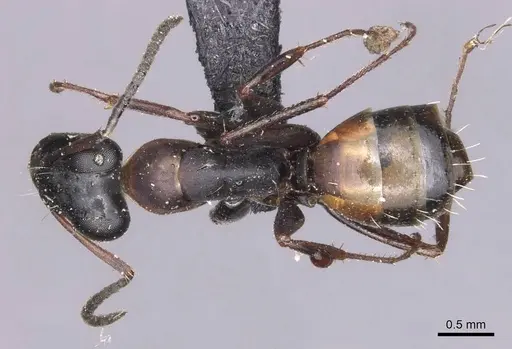
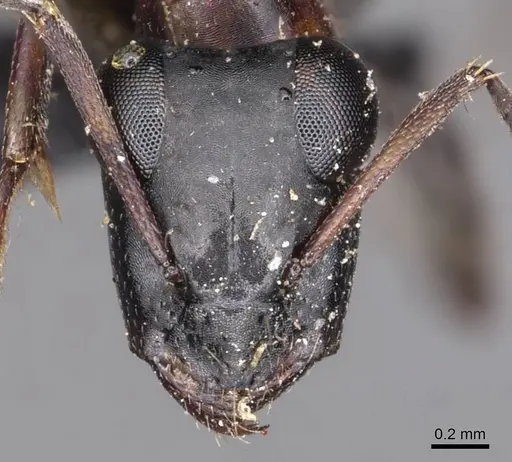
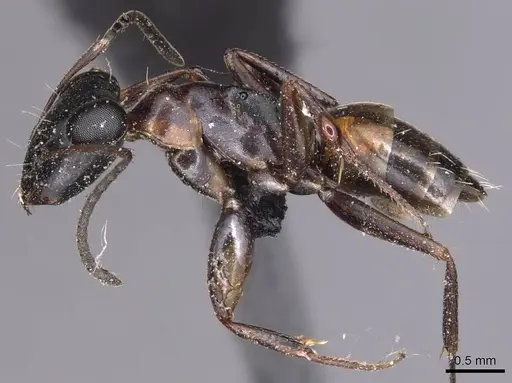
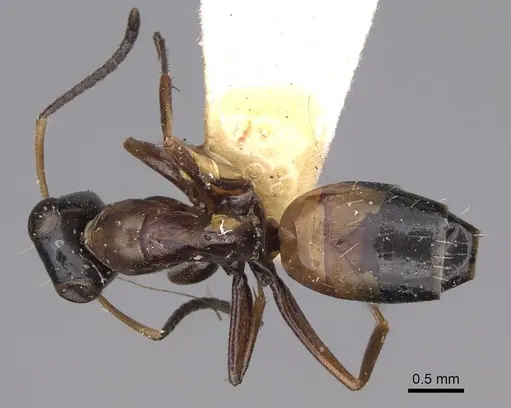
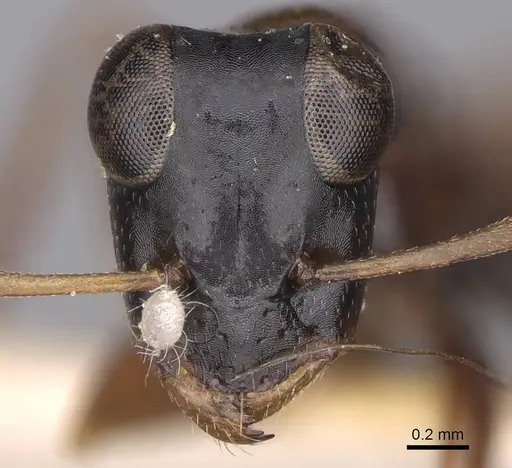
Opisthopsis rufithorax is an Australian ant with massive compound eyes visible to the naked eye, giving it a wasp-like appearance . Size data is unavailable for both queens and workers, as no total length measurements are provided in the research . The species has an Australia-wide distribution, including New Guinea, and is found mainly east and north of Perth in southwestern Australia . This ant is known for its unique jerky, strobe-like movement, earning nicknames like 'electric ant' . Workers are timid and will rapidly dart away or drop to the ground when approached, making them interesting to observe but not suitable for handling .
Quick Summary
- Difficulty: Easy
- Origin & Habitat: Australia-wide distribution, including New Guinea. Most common in tropical areas but tolerant of urban environments. In southwestern Australia, found mainly east and north of Perth [2][1].
- Colony Type: Colony structure is unconfirmed in scientific literature. No data on queen number or social structure.
- Size & Growth:
- Queen: Size data unavailable, no total length measurements provided
- Worker: Size data unavailable, no total length measurements provided
- Colony: Unknown, maximum colony size has not been documented
- Growth: Unknown, growth rate has not been studied
- Development: Unknown, no direct development data available (Development timeline is unconfirmed. No specific data on temperature dependency.)
- Antkeeping:
- Temperature: Based on tropical distribution, likely prefers warm conditions around 22-28°C. Provide a temperature gradient and adjust based on colony activity [1].
- Humidity: Keep nest substrate consistently moist but not waterlogged. These ants are adaptable to various humidity levels [1].
- Diapause: Unknown, no specific data on overwintering. As an Australian species, they may have reduced activity in cooler months but true hibernation is unconfirmed.
- Nesting: Arboreal in nature, nesting in pre-existing cavities in wood or under bark [1]. In captivity, use Y-tong (AAC), plaster, or soil nests with climbing structures. Avoid acrylic nests.
- Behavior: Workers are timid and will rapidly dart to the opposite side of a tree trunk or drop to the ground when approached [1]. They use formic acid spray as defense, typical of Formicinae. Escape risk is high due to small size, ensure enclosures have fine mesh and tight lids.
- Common Issues: small size means escapes are likely without fine mesh barriers and tight-fitting lids., timid nature may cause stress if housed in open containers without adequate cover., limited research means care requirements are not fully understood, be prepared to experiment., wild-caught colonies may have parasites that can affect captive health.
Appearance and Identification
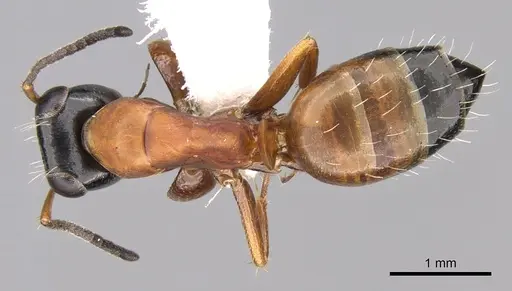
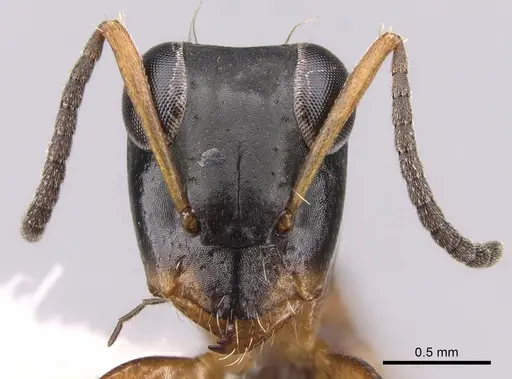
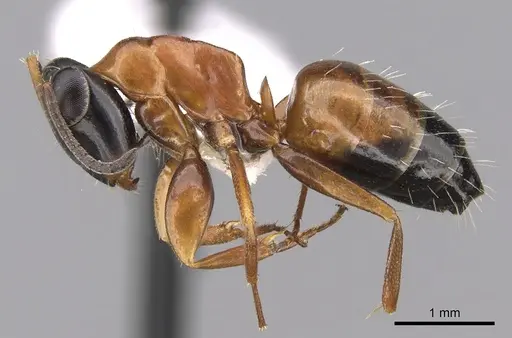
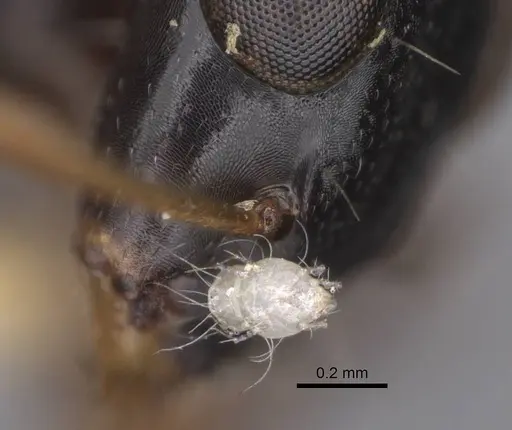
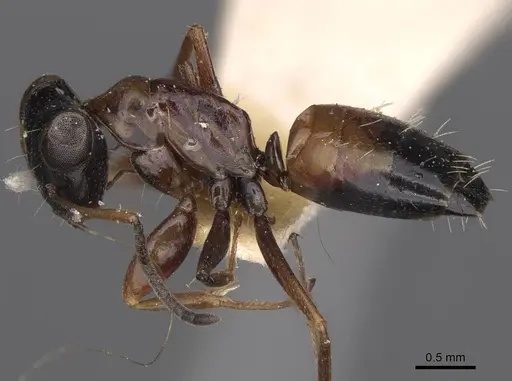
Opisthopsis rufithorax workers have massive compound eyes visible to the naked eye, giving them a wasp-like appearance [1]. Their movements are jerky and intermittent, earning nicknames like 'electric ant' [1]. Size data is unavailable, but they are small ants. The species name refers to a reddish thorax, though exact coloration varies.
Natural History and Behavior
In the wild, these ants are arboreal, running up and down tree trunks [1]. Workers are timid and will rapidly dart away or drop to the ground when approached [1]. They use formic acid spray as defense, typical of Formicinae. They are adaptable to urban environments, as observed raiding rubbish bins in Brisbane [1].
Housing and Nest Setup
Provide arboreal setups with climbing structures, as they naturally run on vertical surfaces [1]. Use Y-tong (AAC), plaster, or soil nests with narrow chambers. Include rough surfaces like cork bark for traction. Ensure all connections are secure to prevent escapes due to their small size.
Feeding and Diet
They are omnivorous, likely foraging for nectar, honeydew, and small insects [1]. In captivity, offer sugar water or honey as a constant energy source, and provide small protein like fruit flies or mealworms. Prey should be appropriately sized for their small stature.
Temperature and Seasonal Care
Aim for warm conditions around 22-28°C, with a temperature gradient [1]. Diapause requirements are unknown, a mild cool period in winter is optional if colony activity reduces. Monitor behavior to adjust temperatures.
Handling and Observation
These ants are not suitable for handling due to their timid nature and small size. Observe them through the enclosure, their jerky movement is interesting to watch. Move slowly when working with the colony to avoid stressing them. [1]
Frequently Asked Questions
How long does it take for Opisthopsis rufithorax to produce first workers?
The egg-to-worker timeline is unknown, as no direct data is available. Be patient with founding colonies.
What do Opisthopsis rufithorax ants eat?
They are omnivorous. Offer sugar water or honey, and small protein like fruit flies or mealworms [1].
Are Opisthopsis rufithorax ants aggressive?
No, they are timid and will flee rather than fight [1].
What temperature do Opisthopsis rufithorax ants need?
Aim for warm conditions around 22-28°C, with a gradient [1].
Are Opisthopsis rufithorax good for beginners?
They are considered easy to keep due to adaptability, but limited research means you may need to experiment [1].
How big do Opisthopsis rufithorax colonies get?
Maximum colony size is unknown, as it has not been documented.
Can I keep multiple Opisthopsis rufithorax queens together?
Colony structure is unconfirmed, it is not recommended to combine queens without evidence.
Why do they move in a strobe-like pattern?
Their jerky movement is a characteristic of the genus Opisthopsis, thought to help avoid predators [1].
Do Opisthopsis rufithorax ants need hibernation?
Diapause requirements are unknown, a mild cool period in winter is optional if activity reduces.
What type of nest is best for Opisthopsis rufithorax?
Arboreal nests like Y-tong (AAC) or plaster with climbing structures work well [1]. Ensure no gaps to prevent escapes.
Where does Opisthopsis rufithorax live in the wild?
Australia-wide distribution, including New Guinea. In southwestern Australia, found mainly east and north of Perth [2][1].
Report an Issue
The current care sheet is based fully on literature. See inconsistencies, or something that's incorrect? Please , it will be resolved after review from an admin. Contributing to the blogs tab also helps providing information, to make us be able to further improve the caresheets. Thank you for your support!
References

This caresheet is licensed under CC BY-SA 4.0 .
Community Blogs
Literature
Loading distribution map...Loading products...