
Ooceraea besucheti
- Sci. Name
- Ooceraea besucheti
- Subfamily
- Dorylinae
- Author
- Brown, 1975
- Distribution
- Found in 1 countries
Introduction
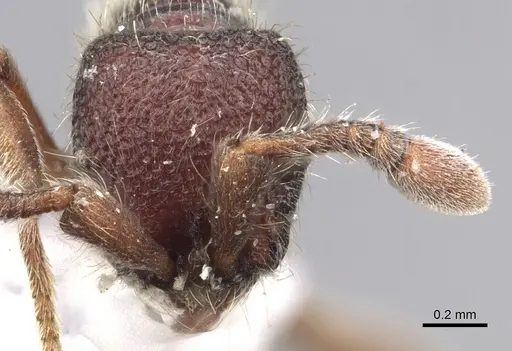
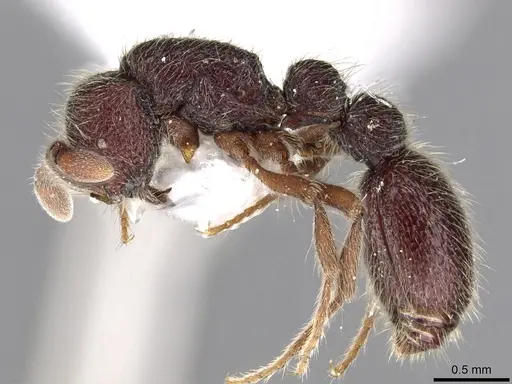
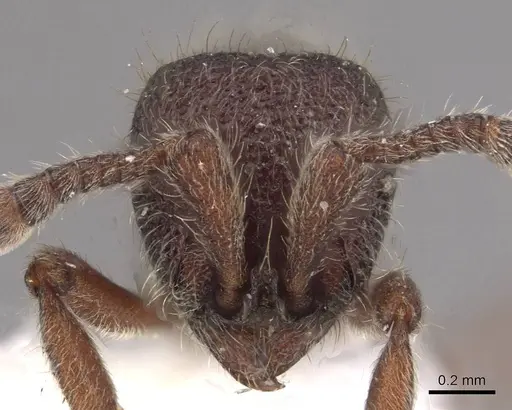
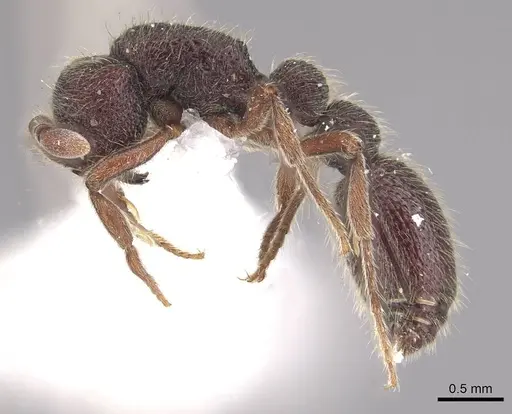
Ooceraea besucheti is a small, robust Dorylinae ant native to the Western Ghats of India, recorded from Tamil Nadu and Kerala . Workers are 4.1-4.4 mm long, dark reddish-brown with 11-segmented antennae . They have small but convex eyes with 20-30 facets and a broad, trapezoidal petiole and postpetiole . Unlike many ants, this species reproduces via ergatoid (wingless) queens - worker-like females that serve as reproductives within the colony . The type series was collected from soil and leaf litter at 1150 m elevation in the Anaimalai Hills .
Quick Summary
- Difficulty: Medium
- Origin & Habitat: India (Tamil Nadu, Kerala) in the Western Ghats, from soil and leaf litter at 1150 m elevation in forested hills [2][1].
- Colony Type: Reproduces via ergatoid (wingless) queens. Multiple ergatoid females may be present in a colony [5]. This system differs from typical monogyne or polygyne colonies, the reproductive castes are wingless and resemble workers [2].
- Size & Growth:
- Antkeeping:
- Temperature: Estimated 22-26 °C based on mid-elevation (1150 m) tropical habitat [2]. Provide a slight gradient if possible.
- Humidity: Likely high humidity (moist substrate) based on soil/litter habitat [2]. Exact requirements not documented, keep the nest substrate consistently damp but not waterlogged.
- Diapause: Unknown. Given tropical origin, no diapause expected.
- Nesting: Found naturally in soil and leaf litter [2]. In captivity, a naturalistic setup with moist substrate (e.g., soil/plaster mix) or a Y-tong/plaster nest with tight chambers is recommended (unconfirmed).
- Behavior: As Dorylinae, O. besucheti is likely predatory on small invertebrates. Workers are small (4 mm) and can escape through tiny gaps. They are not aggressive toward humans.
- Common Issues: small size makes escape likely without fine mesh barriers (0.5 mm or finer), predatory diet may be difficult to supply consistently, need small live prey, colony size and growth rate unknown, no established keep protocols, humidity control is critical but exact needs uncertain, both too dry and too wet can be fatal, founding method unknown, making colony propagation challenging
Housing and Nest Setup
Based on their natural habitat, soil and leaf litter in the Western Ghats [2], a naturalistic setup with moist substrate (e.g., soil/plaster mix) is recommended. The nest should have small, enclosed chambers that mimic natural soil cavities. Because workers are only 4.1-4.4 mm, use fine mesh (0.5 mm or smaller) on all openings to prevent escapes. A small outworld can be used for foraging. Keep the nest substrate consistently moist but not waterlogged.
Feeding and Diet
Specific dietary data is unavailable. As a member of Dorylinae, O. besucheti is likely a predator of small invertebrates. Offer small live prey such as springtails, fruit flies, or tiny crickets. Sugar sources are probably not a primary food. Overfeeding should be avoided as colonies may be small.
Temperature and Seasonal Care
This species was collected at 1150 m elevation in tropical India [2]. Based on that, maintain a temperature of roughly 22-26 °C. A slight gradient can be provided, but avoid extreme heat or cold. No diapause is expected, but you may reduce temperature slightly during cooler months if activity drops.
Understanding Ergatoid Queen Biology
One of the most interesting aspects of Ooceraea besucheti is the ergatoid queen system. Unlike most ants where queens are winged and fly to start new colonies, ergatoid queens are wingless and stay within or near the nest [5]. They look similar to workers but are slightly larger (4.7-5.1 mm) and have three ocelli (simple eyes) on the top of their heads [2]. This means colonies can keep reproducing without swarming, when an ergatoid queen becomes less productive, another ergatoid can take over. For keepers, this means you won't see nuptial flights. Colony reproduction happens internally, which may make this species harder to propagate than typical ants.
Behavior and Temperament
Workers are small and likely forage within leaf litter. As Dorylinae, they may use cooperative hunting to capture small prey. They are not aggressive toward humans and any sting would be negligible given their size. The main concern is escape, at only 4 mm they can slip through tiny gaps, so use Fluon barriers on test tube rims and fine mesh on all ventilation. If workers seem stressed or gather at nest edges, check temperature and humidity.
Frequently Asked Questions
How long does it take for Ooceraea besucheti to produce the first workers?
Unknown. There are no studies on development time for this species.
What do Ooceraea besucheti ants eat?
They are likely predatory on small invertebrates, but specific dietary data is not documented. Offer small live prey such as springtails, fruit flies, or tiny crickets.
Can I keep multiple Ooceraea besucheti queens together?
Unknown. The ergatoid system suggests that multiple reproductive females may coexist, but there is no data for this species. Combining unrelated foundresses is not recommended.
What is the best nest type for Ooceraea besucheti?
Based on their natural habitat in soil and leaf litter [2], a nest with moist substrate (e.g., soil/plaster mix) or a Y-tong/plaster formicarium with tight chambers is recommended. Exact preferences are not documented.
Are Ooceraea besucheti good for beginners?
No. This species is poorly documented, has specific needs (predatory diet, high humidity, escape risk), and its founding method is unknown. It is best suited for experienced keepers.
How big do Ooceraea besucheti colonies get?
Unknown. Colony size has not been documented.
Do Ooceraea besucheti need hibernation?
Unknown. Given their tropical origin, no diapause is expected, but no specific data is available. Maintain stable temperature year-round.
Why are my Ooceraea besucheti dying?
Common causes include unsuitable humidity (too dry or waterlogged), incorrect temperature, escape through tiny gaps, or starvation. Monitor conditions closely, as exact requirements are not established.
When should I move Ooceraea besucheti to a formicarium?
Unknown. Watch for colony growth. Start with a test tube setup and move to a larger nest only when the colony outgrows it. No specific timeline is documented.
Report an Issue
The current care sheet is based fully on literature. See inconsistencies, or something that's incorrect? Please , it will be resolved after review from an admin. Contributing to the blogs tab also helps providing information, to make us be able to further improve the caresheets. Thank you for your support!
References

This caresheet is licensed under CC BY-SA 4.0 .
Community Blogs
CASENT0902721
View on AntWeb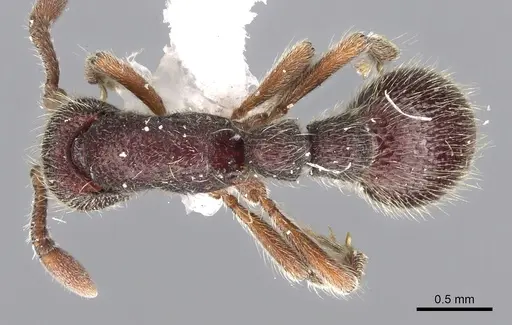
CASENT0911143
View on AntWeb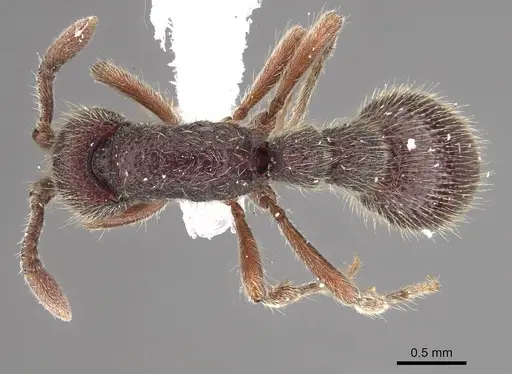
Literature
Loading distribution map...Loading products...