
Odontomachus tyrannicus
- Sci. Name
- Odontomachus tyrannicus
- Tribe
- Ponerini
- Subfamily
- Ponerinae
- Author
- Smith, 1859
- Distribution
- Found in 2 countries
Introduction
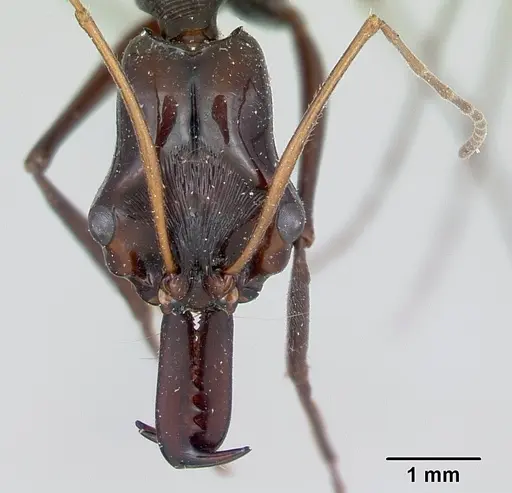
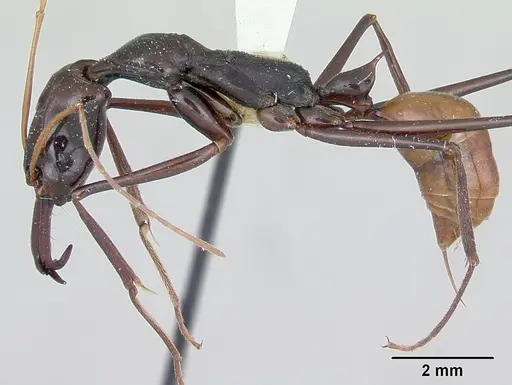
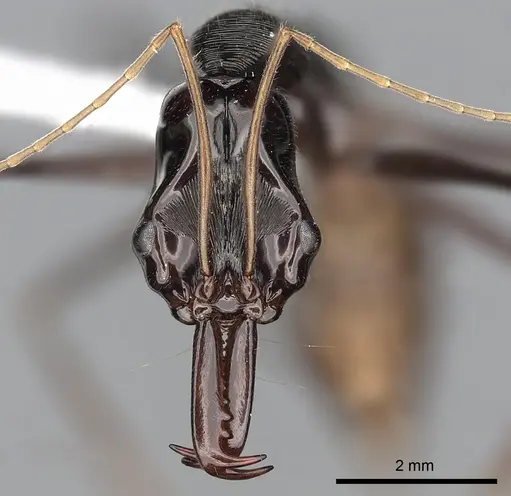
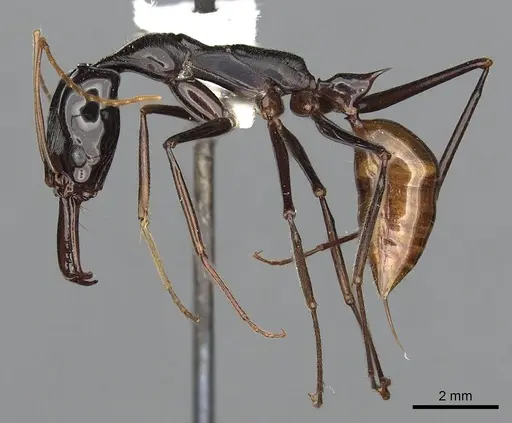
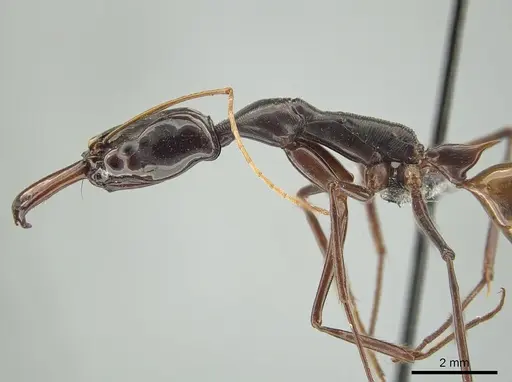
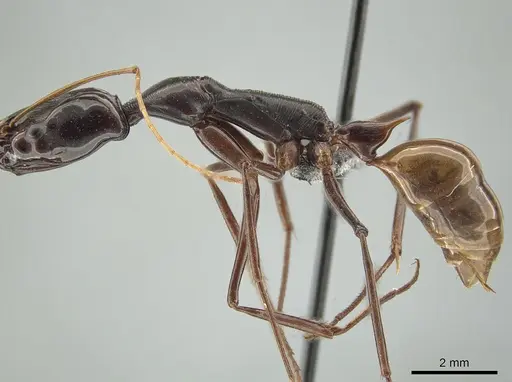
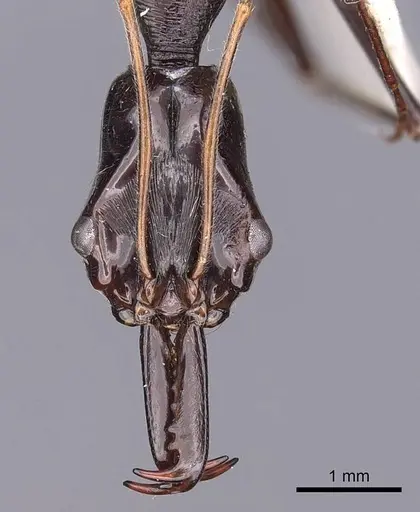
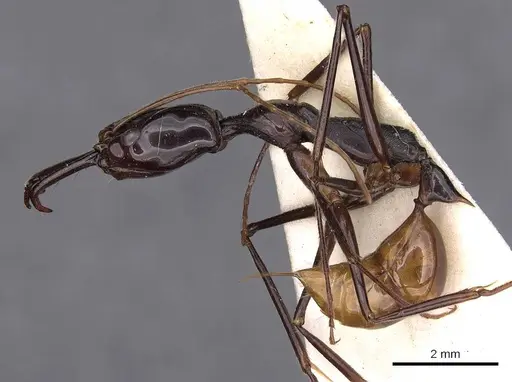
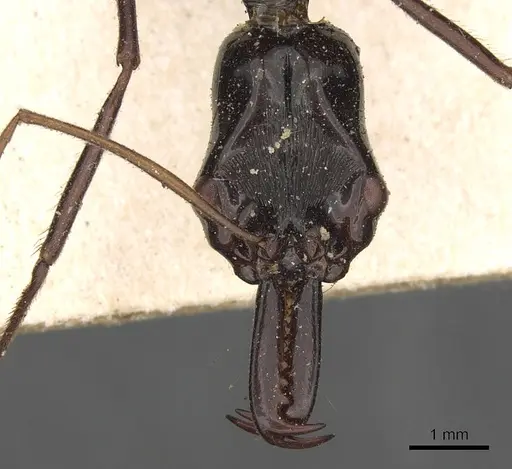
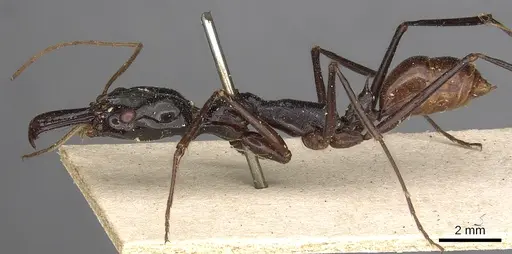
Odontomachus tyrannicus is a trap-jaw ant in the Ponerinae subfamily. It has a short head that is wide at the front and narrow at the back, with a pronotum showing strong transverse striations . Size data for this species is unavailable. It is found in Indonesia (Aru Islands, Irian Jaya, Waigeu) and Papua New Guinea, including the Bismarck Archipelago . This species is part of the tyrannicus species group, distinguished by short heads lacking temporal prominences . As a trap-jaw ant, it uses fast-snap mandibles to capture prey.
Quick Summary
- Difficulty: Medium
- Origin & Habitat: Tropical forests in Indonesia (Aru Islands, Irian Jaya, Waigeu) and Papua New Guinea [2][3].
- Colony Type: Unconfirmed, no specific data on queen number. Based on Odontomachus patterns, likely monogyne (single queen colony).
- Size & Growth:
- Queen: Size data unavailable
- Worker: Size data unavailable
- Colony: Unknown, no data on colony size
- Growth: Moderate
- Development: 6-10 weeks (estimated based on typical Ponerinae development) (Development time is inferred from related species, specific data for O. tyrannicus is not available)
- Antkeeping:
- Temperature: Keep warm, around 24-28°C, as inferred from tropical habitat.
- Humidity: Keep nest substrate consistently moist but not waterlogged, as inferred from forest habitat.
- Diapause: No, tropical species do not require hibernation.
- Nesting: In the wild, they nest in soil or rotting wood. In captivity, use moist substrate nests or Y-tong/plaster nests with a dark, humid area.
- Behavior: Trap-jaw ants are active predators. Workers forage individually for prey. Defense involves a sting, as typical for Ponerinae. Escape risk is moderate due to medium size and speed.
- Common Issues: humidity control is critical, too dry and colonies will fail, too wet and mold becomes a problem, slow founding phase, new colonies may take months to establish, patience is required, predatory diet means they need regular live insect prey, sugar sources alone are insufficient, heating requirements year-round mean higher ongoing care commitment
Housing and Nest Setup
Odontomachus tyrannicus does well in naturalistic setups that replicate forest floor habitat. Use a mix of soil and sand as substrate, keeping it consistently moist. A Y-tong nest with a water reservoir works well, or use a traditional formicarium with moist chambers. Provide a separate outworld for foraging. Keep the nest dark as these are forest-floor species. Ensure excellent escape prevention due to their speed [1].
Feeding and Diet
As predatory ants, they require a protein-rich diet of live insects. Offer small live prey such as fruit flies, crickets, and mealworms. Feed every 2-3 days, removing uneaten prey after 24 hours. A varied diet helps ensure healthy colony development.
Temperature and Seasonal Care
These are tropical ants requiring warm temperatures year-round. Maintain nest temperatures around 24-28°C. A heating cable can help maintain optimal temperatures. Consistent warmth is key, temperature drops below 20°C for extended periods can stress colonies.
Colony Founding and Growth
Colony founding in Odontomachus is typically semi-claustral, the queen may need to hunt for food during founding. This makes founding more challenging. Expect slower start compared to other species. The first workers may take 2-3 months to emerge. Growth is steady but not fast.
Behavior and Defense
Odontomachus ants are famous for their trap-jaw mechanism, used primarily to capture prey. Their primary defense is a sting, as typical for Ponerinae. Workers are active foragers hunting individually. They defend their nest vigorously but are not particularly aggressive toward humans.
Frequently Asked Questions
How long does it take for first workers to appear in Odontomachus tyrannicus?
Expect 6-10 weeks from egg to first worker at optimal temperature (24-28°C). This is slower than many common species, so patience is essential during founding.
What do Odontomachus tyrannicus eat?
They are predatory ants requiring live insect prey. Feed small live insects like fruit flies, pinhead crickets, and mealworms. Protein is essential.
Do Odontomachus tyrannicus ants sting?
Yes, they have a sting as typical for Ponerinae. Their main defense is the sting, while trap-jaws are used for prey capture.
What temperature do they need?
Keep them warm at around 24-28°C, as inferred from their tropical habitat.
Do they need hibernation?
No, as a tropical species, they do not require hibernation.
Are they good for beginners?
They are intermediate difficulty due to predatory diet, humidity needs, and slower growth.
How big do colonies get?
Colony size is unknown, no data is available for this species.
Can I keep multiple queens together?
Not recommended, colony type is unconfirmed, but based on genus patterns, they are likely monogyne.
What humidity level do they need?
Keep nest substrate consistently moist but not waterlogged, as inferred from forest habitat.
When should I move them to a formicarium?
Wait until the colony has a stable number of workers, typically after the founding phase. Use a test tube setup initially.
Report an Issue
The current care sheet is based fully on literature. See inconsistencies, or something that's incorrect? Please , it will be resolved after review from an admin. Contributing to the blogs tab also helps providing information, to make us be able to further improve the caresheets. Thank you for your support!
References

This caresheet is licensed under CC BY-SA 4.0 .
Community Blogs
CASENT0172659
View on AntWeb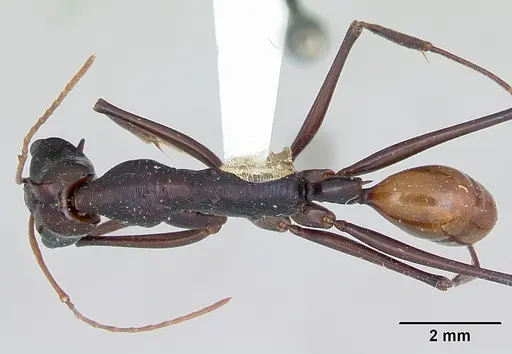
CASENT0249123
View on AntWeb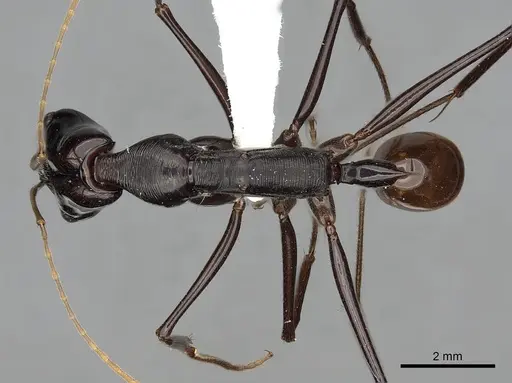
CASENT0249124
View on AntWeb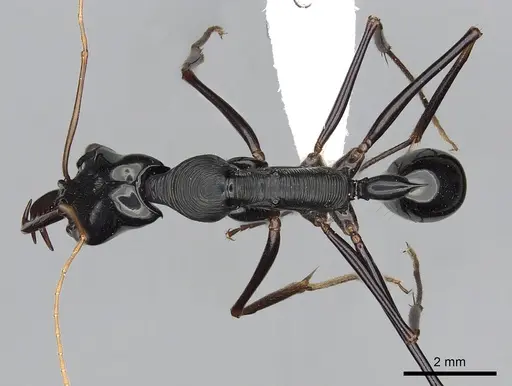
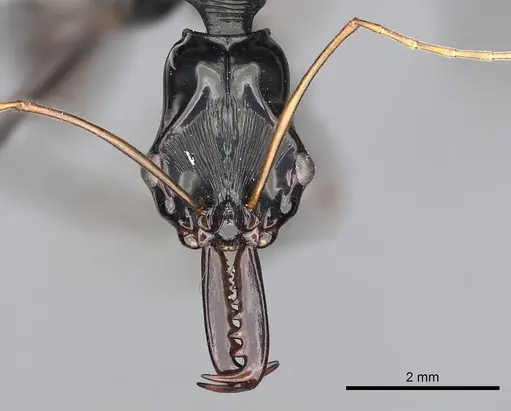
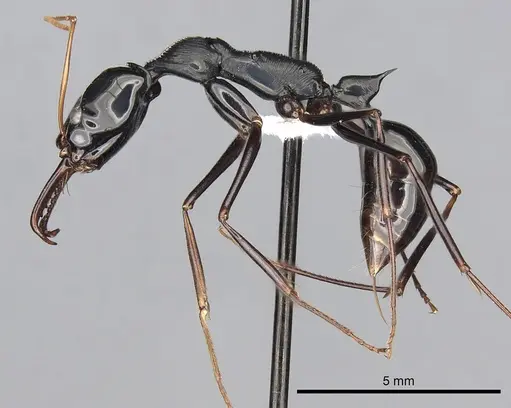
CASENT0650184
View on AntWeb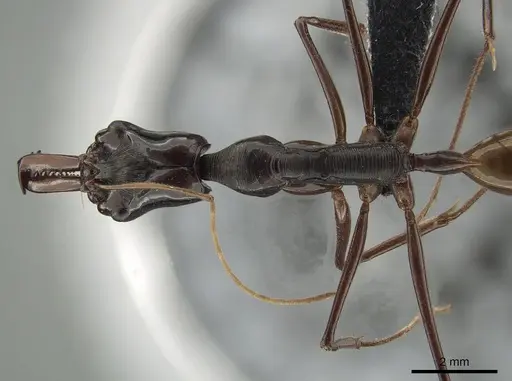
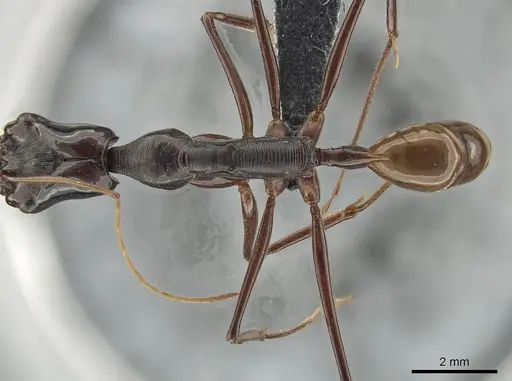
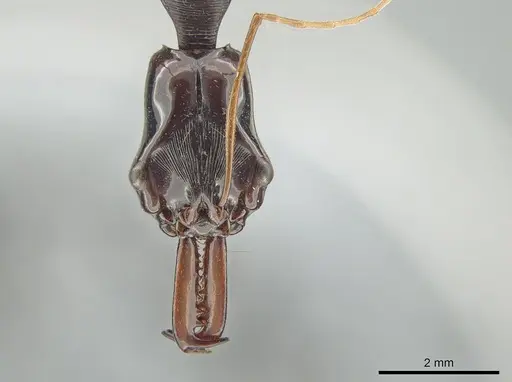
CASENT0900612
View on AntWeb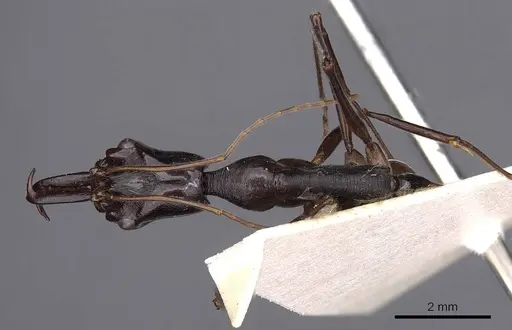
CASENT0901335
View on AntWeb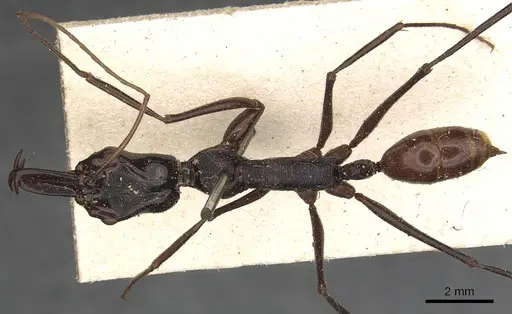
CASENT0923417
View on AntWeb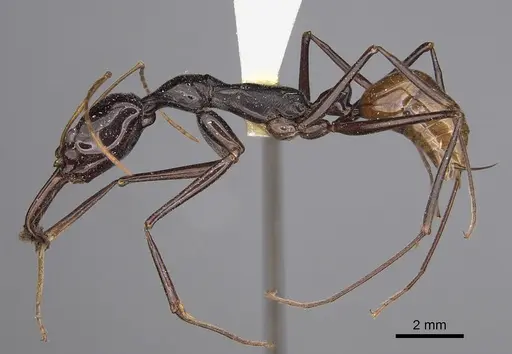
Literature
Loading distribution map...Loading products...