
Odontomachus spissus
- Sci. Name
- Odontomachus spissus
- Tribe
- Ponerini
- Subfamily
- Ponerinae
- Author
- Kempf, 1962
- Distribution
- Found in 3 countries
Introduction
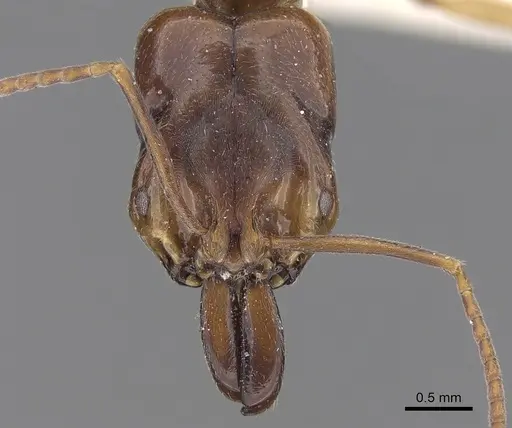
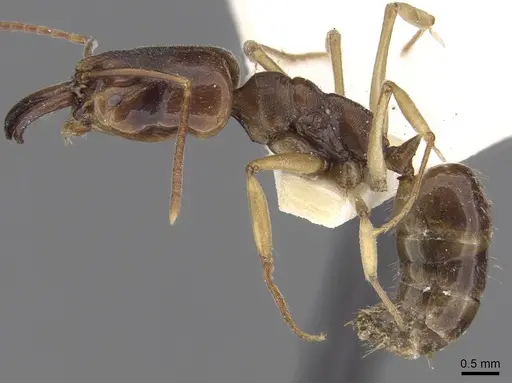
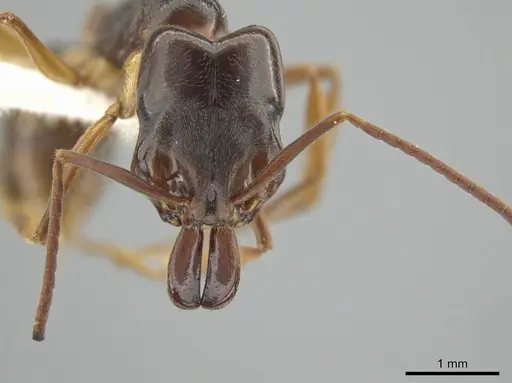
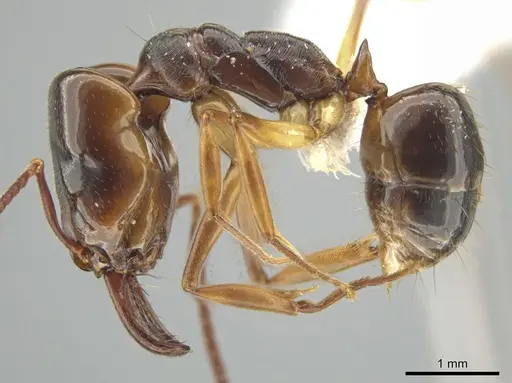
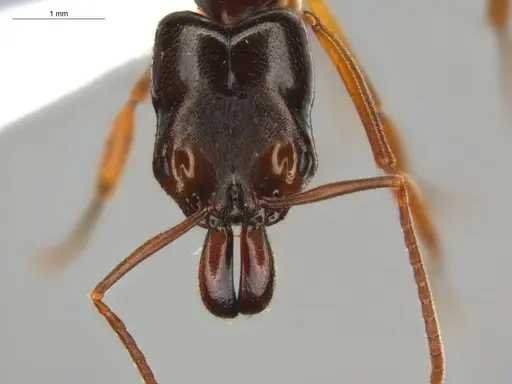
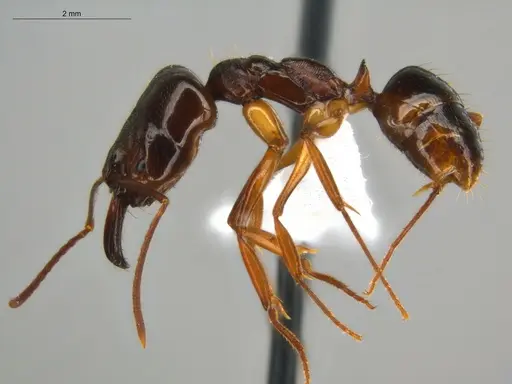
Odontomachus spissus is a small trap-jaw ant from Brazil and French Guiana. Workers are up to 7.9 mm long . They have a broad head, short antennae, and small eyes, indicating a cryptic lifestyle . First described in 1962 from Mato Grosso, Brazil . This species belongs to the Odontomachus haematodus group and has powerful mandibles for defense and prey capture .
Quick Summary
- Difficulty: Medium
- Origin & Habitat: Brazil (Mato Grosso) and French Guiana in tropical forests at low elevations [2][3].
- Colony Type: Likely monogyne (single queen) based on Odontomachus patterns.
- Size & Growth:
- Antkeeping:
- Temperature: Keep warm around 24-27°C, based on tropical habitat [2][3].
- Humidity: Keep nest substrate consistently moist but not waterlogged, based on tropical forest habitat [2][3].
- Diapause: No diapause required, as they are tropical ants[3]].
- Nesting: Y-tong or plaster nests work well for their cryptic nature].
- Behavior: Trap-jaw ants with powerful mandibles for defense and prey capture [1]. Workers are likely less aggressive due to small size. Escape risk is moderate.
- Common Issues: colonies may fail if kept too dry, their cryptic nature requires stable humidity[3]]., slow founding phase, queens may take months to raise first workers., small colony size means any losses have bigger impact early on]., overfeeding can lead to mold in enclosed nests., wild-caught colonies may have parasites.
Nest Preferences and Housing
Odontomachus spissus is a cryptic, ground-dwelling species that prefers dark, humid enclosed spaces [1]. In captivity, Y-tong (AAC) nests or plaster nests work well because they provide darkness and moisture retention [3]. The nest should have chambers scaled to their small size, around 5-10mm wide passages are appropriate for workers. Avoid tall vertical spaces as they are not arboreal ants. A small outworld area for foraging is sufficient. Keep the nest area consistently moist but not waterlogged, the substrate should feel damp to the touch[3]]. Because of their secretive nature, minimize disturbance during the founding stage [1].
Feeding and Diet
Like other Odontomachus species, O. spissus is predatory and will accept small live invertebrates]. Offer small prey items like fruit flies, pinhead crickets, or small mealworms. They may accept sugar sources occasionally, but protein-rich prey should be their primary food. Feed every 2-3 days, removing any uneaten prey after 24 hours to prevent mold.
Temperature and Seasonal Care
As a tropical species from Brazil and French Guiana, Odontomachus spissus requires warm temperatures year-round [2][3]. Keep the nest area at 24-27°C for optimal brood development. A heating cable placed on one side of the nest creates a temperature gradient. Do not allow temperatures to drop below 22°C for extended periods. They do not require hibernation or diapause.
Behavior and Temperament
Odontomachus spissus is a trap-jaw ant with powerful mandibles for defense and prey capture [1]. Their small size and reduced eyes suggest they are less aggressive and more secretive than larger relatives. Workers will likely retreat if given the chance, but can deliver a painful snap if handled carelessly. They are moderate escape risks, standard barriers work well, but ensure lids fit tightly.
Colony Founding
Founding behavior is unconfirmed for this species. Like other Odontomachus, queens may seal themselves in a chamber and raise first workers on stored fat reserves]. Provide a founding setup with moist substrate in darkness. Do not feed the queen during founding if claustral. The founding phase may take several weeks depending on temperature. Be patient, founding colonies are fragile and disturbance can cause queen stress.
Frequently Asked Questions
How long does it take for Odontomachus spissus to raise first workers?
Estimated 6-10 weeks from egg to first worker at optimal temperature (24-27°C). The exact time depends on temperature and individual colony variation.
What do Odontomachus spissus ants eat?
They are predatory ants that accept small live invertebrates like fruit flies and crickets]. Protein-rich prey should be their primary food.
Can I keep multiple Odontomachus spissus queens together?
Colony type is unconfirmed, but based on Odontomachus patterns, likely monogyne (single queen). Combining unrelated queens is not recommended as they would likely fight.
What temperature do Odontomachus spissus need?
Keep them warm at 24-27°C, based on their tropical habitat [2][3]. A heating cable can help maintain optimal temperatures.
Are Odontomachus spissus good for beginners?
They are rated as medium difficulty. Their small size and specific humidity needs make them slightly more challenging than beginner species. Experience with at least one previous ant species is recommended.
Do they need hibernation?
No, they are tropical ants from Brazil and French Guiana and do not require hibernation[3]].
When should I move them to a formicarium?
Wait until the colony has at least 10-20 workers before moving to a larger formicarium. They can remain in a test tube setup longer due to their small colony size.
How big do Odontomachus spissus colonies get?
Colony size is not documented for this species. Based on their small worker size, colonies are likely small].
Why are my Odontomachus spissus dying?
Common causes include: too dry conditions (they need high humidity[3]]), temperature too low or fluctuating, disturbance during founding, or parasites from wild-caught colonies.
Report an Issue
The current care sheet is based fully on literature. See inconsistencies, or something that's incorrect? Please , it will be resolved after review from an admin. Contributing to the blogs tab also helps providing information, to make us be able to further improve the caresheets. Thank you for your support!
References

This caresheet is licensed under CC BY-SA 4.0 .
Community Blogs
CASENT0281868
View on AntWeb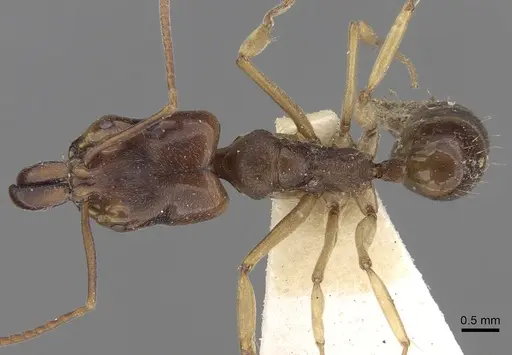
CASENT0646079
View on AntWeb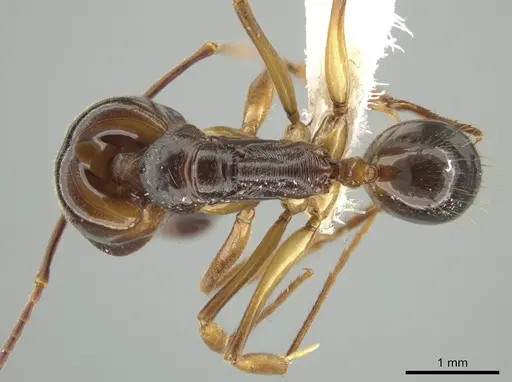
ECOFOG-HC-0086-01
View on AntWeb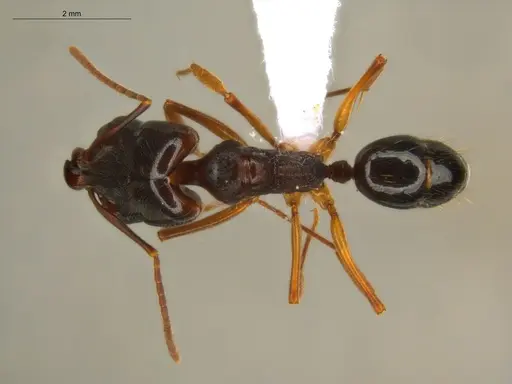
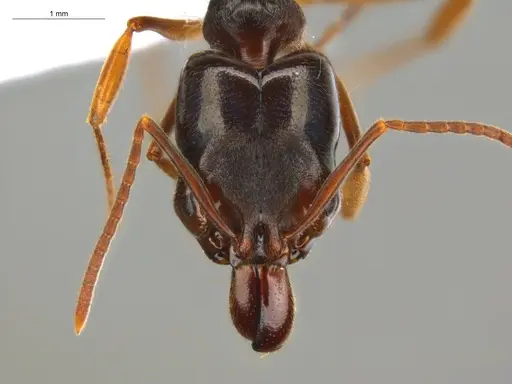
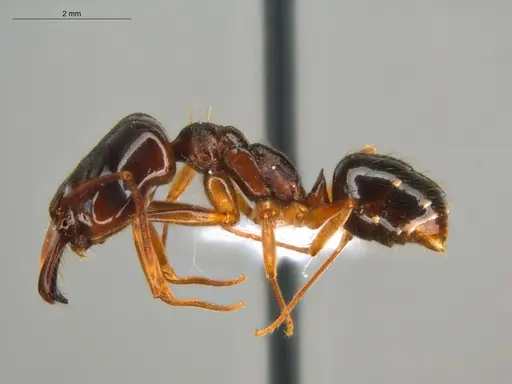
ECOFOG-HC-0088-01-Q
View on AntWeb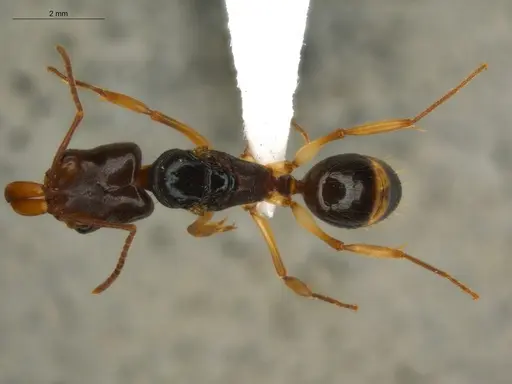
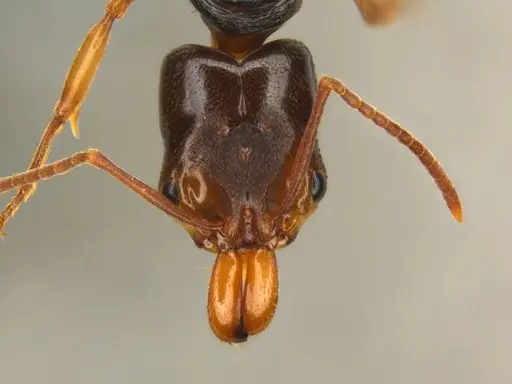
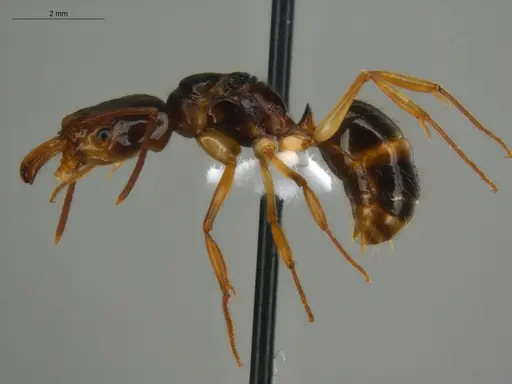
ECOFOG-HC-0088-01
View on AntWeb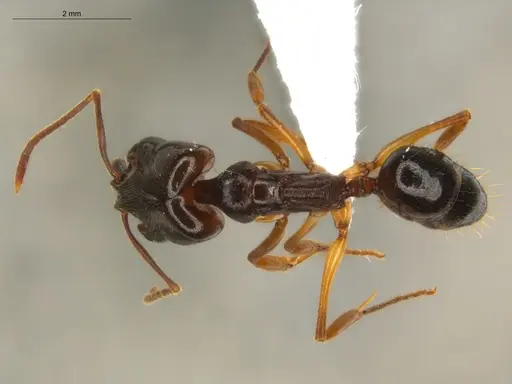
Literature
Loading distribution map...Loading products...