
Odontomachus schoedli
- Sci. Name
- Odontomachus schoedli
- Tribe
- Ponerini
- Subfamily
- Ponerinae
- Author
- Sorger & Zettel, 2011
- Distribution
- Found in 1 countries
Introduction
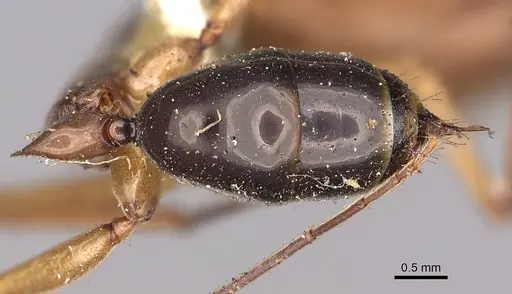
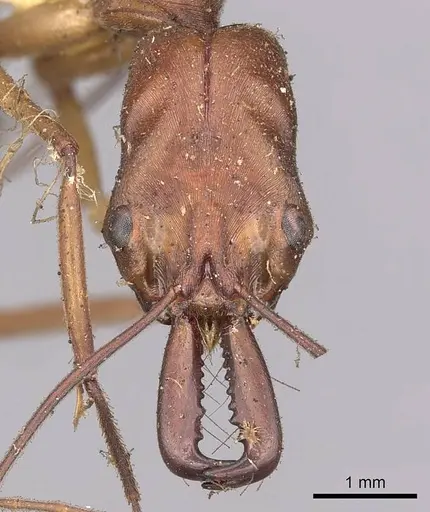
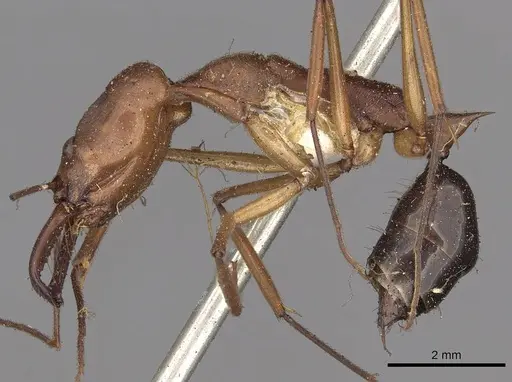
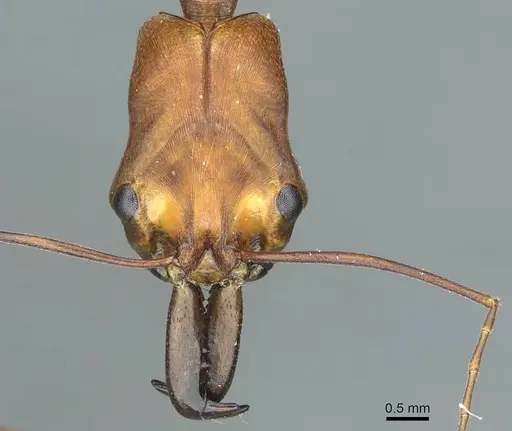
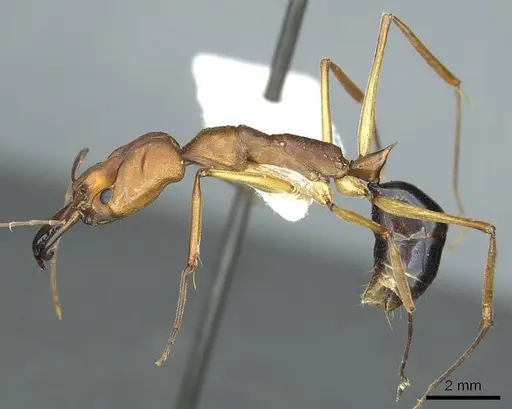
Odontomachus schoedli is a medium-sized trap-jaw ant endemic to the northern Philippines, specifically the mountain provinces of Luzon. Workers measure 12.75-16.25mm in total length . They have a distinctive appearance with a medium brown head and mesosoma, dark brown petiole and gaster, and fine transverse striations on the pronotum . This species belongs to the Odontomachus infandus species group and is only known from higher elevations in the Cordillera mountain range, where they inhabit forest floors in both secondary and primary forests . Their most notable feature is the trap-jaw mechanism, where mandibles can snap shut at high speeds to capture prey . This species was described in 2011 and is named after Stefan Schödl, a hymenopterist who collected the type series .
Quick Summary
- Difficulty: Medium
- Origin & Habitat: Endemic to the Philippines, found only in northern Luzon (Mountain Province, Benguet) at higher elevations. They inhabit forest floors in secondary to primary forests in the Central Cordillera Range, typically above 1500m elevation [1][2].
- Colony Type: Colony structure is unconfirmed. No specific studies on queen number.
- Size & Growth:
- Queen: Undescribed, queen measurements not available in scientific literature
- Worker: 12.75-16.25mm total length [1]
- Colony: Unknown, no colony size data available
- Growth: Unknown, growth rate has not been studied
- Development: Unknown, development timeline has not been documented. (No direct studies on development.)
- Antkeeping:
- Temperature: Based on their high-elevation habitat, they likely prefer cooler temperatures. Start around 22-26°C with a gradient, and observe colony activity [2].
- Humidity: Forest floor inhabitants require high humidity. Keep the nest substrate consistently moist but not waterlogged [1].
- Diapause: Unknown, diapause requirements have not been studied.
- Nesting: In nature, they nest in soil and leaf litter on forest floors [1]. In captivity, use moist substrate or Y-tong/plaster nests to maintain humidity.
- Behavior: As trap-jaw ants, they have fast mandibles for capturing prey. They are likely predatory but diet is unconfirmed. Workers can deliver a painful sting if handled roughly, but are not aggressive toward humans. Escape prevention is important due to their size [1][3].
- Common Issues: humidity control is critical, they die quickly in dry conditions, lack of documented care information means trial and error is required, diet is unconfirmed, may require live prey but this is not specific to this species, high-elevation origin suggests they may be sensitive to overheating, colony founding may be difficult as queen is not described and founding behavior is unconfirmed
Appearance and Identification
Odontomachus schoedli workers are relatively large ants measuring 12.75-16.25mm in total length [1]. They have the characteristic trap-jaw mandibles of the genus. The head and mesosoma are medium brown, while the petiole and gaster are darker brown [1]. They have fine transverse striations on the pronotum, and the petiole has a remarkably short, nearly straight spine [1]. These features help distinguish them from the related O. infandus, which has more longitudinal striations and a longer, curved petiolar spine [1].
Natural History and Distribution
This species is endemic to the Philippines and is only known from the northern part of Luzon Island, specifically the Mountain Province and Benguet regions. They occur at higher elevations in the Central Cordillera mountain range, typically above 1500m. Their habitat consists of forest floors in both secondary and primary forests. The type locality is on the slopes of Mount Polis at approximately 1600m elevation. They are sympatric with O. infandus in Benguet province [1][2].
Temperature and Humidity
Based on their high-elevation habitat, they likely prefer cooler temperatures than typical tropical ants. Start with a temperature range of 22-26°C and observe your colony's behavior [2]. For humidity, they need consistently moist substrate to mimic their forest floor habitat [1]. The substrate should feel damp but not have standing water. A water tube connected to the nest helps maintain humidity.
Housing and Nesting
In captivity, O. schoedli can be kept in naturalistic setups with moist substrate or in Y-tong/plaster nests that hold humidity well. They prefer enclosed, tight spaces that mimic their natural forest floor nesting sites [1]. A test tube setup can work for founding colonies, but you may need to upgrade to a larger formicarium as the colony grows. Provide a foraging area with substrate they can walk on easily. Since they are moderate-sized ants, standard escape prevention measures work well.
Trap-Jaw Mechanism
Odontomachus ants are famous for their trap-jaw mandibles, one of the fastest biological mechanisms in the animal kingdom. When triggered, their mandibles can snap shut at high speeds, allowing them to capture prey that would otherwise escape [3]. In captivity, you may observe this behavior when feeding live prey. The sting is also functional and can deliver a painful injection, though they are not aggressive toward humans.
Frequently Asked Questions
How long does it take for Odontomachus schoedli to produce first workers?
The development timeline is unconfirmed for this species. No specific studies exist on this species.
What do Odontomachus schoedli ants eat?
Diet is unconfirmed for this species. As a Ponerine ant, they are likely predatory, but this is not specific to O. schoedli.
Are Odontomachus schoedli ants good for beginners?
This species is rated as Medium difficulty. While not the most challenging ant, there is limited documented care information since the species was only described in 2011. You may need to experiment with conditions.
What temperature do Odontomachus schoedli ants need?
Based on their high-elevation habitat in the Philippines, they likely prefer cooler temperatures than typical tropical ants. Start around 22-26°C with a temperature gradient, and adjust based on colony behavior [2].
How big do Odontomachus schoedli colonies get?
Colony size is unconfirmed for this species. No data available on maximum colony size.
Can I keep multiple Odontomachus schoedli queens together?
Colony structure is unconfirmed for this species. The safe approach is to keep only one queen per colony. Combining unrelated queens has not been documented and could result in fighting.
Do Odontomachus schoedli ants need hibernation?
Diapause requirements are unknown. Their high-elevation origin suggests they may experience seasonal temperature changes, but specific hibernation requirements have not been studied.
What humidity level do Odontomachus schoedli ants need?
They require high humidity consistent with their forest floor habitat. Keep the nest substrate consistently moist but not waterlogged [1].
When should I move Odontomachus schoedli to a formicarium?
Start with a test tube setup for the founding colony. Once the colony shows significant brood development, you can consider upgrading to a larger formicarium with a foraging area. Ensure the new setup maintains appropriate humidity.
Report an Issue
The current care sheet is based fully on literature. See inconsistencies, or something that's incorrect? Please , it will be resolved after review from an admin. Contributing to the blogs tab also helps providing information, to make us be able to further improve the caresheets. Thank you for your support!
References

This caresheet is licensed under CC BY-SA 4.0 .
Community Blogs
CASENT0900655
View on AntWeb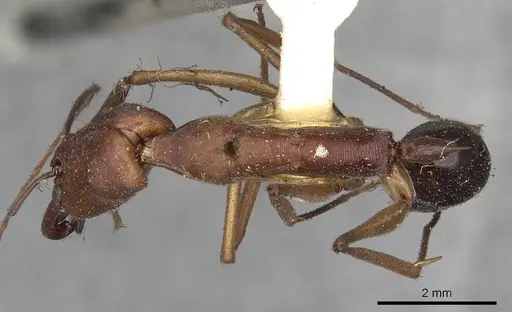
CASENT0915898
View on AntWeb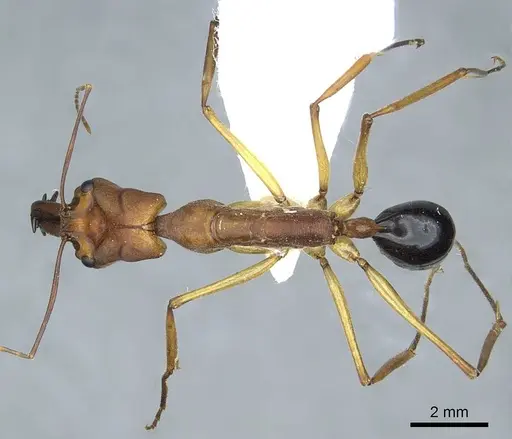
Literature
Loading distribution map...Loading products...