
Odontomachus minangkabau
- Sci. Name
- Odontomachus minangkabau
- Tribe
- Ponerini
- Subfamily
- Ponerinae
- Author
- Satria <i>et al.</i>, 2015
- Distribution
- Found in 1 countries
Introduction
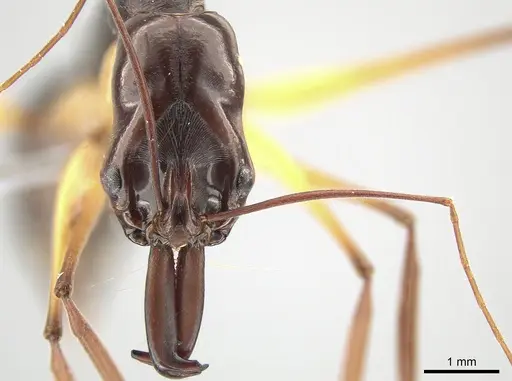
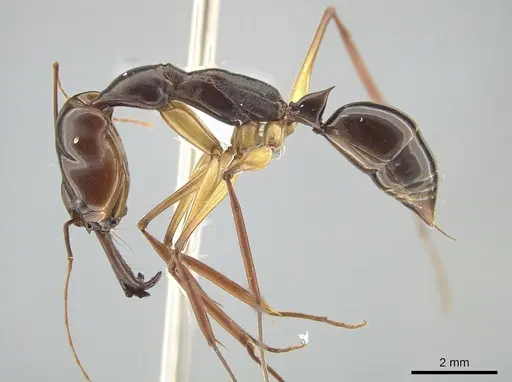
Odontomachus minangkabau is a trap-jaw ant species endemic to Sumatra, Indonesia. It belongs to the O. rixosus species group and is morphologically similar to O. rixosus and O. pararixosus . The species inhabits secondary and primary lowland forests, nesting in soil near the base of living trees . Workers have trap-jaw mandibles with 11-14 denticles . This species was described in 2015 and is known from subterranean nests at depths of 12.5-37.5 cm . Its recent discovery and limited distribution make it a unique species for advanced antkeepers.
Quick Summary
- Difficulty: Expert
- Origin & Habitat: Endemic to Sumatra, Indonesia. Inhabits secondary and primary lowland forests, nesting in soil near base of living trees [1][2].
- Colony Type: Unconfirmed, no specific data on queen number in research context.
- Size & Growth:
- Queen: Size data unavailable, inferred from Odontomachus genus as approximately 8-10 mm total length.
- Worker: Size data unavailable, inferred from Odontomachus genus as approximately 8-12 mm total length.
- Colony: Unknown, no data on colony size in research context.
- Growth: Moderate, estimated based on genus patterns.
- Development: Unknown, no specific data in research context. (Development time is unconfirmed for this species.)
- Antkeeping:
- Temperature: Keep warm, roughly 24-28°C, as a tropical lowland species [1].
- Humidity: Keep nest substrate consistently moist but not waterlogged, based on subterranean nesting habits [2].
- Diapause: No, tropical species from Sumatra do not require hibernation [1].
- Nesting: Use soil-based nests with high humidity, mimicking natural subterranean conditions [2].
- Behavior: Trap-jaw ants have fast mandibles for hunting and defense. They are predatory and may bite if disturbed. Escape risk is moderate due to size.
- Common Issues: high humidity requirements, dry nests can cause colony decline, warm temperatures needed, cold can slow development, predatory nature, requires live prey, subterranean nesting, may need custom setups
Housing and Nest Setup
Odontomachus minangkabau is a subterranean species that nests in soil near tree bases. For captivity, use a deep soil layer or a nest with soil chambers to mimic natural conditions. Maintain high humidity with moist substrate, but ensure ventilation to prevent mold [2][1]. Naturalistic terrariums with leaf litter work well.
Feeding and Diet
As predatory trap-jaw ants, they hunt small invertebrates. Offer live prey like crickets or fruit flies 2-3 times per week. Sugar sources are not primary, focus on protein-rich live prey.
Temperature and Seasonal Care
Keep temperatures around 24-28°C year-round, as this is a tropical species from Sumatra [1]. Use a gentle heat gradient. No hibernation is needed.
Behavior and Defense
Trap-jaw ants use fast mandibles for hunting and defense. They are not aggressive toward humans but may bite if disturbed. Escape risk is moderate due to their size.
Colony Founding
Founding behavior is unconfirmed. No data on queen founding in research context.
Growth and Development
Growth rate is moderate, but specific timelines are unknown. Development data is not available for this species.
Frequently Asked Questions
How long does it take for Odontomachus minangkabau to produce first workers?
Unknown, no specific data in research context. Based on genus patterns, it may take several weeks, but this is unconfirmed.
What do Odontomachus minangkabau eat?
They are predatory and eat small invertebrates. Feed live prey such as crickets or fruit flies.
What temperature do they need?
Keep them warm at 24-28°C, as they are a tropical species from Sumatra [1].
Are they good for beginners?
No, this is an expert-level species due to humidity, temperature, and predatory needs.
Do they need hibernation?
No, as a tropical species, they do not require hibernation [1].
How big do colonies get?
Colony size is unknown for this species.
What type of nest should I use?
Use soil-based nests with high humidity, mimicking subterranean conditions [2].
Can I keep multiple queens together?
Colony type is unconfirmed, but monogyne is typical for the genus. Avoid combining queens without evidence.
Why are my ants dying?
Common causes include low humidity, cold temperatures, or lack of live prey. Ensure conditions match their tropical, subterranean habitat.
Report an Issue
The current care sheet is based fully on literature. See inconsistencies, or something that's incorrect? Please , it will be resolved after review from an admin. Contributing to the blogs tab also helps providing information, to make us be able to further improve the caresheets. Thank you for your support!
References

This caresheet is licensed under CC BY-SA 4.0 .
Community Blogs
ZRC
View on AntWeb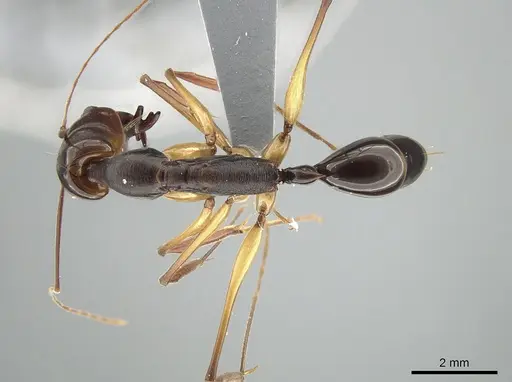
Literature
Loading distribution map...Loading products...