
Odontomachus caelatus
- Sci. Name
- Odontomachus caelatus
- Tribe
- Ponerini
- Subfamily
- Ponerinae
- Author
- Brown, 1976
- Distribution
- Found in 4 countries
Introduction
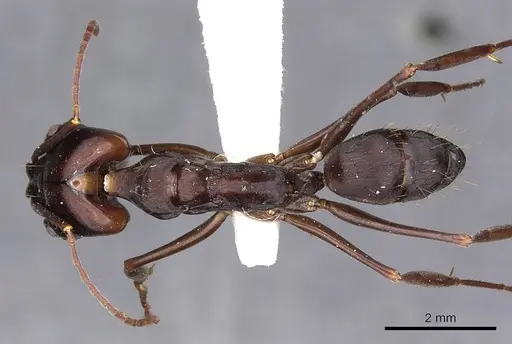
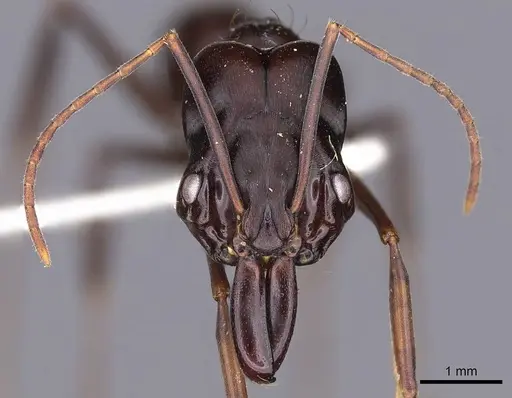
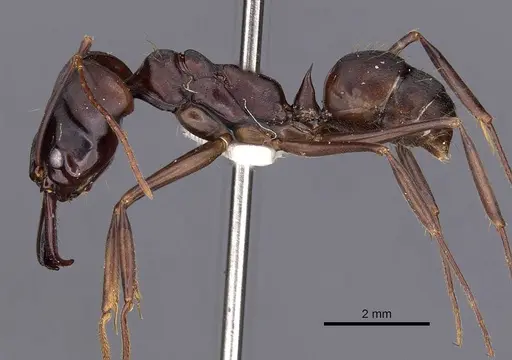
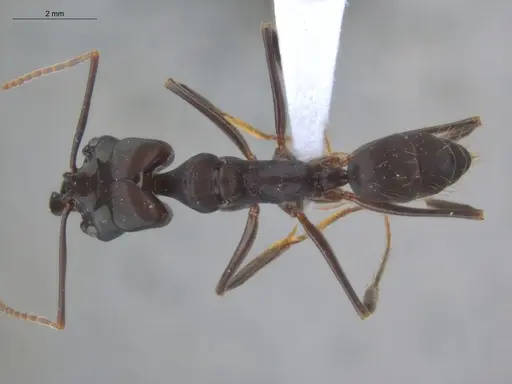
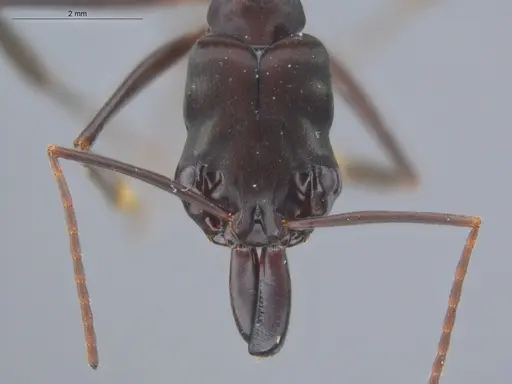
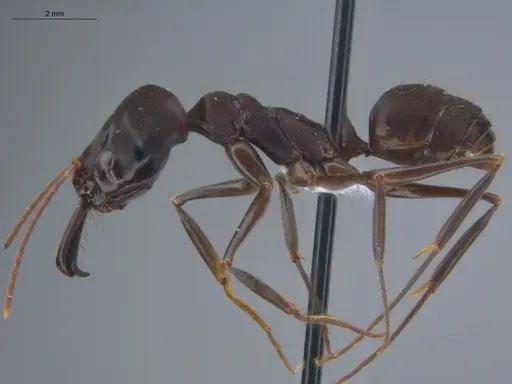
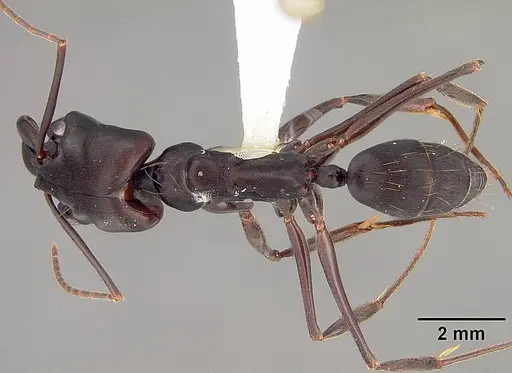
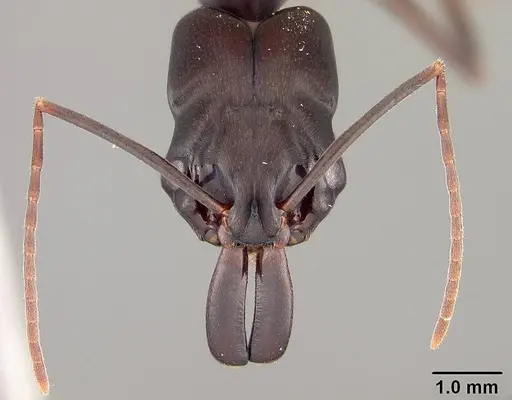
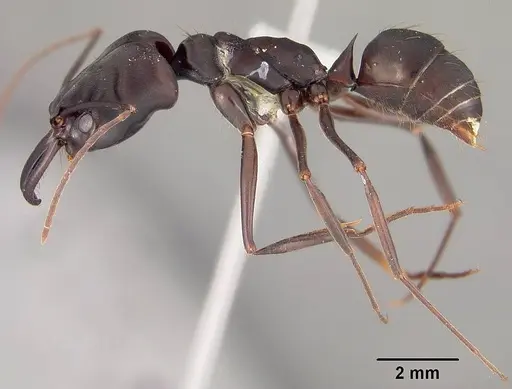
Odontomachus caelatus is a large trap-jaw ant found in the Amazon Basin and Guyanan forests of South America. Workers measure 11.1 to 14.6 mm in total length, with a dark reddish-brown to black body and distinctive longitudinal striations on the gastric dorsum and mesonotum . These ants inhabit wet rainforests, nesting in rotten wood or under leaf litter at tree bases .
Quick Summary
- Difficulty: Medium
- Origin & Habitat: Amazon Basin and Guyanan forests, including Brazil, Ecuador, Peru, Guyana, French Guiana, and Colombia. They live in wet tropical rainforest at elevations of 170-650 m, often in leaf litter or under rotten wood [1][2].
- Colony Type: Likely monogyne (single queen) based on typical Odontomachus patterns, but unconfirmed for this species.
- Size & Growth:
- Antkeeping:
- Temperature: Keep warm, roughly 24-28°C, based on tropical habitat. Provide a gradient for self-regulation.
- Humidity: Keep nest substrate consistently moist but not waterlogged, with a humidity gradient to mimic rainforest conditions.
- Diapause: No, as a tropical species, they do not require hibernation.
- Nesting: Provide a naturalistic setup with rotten wood, leaf litter, and moist soil, as they nest in these materials in the wild [1][2].
- Behavior: Aggressive predators with powerful stings and trap-jaw mandibles for hunting. Workers are active foragers on the forest floor. Escape risk is moderate due to their large size, use barriers like fluon on outworld rims.
- Common Issues: colonies may fail if humidity drops too low, these forest ants are sensitive to drying out, their powerful sting makes them unsuitable for handling or households with pets, founding phase can be slow if conditions are not optimal, wild-caught colonies may have parasites that cause mortality in captivity, live prey is essential, colonies can fail if only given dry food
Housing and Setup
Recreate their natural forest-floor habitat with a mix of soil, sand, and rotting wood pieces. Keep the nest area dark and humid, with a moisture gradient. Use a Y-tong or plaster nest with a water reservoir to maintain humidity. Provide a shallow water dish and sugar water source. Ensure enough space for foraging, with at least 10x10 cm floor area for growing colonies [1][2].
Feeding and Diet
These ants are obligate predators and need live prey such as fruit flies, small crickets, or mealworms. Offer protein 2-3 times per week and provide constant sugar water. Remove uneaten prey after 24 hours to prevent mold. [2]
Temperature and Humidity Control
Maintain temperatures around 24-28°C using a heating cable on top of the nest. Monitor with a thermometer at nest level. Humidity should be kept high with moist substrate, mist regularly or use a moisture reservoir in plaster nests.
Behavior and Handling
Workers are aggressive and will sting if threatened. Observe from a distance and avoid handling. They forage actively, especially at night, and can climb smooth surfaces, so use escape prevention like fluon. [2]
Colony Growth and Development
Founding queens may lay eggs within weeks, but development timeline is unconfirmed. First workers are smaller and help expand the colony. Growth is moderate, with colonies potentially reaching several hundred workers over years.
Frequently Asked Questions
How long does it take for Odontomachus caelatus to produce first workers?
No specific data is available for this species. Based on related Ponerinae, it may take several months at tropical temperatures, but this is unconfirmed.
Do Odontomachus caelatus ants sting?
Yes, they have a painful sting as part of their primary defense mechanism as ponerine ants.
What do I feed my Odontomachus caelatus colony?
They need live prey like fruit flies or crickets, and sugar water for energy. Protein is essential for brood development.
Are Odontomachus caelatus good for beginners?
No, they are considered intermediate due to high humidity needs, live prey requirements, and potent sting.
How big do Odontomachus caelatus colonies get?
Colony size data is unavailable, but they are long-lived ants with queens that can live many years.
Do I need to hibernate Odontomachus caelatus?
No, as a tropical species, they do not require hibernation. Keep them warm year-round.
Can I keep multiple Odontomachus caelatus queens together?
This has not been documented. Based on typical ponerine behavior, it is not recommended as they may fight.
Why is my colony dying?
Common causes include low humidity, insufficient live prey, or temperatures outside the 24-28°C range. Check for parasites in wild-caught colonies.
Report an Issue
The current care sheet is based fully on literature. See inconsistencies, or something that's incorrect? Please , it will be resolved after review from an admin. Contributing to the blogs tab also helps providing information, to make us be able to further improve the caresheets. Thank you for your support!
References

This caresheet is licensed under CC BY-SA 4.0 .
Community Blogs
Literature
Loading distribution map...Loading products...