
Odontomachus bradleyi
- Sci. Name
- Odontomachus bradleyi
- Tribe
- Ponerini
- Subfamily
- Ponerinae
- Author
- Brown, 1976
- Distribution
- Found in 3 countries
Introduction
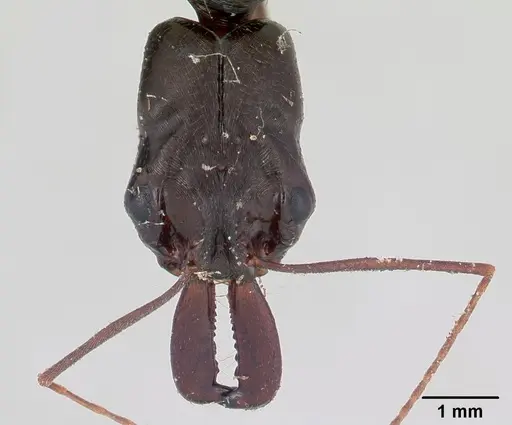
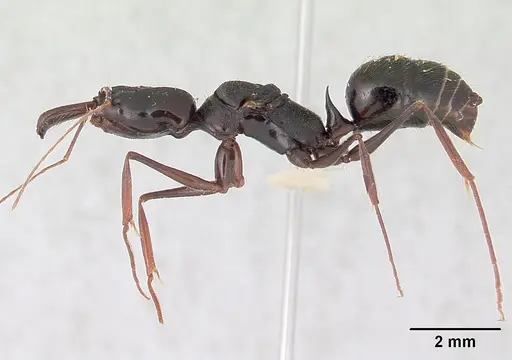
Odontomachus bradleyi is a large, reddish-brown trap-jaw ant native to the northwestern Andes of South America, found in Colombia, Ecuador, and Peru . Workers measure 13.4-14.9mm in total length, making them one of the larger Neotropical Odontomachus species . This species is unique within its genus as the sole member of the O. bradleyi group, identified by its four-segmented labial palpi which distinguishes it from other Odontomachus species . They inhabit mid-elevation forests and streams in the Andean region, typically nesting in decomposing wood at altitudes between 800 and 1,473 meters . The smooth areas of the head and gaster often show a distinct bluish iridescence .
Quick Summary
- Difficulty: Medium
- Origin & Habitat: Northwestern South America (Colombia, Ecuador, Peru), found in Andean forests and streams at 800-1,473m elevation, nesting in decomposing wood [2][4].
- Colony Type: Colony structure is unconfirmed, likely monogyne (single queen) based on typical genus patterns, but no specific studies exist for this species.
- Size & Growth:
- Queen: ~16.1mm [2]
- Worker: ~13.4-14.9mm [2]
- Colony: Unknown, no colony size data available for this species
- Growth: Unknown, no development timing data exists
- Development: Unknown, no direct studies on development. Based on typical Ponerinae patterns, estimate 8-12 weeks at optimal temperature. (Development timeline is unconfirmed. Related Neotropical Odontomachus species typically take 2-3 months from egg to worker.)
- Antkeeping:
- Temperature: Keep at moderate temperatures. Based on their mid-elevation Andean habitat (800-1,473m), they prefer stable warmth, avoid extreme heat. A gentle gradient allowing them to choose their preferred zone works best.
- Humidity: Moderate to high humidity required, they naturally inhabit damp forest environments near streams. Keep nest substrate consistently moist but not waterlogged. Provide a water tube for drinking access.
- Diapause: Unknown, no specific studies on overwintering requirements. Their highland habitat suggests they may tolerate cooler temperatures, but captive colonies should maintain stable warmth year-round unless behavioral slowdown is observed.
- Nesting: Natural nesting in decomposing wood, in captivity they do well in Y-tong (AAC) nests or well-moistened plaster nests. Provide narrow chambers and a dark, quiet location. They prefer tight, enclosed spaces similar to their natural rotting log habitat [4].
- Behavior: As trap-jaw ants, they possess powerful mandibles capable of snapping shut rapidly, this is their primary defense and hunting tool. They are predatory, hunting small invertebrates. Workers are moderately active and will forage for protein prey. Escape prevention is important given their large size and powerful jaws, ensure secure barriers. They are defensive when disturbed, using their mandibles aggressively. As members of the subfamily Ponerinae, they also possess a functional sting that can inject potent venom.
- Common Issues: lack of captive care data makes specific requirements uncertain, keepers must adapt based on colony observations, predatory nature requires constant protein supply, colonies may decline without adequate live prey, large size and powerful mandibles mean they can damage escape barriers if not properly secured, high humidity needs can lead to mold if ventilation is inadequate, functional sting means handling requires caution, they are not dangerous but can be painful
Housing and Nest Setup
Odontomachus bradleyi does well in Y-tong (AAC) nests or moistened plaster nests that can maintain high humidity. They naturally nest in decomposing wood, so provide chambers that mimic this tight, enclosed environment. The nest should have multiple connected chambers but avoid overly large spaces, these ants prefer cozy, confined areas. Place the nest in a dark location as they are light-sensitive and prefer to stay hidden. An outworld (foraging area) should be attached for feeding access. Use a water tube to maintain humidity and provide drinking water. Given their large size (up to 15mm), ensure the nest chambers are appropriately scaled. They are found in forests and streams, often collected in decomposing trunks [4].
Feeding and Diet
As predatory Ponerinae ants, they require a protein-rich diet. Feed small live insects such as fruit flies, small crickets, mealworms, and other appropriately-sized invertebrates. They will likely accept dead prey as well, but live prey encourages natural hunting behavior. Sugar sources are not typically a primary food for this genus, they obtain energy primarily from protein. Feed protein prey 2-3 times per week, adjusting based on colony consumption. Remove uneaten prey after 24-48 hours to prevent mold. A constant water source is essential.
Temperature and Humidity
Maintain moderate temperatures, reflecting their mid-elevation Andean habitat. They come from environments with stable temperatures around 800-1,473m elevation, so avoid extreme heat or cold. Use a heating cable on one side of the nest only if room temperature falls below this range, and always place heating on top of the nest to avoid drying. Humidity should be moderate to high, keep the nest substrate consistently moist. These ants naturally inhabit damp forest floors near streams, so they are not tolerant of dry conditions. Monitor for condensation as an indicator of proper humidity. Poor humidity can cause colony decline. [2][4]
Behavior and Handling
Odontomachus bradleyi is a trap-jaw ant with powerful mandibles capable of rapid snapping. While not typically aggressive toward humans, they can deliver a painful pinch if handled carelessly. Workers are moderately active and will venture into the outworld to hunt for prey. They are not known for excessive climbing or escaping, but their large size and strong jaws mean they can exploit loose connections in setup. Use secure barriers and check connections regularly. They prefer to stay within the nest and may become stressed with excessive light or disturbance. Observe colony activity patterns to understand their daily rhythms. As members of the subfamily Ponerinae, they also possess a functional sting that can inject potent venom.
Colony Establishment
If acquiring a queen (foundress), she will likely seal herself in a chamber and raise the first brood alone, this is typical claustral founding behavior for Ponerinae. The queen will not forage during founding, relying on stored energy reserves. Do not disturb her during this critical period. Once the first workers (nanitics) emerge, the colony can be fed small prey items. Growth is likely slow initially, be patient as the colony establishes itself. No specific data exists on colony founding for this species, so observe behavior and adjust care accordingly. Expect 6+ months before significant growth.
Frequently Asked Questions
How long does it take for Odontomachus bradleyi to produce first workers?
The exact timeline is unconfirmed for this species. Based on typical Ponerinae development, expect 8-12 weeks from egg to first worker at optimal temperature. Patience is essential as this is a slow-growing species compared to faster tropical ants.
What do Odontomachus bradleyi ants eat?
They are predatory ants requiring protein. Feed small live insects like fruit flies, small crickets, and mealworms. They are not typically sugar-dependent like some ant genera. Remove uneaten prey after 24-48 hours to prevent mold.
What temperature do Odontomachus bradleyi need?
Keep them at moderate temperatures. This reflects their mid-elevation Andean habitat where temperatures are moderate year-round. Avoid extreme heat or cold.
Are Odontomachus bradleyi good for beginners?
This species is rated as Medium difficulty. While visually impressive as trap-jaw ants, the lack of captive care data and specific requirements make them better suited for keepers with some experience. Their high humidity needs and predatory diet require attention.
How big do Odontomachus bradleyi colonies get?
Colony size is unknown, no data exists on maximum colony size for this species. Based on their large worker size and typical genus patterns, colonies likely reach several hundred workers over several years.
Do Odontomachus bradleyi need hibernation?
Diapause requirements are unconfirmed. Their highland habitat (800-1,473m) suggests they may tolerate cooler temperatures, but captive colonies should likely maintain stable warmth year-round unless behavioral slowdown is naturally observed.
What humidity level do Odontomachus bradleyi need?
Moderate to high humidity is essential, they naturally inhabit damp forest environments near streams. Keep nest substrate consistently moist but not waterlogged. A water tube for constant access helps maintain humidity.
Can I keep multiple Odontomachus bradleyi queens together?
Colony structure is unconfirmed for this species. Combining unrelated queens is not recommended as no studies exist on pleometrosis (multiple queen founding) for O. bradleyi. Most Odontomachus are single-queen colonies.
What type of nest is best for Odontomachus bradleyi?
Y-tong (AAC) nests or moistened plaster nests work well. They naturally nest in decomposing wood, so provide tight, enclosed chambers. Avoid overly large spaces and ensure the nest can maintain high humidity.
Where is Odontomachus bradleyi found in the wild?
They are found in the northwestern Andes of South America, Colombia, Ecuador, and Peru. They inhabit forests and streams at elevations between 800-1,473 meters, typically nesting in decomposing wood.
Why is Odontomachus bradleyi called the bradleyi group?
This species is unique as the sole member of the Odontomachus bradleyi group, distinguished by its four-segmented labial palpi (four-segmented mouthparts) which separates it from all other Odontomachus species [3]. It was described by Brown in 1976 from specimens collected in Peru.
Report an Issue
The current care sheet is based fully on literature. See inconsistencies, or something that's incorrect? Please , it will be resolved after review from an admin. Contributing to the blogs tab also helps providing information, to make us be able to further improve the caresheets. Thank you for your support!
References

This caresheet is licensed under CC BY-SA 4.0 .
Community Blogs
CASENT0178691
View on AntWeb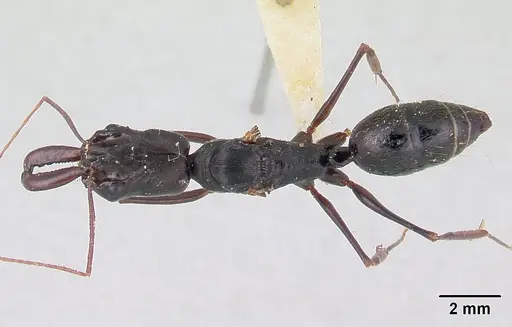
Literature
Loading distribution map...Loading products...