
Odontomachus biumbonatus
- Sci. Name
- Odontomachus biumbonatus
- Tribe
- Ponerini
- Subfamily
- Ponerinae
- Author
- Brown, 1976
- Distribution
- Found in 6 countries
Introduction
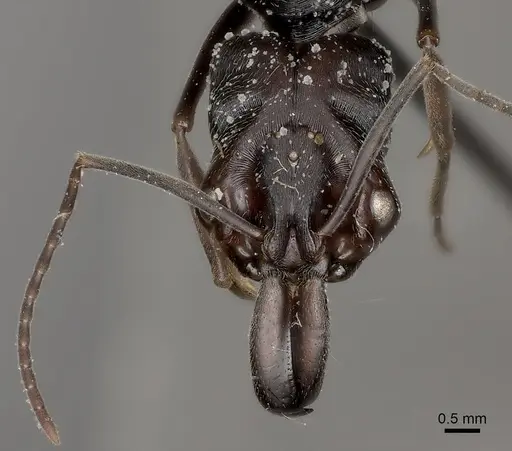
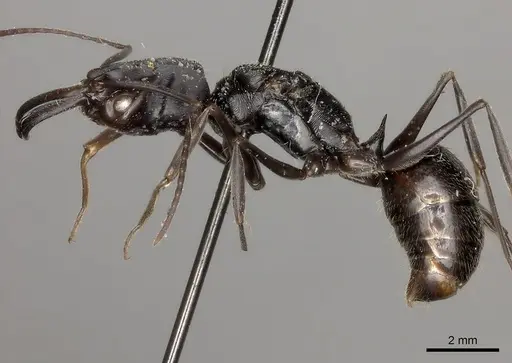
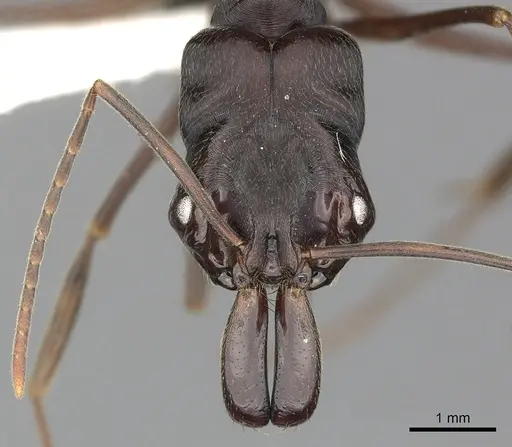
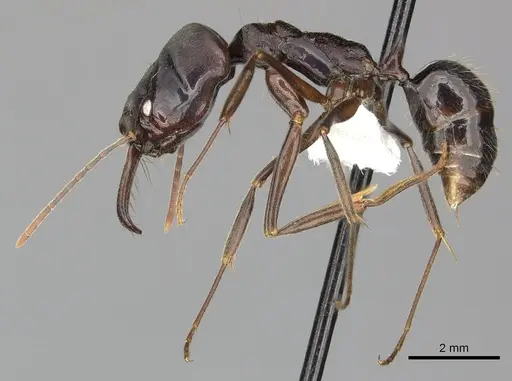
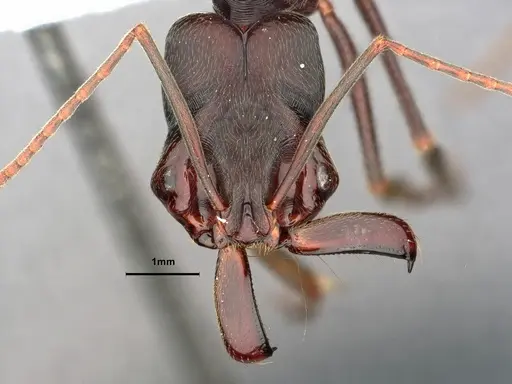
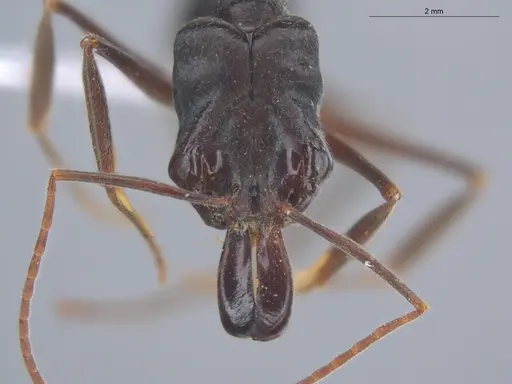
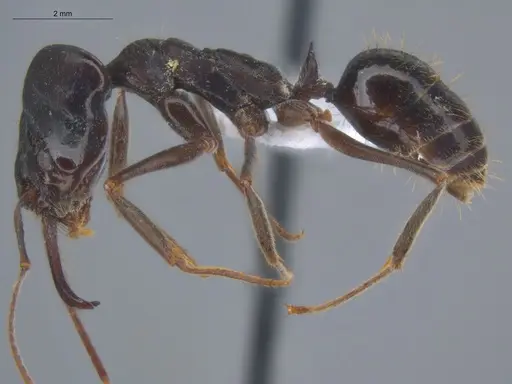
Odontomachus biumbonatus is a large trap-jaw ant found in the Amazon Basin, including Brazil, Ecuador, Peru, Guyana, French Guiana, and Colombia . Workers measure approximately 11.7-13.2 mm in total length, with queens slightly larger at 14.9-15.1 mm . The species has dark reddish-brown to nearly black coloration, a broad head, and a uniquely smooth petiole with posterolateral prominences . It nests primarily in decomposing wood in humid lowland tropical forests, often near streams and rivers .
Quick Summary
- Difficulty: Medium
- Origin & Habitat: Amazon Basin, found in Brazil, Ecuador, Peru, Guyana, French Guiana, and Colombia. Inhabits humid tropical forests, typically nesting in rotting wood near streams and rivers [1][2].
- Colony Type: Based on Odontomachus patterns, likely monogyne (single queen colonies).
- Size & Growth:
- Antkeeping:
- Temperature: Keep warm, roughly 24-28°C, based on tropical habitat [3].
- Humidity: Keep nest substrate consistently moist but not waterlogged, based on humid forest habitat [3][1].
- Diapause: No, tropical species, no hibernation needed.
- Nesting: Nests in decomposing wood [1]. In captivity, use naturalistic setups with rotting wood or Y-tong/plaster nests with moisture chambers.
- Behavior: Odontomachus biumbonatus is an active predator with powerful trap-jaw mandibles. Workers are alert and hunt small invertebrates. They are not aggressive toward keepers but can deliver a painful bite. Defense involves their mandibles, as they belong to the Ponerinae subfamily with sting capability. Escape risk is moderate due to their size, standard barriers work well.
- Common Issues: tropical humidity requirements mean colonies can suffer in dry indoor environments [3], their predatory nature means they need constant access to live prey, sugar alone is insufficient, slow colony growth compared to many common ants can frustrate beginners, wild-caught colonies may carry parasites that can decimate the colony in captivity, large size means they need appropriately sized prey items
Housing and Nest Setup
Odontomachus biumbonatus nests naturally in decomposing wood, so a naturalistic setup works best [1]. You can use cork nests, rotting wood pieces, or a Y-tong/plaster formicarium with a moisture chamber. The key is maintaining high humidity, these Amazonian ants need consistently damp conditions [3]. Place the nest in a quiet area away from direct sunlight and vibrations. The outworld should be spacious enough for hunting and foraging. Use a water test tube as a humidity source and mist regularly to maintain moisture levels. Escape prevention is straightforward for this size, standard fluon barriers on smooth surfaces work well.
Feeding and Diet
As predatory trap-jaw ants, they need a protein-rich diet of live insects. Feed them appropriately sized prey like crickets, mealworms, fruit flies, and other small invertebrates. They will also accept sugar sources like honey or sugar water, but protein is essential for colony growth and brood development. Feed protein 2-3 times per week, and keep sugar water available constantly. Remove uneaten prey after 24-48 hours to prevent mold.
Temperature and Humidity
These are tropical ants requiring warm, humid conditions. Keep temperatures roughly 24-28°C, avoid drops below 22°C as this can stress the colony [3]. A heating cable on one side of the nest creates a temperature gradient allowing ants to self-regulate. Humidity should be maintained by keeping the nest substrate consistently moist but not waterlogged [3][1]. Mist the outworld regularly and check for condensation on nest walls.
Behavior and Temperament
Odontomachus biumbonatus is an active, alert ant with powerful trap-jaw mandibles. Workers are efficient predators that hunt small invertebrates on the forest floor. They are not particularly aggressive toward humans but can deliver a painful bite if handled roughly or threatened. The colony maintains moderate activity, with workers patrolling the outworld and tending to the queen and brood. Their eyesight is good compared to many ants, and they respond to vibrations and movement.
Colony Development
Colony growth is moderate rather than rapid. A newly mated queen will found a colony alone, but founding behavior is unconfirmed for this species. The first workers, called nanitics, may take 6-10 weeks to emerge at optimal temperatures. As the colony grows, new workers will be larger and more robust. The queen is long-lived and will continue producing eggs for years. Regular feeding and proper humidity are key to sustained growth.
Frequently Asked Questions
How long does it take for Odontomachus biumbonatus to produce first workers?
Expect first workers in about 6-10 weeks at optimal tropical temperatures (24-28°C), based on typical Ponerinae development timelines.
What do I feed Odontomachus biumbonatus?
Feed them live insects like crickets, mealworms, fruit flies, and other small invertebrates. They are predators and need protein for colony growth. You can also offer sugar water or honey as an energy source, but protein is essential.
Can I keep multiple queens together?
This species is likely monogyne based on Odontomachus patterns, meaning colonies have a single queen. Combining unrelated queens will likely result in fighting. Only keep one queen per colony.
Do they need hibernation?
No. As a tropical Amazonian species, they do not require hibernation or winter cooling. Keep them warm year-round [3].
Are Odontomachus biumbonatus good for beginners?
They are intermediate-level ants. While not as difficult as some specialized species, they do require specific conditions: high humidity, warm temperatures, and a constant supply of live prey. If you have experience maintaining tropical conditions, they are a rewarding species.
How big do colonies get?
Colony size data is unavailable for this species. Based on typical Ponerinae patterns, colonies may grow moderately over several years.
What humidity level do they need?
Keep the nest substrate consistently moist but not waterlogged, based on their humid forest habitat [3][1]. Drying out is a common cause of colony failure.
When should I move them to a formicarium?
Move them when the colony reaches a crowded state in the test tube setup. They do well in naturalistic setups with rotting wood or cork, or in plaster/Y-tong nests with moisture chambers [1].
Why are my ants dying?
Common causes include: low humidity (tropical ants dry out easily), temperatures below 22°C, lack of live prey (they are obligate predators), and stress from vibrations or disturbance. Check your conditions first. Wild-caught colonies may also carry parasites that can cause problems in captivity.
Report an Issue
The current care sheet is based fully on literature. See inconsistencies, or something that's incorrect? Please , it will be resolved after review from an admin. Contributing to the blogs tab also helps providing information, to make us be able to further improve the caresheets. Thank you for your support!
References

This caresheet is licensed under CC BY-SA 4.0 .
Community Blogs
CASENT0217537
View on AntWeb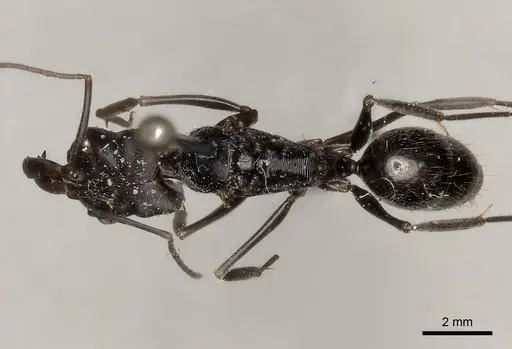
CASENT0270599
View on AntWeb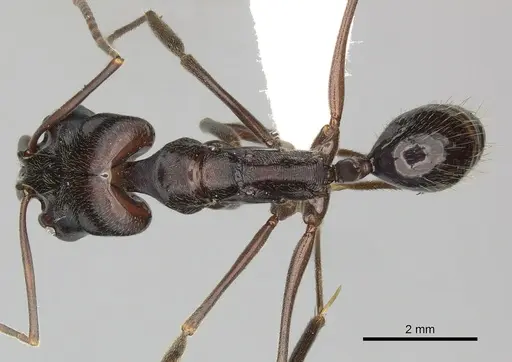
CASENT0882097
View on AntWeb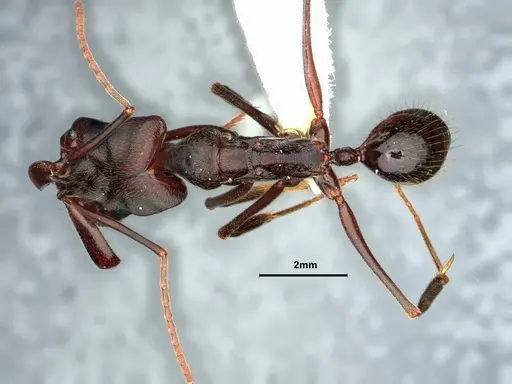
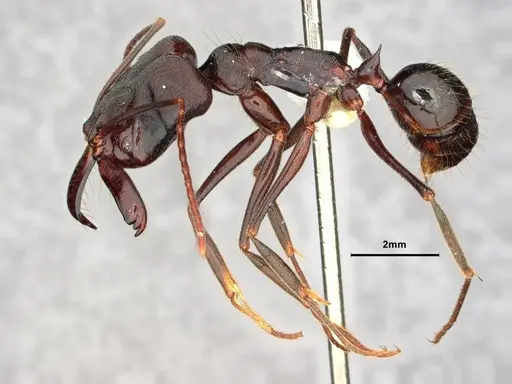
CASENT0900610
View on AntWeb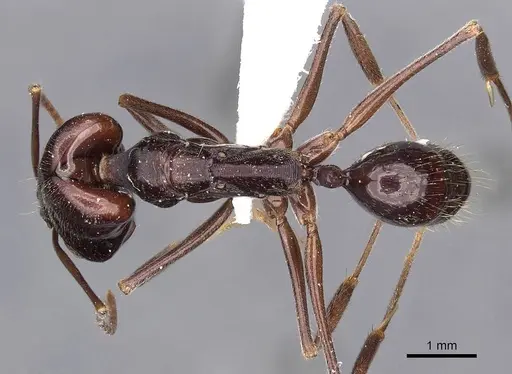
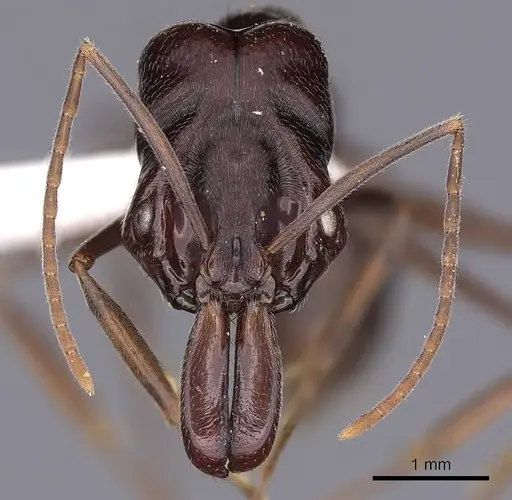
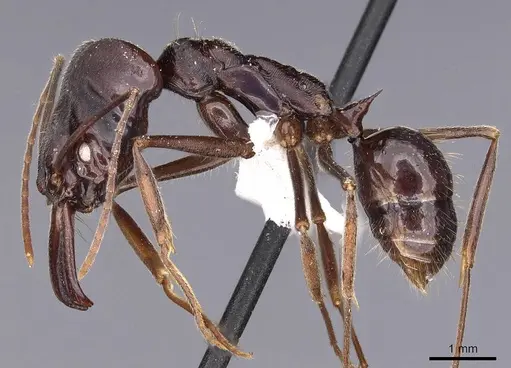
ECOFOG-KW14-0077-13
View on AntWeb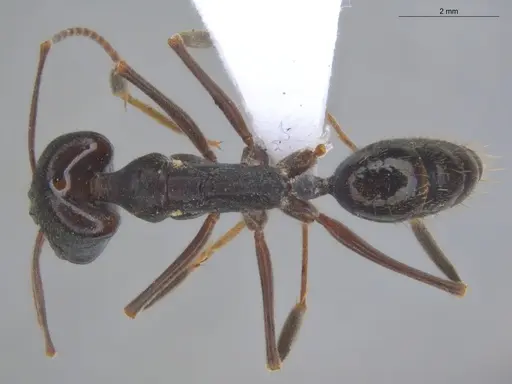
Literature
Loading distribution map...Loading products...