
Ocymyrmex picardi
- Sci. Name
- Ocymyrmex picardi
- Tribe
- Crematogastrini
- Subfamily
- Myrmicinae
- Author
- Forel, 1901
- Distribution
- Found in 3 countries
Introduction
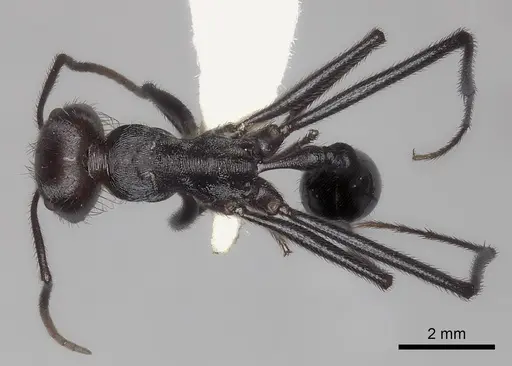
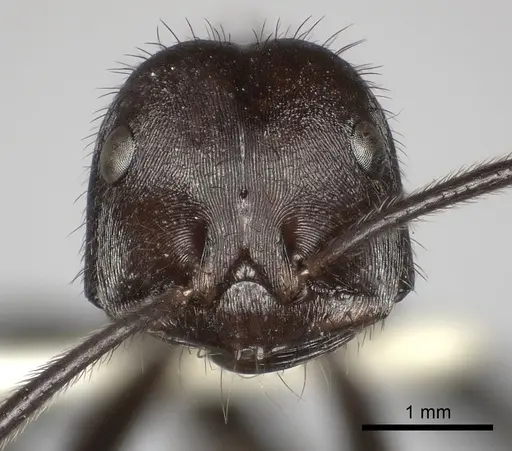
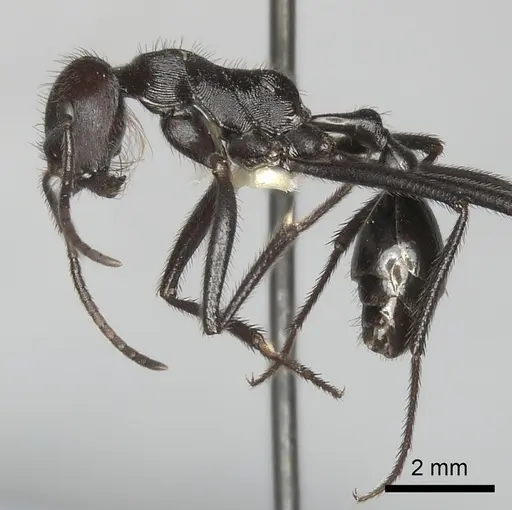
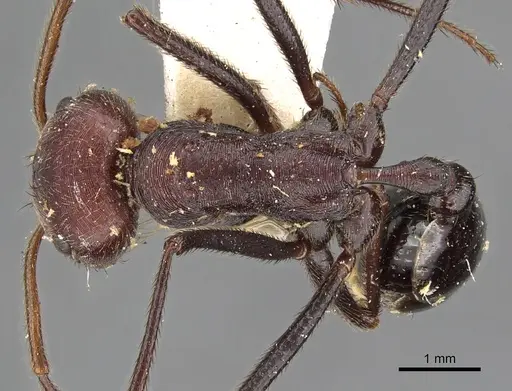
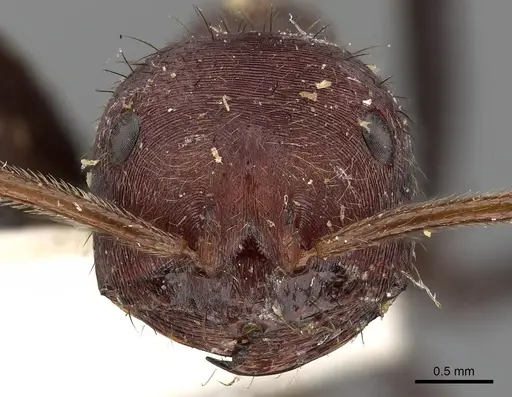
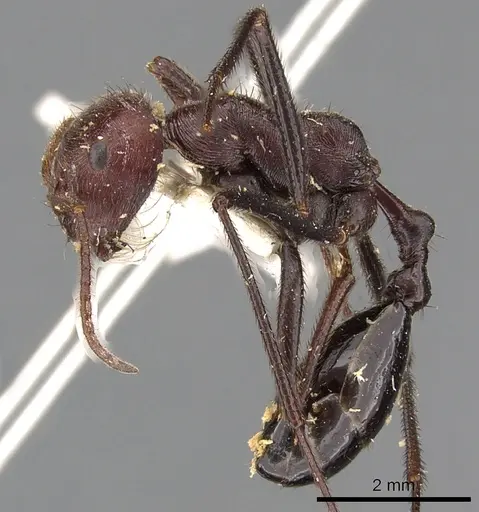
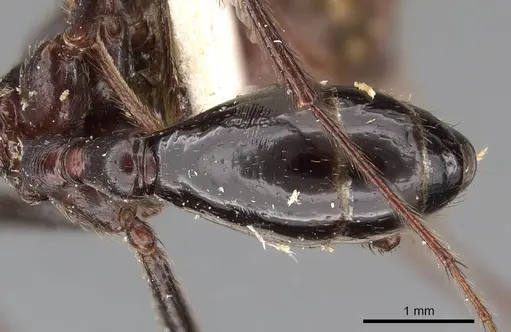
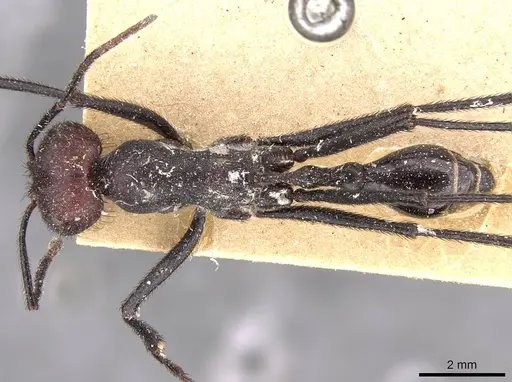
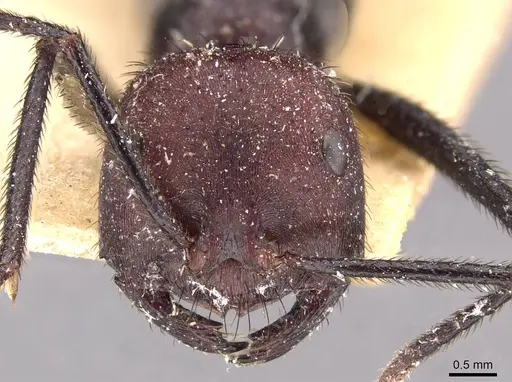
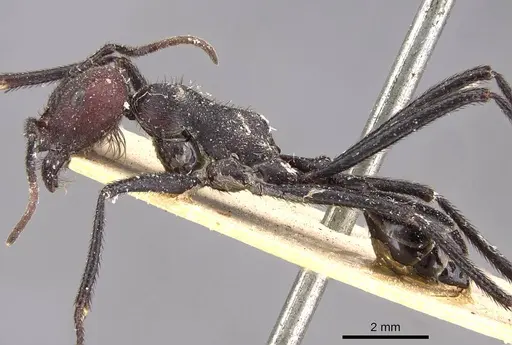
Ocymyrmex picardi is the largest species in its genus, with workers reaching 11.6-12.6 mm in total length . These ants are native to southern Africa, found in Angola, Botswana, Namibia, South Africa, and Zimbabwe . They live in hot, arid desert and semi-desert regions . A unique feature is the pygidial gland, an exocrine gland on the abdomen that produces chemical secretions . Unlike most ants, O. picardi has ergatoid queens, wingless queens that develop from worker larvae . Based on related species, only one ergatoid queen is reproductively active per colony .
Quick Summary
- Difficulty: Medium
- Origin & Habitat: Southern Africa (Angola, Botswana, Namibia, South Africa, Zimbabwe) in hot, arid desert and semi-desert regions [1].
- Colony Type: Single-queen colonies with ergatoid (wingless) replacement queens. Only one ergatoid queen is inseminated and reproductively active per colony [2][1].
- Size & Growth:
- Queen: Size data unavailable for ergatoid queens [1].
- Worker: 11.6-12.6 mm [1].
- Colony: Up to several hundred workers, based on related Ocymyrmex species [1].
- Growth: Moderate, inferred from genus patterns.
- Development: Unknown for this species [1]. (Development timeline unconfirmed, monitor colony progress.)
- Antkeeping:
- Temperature: Keep warm, roughly 26-32°C, based on desert adaptation [1].
- Humidity: Low to moderate, keep nest substrate dry to moderately moist, with a dry outworld [1].
- Diapause: Likely minimal or none, as a desert species [1].
- Nesting: Ground-nesting species, use dry, sandy substrate or Y-tong/plaster nests with low humidity chambers [1].
- Behavior: Predatory and fast-moving, diet is 70% arthropods, especially termites [1]. Workers are large and confident, making them moderate escape risks [1]. Colonies reproduce through fission, where a portion splits to a new nest [1].
- Common Issues: excess humidity can cause fungal infections, keep conditions dry [1]., lack of specific development data means growth timelines are estimates, monitor colony progress., predatory diet requires live prey, ensure steady supply of small insects [1]., ergatoid queens mean no winged reproductives, reproduction through colony fission [1]., deep-nesting instinct may struggle in shallow nests, provide adequate depth [1].
Housing and Nest Setup
Ocymyrmex picardi is a ground-nesting desert ant that requires dry, warm conditions. In captivity, use a naturalistic setup with deep sandy substrate, these ants dig nests about 30 cm deep in the wild [1]. A Y-tong or plaster nest with dry to moderately moist chambers works well. Provide a temperature gradient with a warm side and a cooler side, plus a dry outworld for foraging. Because they are large ants, secure lids and barrier tape prevent escapes [1].
Feeding and Diet
In the wild, O. picardi eats about 70% arthropods, especially live termites, and some plant material [1]. In captivity, offer live insects like fruit flies, small crickets, mealworms, and termites. They are active hunters, so protein-rich live prey should be the main diet. Supplement occasionally with sugar water or honey [1].
Temperature and Heating
As a desert species, O. picardi needs warm conditions. Keep the nest area at roughly 26-32°C, using a heating cable on one side to create a gradient. Room temperature alone may be too cool, so supplemental heating is often necessary. Monitor temperatures with a thermometer [1].
Colony Structure and Reproduction
O. picardi has ergatoid queens, wingless queens that develop from worker larvae [1]. Based on related species, only one ergatoid queen is reproductively active per colony [2]. Colonies reproduce through fission, where a portion splits to a new nest site, sometimes up to 150 meters away [1]. This means no winged reproductives, growth happens through the existing queen [1].
Behavior and Foraging
These ants are fast, active foragers with a strong predatory drive. Workers hunt cooperatively and can take down large prey. They construct nests with a single entrance leading to deep chambers [1]. The pygidial gland may produce defensive chemicals [1]. Workers are confident but not aggressive toward keepers [1].
Frequently Asked Questions
How long does it take for Ocymyrmex picardi to produce first workers?
The exact timeline is unknown for this species [1]. Monitor your colony's progress and adjust temperature and feeding accordingly.
Can I keep multiple Ocymyrmex picardi queens together?
No, this species has single-queen colonies with ergatoid replacement queens. Only one ergatoid queen is reproductively active per colony [2][1]. Combining unrelated queens is not recommended.
What do Ocymyrmex picardi ants eat?
They are primarily predatory, needing live insects. About 70% of their diet is arthropods, especially termites [1]. Feed them live fruit flies, small crickets, mealworms, and termites.
Do Ocymyrmex picardi ants sting?
As a Myrmicinae species, they have a stinger. They are not typically aggressive toward humans but will defend the nest if threatened. The pygidial gland may also produce defensive chemicals [1].
What temperature do Ocymyrmex picardi ants need?
Keep them warm at roughly 26-32°C, based on their desert adaptation [1]. Use a heating cable on one side of the nest to create a gradient.
Are Ocymyrmex picardi good for beginners?
They are rated as medium difficulty. They require warm, dry conditions and a predatory diet of live insects, which is more demanding than feeding standard ant species [1]. Experience with antkeeping basics is recommended.
How big do Ocymyrmex picardi colonies get?
The exact maximum is unknown, but colonies likely reach up to several hundred workers, based on related species [1]. Reproduction occurs through colony fission.
Do Ocymyrmex picardi need hibernation?
Probably not, as a desert species, they likely remain active year-round in warm conditions [1]. If kept cooler, they may slow down, but hibernation is not necessary.
When should I move Ocymyrmex picardi to a formicarium?
Start in a test tube setup. Once the colony has 20-30 workers and significant brood, transition to a deeper nest with heating [1].
Why are my Ocymyrmex picardi dying?
Common causes include excess humidity, temperatures that are too cool, insufficient live prey, or poor escape prevention [1]. Review these factors and avoid disturbing the colony excessively.
Report an Issue
The current care sheet is based fully on literature. See inconsistencies, or something that's incorrect? Please , it will be resolved after review from an admin. Contributing to the blogs tab also helps providing information, to make us be able to further improve the caresheets. Thank you for your support!
References

This caresheet is licensed under CC BY-SA 4.0 .
Community Blogs
Literature
Loading distribution map...Loading products...