
Ocymyrmex fortior
- Sci. Name
- Ocymyrmex fortior
- Tribe
- Crematogastrini
- Subfamily
- Myrmicinae
- Author
- Santschi, 1911
- Distribution
- Found in 6 countries
Introduction
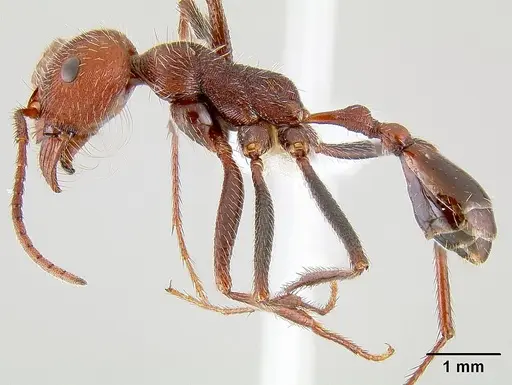
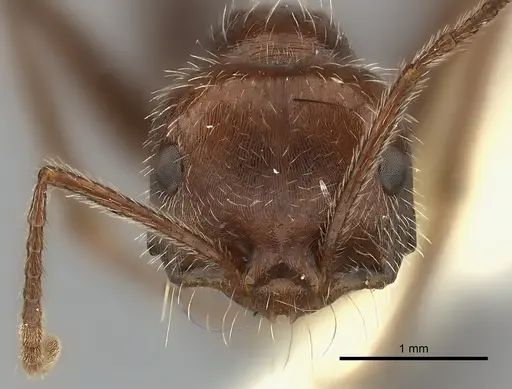
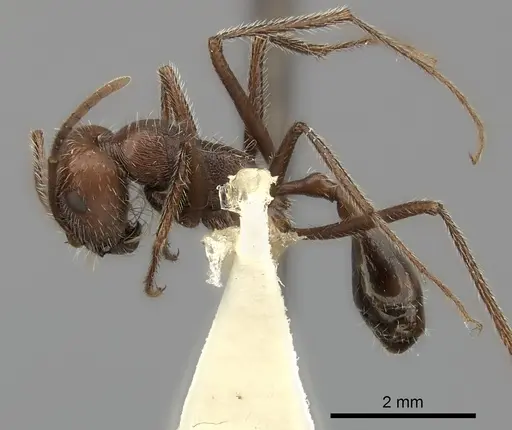
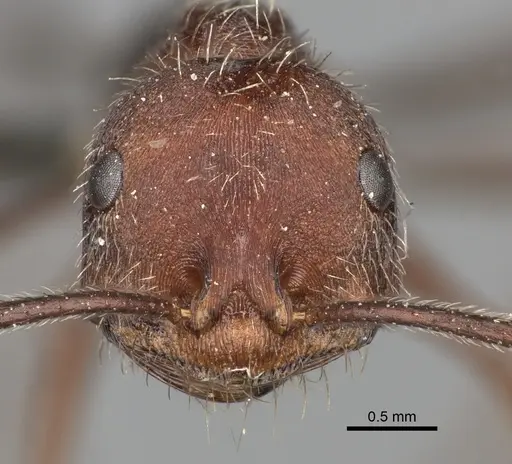
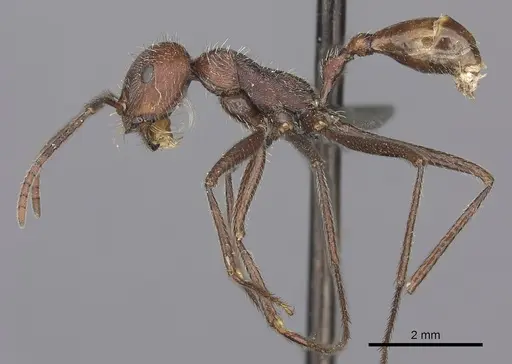
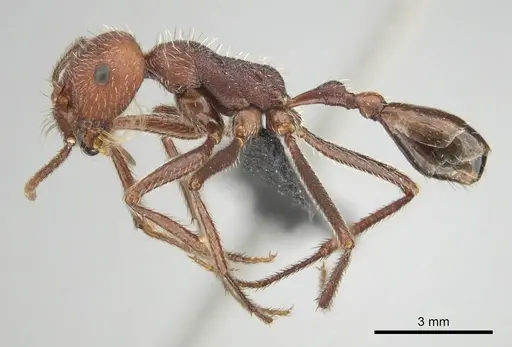
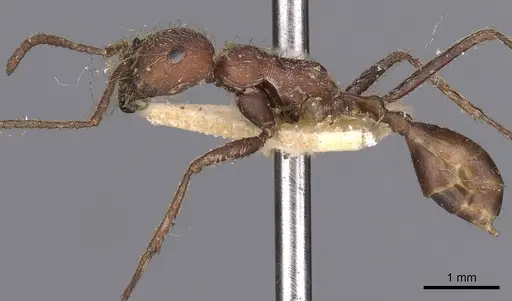
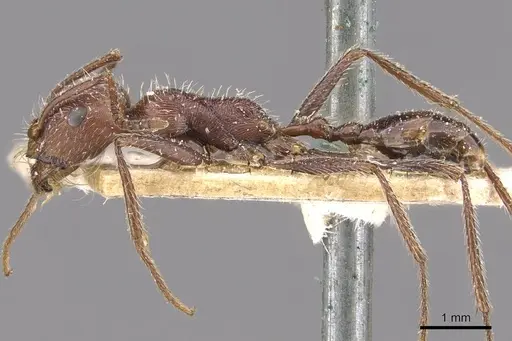
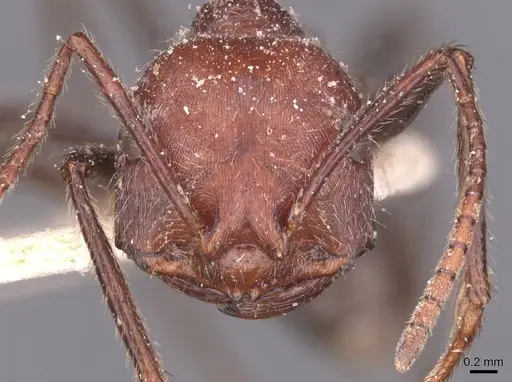
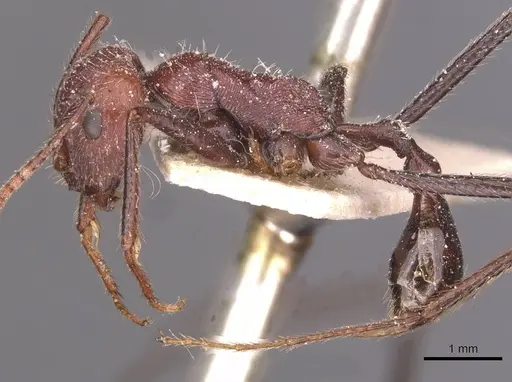
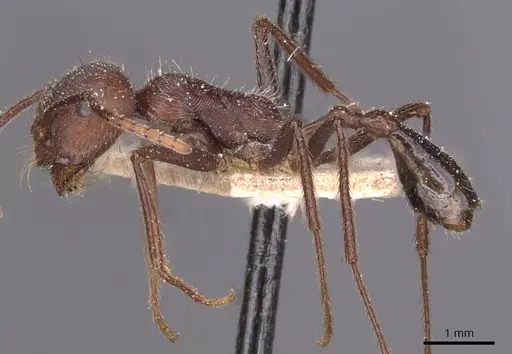
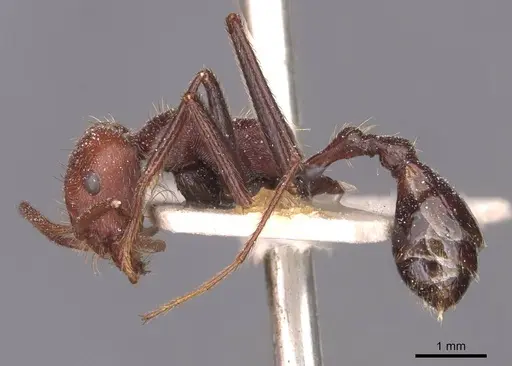
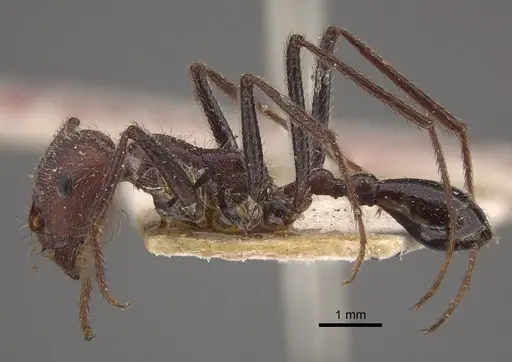
Ocymyrmex fortior is a medium-sized myrmicine ant native to southern Africa. Workers measure 6.7-8.2 mm in total length . They have a brick-red head and alitrunk, with a darker blackish-brown gaster . This species is widespread from Angola to South Africa and Zimbabwe, and is strongly associated with woodland habitats . Workers exhibit nest-building behavior, deliberately closing nest entrances with small stones during inactivity .
Quick Summary
- Difficulty: Medium
- Origin & Habitat: Southern Africa, found in Angola, Botswana, Eswatini, Namibia, South Africa, Zambia, and Zimbabwe. Strongly associated with woodland vegetation types, and also found in lowveld natural grasslands. Avoids higher elevations above 1200m [2][3][4].
- Colony Type: Based on typical Ocymyrmex patterns, likely single-queen colonies, but this has not been directly studied.
- Size & Growth:
- Antkeeping:
- Temperature: Keep warm, around 24-30°C. This is a thermophilic genus from hot southern African climates [1].
- Humidity: Low to moderate, these are desert and savanna ants adapted to dry conditions [1].
- Diapause: No, they are adapted to year-round warm conditions in tropical/subtropical Africa [1].
- Nesting: Natural nesting involves underground nests with crater-like entrances, and workers add stones to seal them [1]. In captivity, use dry, well-drained nests like Y-tong or plaster with compact chambers.
- Behavior: Workers are active foragers with a varied diet, primarily granivorous but also predatory [1]. They are not particularly aggressive toward keepers but will defend their nest. Escape risk is moderate due to their medium size.
- Common Issues: dry conditions are essential, too much moisture leads to mold and colony stress, warm temperatures are critical, they are adapted to hot climates and may struggle in cool conditions, slow to establish, founding colonies may take time to produce first workers, predatory nature means they need protein prey, not just seeds, limited availability, this is not a common species in the antkeeping hobby
Natural History and Distribution
Ocymyrmex fortior is widespread across southern Africa, found from Angola to Zimbabwe and South Africa. It is strongly associated with woodland vegetation and common in grassy areas of Kruger National Park. Populations decrease above 1200m elevation [2][4][3].
Appearance and Identification
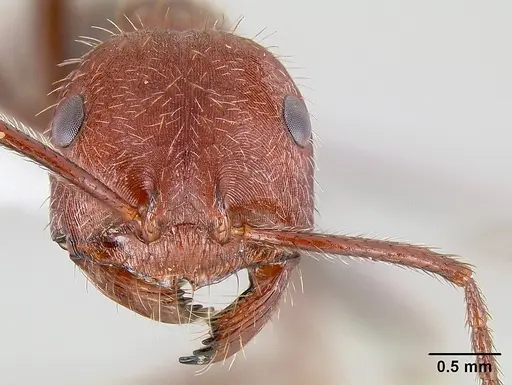
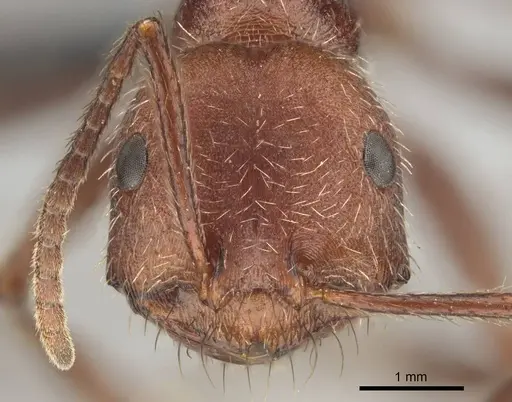
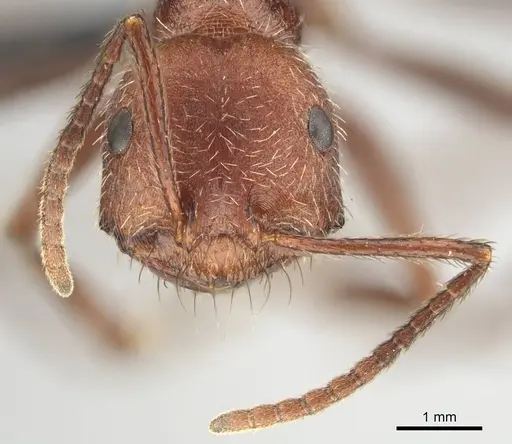
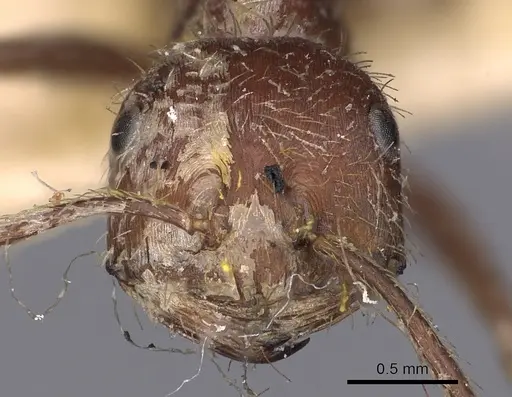
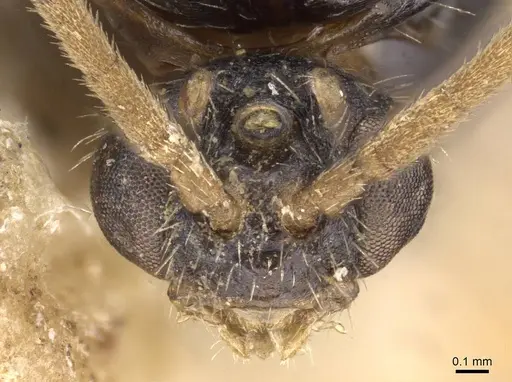
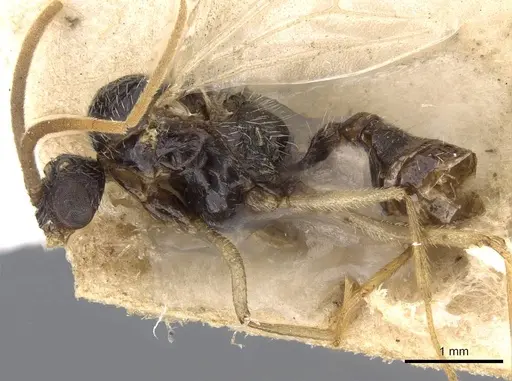
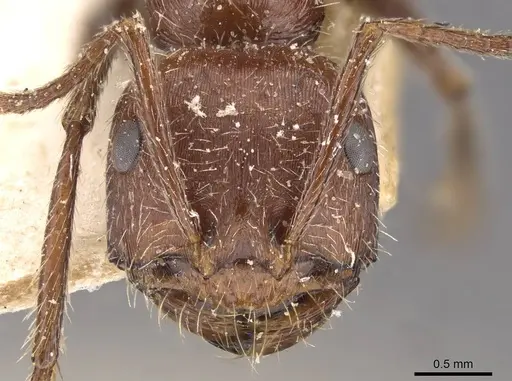
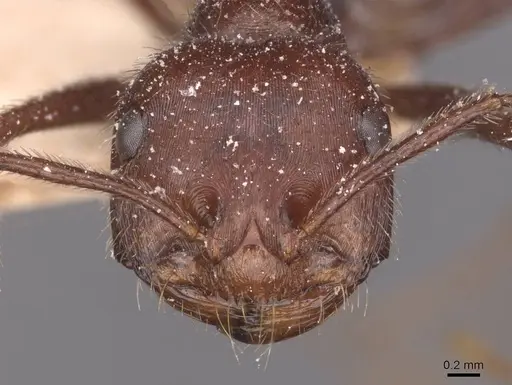
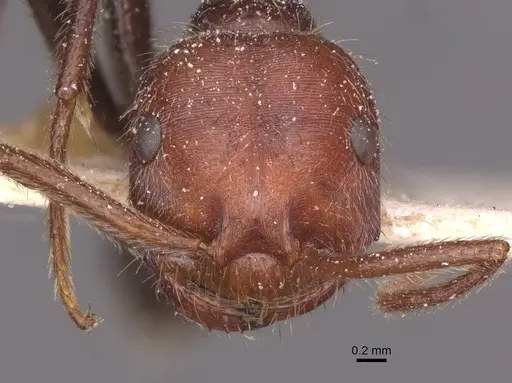
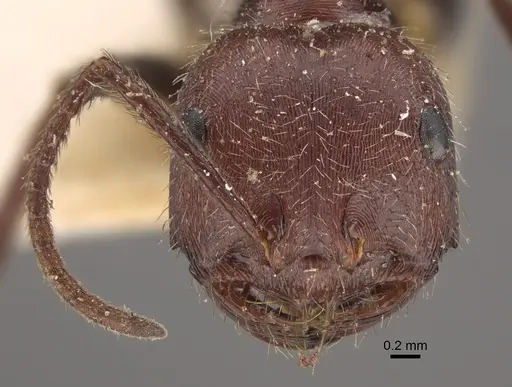
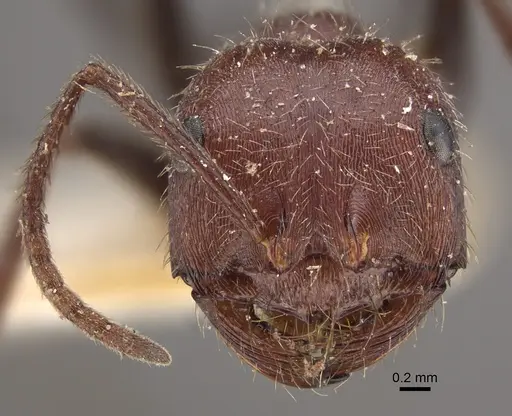
Workers are 6.7-8.2 mm in total length, with brick-red head and alitrunk, and darker gaster [1]. The head has fine longitudinal striations, and the petiole has a small, low node [1].
Feeding and Diet
Ocymyrmex fortior is primarily granivorous but also predatory, consuming seeds and preying on other ants and termites [1]. In captivity, offer seeds and protein sources like insects.
Nest Building Behavior
Workers deliberately close nest entrances with small stones during inactivity and add stones to create crater-like entrances [1]. This behavior may regulate temperature or provide protection.
Temperature and Care
As a thermophilic species, keep temperatures around 24-30°C with a gradient [1]. They require low humidity and no diapause [1].
Housing and Setup
Use dry, well-drained nests like Y-tong or plaster with compact chambers [1]. Provide an outworld with seeds and protein, and ensure escape prevention.
Frequently Asked Questions
What do Ocymyrmex fortior ants eat?
They are primarily granivorous (seed-eaters) but also predatory. Offer small seeds, grains, or bird seed as a staple, supplemented with protein sources like small insects or mealworms [1].
What temperature do Ocymyrmex fortior ants need?
Keep them warm at 24-30°C. This is a thermophilic species from hot southern African climates [1].
Are Ocymyrmex fortior ants difficult to keep?
They are considered medium difficulty. They require warm, dry conditions and have specific dietary needs [1].
How big do Ocymyrmex fortior colonies get?
Colony size is not well documented in research. Based on genus patterns, they may reach moderate sizes, but no specific data is available.
Do Ocymyrmex fortior ants sting?
Ocymyrmex ants have a stinger but are not considered particularly dangerous to humans. They will defend their nest if threatened.
What humidity level do Ocymyrmex fortior ants need?
Low to moderate humidity. These are desert and savanna ants adapted to dry conditions [1].
How long does it take for Ocymyrmex fortior to produce first workers?
Development time is unknown, no data available in research.
Can I keep multiple Ocymyrmex fortior queens together?
Colony structure is not well studied. It is unknown whether they are single-queen or multi-queen. Combining unrelated queens is not recommended without more information.
Do Ocymyrmex fortior ants need hibernation?
No, they do not require hibernation. As tropical/subtropical ants, they are adapted to year-round warm conditions [1].
What type of nest is best for Ocymyrmex fortior?
Dry, well-drained nests work best, such as Y-tong or plaster nests with compact chambers [1].
Where are Ocymyrmex fortior ants found in the wild?
They are native to southern Africa, found in Angola, Botswana, Eswatini, Namibia, South Africa, Zambia, and Zimbabwe [1][2][4].
Why do Ocymyrmex fortior ants add stones to their nest entrance?
Workers deliberately close the nest entrance with small stones during inactivity and add stones to create a crater-like entrance [1].
Report an Issue
The current care sheet is based fully on literature. See inconsistencies, or something that's incorrect? Please , it will be resolved after review from an admin. Contributing to the blogs tab also helps providing information, to make us be able to further improve the caresheets. Thank you for your support!
References

This caresheet is licensed under CC BY-SA 4.0 .
Community Blogs
CASENT0106140
View on AntWeb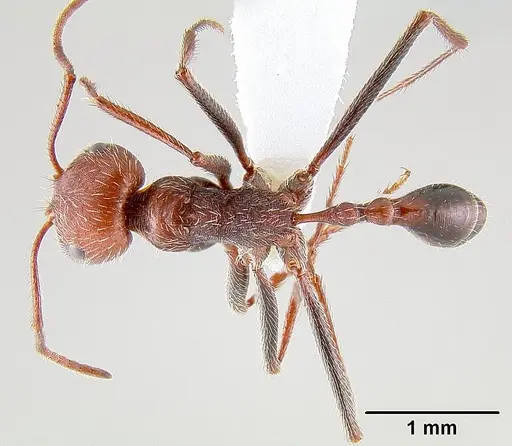
CASENT0217897
View on AntWeb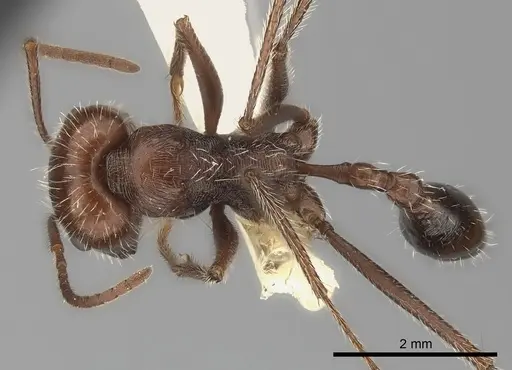
CASENT0235944
View on AntWeb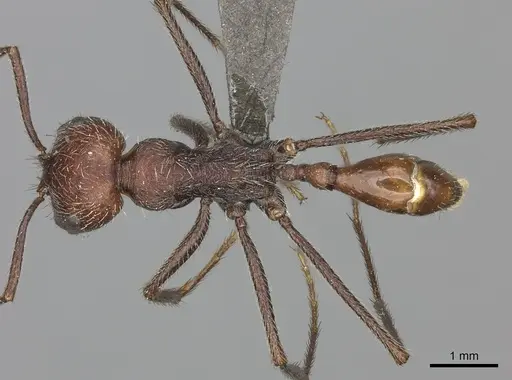
CASENT0257381
View on AntWeb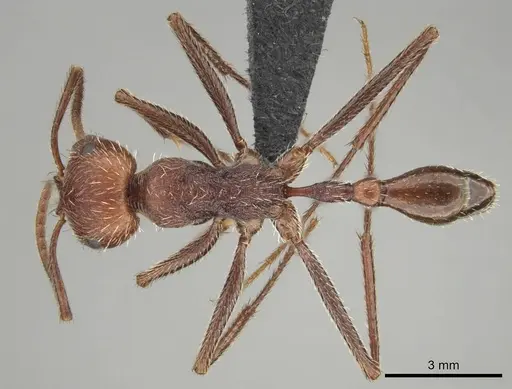
CASENT0900406
View on AntWeb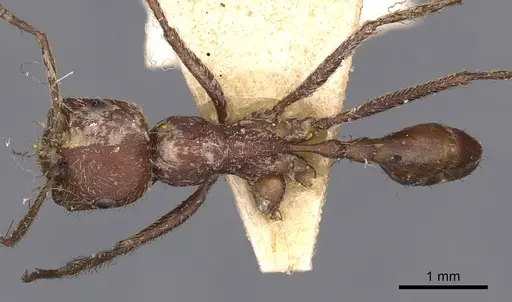
CASENT0909077
View on AntWeb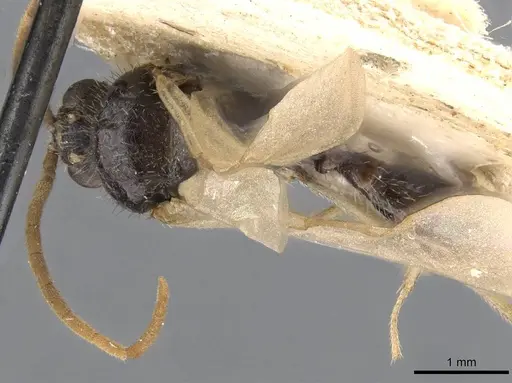
CASENT0909078
View on AntWeb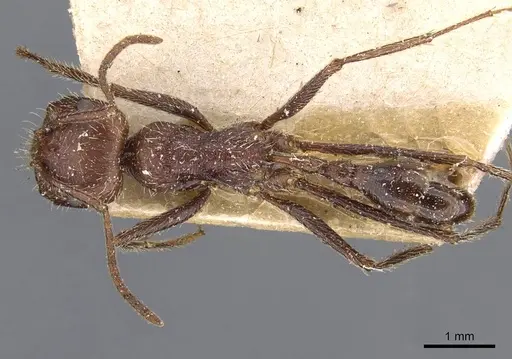
CASENT0913235
View on AntWeb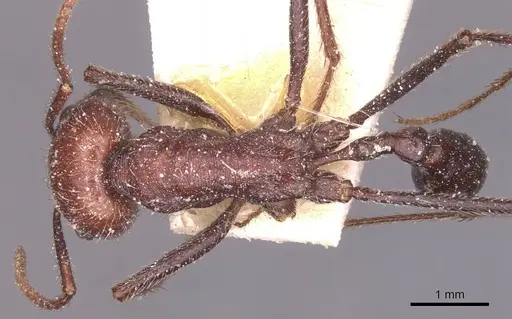
CASENT0913236
View on AntWeb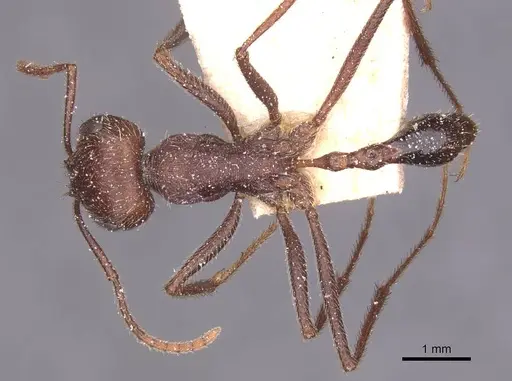
CASENT0913237
View on AntWeb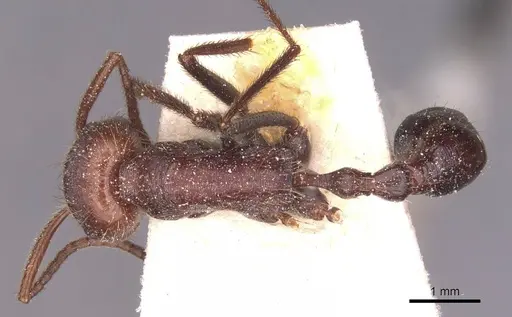
CASENT0917834
View on AntWeb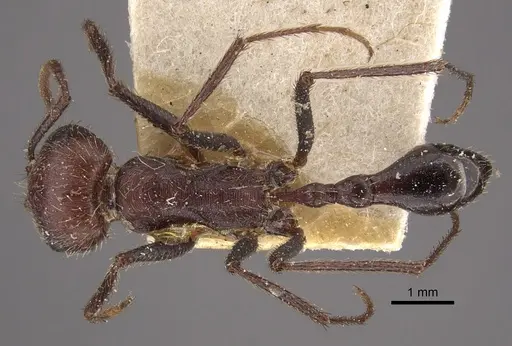
Literature
Loading distribution map...Loading products...