
Bearded Hotrod Ant
Ocymyrmex barbiger
- Sci. Name
- Ocymyrmex barbiger
- Tribe
- Crematogastrini
- Subfamily
- Myrmicinae
- Author
- Emery, 1886
- Common Name
- Bearded Hotrod Ant
- Distribution
- Found in 2 countries
Introduction
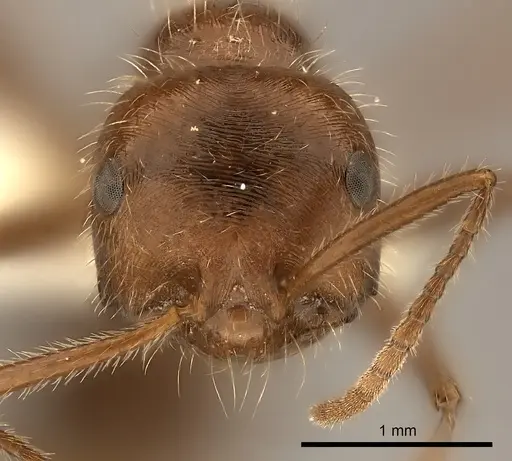
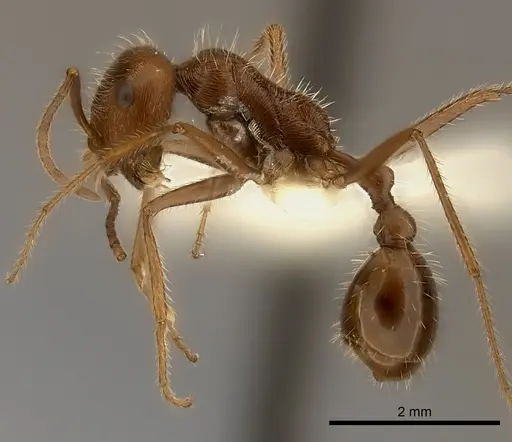
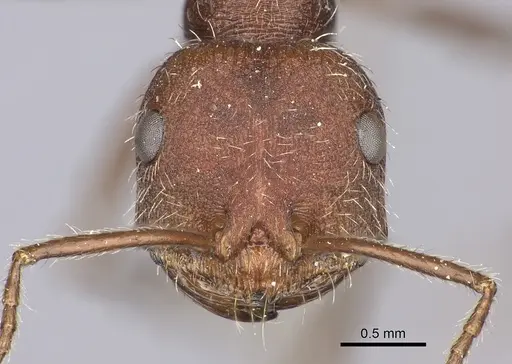
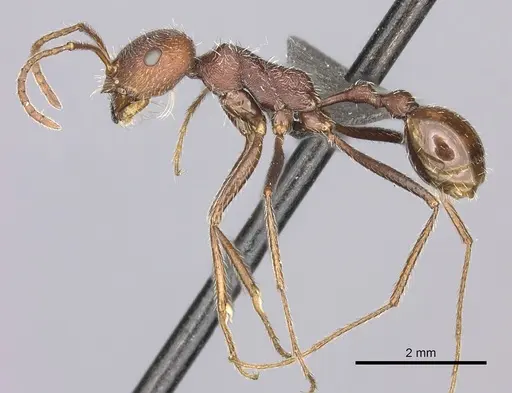
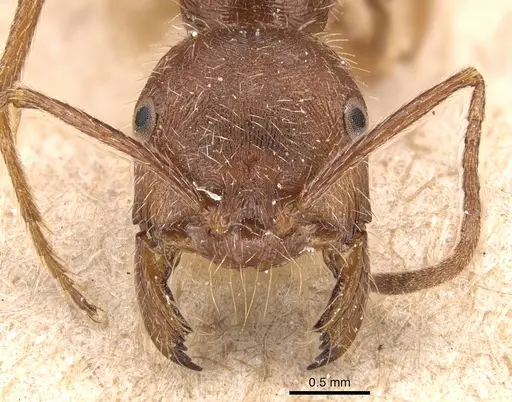
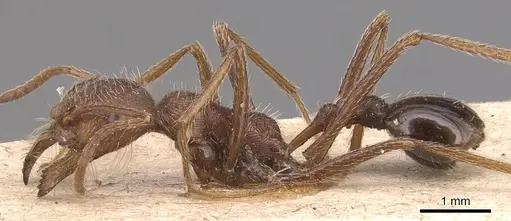
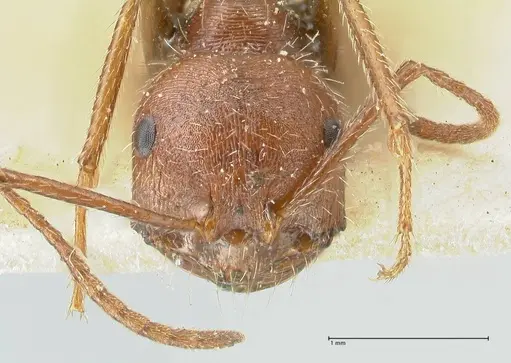
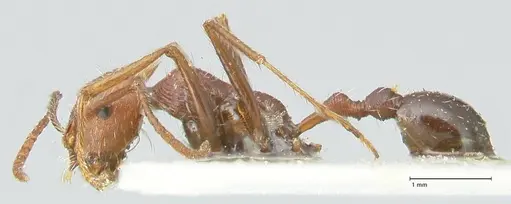
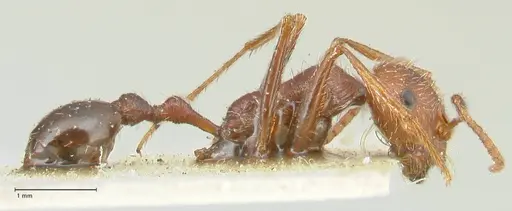
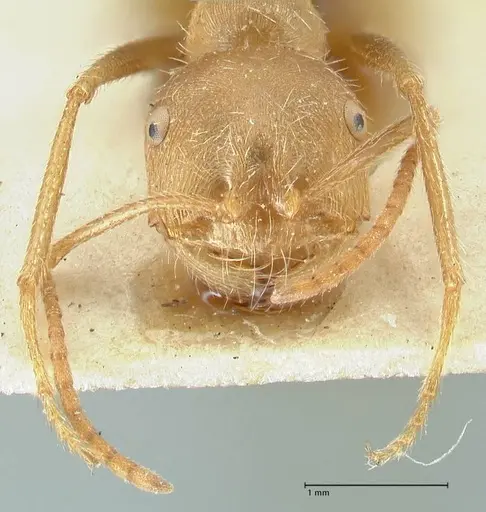
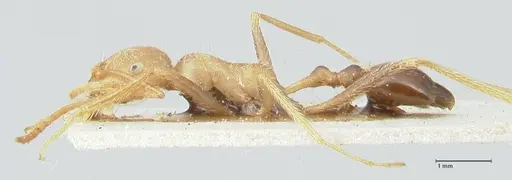
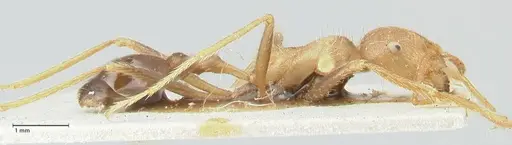
Ocymyrmex barbiger is a medium-sized ant native to arid regions of southern Africa, including Botswana, Namibia, and South Africa . Workers measure 6.7-7.2 mm in total length , with an orange to reddish-brown head and alitrunk, and a darker gaster. This species belongs to the barbiger group and lacks the narrow neck constriction typical of other Ocymyrmex species . It is a thermophilic desert ant that forages during the hottest parts of the day, accessing prey that die from heat stress .
Quick Summary
- Difficulty: Medium
- Origin & Habitat: Native to the Afrotropical region, Botswana, Namibia, and South Africa. Inhabits arid to semi-arid environments like the Namib Desert and fynbos ecosystems, preferring bare ground and commonly found in road verges [4].
- Colony Type: Colony structure is unconfirmed, no specific data on queen number or social structure exists.
- Size & Growth:
- Queen: Size data unavailable, no measurements in literature.
- Worker: 6.7-7.2 mm [1].
- Colony: Unknown, no colony size data available.
- Growth: Unknown, no development data available.
- Development: Unknown, no direct data. Based on typical Myrmicinae patterns in warm climates, estimate 6-10 weeks at optimal temperature. (Development timeline has not been studied, related desert ants may develop faster due to high temperatures.)
- Antkeeping:
- Temperature: Thermophilic species, keep nest at 26-32°C with a heated zone reaching 35-40°C [5]. Workers tolerate body temperatures from 27.2°C to 61.6°C [5].
- Humidity: Low to moderate, desert species prefer dry conditions. Keep nest substrate moderately dry with occasional moisture zones.
- Diapause: Likely minimal, may reduce activity in cooler months rather than true hibernation.
- Nesting: In nature, nests in bare ground [1]. For captivity, use dry, warm nests like Y-tong (AAC) or plaster nests [4]. Provide a temperature gradient across the nest.
- Behavior: Solitary forager, workers search for food alone [6]. Thermophilic, active during midday when ground temperatures peak [7][3]. Predatory and scavenges dead insects [6]. Non-territorial with moderate escape risk due to medium size and speed [5].
- Common Issues: temperature management is critical, they become sluggish if kept too cool, overheating risk under heating elements, use thermostat controls, low humidity is essential, damp conditions can kill colonies, slow colony growth due to lack of development data, solitary foraging means less dramatic food discovery, workers find food individually
Temperature Requirements - The Critical Factor
Ocymyrmex barbiger is a thermophilic ant that thrives in extreme heat. In the wild, they forage during midday when ground temperatures are highest, accessing prey that die from heat stress [2][3]. Workers can tolerate body temperatures from 27.2°C to 61.6°C [5]. For captive care, keep the nest at 26-32°C with a heated zone reaching 35-40°C. Use a heating cable or mat on one side to create a gradient. Without adequate heat, workers will become sluggish and stop foraging.
Feeding and Diet
This species is primarily a predator and scavenger. In the wild, they collect dead insects, particularly those that die from extreme heat [6]. They are classified as omnivores but focus on protein from insects [5]. For captivity, offer small dead insects like fruit flies or mealworms as primary food. Sugar water can be offered occasionally but is not essential. Feed every 2-3 days, removing uneaten prey after 24 hours.
Foraging Behavior
Unlike many ants, O. barbiger is a solitary forager, workers search for food alone without recruitment [6]. They are most active during midday when ground temperatures peak [7][3], avoiding competition with other species. In captivity, activity increases under heat lamps or in warm nest areas. Respect this natural rhythm and do not force activity during cooler periods.
Nesting and Habitat Setup
In nature, they nest in bare ground, often in disturbed areas like road verges [4]. For captivity, replicate dry, warm conditions using Y-tong (AAC) or plaster nests. Avoid soil setups that hold moisture. Provide a temperature gradient with one heated side and keep humidity low.
Seasonal Care and Winter Rest
As a desert species, they may reduce activity in cooler months but do not require true hibernation. If activity decreases, reduce temperatures to 15-20°C for 2-3 months. Never let them get cold, temperatures below 20°C can cause problems.
Common Keeping Challenges
The biggest challenge is providing adequate heat without overheating. Place heating elements on top of the nest and use a thermostat. Keep humidity low to avoid killing the colony. Be patient with growth due to lack of development data.
Frequently Asked Questions
What temperature do Ocymyrmex barbiger ants need?
They need warm conditions, keep nest at 26-32°C with a heated zone reaching 35-40°C [5]. This species is thermophilic and forages in extreme heat.
How often should I feed Ocymyrmex barbiger?
Feed every 2-3 days with small dead insects like fruit flies or mealworms. Remove uneaten prey after 24 hours [6][5].
Are Ocymyrmex barbiger good for beginners?
No, this is not a beginner species. They have specific temperature needs and require dry conditions. Best suited for experienced keepers.
Do Ocymyrmex barbiger ants sting?
Ocymyrmex species have stingers, but they are not medically significant to humans. Sting risk is minimal due to small size and non-aggressive nature.
What do Ocymyrmex barbiger eat in captivity?
Primary food is small dead insects, fruit flies, crickets, or mealworms. They are solitary foragers that scavenge individually [6].
How long does it take for Ocymyrmex barbiger to develop from egg to worker?
The exact timeline is unknown. Based on typical Myrmicinae patterns, estimate 6-10 weeks at optimal temperature.
Can I keep multiple Ocymyrmex barbiger queens together?
Not recommended. Colony structure is unconfirmed, and combining queens risks fighting.
Do Ocymyrmex barbiger need hibernation?
No true hibernation is required. They may reduce activity in cooler months, if so, reduce temperatures to 15-20°C for 2-3 months.
Why is my Ocymyrmex barbiger colony inactive?
Most likely cause is temperature, they are too cold. Ensure a warm zone at 35-40°C [5].
What type of nest is best for Ocymyrmex barbiger?
Use a dry, heatable nest like Y-tong (AAC) or plaster. Avoid moist soil setups. Provide a temperature gradient [4].
Report an Issue
The current care sheet is based fully on literature. See inconsistencies, or something that's incorrect? Please , it will be resolved after review from an admin. Contributing to the blogs tab also helps providing information, to make us be able to further improve the caresheets. Thank you for your support!
References

This caresheet is licensed under CC BY-SA 4.0 .
Community Blogs
CASENT0217895
View on AntWeb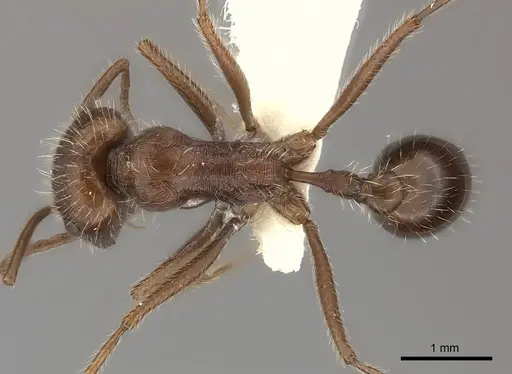
CASENT0235946
View on AntWeb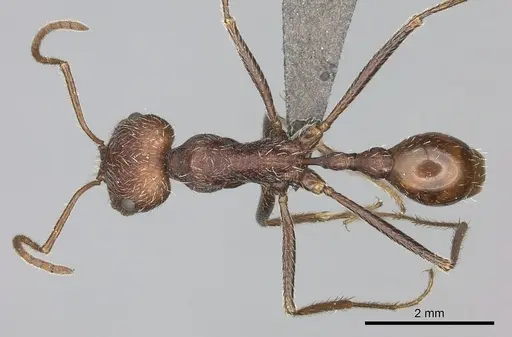
CASENT0904784
View on AntWeb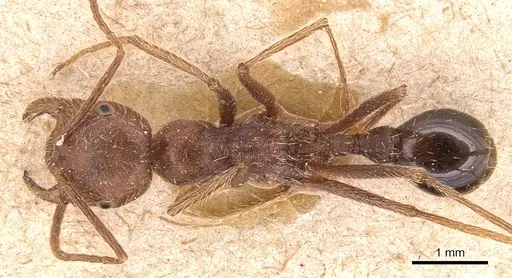
FOCOL2183
View on AntWeb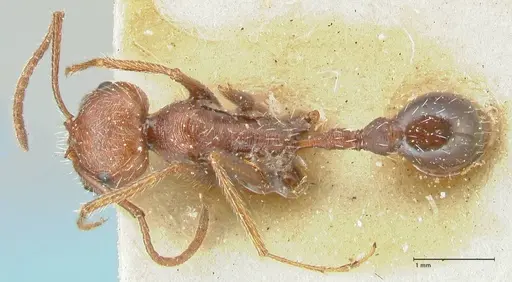
FOCOL2184
View on AntWeb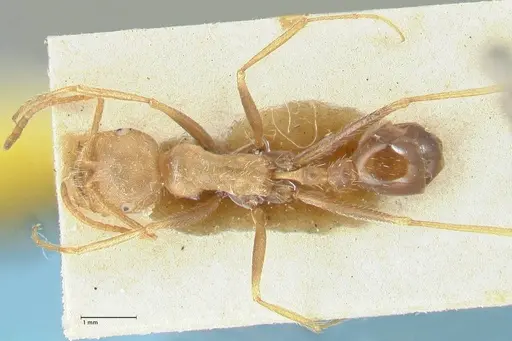
Literature
Loading distribution map...Loading products...