
Octostruma triquetrilabrum
- Sci. Name
- Octostruma triquetrilabrum
- Tribe
- Attini
- Subfamily
- Myrmicinae
- Author
- Longino, 2013
- Distribution
- Found in 2 countries
Introduction
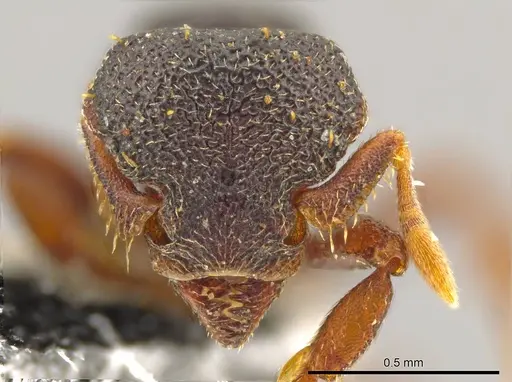
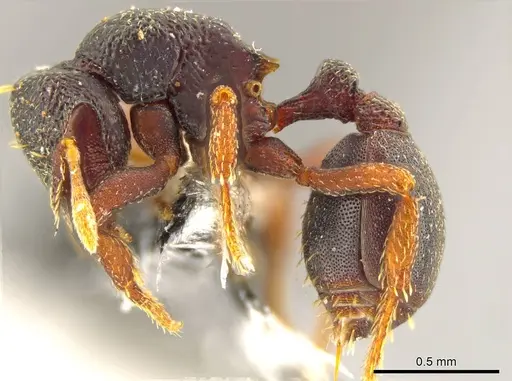
Octostruma triquetrilabrum is a small ant native to cloud forests in Costa Rica and western Panama. It was described in 2013 and is known only from worker specimens collected from leaf litter at elevations of 800-1150 meters . Full body size data is unavailable, as only head and mesosoma measurements are provided in the literature . This species belongs to the tribe Attini, which includes fungus-growing ants, but Octostruma is considered a primitive attine, and its biology is poorly understood .
Quick Summary
- Difficulty: Hard
- Origin & Habitat: Cloud forests of Costa Rica and western Panama at 800-1150m elevation. They inhabit very wet old-growth montane forest on the Atlantic slope and seasonal moist forest just below cloud forest on the Pacific slope. All specimens have been collected by sifting leaf litter [1][2].
- Colony Type: Unknown, only worker caste has been described. Colony structure (single queen vs multiple queens) has not been documented. Founding behavior is unconfirmed [1].
- Size & Growth:
- Queen: Unknown, only workers have been described [1]
- Worker: Size data unavailable, only head and mesosoma measurements are provided in literature [1]
- Colony: Unknown, only a few specimens have ever been collected [1]
- Growth: Unknown
- Development: Unknown, no development data exists for this species. Based on similar tiny leaf litter ants, it might take 4-8 weeks at optimal temperature. (No direct observations of colony development exist.)
- Antkeeping:
- Temperature: Keep stable and cool, roughly 20-24°C, based on their cloud forest habitat [1].
- Humidity: Keep nest substrate consistently moist but not waterlogged, as they come from wet montane forests [1].
- Diapause: Unknown, no data on overwintering behavior.
- Nesting: Naturalistic setup works best. Since they're leaf litter ants, they do well in setups that mimic forest floor conditions. Use a shallow container with moist soil/leaf litter, or a small plaster or soil nest with high humidity. Recommend Y-tong, plaster, or 3D-printed nests scaled to their tiny size [1].
- Behavior: Extremely cryptic and reclusive. Workers forager slowly through leaf litter and are rarely seen on the surface. They are not aggressive and likely possess a sting as part of Myrmicinae, but it is not medically significant. Escape prevention is critical due to their tiny size, they can squeeze through gaps that larger ants cannot. Expect minimal activity and slow colony growth.
- Common Issues: escape risk due to tiny size, use fine mesh barriers, mold growth from high humidity, ensure proper ventilation, slow colony growth, avoid overfeeding and be patient, lack of biological data, care requirements are estimates
Housing and Setup
Because Octostruma triquetrilabrum is a tiny leaf litter ant, create a setup that mimics their natural forest floor habitat. Use a shallow container with several centimeters of moist substrate (a mix of soil, sand, and decomposed leaf litter). Keep the substrate consistently moist but not waterlogged. Since they're so small, standard test tube setups may be too large and dry. Instead, use a small plaster nest, soil nest, or 3D-printed nest with tight chambers. Provide a water reservoir or damp cloth to maintain humidity. Escape prevention is critical, use fine mesh (at least 0.5mm or smaller) on any openings [1].
Feeding and Diet
The diet of Octostruma triquetrilabrum is unknown. As a member of the Attini tribe, they may involve fungus cultivation, but no specific feeding data exists for this species. Offer tiny live prey like springtails or fruit flies, and monitor what they accept. Sugar sources may not be accepted. Feed small amounts and remove uneaten food to prevent mold.
Temperature and Humidity
These cloud forest ants prefer stable, moderate temperatures around 20-24°C [1]. High humidity is essential, keep nest substrate consistently moist, and consider a shallow water dish in the outworld [1]. Good ventilation is important to prevent mold.
Colony Establishment
Since only workers have been collected, establishing a colony is challenging. If you obtain wild-caught workers, expect a small colony size. No information on queen founding or growth rates exists. Be prepared for slow development and minimal activity [1].
Frequently Asked Questions
How big do Octostruma triquetrilabrum colonies get?
Unknown, only a few individual workers have ever been collected in the wild [1]. Based on related species, colonies likely remain small, but no specific size data exists.
What do Octostruma triquetrilabrum ants eat?
The diet is unknown. Based on general Attini knowledge, they might eat fungus and small prey, but specific diet is unknown [1].
Can I keep Octostruma triquetrilabrum in a test tube?
Test tubes may be too large and dry for these tiny ants. A naturalistic setup with moist leaf litter substrate or a small plaster nest works better [1].
What temperature do they need?
Keep them around 20-24°C, based on their cloud forest habitat [1].
How long does it take for eggs to become workers?
Unknown, no development data exists. Based on similar tiny ants, it might take 4-8 weeks at optimal temperature.
Are Octostruma triquetrilabrum good for beginners?
No, this is an expert-level species due to lack of data and tiny size [1].
Where is Octostruma triquetrilabrum found?
Only in cloud forests of Costa Rica and western Panama at 800-1150m elevation [1][2].
Do they need hibernation?
Unknown, no data on overwintering behavior [1].
Why are my Octostruma triquetrilabrum dying?
Common issues include escape due to tiny size, mold from high humidity, or starvation from improper feeding. Without basic data, diagnosis is difficult [1].
Report an Issue
The current care sheet is based fully on literature. See inconsistencies, or something that's incorrect? Please , it will be resolved after review from an admin. Contributing to the blogs tab also helps providing information, to make us be able to further improve the caresheets. Thank you for your support!
References

This caresheet is licensed under CC BY-SA 4.0 .
Community Blogs
JTLC000004551
View on AntWeb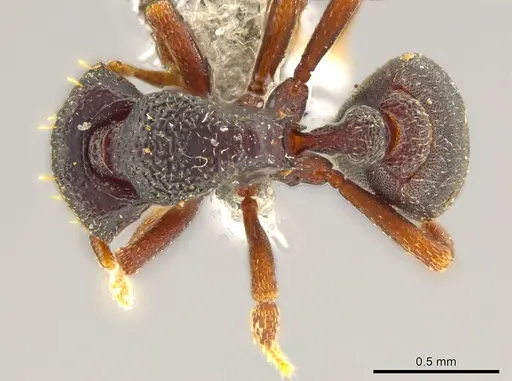
Literature
Loading distribution map...Loading products...