
Octostruma triangulabrum
- Sci. Name
- Octostruma triangulabrum
- Tribe
- Attini
- Subfamily
- Myrmicinae
- Author
- Longino, 2013
- Distribution
- Found in 1 countries
Introduction
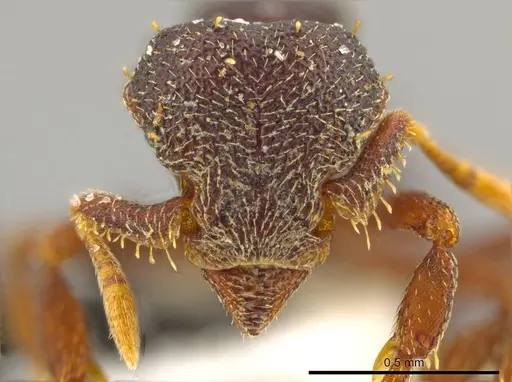
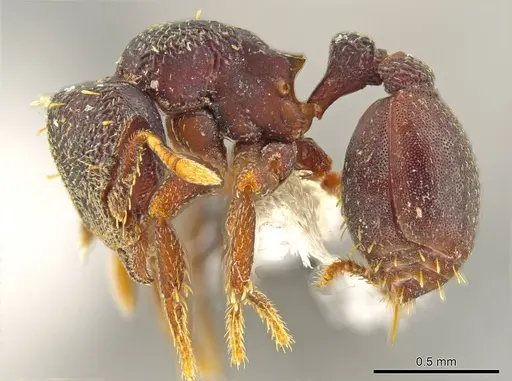
Octostruma triangulabrum is a tiny ant species native to montane forests in the Chiapas highlands of southern Mexico . It inhabits mesophyll cloud forest and wet pine-oak forests at elevations of 900-2750 meters, and is only found in sifted leaf litter . Workers are dark red-brown and have distinctive setae on the face and mesonotum . This species was described in 2013 and is part of the Attini tribe, but unlike fungus-farming ants, Octostruma are specialized predators .
Quick Summary
- Difficulty: Expert
- Origin & Habitat: Montane wet forests in the Chiapas highlands of Mexico, at elevations of 900-2750 meters, inhabiting mesophyll cloud forest and wet pine-oak forests [1][2].
- Colony Type: Unknown, only the worker caste has been described, and colony structure is unconfirmed [1].
- Size & Growth:
- Antkeeping:
- Temperature: Based on montane origin, likely prefer cool temperatures around 18-22°C [1]
- Humidity: Keep substrate consistently moist but not waterlogged, as they inhabit cloud forest leaf litter [1][2]
- Diapause: Unknown, no specific data on diapause requirements
- Nesting: Naturalistic setup with fine substrate mimicking leaf litter is recommended [1]
- Behavior: Workers are cryptic and forage exclusively in leaf litter, unlikely to venture into open spaces. Escape prevention is critical due to their small size. Temperament is unknown but likely non-aggressive [1]. As a Myrmicinae, they have a sting, but it is imperceptible to humans.
- Common Issues: their cryptic nature and leaf-litter habitat make escape prevention challenging, no information on queen or founding behavior makes captive breeding experimental, high humidity requirements can lead to mold if ventilation is poor, cool temperature needs may be difficult to maintain consistently, wild colonies are nearly impossible to obtain due to specialized collection methods
Natural History and Distribution
Octostruma triangulabrum is endemic to the central Chiapas highlands of southern Mexico, where it lives in montane wet forests at 900-2750 meters elevation [1][2]. You will only find this species in sifted leaf litter samples from cloud forest or wet pine-oak habitats, it has never been observed above ground [1]. The species can be locally abundant, making up to 13% of ant individuals in litter samples, but it is sharply parapatric with Octostruma wheeleri, meaning their ranges abut but do not overlap [1].
Housing and Enclosure Setup
You should use a naturalistic terrarium or formicarium with a deep layer of moist substrate mixed with soil, sand, and decomposed leaf litter to mimic their forest floor habitat [1]. The setup needs excellent humidity retention since these ants are adapted to constantly damp conditions. Because they are cryptic leaf-litter ants, they need floor space to forage but not large vertical areas. Test tubes can work for founding colonies if kept moist, but established colonies do better in naturalistic setups. Escape prevention is critical, use fine mesh on ventilation and ensure tight connections [1].
Feeding and Diet
Octostruma triangulabrum are specialized predators, not fungus growers like some Attini ants [1]. You should offer small live prey appropriate to their size, such as springtails, tiny isopods, or booklice. They are unlikely to accept larger prey or sugar sources. Feed small prey every few days and remove uneaten items to prevent mold [1].
Temperature and Seasonal Care
As a montane species, they likely prefer cool, stable temperatures around 18-22°C [1]. Avoid temperatures below 15°C or above 25°C. Room temperature in most homes may be too warm, so you might need a cool basement or cooler setup during summer. Humidity should remain high year-round, as cloud forest conditions are humid regardless of season [1].
Challenges and Limitations
Keeping this species is challenging because they are difficult to obtain, you need specialized leaf-litter sifting and extraction methods [1]. No information exists on queens or colony structure, making captive breeding experimental. Their cryptic nature and small size make escape prevention and feeding tricky. Cool, humid conditions can be hard to maintain consistently. This species is best for experienced antkeepers [1].
Frequently Asked Questions
Can I keep Octostruma triangulabrum in a test tube?
Test tubes can work for founding colonies if kept moist, but established colonies need naturalistic setups with soil and leaf litter substrate for foraging space [1].
How long does it take for Octostruma triangulabrum to develop from egg to worker?
No research has documented their development timeline, so it is unknown.
What do Octostruma triangulabrum eat?
They are predatory on tiny arthropods like springtails and micro-mites, and do not accept sugar sources [1].
Are Octostruma triangulabrum good for beginners?
No, this species is rated Expert difficulty due to specialized needs, unknown colony structure, and difficulty in obtaining colonies [1].
Do Octostruma triangulabrum need hibernation?
No specific data on diapause requirements is available.
How big do Octostruma triangulabrum colonies get?
Unknown, no data on colony size is available [1].
Can I keep multiple queens together?
Unknown, the queen caste has never been described, so colony structure is unconfirmed [1].
Why can't I find Octostruma triangulabrum for sale?
This species is extremely difficult to collect, it lives only in leaf litter and requires specialized extraction methods [1].
What temperature should I keep Octostruma triangulabrum at?
Keep them cool, around 18-22°C, based on their montane origin [1].
Report an Issue
The current care sheet is based fully on literature. See inconsistencies, or something that's incorrect? Please , it will be resolved after review from an admin. Contributing to the blogs tab also helps providing information, to make us be able to further improve the caresheets. Thank you for your support!
References

This caresheet is licensed under CC BY-SA 4.0 .
Community Blogs
CASENT0608768
View on AntWeb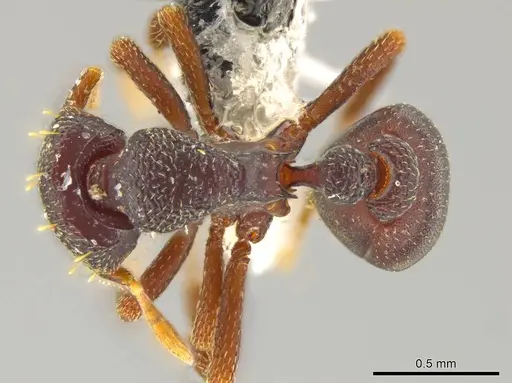
Literature
Loading distribution map...Loading products...