
Octostruma stenognatha
- Sci. Name
- Octostruma stenognatha
- Tribe
- Attini
- Subfamily
- Myrmicinae
- Author
- Brown & Kempf, 1960
- Distribution
- Found in 1 countries
Introduction
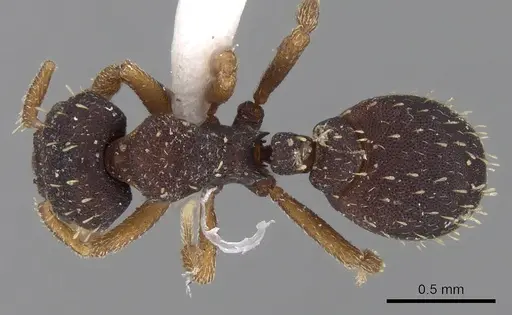
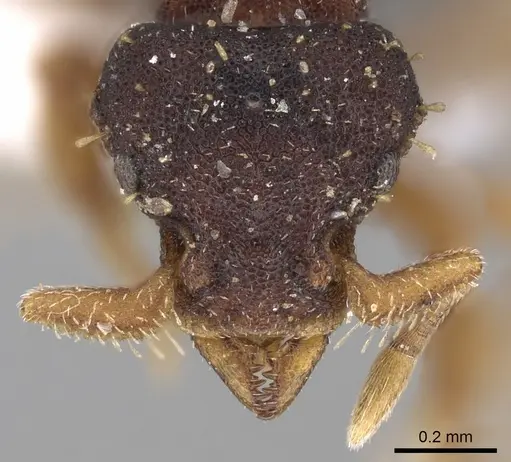
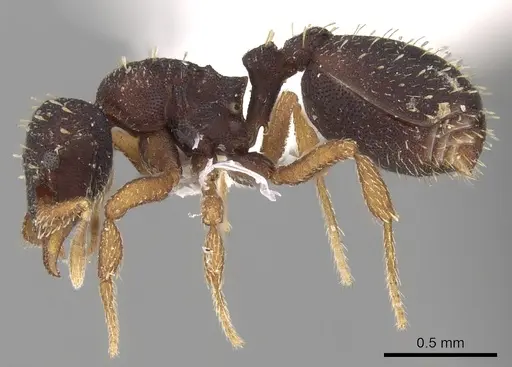
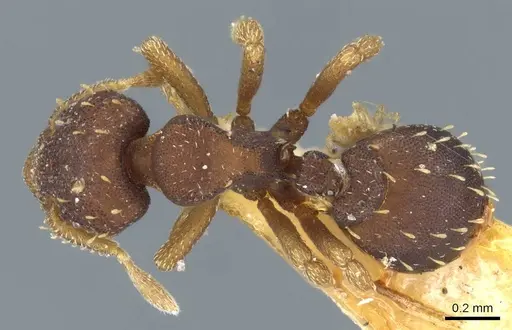
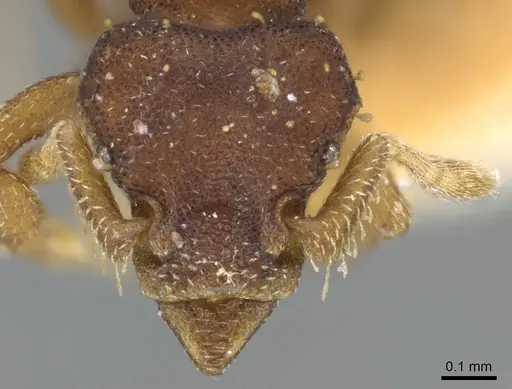
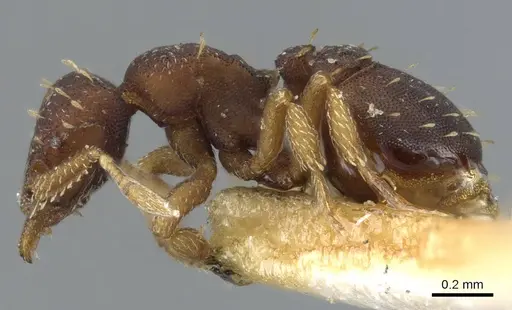
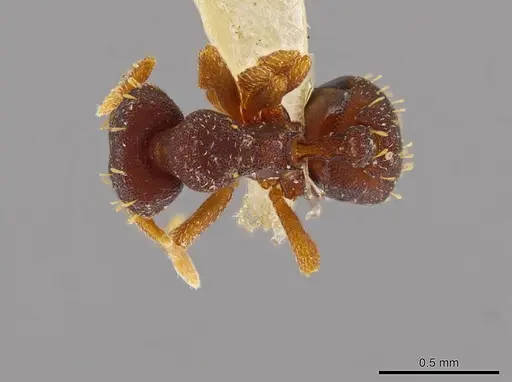
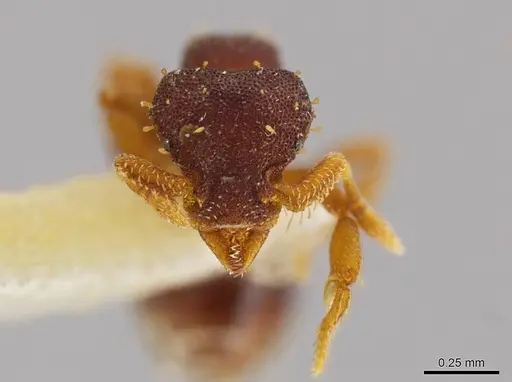
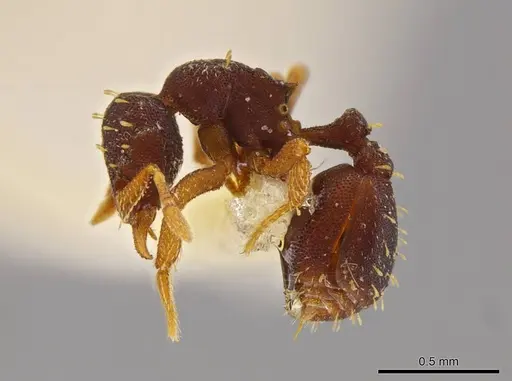
Octostruma stenognatha is a tiny leaf-litter ant in the tribe Attini. Workers measure 2.0-2.3 mm in total length, and dealate queens measure 2.7 mm . They are native to southern Brazil, especially the Atlantic Forest, where they inhabit moist forest floors . This species is part of a complex with Octostruma balzani, O. batesi, and O. betschi, forming a replacement series across South America . Unlike many fungus-growing ants, Octostruma species are likely predators of small invertebrates in the leaf litter, though specific diet data is limited [inferred from genus patterns].
Quick Summary
- Difficulty: Medium
- Origin & Habitat: Southern Brazil, Atlantic Forest, nests in moist leaf-litter and humus layers [1][3][5][4].
- Colony Type: Small colonies with workers and ergatoid reproductives, queen number is unconfirmed [6][2].
- Size & Growth:
- Antkeeping:
- Temperature: Keep at room temperature, roughly 22-26°C, based on their subtropical range.
- Humidity: Keep substrate consistently moist but not waterlogged, as they live in moist forest floors [5].
- Diapause: No diapause required, this is a tropical species.
- Nesting: Naturalistic setups with moist substrate and leaf litter are ideal, mimicking their forest floor habitat [5].
- Behavior: Shy and cryptic, not aggressive but small size poses escape risk.
- Common Issues: high humidity needs make them prone to mold if ventilation is poor [5], tiny size means escape prevention must be excellent, they can squeeze through standard mesh, sensitive to drying out, substrate must stay moist [5], slow growth means colonies develop slowly and may appear stagnant for weeks, habitat specialist, wild-caught colonies may struggle if conditions don't match their moist forest floor preferences [4]
Natural History and Habitat
Octostruma stenognatha is endemic to the Atlantic Forest of southern Brazil [1]. It was first described in 1960 from specimens in São Paulo state [2]. This species is strongly associated with primary forest systems, with higher frequency in preserved forests (0.6) than in secondary forests (0.1-0.2) [3][4]. In the wild, it nests between decayed leaves in the humus layer of very moist forest floors [5]. The species forms part of a clade with O. balzani, O. batesi, and O. betschi, which occupy allopatric or parapatric ranges across South America [2].
Housing and Nest Setup
These ants naturally nest in leaf-litter and humus layers, so setups should mimic the forest floor. Use a deep layer of moist substrate (soil, coco fiber mix) with leaf litter and bark for micro-habitats [5]. Y-tong or plaster nests with soil chambers work well, but avoid tall open chambers. Escape prevention is critical due to their tiny size, use fine mesh on all openings.
Feeding and Diet
Octostruma species are likely predators of small invertebrates in the leaf litter. Feed tiny live prey like springtails, fruit flies, and small insects. Sugar sources may be accepted but are not essential. Remove uneaten prey after 24 hours to prevent mold.
Temperature and Humidity
Keep ants at room temperature, roughly 22-26°C, based on their subtropical range. Humidity is key, keep substrate consistently moist like a damp forest floor, with occasional misting [5]. Balance ventilation to prevent mold.
Colony Structure and Development
Colonies include workers and ergatoid (wingless) reproductives, which can serve as replacement queens [6][2]. Queen number is unconfirmed. Growth is moderate, with first workers estimated to emerge 6-10 weeks after founding. Colonies are small, with exact size unknown [5].
Frequently Asked Questions
How long does it take for Octostruma stenognatha to produce first workers?
Expect 6-10 weeks from egg to first worker at optimal temperature (22-26°C). This is an estimate based on related Attini species, as specific development data is not available.
What do Octostruma stenognatha ants eat?
They are likely predators of small invertebrates. Feed tiny live prey like springtails and fruit flies.
Are Octostruma stenognatha ants aggressive?
No, they are shy and non-aggressive. These tiny ants will flee rather than fight.
Do Octostruma stenognatha ants need hibernation?
No, they are a tropical species from southern Brazil and do not require diapause.
What size colony does Octostruma stenognatha reach?
They form small colonies, with exact size unknown [5].
What humidity do Octostruma stenognatha ants need?
High humidity is essential. Keep substrate consistently moist, as they live in moist forest floors [5].
Can I keep Octostruma stenognatha in a test tube?
Test tubes can work for founding, but naturalistic setups with moist substrate are better for established colonies.
Are Octostruma stenognatha ants good for beginners?
They are medium difficulty due to small size and humidity needs, best for keepers with some experience.
What temperature should I keep Octostruma stenognatha at?
Keep them at 22-26°C, typical room temperature.
Why are my Octostruma stenognatha dying?
Common causes are drying out, mold from poor ventilation, or escapes due to small size. Check substrate moisture and escape prevention [5].
Report an Issue
The current care sheet is based fully on literature. See inconsistencies, or something that's incorrect? Please , it will be resolved after review from an admin. Contributing to the blogs tab also helps providing information, to make us be able to further improve the caresheets. Thank you for your support!
References

This caresheet is licensed under CC BY-SA 4.0 .
Community Blogs
Literature
Loading distribution map...Loading products...