
Octostruma petiolata
- Sci. Name
- Octostruma petiolata
- Tribe
- Attini
- Subfamily
- Myrmicinae
- Author
- Mayr, 1887
- Distribution
- Found in 1 countries
Introduction
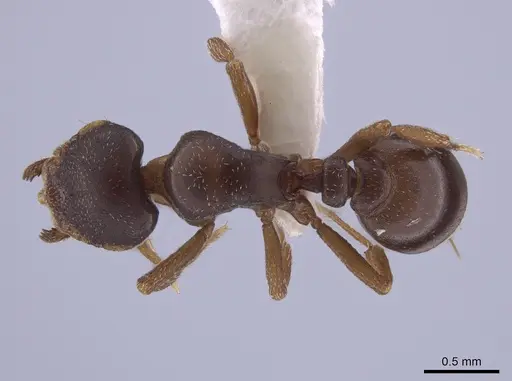
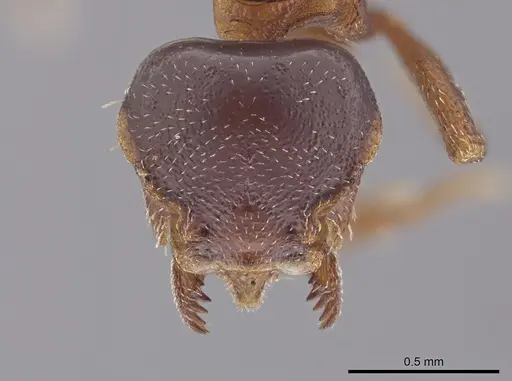
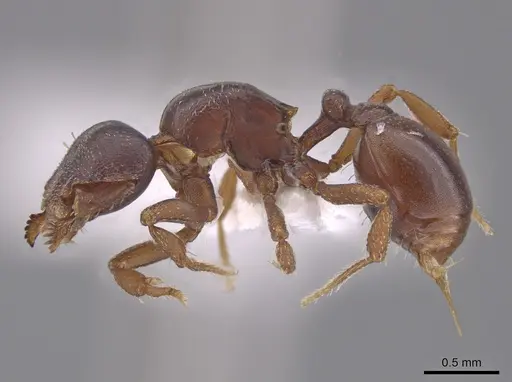
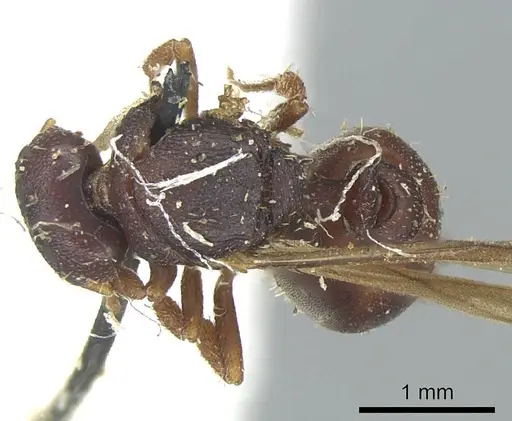
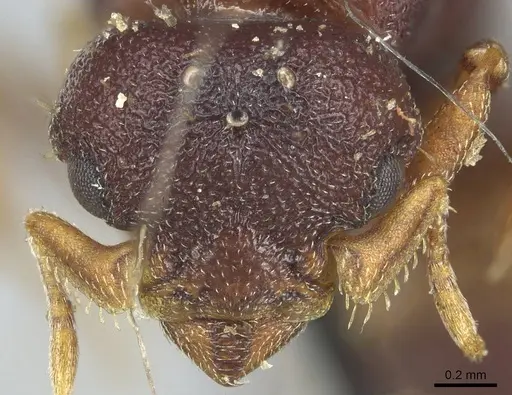
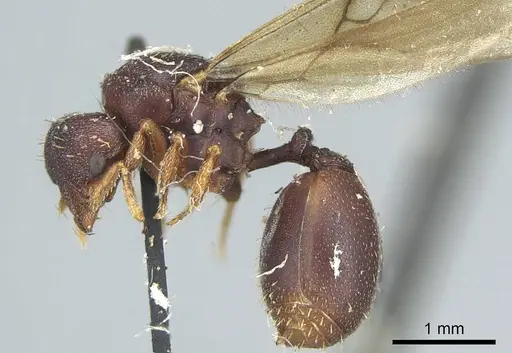
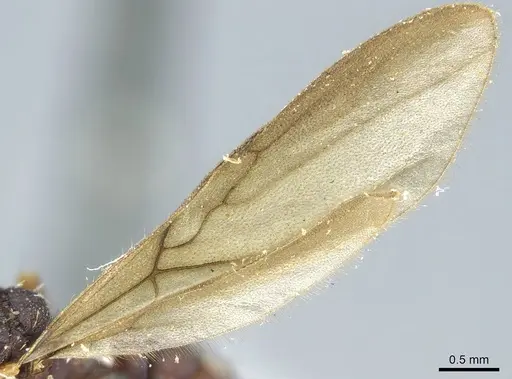
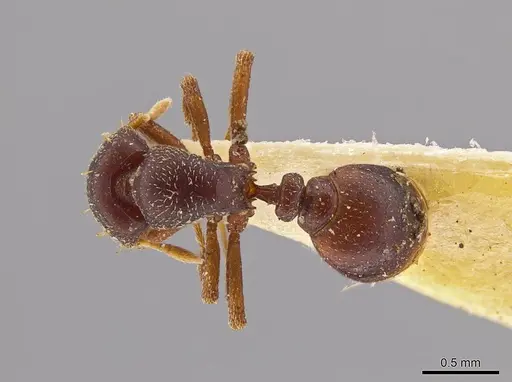
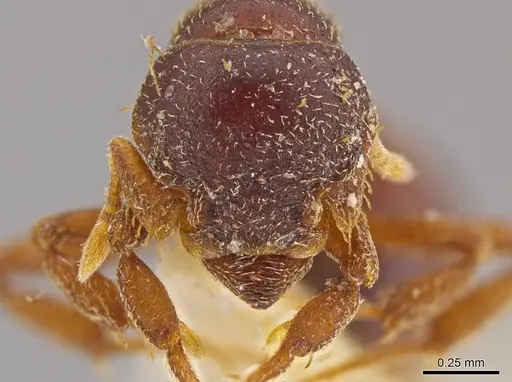
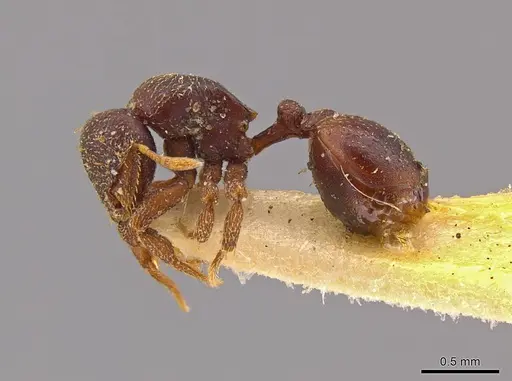
Octostruma petiolata is a small leaf-litter ant native to southern Brazil, specifically the Atlantic Forest regions of Santa Catarina state . Workers have a total length of 3.3-3.5 mm, and queens are larger at 5.2-5.5 mm . They can be identified by their strongly transverse petiolar node, smooth mesosoma lacking erect hairs, and distinctive propodeal spines . This species is one of the least documented ants in terms of biology, with no published data on colony structure or captive care . The genus Octostruma belongs to the tribe Attini, and a 2023 study confirmed these ants are generalized predators with specialized mandible structures .
Quick Summary
- Difficulty: Hard
- Origin & Habitat: Southern Brazil, specifically Santa Catarina state in the Atlantic Forest region, found in leaf-litter on the forest floor [1][2].
- Colony Type: Unconfirmed, colony structure has not been documented. Based on Octostruma genus patterns, likely forms small colonies with single queens.
- Size & Growth:
- Queen: 5.2-5.5 mm [2]
- Worker: 3.3-3.5 mm [2]
- Colony: Unknown, no scientific data available. Likely small colonies under 100 workers based on genus patterns.
- Growth: Unknown
- Development: Unknown, no direct measurements. Based on Attini patterns, estimate 6-10 weeks at optimal temperature. (Development is unconfirmed and may be slow, observe colony behavior for adjustments.)
- Antkeeping:
- Temperature: Start around 22-26°C and observe colony activity. Adjust based on behavior, if workers cluster near heat, increase slightly, if they avoid it, reduce temperature.
- Humidity: Keep nest substrate consistently moist but not waterlogged, with a gradient for drier areas. Leaf-litter ants from Atlantic Forest habitats typically need high humidity [2].
- Diapause: Unknown, no data on overwintering. Southern Brazil has mild winters, so a true hibernation may not be required.
- Nesting: In nature, they live in leaf-litter and rotting wood. In captivity, use moist substrate or Y-tong nests with tight chambers scaled to their small size [2].
- Behavior: Temperament is unknown but likely non-aggressive and cryptic, avoiding confrontation. As a member of Myrmicinae, they have a sting, but it is not medically significant. Escape risk is moderate due to small size, use standard barrier methods. They are generalized predators, hunting small arthropods [3].
- Common Issues: no biological data exists, this species is poorly documented, increasing risk of care errors, growth rate is completely unknown, beginners may lose patience with slow development, humidity requirements are inferred, may develop mold or desiccation issues if not monitored, escape prevention is critical due to small worker size, founding behavior is unconfirmed, unknown if claustral or semi-claustral
Understanding the Challenge: A Data-Poor Species
Octostruma petiolata presents a unique challenge for antkeepers: virtually nothing has been published about its biology since its description in 1887 [2]. You are essentially pioneering captive care for this species. Be patient, observant, and willing to experiment. The guidance here is based on genus-level patterns and related species, so expect to adjust care based on what works for your colony. This is not a species for beginners who want clear protocols, it's for experienced keepers who enjoy discovery [2].
Housing and Nest Setup
For this small leaf-litter ant, naturalistic setups work best. Use a mixture of soil and rotting wood or leaf litter as substrate to mimic their forest floor habitat [2]. A Y-tong nest with narrow chambers also works if you provide moisture. Create a humid environment with minimal airflow to prevent drying. Place the nest in a shaded area away from direct sunlight. Because workers are only 3-4 mm, ensure your outworld has good escape prevention, these ants can slip through small gaps. Use a hydration setup that maintains consistent moisture over time.
Feeding and Diet
Octostruma petiolata is a generalized predator with mandibles built for catching small prey [3]. In captivity, offer small live prey such as springtails, fruit flies, and other micro-arthropods. You can also offer small pieces of insects. Sugar sources like honey may be accepted occasionally, but protein prey should be primary. Feed 2-3 times per week and remove uneaten prey after 24 hours to prevent mold. Variety and small, appropriately-sized prey are key.
Temperature and Seasonal Care
Start with temperatures in the 22-26°C range, aligning with typical Brazilian Atlantic Forest conditions. Use a heating cable on one side of the nest to create a gradient, allowing ants to self-regulate. During winter, you may reduce temperature to 18-22°C if the colony shows reduced activity, but a true hibernation is likely not required. Always maintain humidity alongside heating.
Colony Founding and Early Development
Founding behavior is unconfirmed for this species. If you obtain a founding queen, keep her in a small test tube setup with a water reservoir. Maintain high humidity and stable temperature around 24°C. Do not disturb her during founding, queens of cryptic species are sensitive. Expect a long wait for first workers, as development may be slow.
Observation and Record-Keeping
Keep detailed records of egg appearance, larval and pupal stages, worker eclosion, food acceptance, temperature preferences, and humidity behavior. Take photos at each stage. If you succeed, share findings with the antkeeping community to contribute new knowledge.
Frequently Asked Questions
How long does it take for Octostruma petiolata to produce first workers?
The egg-to-worker timeline is unconfirmed. Based on Attini patterns, estimate 6-10 weeks at optimal temperature (24-26°C), but it could be longer. Patience is essential.
What do Octostruma petiolata ants eat?
They are generalized predators with specialized mandibles for small prey [3]. Feed small live prey like springtails and fruit flies. Sugar sources can be offered occasionally but are not primary.
Are Octostruma petiolata ants good for beginners?
No, this species is not recommended for beginners due to lack of published data. You'll need to make informed guesses and be prepared for slow growth and potential failures.
Do Octostruma petiolata ants need hibernation?
Diapause requirements are unknown. Southern Brazil has mild winters, so a true hibernation is likely not necessary. You may provide a cooler period if the colony shows reduced activity.
What size colony does Octostruma petiolata reach?
Colony size is unknown, no scientific data exists. Based on Octostruma species, expect small colonies under 100 workers.
Can I keep multiple Octostruma petiolata queens together?
Colony structure is unconfirmed, we don't know if they are monogyne or polygyne. Combining unrelated foundresses is not recommended until social structure is understood.
What temperature should I keep Octostruma petiolata at?
Temperature requirements are not confirmed. Start around 22-26°C and observe colony behavior, adjusting based on where workers cluster.
When should I move Octostruma petiolata to a formicarium?
Wait until you have an established colony with at least 10-20 workers. For founding queens, keep them in a test tube setup until workers are actively foraging.
Why is so little known about Octostruma petiolata?
This species is native to a limited range in southern Brazil and was described over 130 years ago. Most research has focused on taxonomy, not ecology or behavior, making it one of the least-studied ants [2].
Report an Issue
The current care sheet is based fully on literature. See inconsistencies, or something that's incorrect? Please , it will be resolved after review from an admin. Contributing to the blogs tab also helps providing information, to make us be able to further improve the caresheets. Thank you for your support!
References

This caresheet is licensed under CC BY-SA 4.0 .
Community Blogs
Literature
Loading distribution map...Loading products...