
Octostruma obtusidens
- Sci. Name
- Octostruma obtusidens
- Tribe
- Attini
- Subfamily
- Myrmicinae
- Author
- Longino, 2013
- Distribution
- Found in 6 countries
Introduction
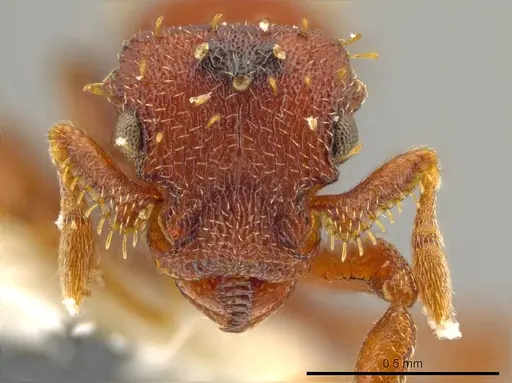
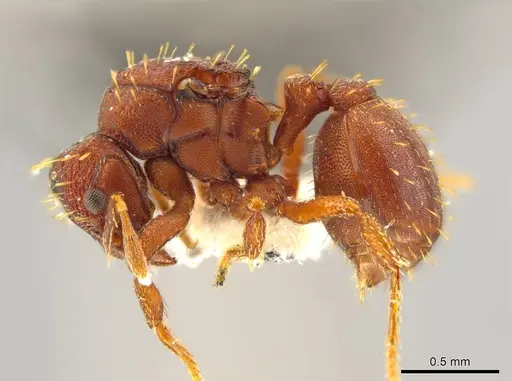
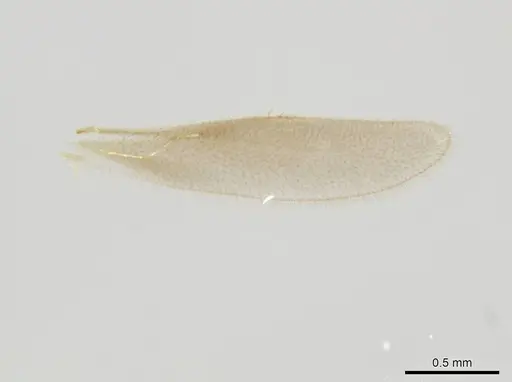
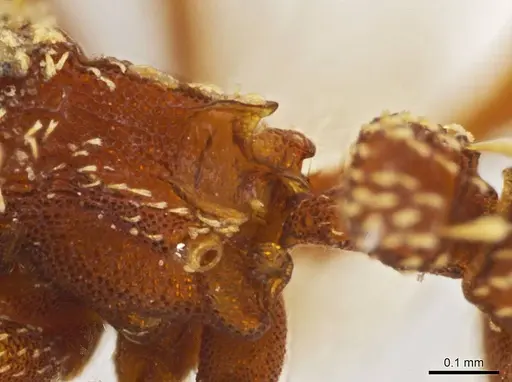
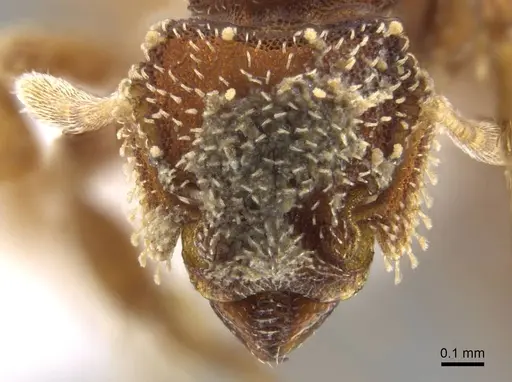
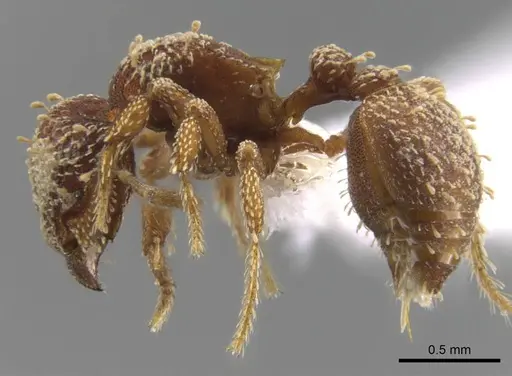
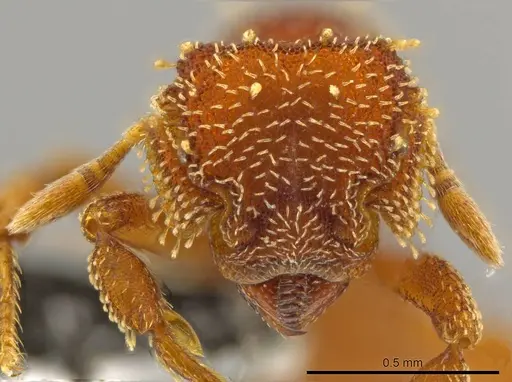
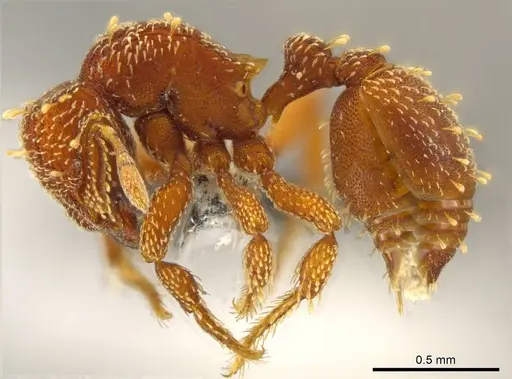
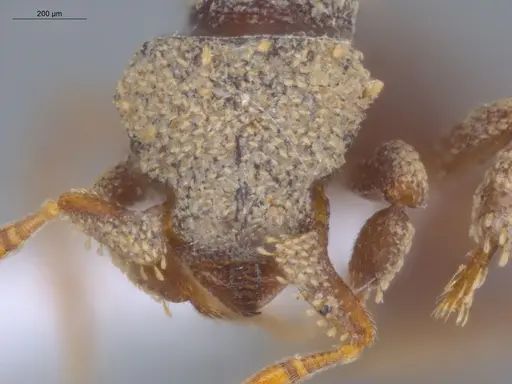
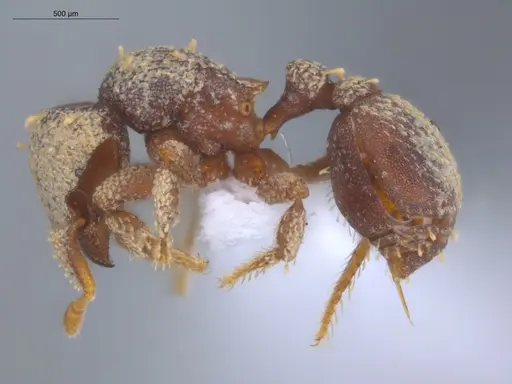
Octostruma obtusidens is a tiny, orange-colored ant from the Myrmicinae subfamily and Attini tribe. Its scientific name means 'blunt tooth' in Latin, referring to its rounded mandible teeth. The face has a pitted surface with faint wrinkles, and the body is covered with curved, projecting hairs . This lowland rainforest species ranges from Guatemala through Costa Rica to Colombia, with recent records from Brazil . It lives from sea level up to 800 meters, in habitats from mature forest to disturbed areas . Most specimens are found in leaf litter and rotting wood. One colony studied at La Selva Biological Station in Costa Rica was polygynous (multiple queens), with at least four wingless queens living together in a small soil cavity under a rotting palm trunk . Interestingly, that nest also contained a stick insect egg, suggesting these ants prey or scavenge on small invertebrates.
Quick Summary
- Difficulty: Medium
- Origin & Habitat: Lowland rainforest from southern Guatemala to Colombia and Brazil, at elevations from sea level to 800 m. Inhabits mature to highly disturbed rainforest and seasonal moist forest, nesting in soil cavities under rotting wood on the forest floor [1][2].
- Colony Type: Polygynous, colonies contain multiple queens that coexist peacefully. One documented nest had at least 4 dealate queens together [1]. Dealate queens are occasionally found with workers in litter samples, suggesting multi-queen colonies are common.
- Size & Growth:
- Queen: Size data unavailable (only head width measurements known). Inferred from the genus Octostruma, queens likely around 2.5-3.5 mm total length.
- Worker: Size data unavailable (only head width measurements known). Inferred from the genus Octostruma, workers likely around 2-3 mm total length.
- Colony: Unknown, no colony size data available. Related Octostruma species typically have colonies of several hundred workers.
- Growth: Unknown, no development data available. Based on Attini tribe patterns, expect moderate growth.
- Development: Unknown, no direct development data. Related Attini species typically take 6-10 weeks at optimal temperature. Estimate 8-12 weeks based on genus patterns. (No species-specific development data exists. Growth is likely moderate, similar to other litter-dwelling Myrmicinae.)
- Antkeeping:
- Temperature: Keep at 22-26°C. As a lowland tropical species, they prefer warm, stable conditions. Room temperature within this range works well [1].
- Humidity: High humidity required, think damp forest floor. Keep nest substrate consistently moist but not waterlogged. These ants live under rotting wood in rainforest litter, so they need humid conditions [1].
- Diapause: No, as a tropical lowland species, they do not require hibernation. Maintain year-round warm conditions.
- Nesting: Natural nesting is in soil cavities under rotting wood. In captivity, a naturalistic setup with moist substrate (like a mix of soil and rotting wood pieces) works well. Y-tong or plaster nests with high humidity also suitable. Avoid dry conditions.
- Behavior: This is a cryptic, litter-dwelling species that forages in the dark, humid microhabitats of the forest floor. Workers are very small and slow-moving. They are not aggressive and unlikely to sting. Escape risk is moderate to high due to their tiny size, use fine mesh barriers. They are likely predatory on small invertebrates, though their specific diet is unstudied [1].
Report an Issue
The current care sheet is based fully on literature. See inconsistencies, or something that's incorrect? Please , it will be resolved after review from an admin. Contributing to the blogs tab also helps providing information, to make us be able to further improve the caresheets. Thank you for your support!
References

This caresheet is licensed under CC BY-SA 4.0 .
Community Blogs
CASENT0627385
View on AntWeb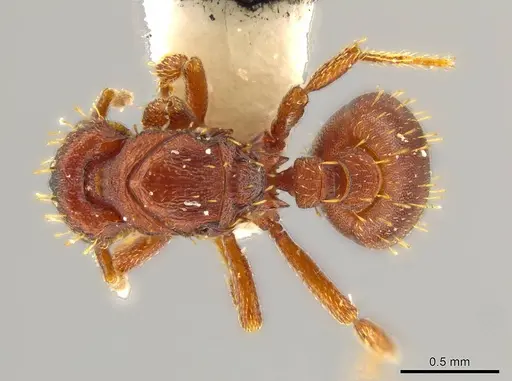
CASENT0629812
View on AntWeb
CASENT0629823
View on AntWeb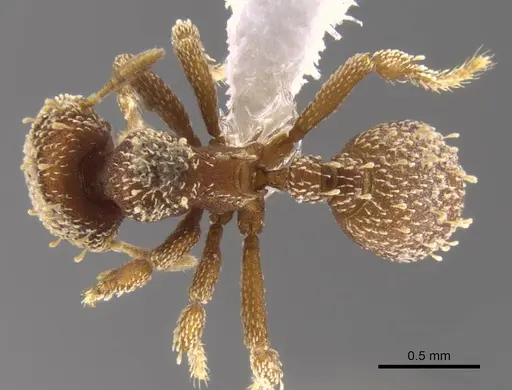
CASENT0629827
View on AntWeb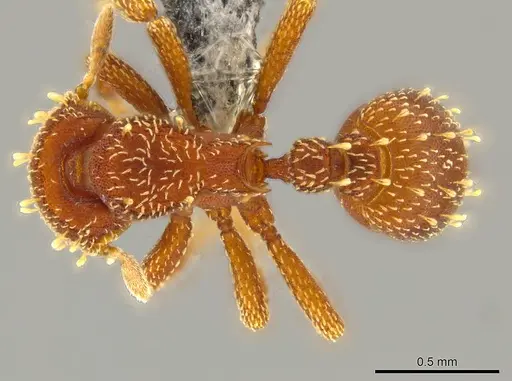
ECOFOG-TR17-0135-05
View on AntWeb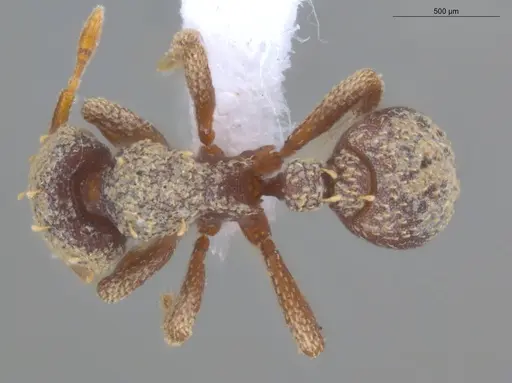
INBIOCRI001281182
View on AntWeb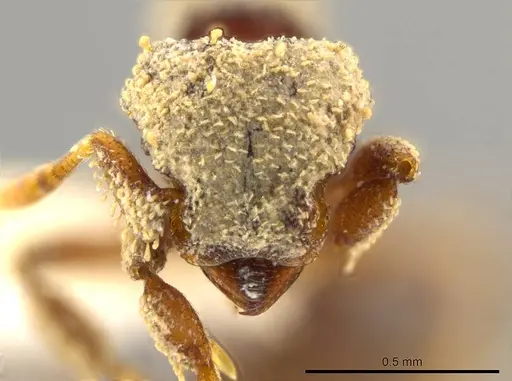
Literature
Loading distribution map...Loading products...