
Octostruma leptoceps
- Sci. Name
- Octostruma leptoceps
- Tribe
- Attini
- Subfamily
- Myrmicinae
- Author
- Longino, 2013
- Distribution
- Found in 1 countries
Introduction
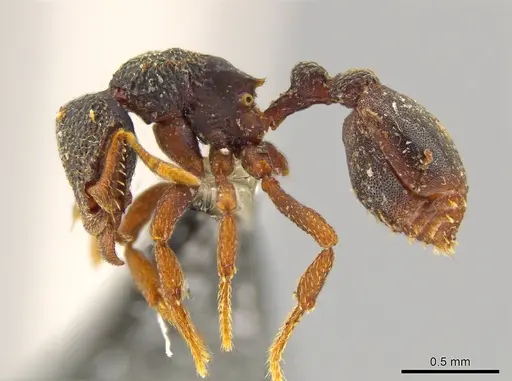
Octostruma leptoceps is an extremely rare ant species described from a single worker collected in Honduras' Cusuco National Park. The species is known only from this specimen, collected in mesophyll cloud forest at 1290m elevation by sifting leaf litter. Workers are very small, but exact body size is unknown as no total length measurements are available . This species is notable for its extreme rarity, with no additional specimens found since its description in 2013. Almost all care information must be inferred from related Octostruma species and general leaf-litter ant biology .
Quick Summary
- Difficulty: Hard
- Origin & Habitat: Honduras, Cortés Province, Cusuco National Park at 1290m elevation in mesophyll cloud forest. Collected from sifted leaf litter on the forest floor [1].
- Colony Type: Unconfirmed, only a single worker has been documented.
- Size & Growth:
- Queen: Unknown, no queens have been collected or described.
- Worker: Size data unavailable, no total length measurements provided.
- Colony: Unknown, only one worker known.
- Growth: Unknown
- Development: Unknown, no development data exists. (No direct data available.)
- Antkeeping:
- Temperature: Keep around 20-24°C based on cloud forest habitat. Start in lower-mid range and observe colony behavior [1].
- Humidity: Keep nest substrate consistently moist but not waterlogged, as cloud forests are humid [1].
- Diapause: Unknown, no data on overwintering requirements.
- Nesting: Natural nesting in leaf litter. In captivity, use moist substrate or small Y-tong nest with tight chambers. Ensure excellent escape prevention due to tiny size [1].
- Behavior: Behavior is unstudied. Based on related Octostruma species, they are likely cryptic leaf-litter ants. Not aggressive, but escape prevention is critical due to tiny size.
- Common Issues: escape prevention is critical due to tiny size, use fine mesh or fluon barriers., humidity control is essential but estimated, not confirmed., no confirmed diet, must experiment with small prey., colony development is unknown, so progress may be slow.
Discovery and Rarity
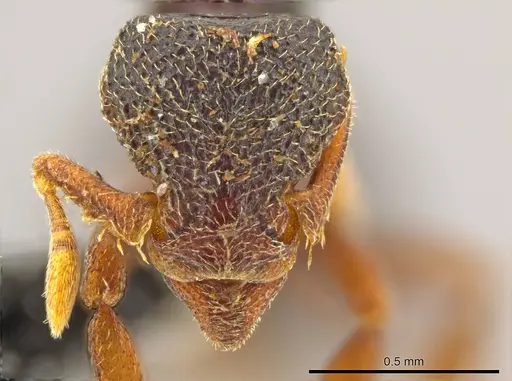
Octostruma leptoceps is one of the rarest ant species to keep, described in 2013 from a single worker in Honduras. The species name means 'narrow head', referring to its distinctive narrow head shape. The holotype was collected in May 2010 by sifting leaf litter from a cloud forest floor at 1290 meters elevation. No additional specimens have been found, so almost nothing is known about queens, colonies, or behavior. All care information is inferred from related species [1].
Housing and Nest Setup
Given their tiny size and cloud forest origin, you need a setup that maintains high humidity while preventing escape. Use a naturalistic setup with moist substrate like coconut fiber or soil mix, or a small Y-tong nest with tight chambers scaled to their minute size. Escape prevention is critical, use fine mesh or fluon barriers, as standard barriers may not work. A small outworld connected to the nest allows for feeding without disturbance [1].
Feeding and Diet
The diet is unstudied, but related Octostruma species are generalist foragers. Offer small protein sources like fruit flies or springtails, and sugar water or honey. Prey must be appropriately sized for their tiny size. Observe what the colony accepts and experiment [1].
Temperature and Humidity
Aim for temperatures around 20-24°C, avoiding high heat. Humidity should be high, with substrate kept consistently moist but not waterlogged. Monitor for condensation and balance ventilation to prevent drying [1].
Understanding the Challenges
Keeping this species is challenging due to complete lack of biological data. You must be comfortable with uncertainty and adapting care based on colony behavior. Expect slow progress and potential failures. Consider gaining experience with more common Octostruma species first [1].
Frequently Asked Questions
How long do Octostruma leptoceps take to develop from egg to worker?
This is completely unconfirmed, no eggs, larvae, or pupae have ever been documented. Based on related small Myrmicinae, estimate 6-10 weeks at optimal temperature, but this is uncertain [1].
What do Octostruma leptoceps eat?
Diet is unconfirmed. Based on related species, they likely accept small live prey and sugar sources. Offer fruit flies, springtails, and honey water, then observe what they accept [1].
Are Octostruma leptoceps good for beginners?
No, this species is not recommended for beginners due to extreme rarity and lack of data. It requires experience with leaf-litter ants and comfort with uncertainty [1].
How big do Octostruma leptoceps colonies get?
Colony size is unknown, only a single worker has been collected. No estimates are available [1].
What temperature should I keep Octostruma leptoceps at?
Keep them at moderate temperatures around 20-24°C, based on their cloud forest habitat. Avoid high heat and adjust based on colony activity [1].
Do Octostruma leptoceps need hibernation?
Diapause requirements are unknown. Observe your colony, if activity decreases in cooler months, provide a slight cool period, but do not force hibernation [1].
Can I keep multiple Octostruma leptoceps queens together?
This is unknown, colony structure has never been documented. Do not attempt combining queens without evidence they accept this [1].
Why is Octostruma leptoceps so rare in the antkeeping hobby?
Only a single worker has ever been collected, and no colonies are known. The species was described in 2013 and remains one of the least-known ants globally [1].
What makes Octostruma leptoceps different from other Octostruma?
The species name 'leptoceps' means narrow head, referring to its exceptionally narrow head shape compared to other Octostruma species [1].
Report an Issue
The current care sheet is based fully on literature. See inconsistencies, or something that's incorrect? Please , it will be resolved after review from an admin. Contributing to the blogs tab also helps providing information, to make us be able to further improve the caresheets. Thank you for your support!
References

This caresheet is licensed under CC BY-SA 4.0 .
Community Blogs
CASENT0617645
View on AntWeb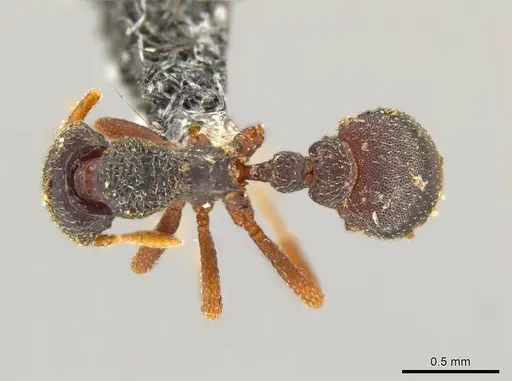
Literature
Loading distribution map...Loading products...