
Octostruma impressa
- Sci. Name
- Octostruma impressa
- Tribe
- Attini
- Subfamily
- Myrmicinae
- Author
- Palacio, 1997
- Distribution
- Found in 1 countries
Introduction
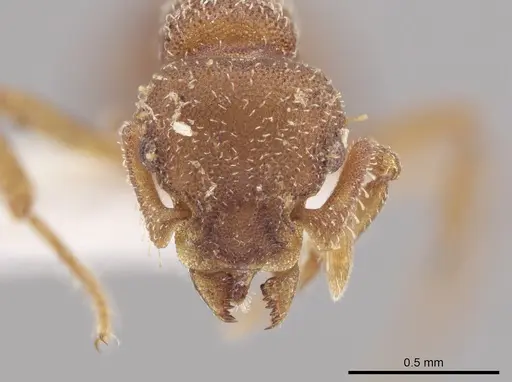
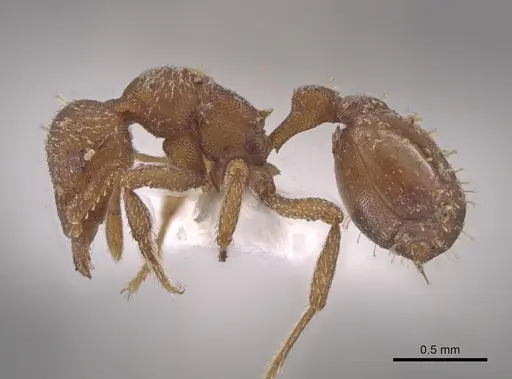
Octostruma impressa is a tiny myrmicine ant belonging to the tribe Attini, native to Colombia. Workers are minute; the scientific literature only documents their head dimensions, making them one of the least known ant species in terms of full body size . The species has a broadly impressed metanotal groove and a blunt basal tooth on the mandible . These ants have been recorded in the Colombian departments of Antioquia, Risaralda, Valle del Cauca, and Magdalena at various elevations . Because this species has never been kept in captivity and almost nothing is known about its biology, keeping it is entirely experimental. The genus Octostruma is rarely encountered in the antkeeping hobby, and this species represents a true challenge for advanced antkeepers interested in rare tropical species.
Quick Summary
- Difficulty: Expert
- Origin & Habitat: Colombia, specifically the departments of Antioquia, Risaralda, Valle del Cauca, and Magdalena. The type locality is in Parque Nacional Natural Orchídeas in Antioquia at 950m elevation [1][2]. This is a tropical forest environment with high humidity year-round.
- Colony Type: Unknown. The colony structure of this species has never been documented. Based on related Octostruma species, they likely form small colonies with a single queen, but this is unconfirmed.
- Size & Growth:
- Queen: Unknown, queen size has not been described in the scientific literature [1]
- Worker: Size data unavailable, only head measurements have been recorded [1]
- Colony: Unknown, no colony size data exists. Based on related small myrmicines, likely under 100 workers.
- Growth: Unknown, no development data exists for this species
- Development: Unknown, no direct observations exist. Based on typical Attini patterns at tropical temperatures, estimate 6 to 10 weeks, but this is highly speculative. (This is entirely unconfirmed. No founding, development, or colony growth data exists for this species.)
- Antkeeping:
- Temperature: Unknown, no thermal studies exist. Based on Colombian lowland/mid-elevation origin, aim for 22 to 26°C as a starting point and observe colony behavior. Avoid temperatures below 20°C or above 30°C.
- Humidity: Unknown, no humidity data exists. Based on tropical forest floor origin, expect high humidity needs (70 to 85%). Keep the nest substrate consistently moist but not waterlogged.
- Diapause: Unknown, no seasonal data exists. Given the Colombian origin with minimal temperature variation year-round, they likely do not require a diapause period, but this is unconfirmed.
- Nesting: Unknown natural nesting preferences. Based on related Octostruma species, likely nests in rotting wood, leaf litter, or soil in humid forest environments. For captivity, a small Y-tong (AAC), plaster, or 3D-printed nest with very tight chambers scaled to their tiny size is appropriate. Maintain high humidity.
- Behavior: Completely unobserved in captivity. Based on genus-level patterns, they are likely cryptic foragers that hunt small prey in leaf litter. Their tiny size means excellent escape prevention is absolutely critical, they can squeeze through gaps too small for most other ants. Aggression level is unknown, but likely low given their size. Do not expect active, visible foraging like larger ants.
- Common Issues: no biological data exists, everything about keeping this species is speculative, tiny size makes escape prevention extremely difficult, use fine mesh and tight-fitting lids, no information on founding behavior, queen may be claustral or semi-claustral, unknown diet, likely accepts small live prey but specific preferences unconfirmed, no data on colony growth rate, expect very slow development, humidity requirements are unknown but likely high given tropical origin, cannot confirm if they accept sugar sources, related species vary widely in diet
Why This Species Is So Challenging
Octostruma impressa is one of the most poorly documented ant species known. The scientific literature contains only morphological descriptions of workers, there is zero information about colony structure, founding behavior, diet, development, or any aspect of its natural history [1]. This means you will be essentially pioneering captive care for this species entirely from scratch. Every aspect of their husbandry must be learned through careful observation and experimentation. For this reason, this species is only recommended for expert antkeepers who have extensive experience with difficult, data-poor species and who are prepared for the possibility of colony failure. Do not choose this species if you want a straightforward, well-documented ant to keep.
Size and Escape Prevention
Workers are extremely small, only their head dimensions have been documented in the literature [1]. Their tiny size means they can escape through gaps that would hold back much larger ants. You must use excellent escape prevention: fine mesh (at least 0.5mm or finer), tightly fitting lids, and barrier gel or fluon on any potential escape routes. Test tube setups should have cotton plugs that are firmly packed. Even with these precautions, expect that escapes may happen. This is not a species for beginners or for those who want to observe active, visible foraging.
Housing and Nest Setup
Because nothing is known about their natural nesting preferences, you must make educated guesses based on related species and their origin. They come from humid tropical forests in Colombia, so humidity is likely critical. Use a small Y-tong (AAC), plaster, or 3D-printed nest with chambers scaled to their tiny size, passages should be narrow. Keep the nest substrate consistently moist. A test tube setup with a water reservoir can work well for founding colonies, but you may need to upgrade to a small formicarium as the colony grows. Given their small size and likely cryptic behavior, a naturalistic setup with moist leaf litter and hiding spots may actually be more appropriate than a fully exposed nest.
Feeding and Diet
The diet of Octostruma impressa is completely unknown. As members of the tribe Attini (which includes leaf-cutter ants), they are related to fungus-growing ants, but not all Attini cultivate fungus, many are generalist foragers. Based on related small myrmicines, they likely hunt small prey such as springtails, mites, and other micro-arthropods. Offer small live prey like pinhead crickets, fruit flies, and small mealworms. Sugar acceptance is uncertain, some myrmicines accept honey or sugar water while others do not. Start by offering small live prey and observe acceptance. Do not rely on sugar sources until acceptance is confirmed.
Temperature and Seasonal Care
No thermal data exists for this species. The type locality in Colombia is at 950m elevation in a tropical premontane forest environment, suggesting they are adapted to warm but not extreme temperatures with high year-round humidity. Aim for 22 to 26°C as a starting point and observe colony activity. If workers become sluggish, slightly increase temperature, if they avoid the heated area, reduce it. There is no information about diapause requirements, and given Colombia's equatorial location with minimal seasonal temperature variation, they likely do not require a winter rest period. However, this is entirely speculative.
Frequently Asked Questions
Is Octostruma impressa a good species for beginners?
No. This species is absolutely not recommended for beginners. There is zero documented information about its care in captivity, and everything must be learned through experimentation. The tiny size also makes escape prevention extremely difficult. Only expert antkeepers with experience keeping rare, data-poor species should attempt this.
How long does it take for the first workers to emerge?
Unknown, no development data exists for this species. Based on typical Attini patterns at tropical temperatures (22 to 26°C), estimate 6 to 10 weeks from egg to worker, but this is highly speculative. Actual development time could be faster or slower.
What do Octostruma impressa eat?
Unknown, their diet has never been documented. Based on related small myrmicines, they likely hunt small live prey such as springtails, mites, and tiny insects. Offer small live prey and observe acceptance. Sugar acceptance is uncertain.
Can I keep multiple queens together?
Unknown, colony structure has never been documented for this species. Do not attempt combining unrelated queens until more is known about their social structure.
What temperature should I keep them at?
No specific data exists. Based on their Colombian origin, start around 22 to 26°C and adjust based on colony behavior. Avoid temperatures below 20°C or above 30°C.
Do they need hibernation or diapause?
Unknown, no seasonal data exists. Given Colombia's equatorial climate with minimal temperature variation, they likely do not require a diapause period, but this is unconfirmed.
How big do colonies get?
Unknown, no colony size data exists. Based on related small Octostruma species, colonies likely remain small, probably under 100 workers.
Why is there no information about this species?
Octostruma impressa is an extremely rare species that has never been studied in captivity. The scientific literature only describes the worker morphology. This is a case where the antkeeping hobby would be pioneering captive husbandry entirely.
What is the best nest type for this species?
Unknown, no captive nesting data exists. Based on their tiny size and likely cryptic behavior, use a small Y-tong (AAC), plaster, or 3D-printed nest with very tight chambers and passages. Maintain high humidity. A naturalistic setup with moist substrate may also work.
Report an Issue
The current care sheet is based fully on literature. See inconsistencies, or something that's incorrect? Please , it will be resolved after review from an admin. Contributing to the blogs tab also helps providing information, to make us be able to further improve the caresheets. Thank you for your support!
References

This caresheet is licensed under CC BY-SA 4.0 .
Community Blogs
CASENT0633165
View on AntWeb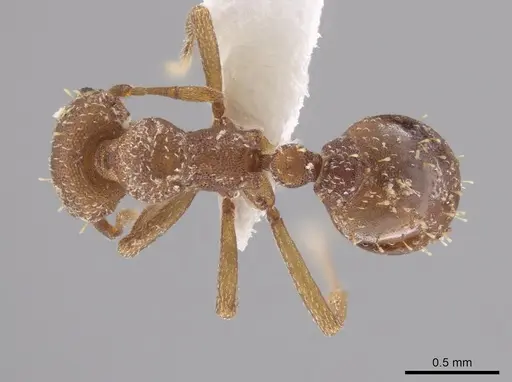
Literature
Loading distribution map...Loading products...