
Octostruma excertirugis
- Sci. Name
- Octostruma excertirugis
- Tribe
- Attini
- Subfamily
- Myrmicinae
- Author
- Longino, 2013
- Distribution
- Found in 9 countries
Introduction
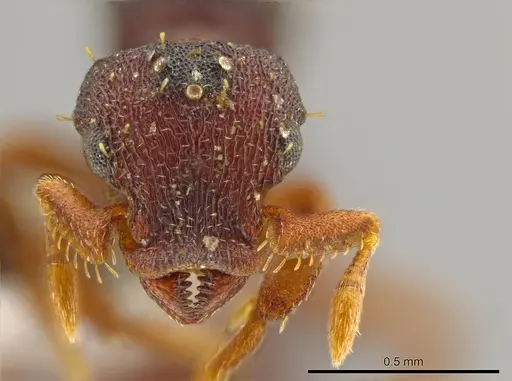
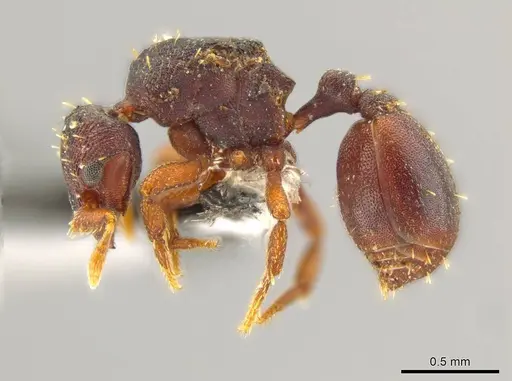
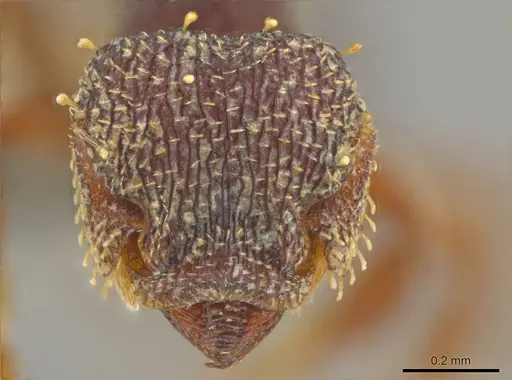
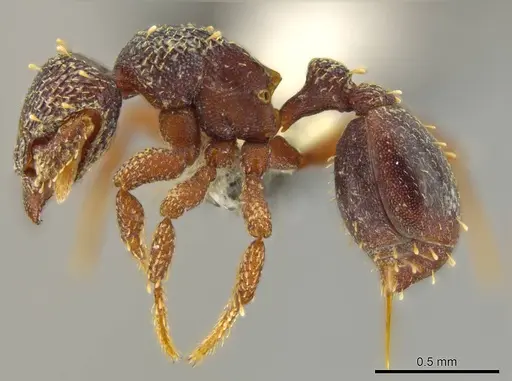
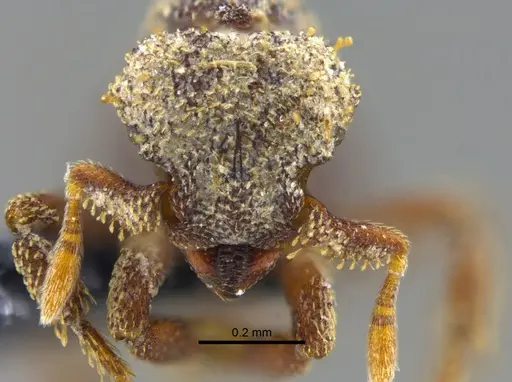
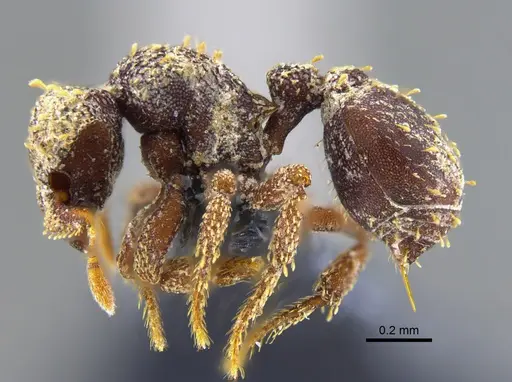
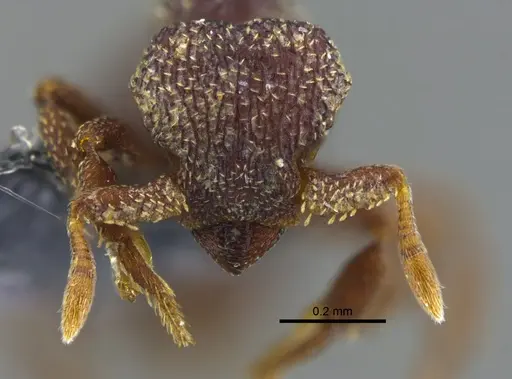
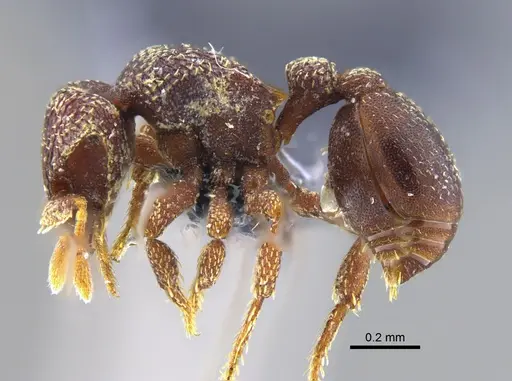
Octostruma excertirugis is a tiny leaf litter ant native to Central America, ranging from Mexico to Costa Rica and recently documented in Colombia . They are among the smallest ants in the leaf litter fauna – total body length is not recorded, but head width is about 0.6 mm. Workers are reddish-brown with a wrinkled (rugose) face and spatulate (club-tipped) hairs . All collections come from sifted leaf litter and rotten wood on the forest floor, in both mature rainforest and disturbed second-growth forest . This species belongs to the fungus-growing ant tribe (Attini), but whether they actually cultivate fungus is unknown – no dietary studies have been done. They are cryptic, slow-moving ants that avoid light and spend their entire lives within the leaf litter layer. Their small eyes (about 7 ommatidia) suggest they rely on touch and chemical cues rather than vision .
Quick Summary
- Difficulty: Hard
- Origin & Habitat: Lowland tropical forests from Mexico to Costa Rica, now also documented in Colombia. Found from sea level to 800 m elevation in mature rainforest, highly disturbed rainforest, and seasonal moist forest. All records are from sifted leaf litter and rotten wood on the forest floor [2][1][3].
- Colony Type: Colony structure is unknown. Dealate (wingless) queens have been found occasionally together with workers in litter samples [2], indicating that colonies have at least one queen, but whether they are monogyne (single queen) or polygyne (multiple queens) is not documented.
- Size & Growth:
- Queen: Size data unavailable (head width is ~0.58–0.64 mm, indicating a very small ant).
- Worker: Size data unavailable (head width is ~0.57–0.66 mm, indicating a very small ant).
- Colony: Unknown – no data from field studies.
- Growth: Unknown – no published data on colony growth rate.
- Development: Unknown – no studies have documented development time. (All developmental timelines are unconfirmed. As a tropical litter dweller, development is likely continuous at warm temperatures.)
- Antkeeping:
- Temperature: Maintain 24–28°C year-round. This is a lowland tropical species [2], temperatures below 20°C will likely stress the colony and stop brood development. Provide a gentle gradient so ants can choose.
- Humidity: High humidity is essential. The nest substrate should be consistently moist (but not waterlogged), mimicking the damp forest floor where this ant lives [2]. Avoid dry conditions.
- Diapause: No – as a tropical species from lowland Central America, it does not require hibernation or a winter cool-down [2]. Keep temperatures stable all year.
- Nesting: Use a naturalistic setup with sifted soil, leaf litter, and small pieces of rotting wood, or a Y-tong (aerated concrete) nest with very small chambers. The nest must be dark and humid. Given the ant's minute size, all gaps must be sealed with fine mesh or Fluon.
- Behavior: Octostruma excertirugis is a secretive, non-aggressive ant that stays hidden in the leaf litter. They are light‑sensitive and will avoid bright areas. Workers have a functional stinger (tribe Attini), but it is far too small to affect humans. Their tiny eyes (about 7 ommatidia [2]) mean they rely on chemical trails and touch. Escape risk is extreme – at under 0.7 mm head width, they can squeeze through gaps invisible to the naked eye. Use very fine mesh and generous barriers.
- Common Issues: escape prevention is critical – these ants are small enough to pass through standard ant‑keeping barriers., low humidity leads to rapid desiccation and colony death, they require constantly moist substrate., light sensitivity can stop them from foraging – keep the setup in a dim area or use red light for observation., colony establishment is difficult because founding behavior and colony structure are unknown – wild‑caught colonies may arrive weak., overfeeding can cause mold due to tiny colony size, feed very small amounts and remove leftovers within 24 h.
Housing and Nest Setup
Octostruma excertirugis demands very small and secure enclosures. For a founding colony, a test tube with a water reservoir can work, but you must add extra escape prevention – these ants can squeeze through gaps that seem sealed. Apply Fluon to all rim edges and wrap the tube in plastic with tiny ventilation holes.
For an established colony, create a naturalistic habitat: use a shallow container filled with sifted, slightly moist soil mixed with decayed leaves and small pieces of rotting wood. This copies the forest floor conditions they prefer. Alternatively, a Y‑tong (aerated concrete) nest with very small chambers and a humid outworld works well. Keep the entire setup in a dark area because these ants avoid light. The key is scale – chambers and passages must be small, matching the ants' tiny size. Large open spaces will not be used [2].
Feeding and Diet
No specific dietary data exists for Octostruma excertirugis. As a member of the fungus‑growing ant tribe (Attini), it is possible that they cultivate fungus, but this has not been confirmed. In captivity, offer tiny prey items such as fruit flies, pinhead crickets, or similarly small insects. A liquid sugar source (diluted honey or sugar water) can be provided, but acceptance is uncertain. All food must be very small or liquid because of their minute mouthparts.
Feed sparingly – a colony of this size can quickly be overrun by mold if food is left too long. Remove uneaten food within 24 to 48 hours.
Temperature and Humidity
This is a true lowland tropical species, so keep the temperature at 24–28°C year‑round [2]. Lower temperatures will slow or halt brood development. Avoid drafts and sudden changes.
Humidity is crucial. These ants live in constantly damp forest‑floor litter. The nest substrate must feel moist to the touch, but not waterlogged. A humidity chamber or a moist outworld helps maintain conditions. Ensure some ventilation to prevent stagnant air and mold, but not so much that the nest dries out. Consistency matters more than exact numbers.
Handling and Observation
Observing Octostruma excertirugis requires patience. They are shy, light‑sensitive ants that spend most of their time hidden. Use a red light or keep the setup in a dim room to see activity. A magnifying glass or macro lens helps appreciate their distinctive features: the longitudinally rugose face, the 8‑toothed mandibles, and the spatulate setae that give a fuzzy appearance.
These ants are completely harmless to keepers – their sting is too small to penetrate human skin. However, their tiny size means they can be crushed easily if you need to move them. The main challenge is simply seeing them, which can be unrewarding for beginners. [2]
Colony Establishment
Acquiring Octostruma excertirugis is difficult because they are rarely available in the hobby. If you obtain a wild‑caught queen or colony, expect a challenging establishment. Queens are dealate (wingless) when found with workers [2], meaning they have mated and shed their wings. No nuptial flight data exists, so you cannot time collecting.
If collecting in the field, search in sifted leaf litter from wet lowland forests. Wild‑caught colonies may arrive with few workers and face high mortality during transport. Quarantine them and watch for mites or other parasites that commonly affect leaf‑litter ants. Because colony structure is unknown, do not attempt to combine unrelated queens.
Frequently Asked Questions
How long does it take Octostruma excertirugis to produce first workers?
The egg‑to‑worker time is unconfirmed. Based on typical tropical myrmicine patterns, a rough estimate is 4–8 weeks at stable warm temperatures, but no data supports this.
Can I keep Octostruma excertirugis in a test tube setup?
A test tube can work for a founding colony, but you must add extra escape barriers – these ants are tiny and can slip through almost invisible gaps. Apply Fluon to all edges and consider wrapping the tube in fine mesh.
What do Octostruma excertirugis eat?
The exact diet has not been studied. In captivity, offer tiny insects (fruit flies, small crickets) and liquid sugar. Avoid large prey. It is unknown if they cultivate fungus, as many other Attini do.
Are Octostruma excertirugis good for beginners?
No. This species is not recommended for beginners due to extreme escape risk, unknown colony structure, high humidity needs, and difficulty in acquisition. Their secretive behavior also makes them unrewarding to observe.
Do Octostruma excertirugis need hibernation?
No – they are a lowland tropical species and require stable warmth year‑round (24–28°C). No cooling period is needed [2].
How big do Octostruma excertirugis colonies get?
Colony size is unknown. Field data is lacking, but based on related leaf‑litter genera, colonies are likely small (under 100 workers).
Why are my Octostruma excertirugis dying?
Common causes include low humidity, temperatures below 20°C, escape (or stress from attempting to escape), mold from overfeeding, or undetected parasites in wild‑caught colonies. Double‑check all environmental parameters.
When should I move Octostruma excertirugis to a formicarium?
Only move them when the colony is stable and actively foraging in the outworld. Because they prefer naturalistic conditions, a setup with sifted soil and leaf litter may be better than a traditional formicarium.
Can I keep multiple Octostruma excertirugis queens together?
It is unknown whether this species is polygyne. Do not attempt to combine unrelated queens without evidence that they can coexist.
Report an Issue
The current care sheet is based fully on literature. See inconsistencies, or something that's incorrect? Please , it will be resolved after review from an admin. Contributing to the blogs tab also helps providing information, to make us be able to further improve the caresheets. Thank you for your support!
References

This caresheet is licensed under CC BY-SA 4.0 .
Community Blogs
CASENT0610434
View on AntWeb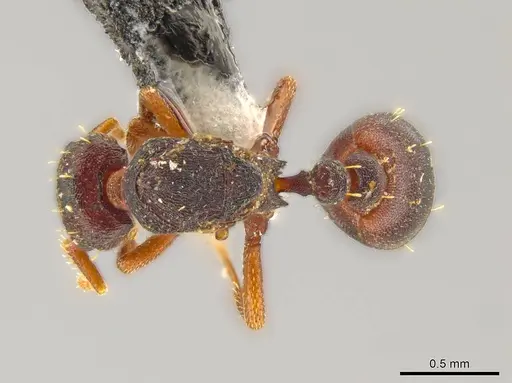
CASENT0629828
View on AntWeb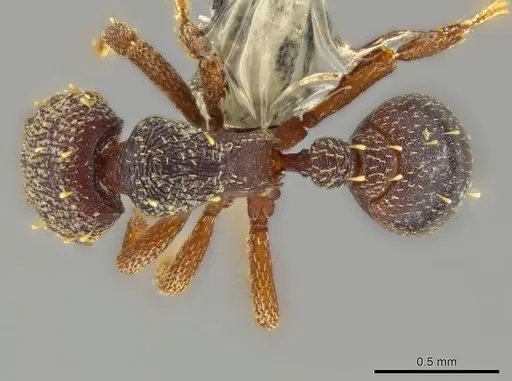
CBUMAGENT41981
View on AntWeb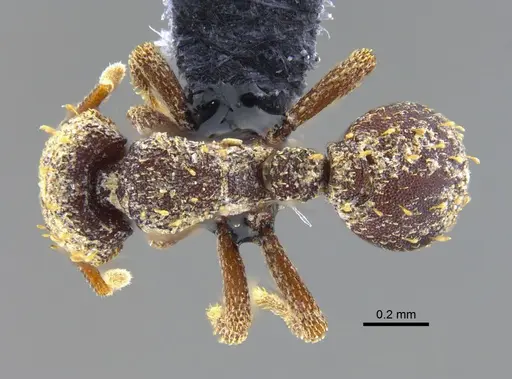
CBUMAGENT41993
View on AntWeb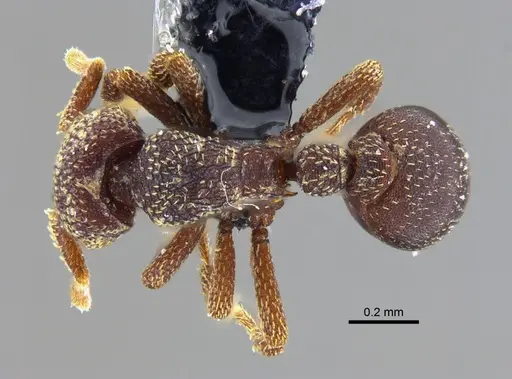
Literature
Loading distribution map...Loading products...