
Octostruma convallisur
- Sci. Name
- Octostruma convallisur
- Tribe
- Attini
- Subfamily
- Myrmicinae
- Author
- Longino, 2013
- Distribution
- Found in 2 countries
Introduction
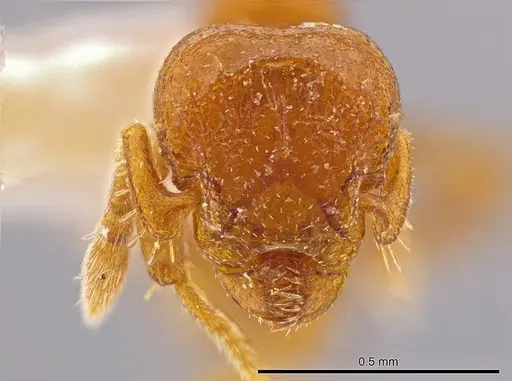
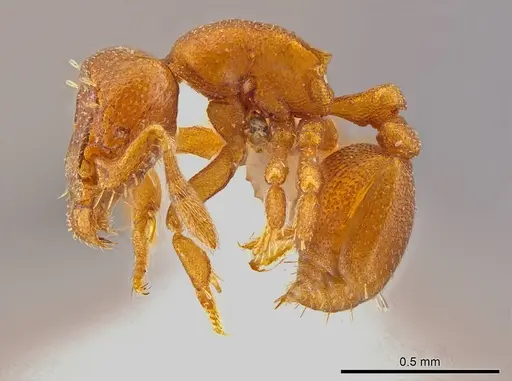
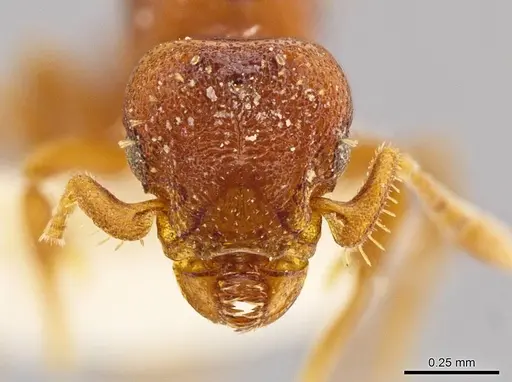
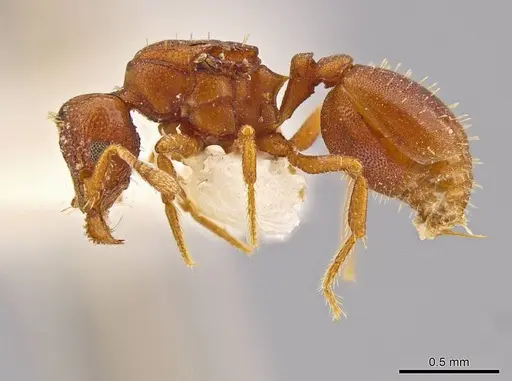
Octostruma convallisur is a tiny ant species native to the cloud forests of Panama and Colombia. Total body length is unknown because only head width measurements exist (0.43–0.56 mm for workers,0.51–0.63 mm for queens), and no total length has been recorded . Workers have an orange coloration and feature three pairs of distinctive spatulate (spoon-shaped) setae along a curved facial carina. Queens are red. This species was formally described in 2013 by John Longino and is known entirely from forest floor leaf litter and debris at the base of stumps, suggesting it is a cryptic ground-dwelling ant that forages in dark, humid microhabitats under the forest canopy .
Quick Summary
- Difficulty: Hard
- Origin & Habitat: Cloud forests of Panama and Colombia at elevations of 1000–1550 m. Collected from forest floor leaf litter and debris at the base of stumps [1][2][3].
- Colony Type: Colony structure is unconfirmed. Based on related Octostruma species, they likely form small colonies with a single queen, but this has not been documented for this specific species.
- Size & Growth:
- Queen: Size data unavailable – only head width (0.51–0.63 mm) is known [1]
- Worker: Size data unavailable – only head width (0.43–0.56 mm) is known [1]
- Colony: Unknown – likely small based on related Octostruma species [1]
- Growth: Unknown – likely slow to moderate based on small colony size
- Development: Unknown – estimated 8–12 weeks based on related small Myrmicinae at optimal temperature (No direct development data exists. Estimates based on genus-level patterns for small litter-dwelling ants.)
- Antkeeping:
- Temperature: Keep around 20–24 °C. This reflects their cloud forest origin at 1000–1550 m elevation where temperatures are moderate and stable year-round. Avoid overheating – these tiny ants are adapted to cool conditions [1].
- Humidity: High humidity is essential, consistent with cloud forest litter habitats. Aim for evenly moist but not waterlogged substrate – around 70–85% relative humidity is a reasonable target. Use a sealed nest with moisture-retaining material [1].
- Diapause: Unknown – no specific data. Cloud forests at their elevation experience mild seasonal swings but not harsh winters. A slight temperature reduction in winter may be appropriate but is not documented.
- Nesting: Likely nest in small cavities within rotting wood, under bark, or in leaf litter on the forest floor. In captivity, a small Y-tong or plaster nest with tight chambers scaled to their tiny size works well. They need minimal disturbance and dark conditions [1].
- Behavior: Very cryptic and rarely seen. They are likely slow-moving and non-aggressive, typical of small litter-dwelling ants. Workers forage individually. Due to their extremely small size, escape prevention is critical – they can squeeze through gaps that hold back larger species. They present no stinging danger to keepers.
- Common Issues: escape prevention is critical due to extremely small size – standard barrier methods may allow escapes, high humidity requirements can lead to mold problems if ventilation is inadequate, slow growth and cryptic behavior make it difficult to assess colony health, virtually no captive breeding data exists – establishing a colony may be extremely challenging, wild-caught colonies may be difficult to locate given their cryptic leaf litter habitat
Natural History and Distribution
Octostruma convallisur is known from cloud forest habitats in Panama and Colombia at elevations between 1000 and 1550 meters [1][2][3]. The type series was collected in western Panama (Chiriquí province) at 1550 m elevation from debris at the base of a stump. Additional specimens have been collected from leaf litter samples in Panama (Barro Colorado Island) and Colombia (Meta department) [1]. This species was formally described in 2013 as part of a comprehensive revision of the genus Octostruma by ant taxonomist John Longino [1]. The name 'convallisur' refers to it being a southern version of the related species Octostruma convallis. These ants occupy the dark, humid forest floor microhabitat where they likely forage individually among leaf litter and decaying wood.
Identification and Morphology
Workers of Octostruma convallisur are tiny. No total body length has been recorded, but head width (a common taxonomic measurement) is 0.43–0.56 mm [1]. They have an orange coloration and can be identified by their shallow antennal scrobe, three pairs of spatulate (spoon-shaped) setae along a curved facial carina, and a uniformly foveolate (pitted) promesonotal dorsum [1]. Queens have head width 0.51–0.63 mm and are red. The facial carina pattern is distinctive – the termini of the facial arc extend laterally beyond the termini of the frontal carinae, which helps separate this species from close relatives [1]. These morphological details are primarily relevant for species identification and do not significantly impact captive care.
Housing and Nest Setup
Due to their tiny size (head width under 0.6 mm) and cryptic lifestyle, you need specialized housing. Use a small nest with chambers scaled to their dimensions – standard formicarium chambers may be too large and make them feel insecure. A small Y-tong or plaster nest with tight-fitting connections works best. Because they come from leaf litter and rotting wood, include some decaying organic material in the outworld to provide foraging opportunities. Escape prevention is absolutely critical – these ants can squeeze through gaps that would hold back much larger species. Use fine mesh (0.3 mm or smaller) on all openings and consider applying barrier gel or fluon to all surfaces. Keep the nest in a quiet, dark spot as these ants appear light-sensitive.
Feeding and Diet
The diet of Octostruma convallisur is not documented. Based on related Octostruma species and their position in the tribe Attini (though in the subtribe Basicerotina, not true fungus growers), they likely feed on small arthropods, honeydew, and possibly fungal fragments. Offer tiny prey items appropriate to their size – fruit flies, springtails, and other micro-arthropods. Prey should be no larger than they can handle. Sugar sources may be accepted but are not a primary dietary component for these litter-dwelling ants. Feed small amounts of protein every few days and remove uneaten prey promptly to prevent mold in the humid conditions.
Temperature and Humidity
As cloud forest inhabitants from 1000–1550 m elevation, these ants prefer cool to moderate temperatures and high humidity. Keep the temperature between 20–24 °C, avoiding both overheating and cold drafts. Their native habitat stays fairly stable year-round, so avoid fluctuations. Humidity should be kept high – aim for a moist substrate in the nest, but avoid waterlogging. Good ventilation is essential to prevent mold, which can kill small colonies. A small water reservoir connected to the nest can help maintain consistent moisture [1].
Challenges in Captive Care
Octostruma convallisur is a significant challenge for antkeepers. This species has never been documented in captive breeding, and very little is known about its wild biology. They are extremely small, requiring specialized housing and excellent escape prevention. Their cryptic lifestyle makes observing colony health difficult. Finding wild colonies is tough since they live in leaf litter and are rarely encountered. If you obtain a colony, expect very slow growth and be prepared for a long-term commitment with uncertain outcomes. These ants are best suited for experienced keepers who enjoy the challenge of establishing poorly-known species and have the resources to maintain optimal conditions over extended periods.
Frequently Asked Questions
How long does it take for Octostruma convallisur to produce first workers?
The egg-to-worker timeline is unknown for this species. Based on typical patterns for small litter-dwelling Myrmicinae, estimate 8–12 weeks at optimal temperature (around 22 °C). However, this is a rough guess as no specific development data exists [1].
Are Octostruma convallisur good for beginners?
No. This species is not suitable for beginners. They are extremely tiny (head width only 0.43–0.56 mm for workers), require very high humidity, have no documented captive breeding history, and are among the more challenging ants to keep. Only experienced antkeepers should attempt this species [1].
What do Octostruma convallisur eat?
Their diet is not documented. Based on related species, they likely accept small live prey (springtails, fruit flies, micro-arthropods). They may also feed on honeydew and sugary liquids. Offer tiny prey items appropriate to their minute size and remove uneaten food promptly.
What temperature should I keep Octostruma convallisur at?
Keep them at 20–24 °C, reflecting their cloud forest origin at 1000–1550 m elevation. Avoid temperatures above 25 °C and sudden changes. A stable, cool environment is ideal [1].
How big do Octostruma convallisur colonies get?
Colony size is unknown but likely small – probably under 100 workers based on typical Octostruma patterns and their cryptic leaf-litter lifestyle. They are not a large, fast-growing species [1].
Can I keep multiple Octostruma convallisur queens together?
Colony structure is unconfirmed for this species. Based on related Octostruma, they likely form single-queen colonies. Do not attempt to combine unrelated queens as this has not been documented and would likely result in aggression.
Do Octostruma convallisur need hibernation?
Diapause requirements are unknown. As cloud forest ants from a tropical region, they likely do not require a true hibernation. A slight temperature reduction during winter months may be appropriate but is not documented.
Why are my Octostruma convallisur escaping?
Their extreme small size (head width only 0.43–0.56 mm) means they can squeeze through remarkably tiny gaps. Standard barrier methods are often inadequate. Use fine mesh (0.3 mm or smaller), apply fluon or barrier gel to all surfaces, and ensure all connections are tightly sealed [1].
Where can I find Octostruma convallisur in the wild?
This species is known from cloud forests in Panama (Chiriquí, Barro Colorado Island) and Colombia (Meta department) at elevations of 1000–1550 m. They are collected from forest floor leaf litter using Berlese extraction. Finding them requires specialized effort in their native cloud forest habitat [1][2][3].
Report an Issue
The current care sheet is based fully on literature. See inconsistencies, or something that's incorrect? Please , it will be resolved after review from an admin. Contributing to the blogs tab also helps providing information, to make us be able to further improve the caresheets. Thank you for your support!
References

This caresheet is licensed under CC BY-SA 4.0 .
Community Blogs
MCZ-ENT00511411
View on AntWeb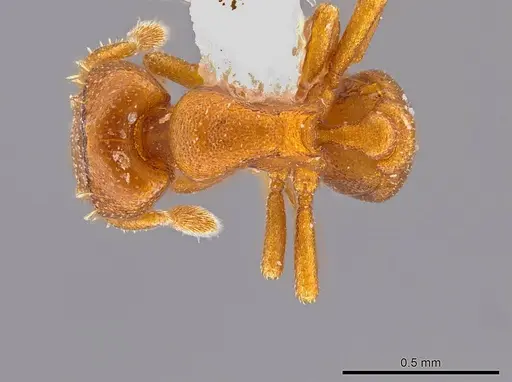
MCZ-ENT00511415
View on AntWeb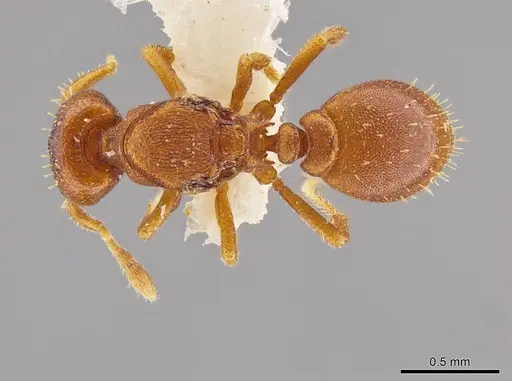
Literature
Loading distribution map...Loading products...