
Octostruma batesi
- Sci. Name
- Octostruma batesi
- Tribe
- Attini
- Subfamily
- Myrmicinae
- Author
- Emery, 1894
- Distribution
- Found in 4 countries
Introduction
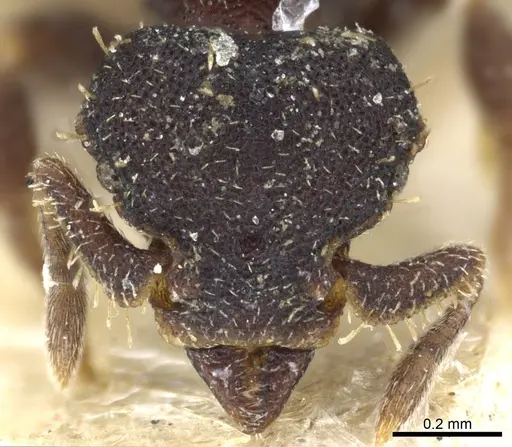
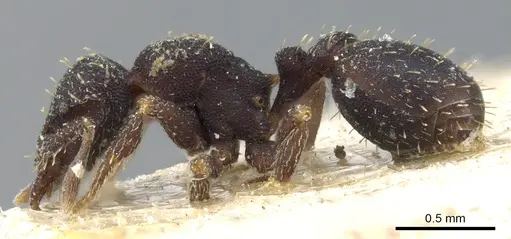
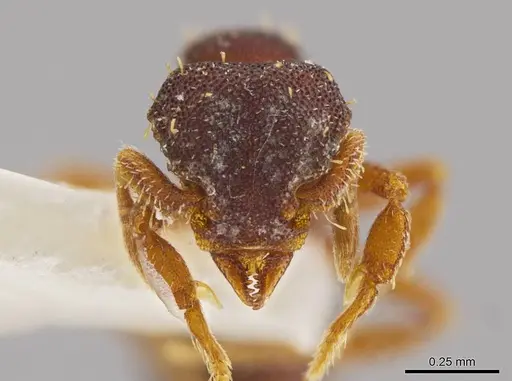
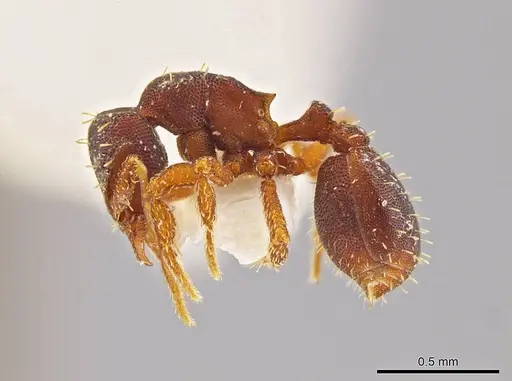
Octostruma batesi is a tiny ant in the tribe Basicerotini. Workers are up to 2.8mm in total length . They have specialized soil-binding setae that help them camouflage in leaf litter . The species is found in the Amazon basin and Andean foothills of Brazil, Ecuador, Bolivia, and other South American countries . One of the most distinctive features is their soil-binding pilosity, where they carry a layer of soil on their bodies for camouflage .
Quick Summary
- Difficulty: Expert
- Origin & Habitat: Amazon basin and Andean foothills of South America, found in tropical rainforest leaf litter [1][3].
- Colony Type: Colony structure is unconfirmed, only known from worker specimens and one queen, with no data on queen number or social structure.
- Size & Growth:
- Queen: Size data unavailable, no total length measurements for queens.
- Worker: Up to 2.8mm total length based on holotype [1].
- Colony: Unknown, no colony collections documented.
- Growth: Unknown
- Development: Unknown, no development studies exist for this species. (No specific data on development timeline.)
- Antkeeping:
- Temperature: Keep warm, roughly low-to-mid 20s°C, based on typical Amazonian conditions. Provide a gentle gradient so ants can self-regulate.
- Humidity: Keep substrate consistently moist but not waterlogged, with some drier areas available for self-regulation.
- Diapause: Unknown, no seasonal data exists for this species.
- Nesting: Prefer naturalistic setups with moist substrate and leaf litter, based on tribe behavior. Small chambers in Y-tong or plaster nests can work if humidity is maintained.
- Behavior: Likely cryptic foragers that hunt small prey in leaf litter. Escape prevention is critical due to their tiny size, use fine mesh and tight barriers.
- Common Issues: no biological data means all care is experimental, colonies may fail without clear reason., escape prevention is critical due to tiny size., high humidity requirements can lead to mold if ventilation is poor., slow growth or failure to establish is likely without proper prey options., wild-caught colonies may have parasites given their cryptic lifestyle.
Species Identification and Range
Octostruma batesi is a member of the Basicerotini tribe. The species was originally described by Emery in 1894 as Octostruma batesi and later moved to Octostruma by Brown in 1949 [1]. Workers are up to 2.8mm in total length [1]. The species is very similar to Octostruma betschi, but differs in having thinner setae on the scape and a flatter to convex face [1]. Distribution includes Brazil, Ecuador, Bolivia, Colombia, and other South American countries [3].
Unique Physical Characteristics
Octostruma batesi has specialized soil-binding pilosity. They have thick, curved holding setae that carry a layer of soil for camouflage [2]. This helps them blend into leaf-litter environments. For antkeepers, providing a naturalistic setup with soil allows them to exhibit this behavior.
Housing and Nest Setup
Use a naturalistic setup with a deep layer of moist substrate like coco fiber and leaf litter. Provide pieces of rotting wood or bark for cover. Ensure excellent escape prevention due to their tiny size, use fine mesh on ventilation.
Feeding and Diet
Their diet is unconfirmed, but based on tribe patterns, they likely hunt small invertebrates. Offer small live prey like springtails or fruit flies. Feed protein prey 2-3 times per week and remove uneaten items to prevent mold.
Temperature and Humidity
Keep temperatures warm, roughly low-to-mid 20s°C, with a gentle gradient. Maintain high humidity by keeping substrate moist but not waterlogged. Avoid stagnant air or excessive airflow.
Challenges and Experimental Care
Keeping this species is experimental due to lack of data. Start with conditions similar to other leaf-litter ants and adjust based on colony activity. Be prepared for setbacks.
Frequently Asked Questions
How long does it take for Octostruma batesi to develop from egg to worker?
Unknown, no development studies exist for this species.
What do Octostruma batesi ants eat?
Their diet is unconfirmed, but they likely hunt small invertebrates. Offer springtails or fruit flies.
Are Octostruma batesi good for beginners?
No, this is an expert-level species due to lack of biological data and experimental care.
How big do Octostruma batesi colonies get?
Unknown, no colony has been documented.
What temperature should I keep Octostruma batesi at?
Keep warm, roughly low-to-mid 20s°C, based on their habitat.
Do Octostruma batesi need hibernation?
Unknown, no seasonal data exists.
Can I keep multiple Octostruma batesi queens together?
Not documented, no data on colony founding or queen behavior.
What is the best nest type for Octostruma batesi?
A naturalistic setup with moist substrate and leaf litter works best.
Why are my Octostruma batesi dying?
Common issues include incorrect humidity, temperature, or lack of prey. This species may not survive in captivity due to unknown requirements.
Report an Issue
The current care sheet is based fully on literature. See inconsistencies, or something that's incorrect? Please , it will be resolved after review from an admin. Contributing to the blogs tab also helps providing information, to make us be able to further improve the caresheets. Thank you for your support!
References

This caresheet is licensed under CC BY-SA 4.0 .
Community Blogs
CASENT0904968
View on AntWeb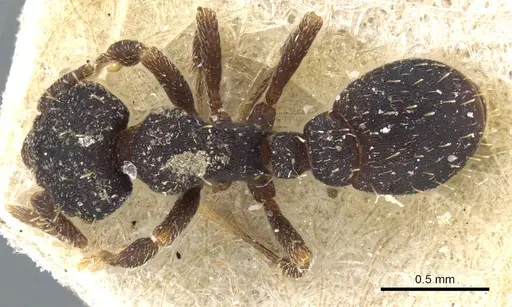
MCZ-ENT00511301
View on AntWeb
Literature
Loading distribution map...Loading products...