
Octostruma ascrobicula
- Sci. Name
- Octostruma ascrobicula
- Tribe
- Attini
- Subfamily
- Myrmicinae
- Author
- Longino, 2013
- Distribution
- Found in 1 countries
Introduction
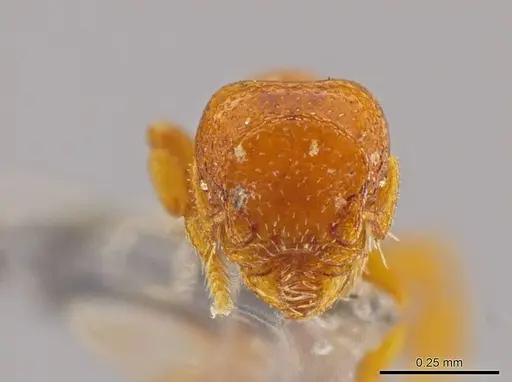
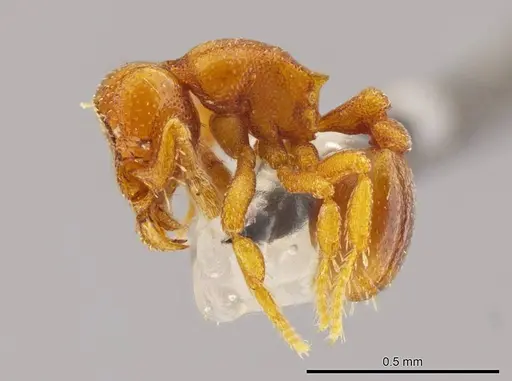
Octostruma ascrobicula is a small ant species described from Ecuador in 2013 . Workers have a distinctive orange coloration and a shallow antennal scrobe . This species was discovered through leaf litter sampling in lowland rainforest in Manabí Province, Ecuador, at around 450m elevation . As a member of the tribe Attini, Octostruma belongs to the 'basic Attini' group that are not fungus-cultivators but are likely specialized predators or scavengers in the leaf litter layer . Their small size and cryptic lifestyle make them difficult to study in the wild.
Quick Summary
- Difficulty: Expert
- Origin & Habitat: Ecuador, lowland rainforest at 450m elevation in Manabí Province. They live in sifted leaf litter in forest habitats [1].
- Colony Type: Colony structure is unconfirmed. No data exists on queen number or colony size for this species.
- Size & Growth:
- Queen: Size data unavailable, no total length measurements provided.
- Worker: Size data unavailable, no total length measurements provided.
- Colony: Unknown, no colony size data available
- Growth: Unknown
- Development: Unknown, no direct observations for this species. (No development data exists for this species.)
- Antkeeping:
- Temperature: Based on their lowland rainforest habitat, keep temperatures warm and stable, roughly 22-26°C [1].
- Humidity: Keep substrate consistently moist but not waterlogged, similar to a damp forest floor [1].
- Diapause: Unknown, no data on seasonal requirements. As a tropical species, they likely do not require diapause, but this is unconfirmed.
- Nesting: Use a nest with small chambers, such as Y-tong or plaster, to mimic their leaf-litter habitat [1].
- Behavior: Behavior is unstudied. Based on genus patterns, they are likely shy and reclusive predators or scavengers [1]. Their tiny size means escape prevention is critical, as they can squeeze through small gaps. Primary defense is likely retreat into the nest, as they have a stinger but it is medically insignificant to humans.
- Common Issues: their tiny size makes housing and feeding challenging with standard equipment., escape prevention is critical due to their ability to squeeze through small gaps., captive care is difficult due to lack of biological data., food preferences are unknown, making feeding experimental., high humidity can cause mold if not managed carefully.
Housing and Nest Setup
Housing Octostruma ascrobicula requires setups scaled to their small size. Use a test tube with tightly packed cotton or a Y-tong nest with miniature chambers. Ensure high humidity retention and provide dark, quiet conditions away from vibrations [1]. Avoid tall, open spaces, they prefer tight, enclosed areas that mimic leaf litter.
Feeding and Diet
Feeding is challenging because their exact diet is unknown. Based on their morphology and genus placement, they likely accept tiny live prey such as springtails or micro-arthropods [1]. Sugar sources may or may not be accepted, offer small prey and observe acceptance.
Temperature and Humidity
Maintain warm, stable temperatures around 22-26°C and keep substrate moist but not waterlogged [1]. This matches their lowland rainforest habitat. Avoid drying conditions from air conditioning or heating vents.
Understanding the Challenge
Keeping this species is experimental due to limited knowledge. Success requires careful observation and adaptation. Document any findings to contribute to ant keeping knowledge [1][2].
Frequently Asked Questions
How big do Octostruma ascrobicula workers get?
Size data is unavailable, no total length measurements are provided in research. Workers are very small based on morphology [1].
What do Octostruma ascrobicula eat?
Their exact diet is unknown. Based on genus patterns, they likely prey on tiny arthropods in leaf litter [1].
How fast do Octostruma ascrobicula colonies grow?
No development data exists for this species. Growth rate is unknown [1].
Are Octostruma ascrobicula good for beginners?
No. This species is extremely challenging and not recommended for beginners due to size and care difficulties [1].
Do Octostruma ascrobicula need hibernation?
Unknown. As a tropical species, they likely do not require diapause, but this is unconfirmed [1].
Can I keep multiple Octostruma ascrobicula queens together?
Unknown. No data exists on colony structure or queen number [1].
Where is Octostruma ascrobicula found in the wild?
They are known only from Ecuador, specifically Manabí Province at 450m elevation, in sifted leaf litter [1].
When was Octostruma ascrobicula discovered?
This species was described in 2013 by John T. Longino [1][2].
How do I house such a tiny ant species?
Use test tubes with tightly packed cotton or miniature nests like Y-tong. Focus on escape prevention and high humidity [1].
Report an Issue
The current care sheet is based fully on literature. See inconsistencies, or something that's incorrect? Please , it will be resolved after review from an admin. Contributing to the blogs tab also helps providing information, to make us be able to further improve the caresheets. Thank you for your support!
References

This caresheet is licensed under CC BY-SA 4.0 .
Community Blogs
MCZ-ENT00511413
View on AntWeb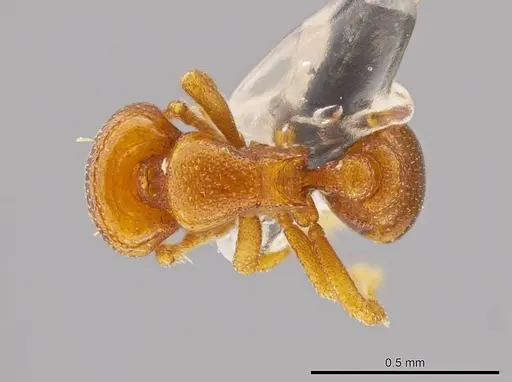
Literature
Loading distribution map...Loading products...