
Nylanderia xestonota
- Sci. Name
- Nylanderia xestonota
- Tribe
- Lasiini
- Subfamily
- Formicinae
- Author
- LaPolla & Kallal, 2019
- Distribution
- Found in 1 countries
Introduction
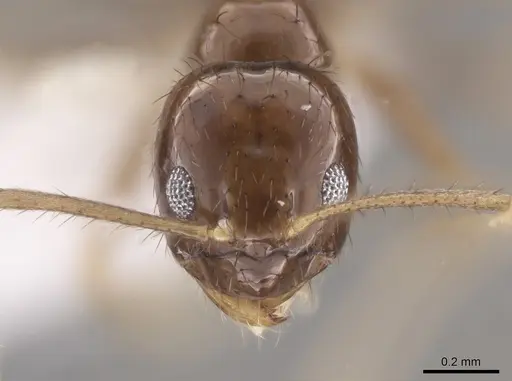
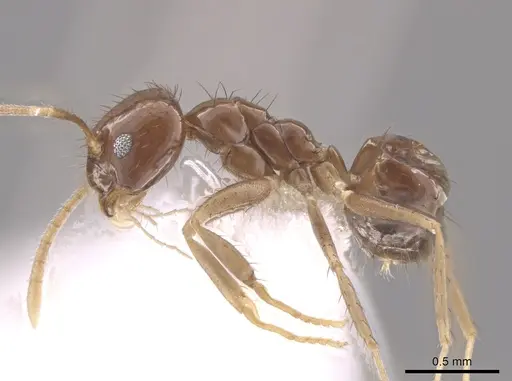
Nylanderia xestonota is a tiny ant species from Cuba, first described in 2019. Workers measure 1.63-2.20 mm in total length . They have a dark brown, distinctly shiny body with no pubescence on the gaster . The species name means 'polished back' in Greek, referring to its smooth mesosoma . This species is only known from the highlands of Parque Nacional Pico Turquino in Cuba, at approximately 1200m elevation . Based on this habitat, they likely prefer cooler, more humid conditions than lowland tropical ants [inferred]. As a newly described species, much about their biology remains unknown .
Quick Summary
- Difficulty: Unknown, likely Medium due to small size and high escape risk
- Origin & Habitat: Cuba, highlands of Parque Nacional Pico Turquino at 1200m elevation [1].
- Colony Type: Unconfirmed, no data on queen number or social structure [1].
- Size & Growth:
- Antkeeping:
- Temperature: Based on highland habitat, likely prefer 20-24°C. Avoid temperatures above 28°C.
- Humidity: Keep nest substrate consistently moist but not waterlogged.
- Diapause: Unknown [1].
- Nesting: Use test tubes for founding colonies. For established colonies, use Y-tong, plaster, or 3D-printed nests with tight barriers to prevent escapes due to small size.
- Behavior: No species-specific behavior documented. Based on genus patterns, Nylanderia are fast-moving and erratic foragers. They are not aggressive but may be skittish.
- Common Issues: escapes are likely without fine mesh barriers due to tiny size (1.63-2.20 mm) [1]., humidity needs are unconfirmed, maintain a gradient to avoid desiccation or mold., temperature stress may occur if too high, keep below 28°C.
Appearance and Identification
Nylanderia xestonota workers are tiny ants measuring just 1.63-2.20 mm in total length [1]. Their most striking feature is their dark brown, distinctly shiny body, so polished-looking that the species name means 'polished back' in Greek [1]. Unlike many related species, they lack the fine hairs (pubescence) on their abdomen, giving them an almost glossy finish [1]. Their legs, antennae scapes, and mandibles are lighter brown than their dark body, creating a subtle contrast [1]. The mesocoxae, metacoxae, and petiole are all dark like the rest of the body, which helps distinguish them from similar species like Nylanderia fuscaspecula where these parts are lighter [1].
Natural Habitat and Distribution
This species is known only from Cuba, specifically the highlands of Parque Nacional Pico Turquino in Granma province at approximately 1200 meters elevation [1]. This is a mountainous area in southeastern Cuba. The elevation is significant because it suggests this species prefers cooler, more humid conditions than typical lowland tropical ants. The type specimens were collected in February 2012,but no data exists on seasonal activity patterns or nuptial flight timing [1].
Housing and Nest Setup
Since no species-specific nesting data exists, use standard setups for small ants. Test tubes work well for founding colonies, ensure cotton is packed tightly as these tiny ants can squeeze through small gaps. For established colonies, use Y-tong, plaster, or 3D-printed nests with narrow chambers. The most critical factor is escape prevention, use fine mesh (0.5mm or smaller) on all ventilation holes and ensure all connections are sealed.
Feeding and Diet
Diet is unknown [2]. In captivity, offer sugar water or honey as a constant energy source. For protein, provide small live prey like fruit flies or pinhead crickets. Remove uneaten food after 24-48 hours to prevent mold.
Temperature and Humidity
Based on their highland Cuban origin, they likely prefer cooler conditions. Start around 20-24°C and monitor colony behavior, if workers seem sluggish, warm slightly, if they avoid the heated area, reduce temperature. For humidity, keep nest substrate moist but not waterlogged.
Colony Development and Growth
No development data exists for this species. Queens have not been described, so founding behavior is unconfirmed [1]. Based on typical Nylanderia patterns, expect relatively fast development compared to larger ants, possibly 4-8 weeks from egg to first worker at optimal temperature. However, this is an estimate only. The first workers (nanitics) will likely be smaller than mature workers. Be patient with newly established colonies, limited data means growth rates may differ from expectations.
Frequently Asked Questions
How long does it take for Nylanderia xestonota to produce first workers?
The egg-to-worker timeline is unconfirmed for this species since no development studies exist. Based on typical Nylanderia patterns and their small size (1.63-2.20 mm), expect approximately 4-8 weeks at warm temperatures (around 24°C). However, this is an estimate, your colony may be faster or slower.
What do Nylanderia xestonota ants eat?
Diet is unknown [2]. Based on genus patterns, they are generalists that likely accept sugar sources (honey, sugar water) and small protein sources (fruit flies, small insects). Offer both and remove uneaten food after 24-48 hours.
What temperature should I keep Nylanderia xestonota at?
Based on their highland Cuban origin (1200m elevation), they likely prefer cooler conditions than typical tropical ants. Start around 20-24°C and adjust based on colony activity. Avoid temperatures above 28°C.
Are Nylanderia xestonota good for beginners?
Difficulty level is unknown since this is a newly described species with no established care protocols. Their tiny size requires excellent escape prevention. If you have experience with small tropical ants, this species may be manageable, but proceed with caution due to limited biological data.
How big do Nylanderia xestonota colonies get?
Colony size is unconfirmed, no colony data exists for this species [1]. Based on genus patterns, expect several hundred to a few thousand workers at maturity.
Can I keep multiple Nylanderia xestonota queens together?
Colony structure is unconfirmed for this species [1]. Many Nylanderia are polygynous (multiple queens), but this has not been documented for xestonota specifically. Without data, combining unrelated queens is not recommended.
Do Nylanderia xestonota need hibernation?
Diapause requirements are unknown [1]. Their highland Cuban habitat may experience cooler seasons, but tropical ants often do not enter true hibernation. Monitor for seasonal slowdowns and reduce temperatures slightly if the colony becomes less active.
Why are my Nylanderia xestonota escaping?
Their tiny size (1.63-2.20 mm) makes them excellent escape artists [1]. Use fine mesh (0.5mm or smaller) on all openings, seal all gaps, and check connections frequently. Even small gaps that other ants cannot pass will not stop these tiny ants.
Where is Nylanderia xestonota found in the wild?
This species is known only from the highlands of Parque Nacional Pico Turquino in Cuba's Granma province, at approximately 1200 meters elevation. It was first described in 2019 [1].
Report an Issue
The current care sheet is based fully on literature. See inconsistencies, or something that's incorrect? Please , it will be resolved after review from an admin. Contributing to the blogs tab also helps providing information, to make us be able to further improve the caresheets. Thank you for your support!
References

This caresheet is licensed under CC BY-SA 4.0 .
Community Blogs
CASENT0656041
View on AntWeb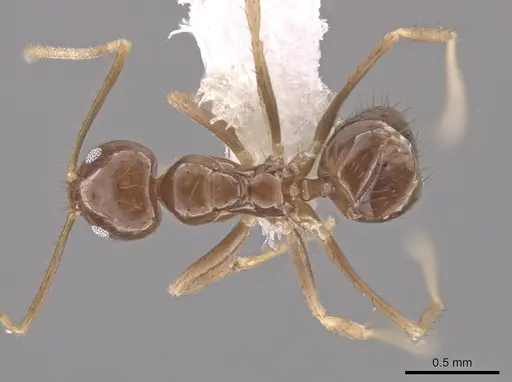
Literature
Loading distribution map...Loading products...