
Nylanderia wardi
- Sci. Name
- Nylanderia wardi
- Tribe
- Lasiini
- Subfamily
- Formicinae
- Author
- LaPolla & Kallal, 2019
- Distribution
- Found in 1 countries
Introduction
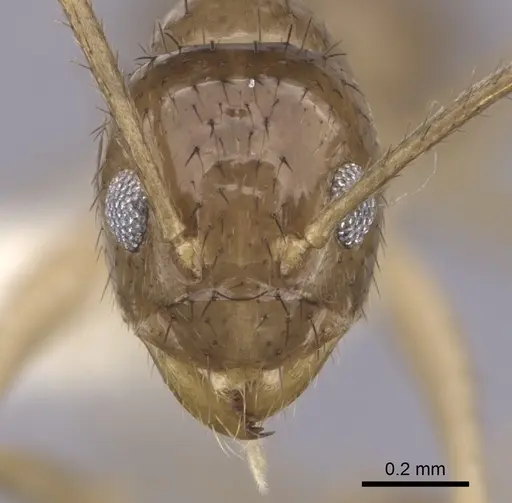
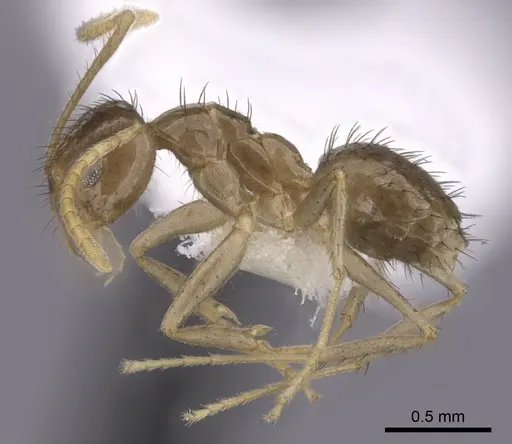
Nylanderia wardi is a small ant species native to Cuba, described in 2019 . Workers are 2.20-2.84 mm in total length . They are light brown to brownish-yellow, with slightly darker dorsal surfaces . The head is ovate with rounded corners, and they have well-developed eyes and a median ocellus . The species is found in Holguin province, Cuba, at low elevations . Biology is completely unstudied; no care data exists .
Quick Summary
- Difficulty: Medium, based on genus patterns, but species-specific data is lacking
- Origin & Habitat: Cuba, Holguin province, found at 25m elevation in forest edge areas [1].
- Colony Type: Unconfirmed, colony structure has not been documented in scientific literature
- Size & Growth:
- Queen: Not described, no queen measurements exist [1]
- Worker: 2.20-2.84 mm total length [1]
- Colony: Unknown, no colony size data exists
- Growth: Unknown, no development data exists
- Development: Unknown, but estimated 4-8 weeks based on typical Nylanderia genus patterns (Development likely depends on temperature, no species-specific data exists)
- Antkeeping:
- Temperature: Estimated 24-26°C based on Cuban tropical habitat, provide a gradient
- Humidity: Keep substrate consistently moist but not waterlogged, based on tropical climate
- Diapause: Unknown, likely minimal given tropical distribution
- Nesting: Use test tube setup for founding, once established, small formicarium with moist substrate
- Behavior: Based on Nylanderia genus patterns, they are fast-moving, active foragers with erratic movement. They are likely generalist feeders. Their small size means escape prevention is critical.
- Common Issues: tiny size makes escape prevention essential, they can squeeze through small gaps, no species-specific care data exists, start with general Nylanderia parameters and adjust, founding behavior unconfirmed, assume caution when introducing queens, colony size unknown, monitor growth and adjust resources as needed
Discovery and Naming
Nylanderia wardi was formally described in 2019 by LaPolla and Kallal as part of a review of Nylanderia species in the West Indies [1]. The species is named after Philip S. Ward, who collected the type specimens [1]. The type locality is in Holguin province, Cuba, approximately 6 kilometers south of Yamanigüey, at 25 meters elevation [1].
Identification and Appearance
Workers of Nylanderia wardi are small ants measuring 2.20-2.84 mm in total length [1]. They are light brown to brownish-yellow, with slightly darker dorsal surfaces [1]. The head is ovate when viewed from the front, with rounded corners [1]. They have well-developed eyes and a median ocellus [1]. This species is larger than the similar N. sierra and has a longer slope between the mesonotum and metanotal area [1].
Known Range and Habitat
Nylanderia wardi is currently known only from Cuba, specifically Holguin province in the eastern part of the island [1]. The type specimens were collected at 25 meters elevation in what appears to be a tropical forest edge area [1]. Cuba has a tropical climate with warm temperatures and moderate humidity [1].
Care Recommendations
Since no biological data exists specifically for N. wardi, care recommendations are based on typical Nylanderia genus behavior. Provide a temperature around 24-26°C and keep substrate moist but not waterlogged [2]. They likely accept sugar sources like honey water and small protein like fruit flies [2]. For founding, use a test tube setup, once established, a small formicarium with moist substrate works well. Given their tiny size, ensure excellent escape prevention with fine mesh [2].
Comparison with Similar Species
Nylanderia wardi is very similar to N. sierra, but N. wardi is larger and has a longer slope between the mesonotum and metanotal area [1]. N. wardi also has more large bristles on the antennae [1]. Despite overlapping ranges, the two species maintain distinct differences [1].
Frequently Asked Questions
How long does it take for Nylanderia wardi to produce first workers?
No species-specific data exists. Based on typical Nylanderia patterns, egg to worker development may take 4-8 weeks at warm temperatures [1].
What do Nylanderia wardi ants eat?
No species-specific feeding observations exist. Based on genus patterns, they likely accept sugar sources and small protein [2].
Are Nylanderia wardi good for beginners?
Difficulty is medium due to lack of species-specific data. If following genus patterns, they may be manageable, but beginners should prefer species with established care guidelines.
What temperature should I keep Nylanderia wardi at?
No specific data exists. Based on Cuban distribution, aim for 24-26°C and provide a gradient [1].
How big do Nylanderia wardi colonies get?
Colony size is unknown. No scientific literature documents maximum sizes [1].
Can I keep multiple Nylanderia wardi queens together?
Colony structure is unconfirmed. Most Nylanderia species are polygyne, but this is not documented for N. wardi. Combining queens is not recommended due to lack of data.
What type of nest should I use for Nylanderia wardi?
No specific nesting data exists. For founding, use a test tube setup, once established, a small formicarium with moist substrate is appropriate [2].
Is Nylanderia wardi invasive anywhere?
No, this species is only known from Cuba and has not been documented as invasive [1].
Does Nylanderia wardi need hibernation?
Diapause requirements are unknown. Given the tropical distribution, true hibernation is unlikely [1].
Report an Issue
The current care sheet is based fully on literature. See inconsistencies, or something that's incorrect? Please , it will be resolved after review from an admin. Contributing to the blogs tab also helps providing information, to make us be able to further improve the caresheets. Thank you for your support!
References

This caresheet is licensed under CC BY-SA 4.0 .
Community Blogs
CASENT0280582
View on AntWeb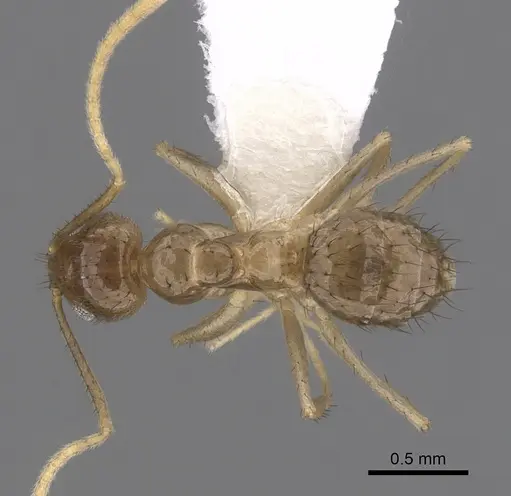
Literature
Loading distribution map...Loading products...