
Nylanderia vitiensis
- Sci. Name
- Nylanderia vitiensis
- Tribe
- Lasiini
- Subfamily
- Formicinae
- Author
- Mann, 1921
- Distribution
- Found in 2 countries
Introduction
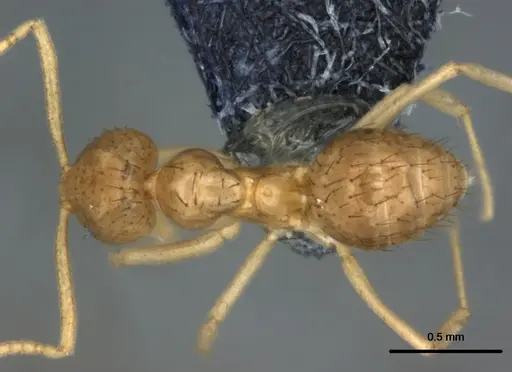
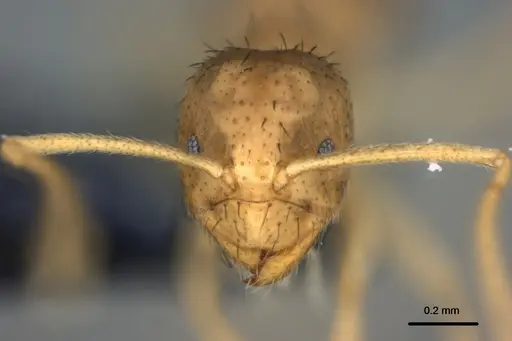
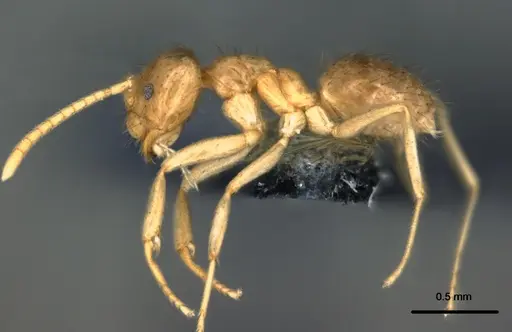
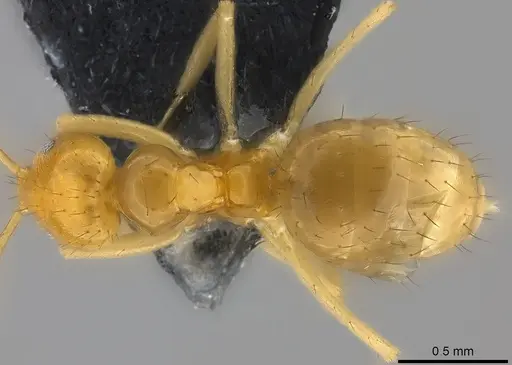
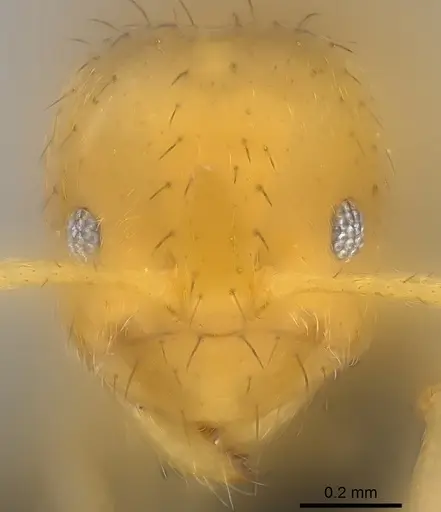
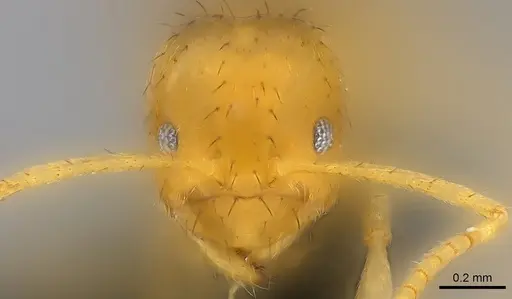
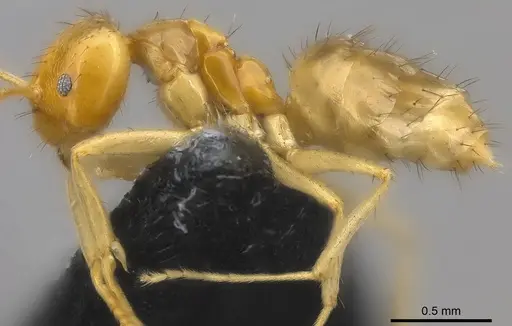
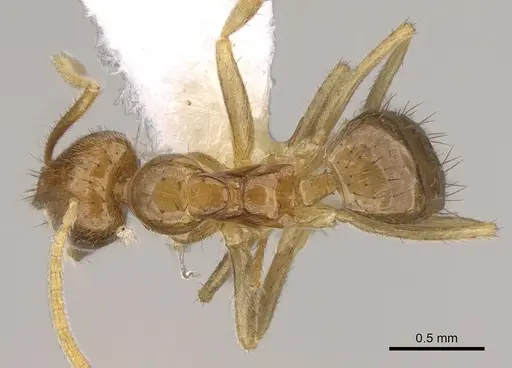
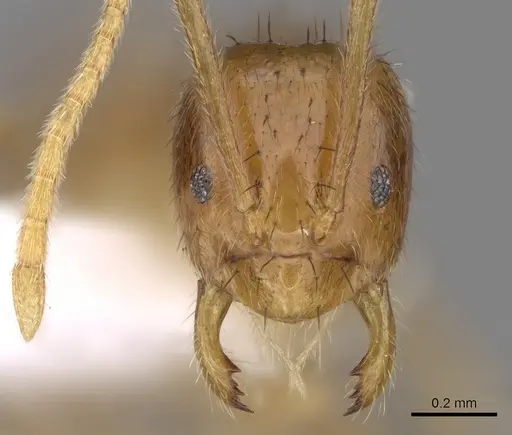
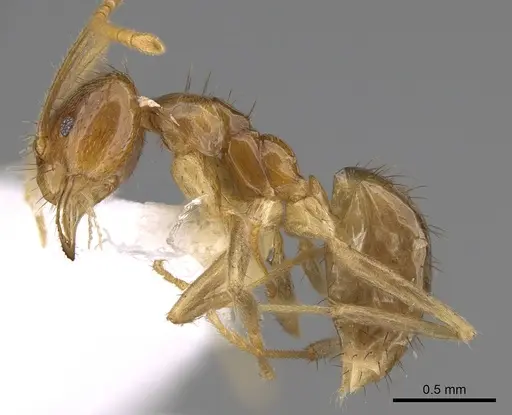
Nylanderia vitiensis is a small ant native to Fiji and the Society Islands in the South Pacific. It has a shiny yellow-brown color, very small eyes, and sparse body hairs . This species nests in rotting logs and is found in leaf litter and on vegetation . It is closely related to Nylanderia glabrior and can be difficult to separate from it .
Quick Summary
- Difficulty: Easy
- Origin & Habitat: Fiji and Society Islands (Tahiti, Raiatea), tropical Pacific islands. Nests in rotting logs and forages in leaf litter and vegetation [1][3].
- Colony Type: Unconfirmed, no data on queen number from research.
- Size & Growth:
- Queen: size data unavailable
- Worker: size data unavailable
- Colony: Unknown, no data on colony size
- Growth: Unknown, no data on growth rate
- Development: Unknown, no data on development time (Development time is unknown for this species.)
- Antkeeping:
- Temperature: Keep warm, roughly 24-28°C, based on tropical habitat [4].
- Humidity: Maintain moderate to high humidity, keep nest substrate moist but not waterlogged [4].
- Diapause: No, tropical species do not require hibernation [4].
- Nesting: Use Y-tong, plaster, or test tube setups. Provide dark, humid conditions similar to rotting logs [1][4].
- Behavior: Active and fast-moving, not aggressive. Due to small size, escape risk is high, ensure tight barriers [4].
- Common Issues: escape prevention is critical due to small size, they can squeeze through tiny gaps., tropical species requires consistent warmth, cold temperatures can harm the colony., wild-caught colonies may harbor parasites., small initial colony size means they can be easily stressed.
Housing and Nest Setup
For founding colonies, use a test tube setup with water and cotton. For established colonies, Y-tong or plaster nests work well to maintain humidity [4]. These ants naturally nest in rotting wood, so provide dark, humid conditions [1]. Keep the nest substrate moist but not waterlogged, and ensure the outworld is escape-proof [4].
Feeding and Diet
Nylanderia vitiensis is a generalist omnivore. Offer sugar sources like honey water and protein such as small insects [4]. Remove uneaten food to prevent mold [4].
Temperature and Seasonal Care
As a tropical species, keep temperatures warm around 24-28°C [4]. Do not expose to cold, as it can harm the colony [4]. No hibernation is needed [4].
Colony Development
Colony growth is unknown due to lack of data. Queens may seal themselves in during founding, but this is unconfirmed [4]. Once workers emerge, the colony can grow steadily under warm conditions [4].
Handling and Observation
These ants are small and fast, so handle with care. They are not aggressive, but escape risk is high due to size [4]. Use a magnifying glass for observation [4].
Frequently Asked Questions
How long does it take for Nylanderia vitiensis to get their first workers?
Development time is unknown for this species. Based on related Nylanderia patterns, it may take several weeks at warm temperatures, but no specific data exists [4].
Can I keep Nylanderia vitiensis in a test tube setup?
Yes, test tubes work well for founding colonies. Keep the water reservoir filled and maintain humidity [4].
What temperature do Nylanderia vitiensis need?
Keep them warm at roughly 24-28°C, as they are tropical [4].
Are Nylanderia vitiensis good for beginners?
Yes, they are considered easy to keep, but escape prevention is critical due to small size [4].
How big do Nylanderia vitiensis colonies get?
Colony size is unknown due to lack of data [4].
What do Nylanderia vitiensis eat?
They are generalist omnivores, accepting sugar water and small insects [4].
Why are my Nylanderia vitiensis escaping?
Their small size makes them excellent escape artists. Check for gaps and use fine mesh barriers [4].
Do Nylanderia vitiensis need a diapause/hibernation?
No, as a tropical species, they do not require hibernation [4].
Can I keep multiple queens together in one colony?
Colony type is unconfirmed, so it is unknown if multiple queens are accepted. It is safer to keep queens separately [4].
Report an Issue
The current care sheet is based fully on literature. See inconsistencies, or something that's incorrect? Please , it will be resolved after review from an admin. Contributing to the blogs tab also helps providing information, to make us be able to further improve the caresheets. Thank you for your support!
References

This caresheet is licensed under CC BY-SA 4.0 .
Community Blogs
Literature
Loading distribution map...Loading products...