
Nylanderia umbella
- Sci. Name
- Nylanderia umbella
- Tribe
- Lasiini
- Subfamily
- Formicinae
- Author
- LaPolla & Fisher, 2011
- Distribution
- Found in 7 countries
Introduction
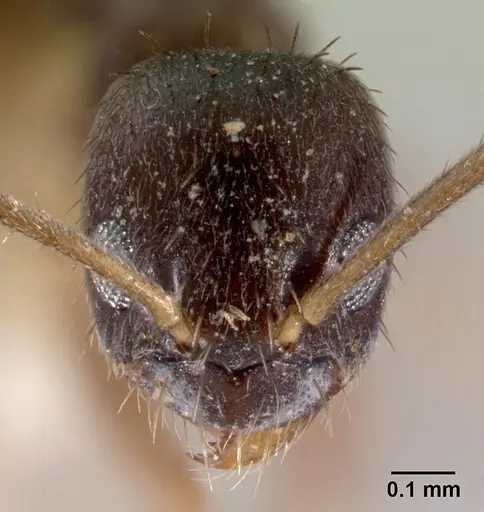
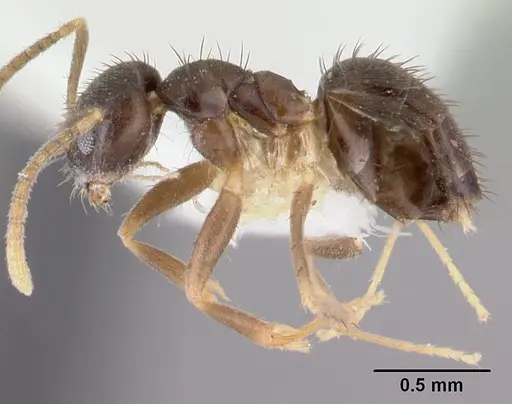
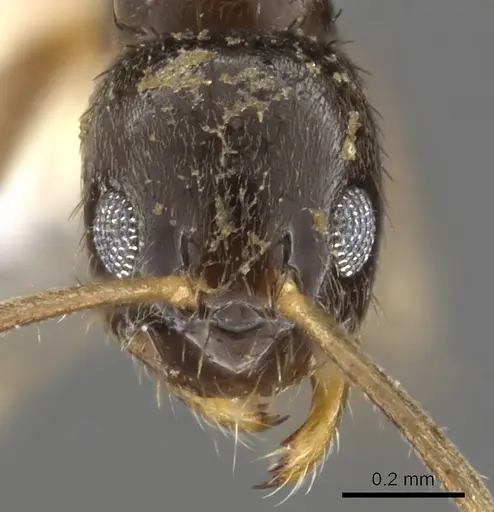
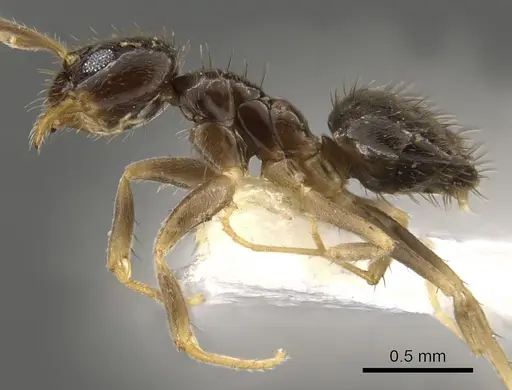
Nylanderia umbella is a tiny ant species native to tropical West and Central Africa, found in Cameroon, Nigeria, and Uganda . Workers measure 2.1-2.4 mm in total length, making them one of the smaller ant species . They are among the darkest Nylanderia species, with a dark brown body that contrasts sharply with yellowish-brown antennae, mandibles, and legs . This dark coloration inspired their scientific name, which means 'shade' or 'shadow' in Latin . The cuticle is smooth and shining, and workers have dense pubescence and erect hairs .
Quick Summary
- Difficulty: Hard
- Origin & Habitat: Tropical West and Central Africa, including Cameroon, Nigeria, and Uganda, at elevations around 958 m in forested regions [1][2].
- Colony Type: Unconfirmed, the queen caste has not been described, so colony structure is unknown [1].
- Size & Growth:
- Antkeeping:
- Temperature: Keep warm around 24-28°C based on tropical origin, but specific needs are unknown [1][3]
- Humidity: Keep nest substrate consistently moist but not waterlogged, as inferred from forest habitat [1][3]
- Diapause: Unknown, no data on diapause requirements, as a tropical species, it may not need hibernation, but this is unconfirmed [1]
- Nesting: Based on genus patterns, small nests in soil or test tubes may work, but specific preferences are unknown [3]
- Behavior: Specific behavior for N. umbella is unknown, but Nylanderia species are often called 'crazy ants' for erratic movement [3]. Escape risk is high due to tiny size, use fine mesh barriers [3].
- Common Issues: queen caste is unknown, you cannot distinguish queens from workers, making colony establishment difficult [1], tiny size means escape prevention must be excellent, they can squeeze through small gaps [3], no colony size data exists, you won't know what to expect as the colony grows [1], development timeline is unconfirmed, you won't know if your colony is developing normally [1], no information on founding behavior, how they establish nests in the wild is unknown [1], limited data means experienced keepers only, this is not a species for beginners [1]
Appearance and Identification
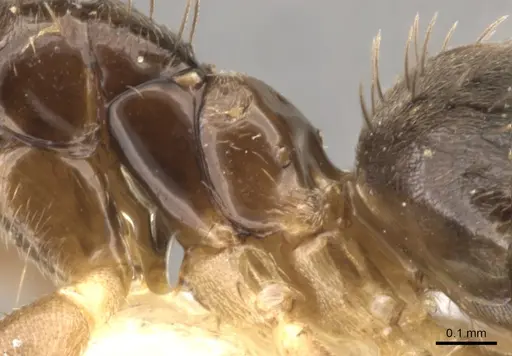
Nylanderia umbella workers are tiny at 2.1-2.4 mm total length [1]. They have a dark brown body that contrasts with yellowish-brown antennae, mandibles, and legs [1]. The cuticle is smooth and shining, with dense pubescence and erect hairs [1]. Scapes extend past the head by about the length of the first two funicular segments [1]. The propodeum has a short, angular dorsal face [1]. You need magnification to examine them properly.
Distribution and Habitat
This species is known from Cameroon, Uganda, and Nigeria, at elevations around 958 m in forested areas [1][2]. Collection data suggests they inhabit humid tropical forests, not open or dry regions [1][2].
What We Don't Know
The queen and male castes are unknown, so colony structure and founding behavior are unconfirmed [1]. No data exists on colony size, development timeline, or nuptial flights [1]. This makes N. umbella a challenging species to keep, as care must be discovery-based [1].
Care Recommendations Based on Genus
Since species-specific data is lacking, care is inferred from Nylanderia genus patterns and natural habitat [3]. Keep them warm and humid, with a small nest scaled to their tiny size [3]. Offer sugar water and small protein sources like fruit flies [3]. Escape prevention is critical due to their size [3].
Finding a Queen
The queen caste is unknown, so identifying a dealate female is difficult [1]. Collecting a colony with workers confirms a reproductive is present [1]. Catching dealate females during nuptial flights is uncertain without verification [1].
Frequently Asked Questions
How long does it take for Nylanderia umbella to produce first workers?
Unknown, no species-specific development data exists [1].
Can I keep multiple Nylanderia umbella queens together?
Not documented, colony structure is unknown [1].
What temperature do Nylanderia umbella need?
Keep them around 24-28°C based on tropical origin, but specific needs are unknown [1][3].
Are Nylanderia umbella good for beginners?
No, this is an expert-level species due to lack of documented biology [1].
Do Nylanderia umbella need hibernation?
Unknown, no data on diapause requirements [1].
What do Nylanderia umbella eat?
Likely generalist feeders, offer sugar water and small protein sources like fruit flies [3].
How big do Nylanderia umbella colonies get?
Unknown, no colony size data exists [1].
Why are my Nylanderia umbella escaping?
Their tiny size allows them to squeeze through small gaps, use fine mesh barriers and check enclosures regularly [3].
Report an Issue
The current care sheet is based fully on literature. See inconsistencies, or something that's incorrect? Please , it will be resolved after review from an admin. Contributing to the blogs tab also helps providing information, to make us be able to further improve the caresheets. Thank you for your support!
References

This caresheet is licensed under CC BY-SA 4.0 .
Community Blogs
CASENT0179583
View on AntWeb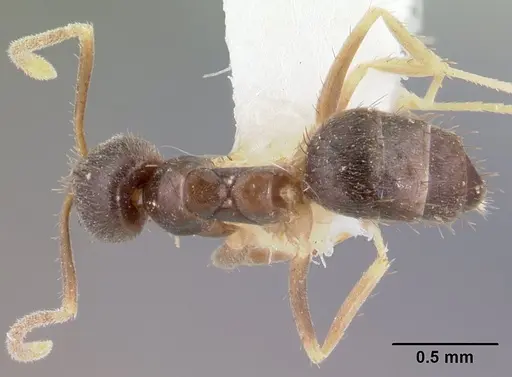
CASENT0900362
View on AntWeb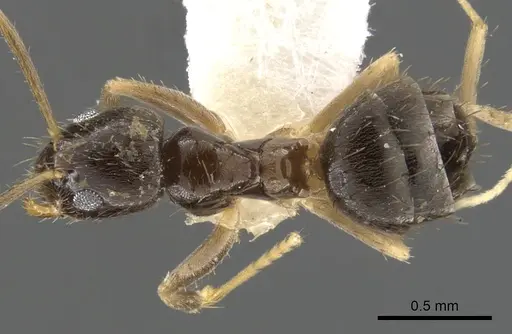
Literature
Loading distribution map...Loading products...