
Nylanderia stigmatica
- Sci. Name
- Nylanderia stigmatica
- Tribe
- Lasiini
- Subfamily
- Formicinae
- Author
- Mann, 1919
- Distribution
- Found in 1 countries
Introduction
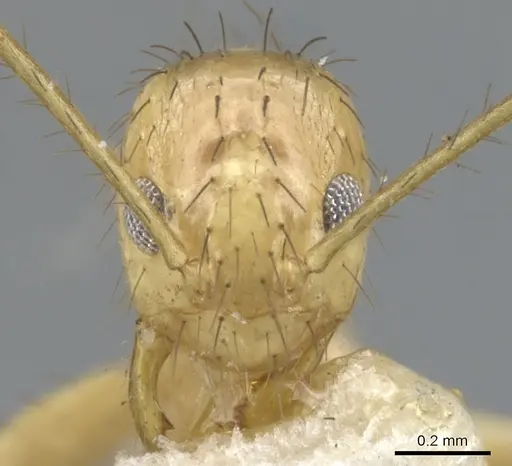
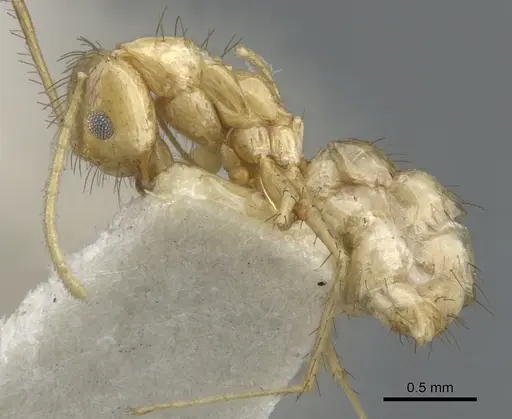
Nylanderia stigmatica is a small ant species native to the Solomon Islands and Samoa, recorded across multiple islands including Makira, Guadalcanal, Malaita, Santa Isabel, and the Russell Islands . It inhabits tropical island environments with high humidity and warm temperatures year-round . Size data is not available in the research literature, but based on genus patterns, workers are small . The species is part of the 'crazy ant' group known for erratic movement patterns .
Quick Summary
- Difficulty: Easy
- Origin & Habitat: Solomon Islands and Samoa, tropical island environments with high humidity and warm temperatures [1][2][3]
- Colony Type: Colony structure is unconfirmed, but based on Nylanderia genus patterns, likely single-queen (monogyne) colonies [3].
- Size & Growth:
- Queen: Size data unavailable, inferred from Nylanderia genus to be approximately 4-5 mm [3].
- Worker: Size data unavailable, inferred from Nylanderia genus to be approximately 2-3 mm [3].
- Colony: Up to several hundred workers at maturity, estimated from related Nylanderia species [3].
- Growth: Moderate [3].
- Development: Estimated 6-8 weeks at optimal temperatures (24-28°C) [3]. (Development is temperature-dependent and inferred from genus patterns.)
- Antkeeping:
- Temperature: Keep at 24-28°C with a gradient, as inferred from tropical habitat needs [3].
- Humidity: Keep nest substrate consistently moist but not waterlogged, inferred from humid tropical islands [3].
- Diapause: No diapause required for this tropical species [3].
- Nesting: In wild, likely nest in rotting wood or soil. For captivity, use test tube setup for founding colonies, then Y-tong or plaster nests with moist substrate [3].
- Behavior: Workers are small, active, with erratic 'crazy ant' movement patterns. They are not aggressive and have a mild sting. Forage individually and are omnivorous. Escape prevention is critical due to their tiny size [3].
- Common Issues: tiny size makes escape prevention critical, use fine mesh and tight-fitting lids., high humidity requirements can lead to mold if ventilation is poor., wild-caught colonies may carry parasites that can decimate captive colonies., tropical species are sensitive to temperature drops, keep away from cold drafts., overfeeding can cause mold issues in small nests, remove uneaten food promptly.
Housing and Setup
For a newly caught queen, a test tube setup works well. Fill a test tube with water, plug with cotton, and add the queen. Place in a dark, quiet location and wait for her to seal herself in and lay eggs. Do not disturb her during founding. Once the colony has around 15-20 workers, you can move to a small formicarium. A Y-tong nest or small plaster nest with moist substrate works well. Maintain high humidity with some ventilation to prevent mold. Because of their tiny size, ensure all connections are sealed with cotton or barriers to prevent escape [3].
Feeding and Diet
Nylanderia stigmatica is omnivorous. Offer a constant source of sugar, such as diluted honey or sugar water. For protein, provide small insects like fruit flies or pinhead crickets every few days. Remove uneaten food promptly to prevent mold. Fresh water should always be available [3].
Temperature and Seasonal Care
Keep the nest area between 24-28°C for optimal brood development. Temperatures below 22°C can slow development, while above 32°C may stress the colony. Use a heating cable on one side to create a gradient. No winter diapause is needed, but avoid cold drafts and never let temperatures drop below 20°C for extended periods [3].
Colony Growth Expectations
A newly mated queen will lay eggs soon after sealing in. Under optimal conditions, first workers emerge in about 6-8 weeks. Colony growth is moderate, reaching up to several hundred workers over time. Growth depends on temperature and feeding [3].
Frequently Asked Questions
How long does it take for Nylanderia stigmatica to produce first workers?
Expect first workers to emerge in about 6-8 weeks after the queen lays eggs, assuming temperatures are kept at 24-28°C. This timeline is based on typical Nylanderia development patterns [3].
What temperature do Nylanderia stigmatica ants need?
Keep them warm at 24-28°C. As a tropical species, they need consistent warmth year-round. A heating setup on one side of the nest creates a suitable gradient [3].
Can I keep multiple Nylanderia stigmatica queens together?
This is not recommended. While colony structure is unconfirmed, most Nylanderia are single-queen colonies. Combining unrelated queens typically results in fighting. House them separately [3].
How big do Nylanderia stigmatica colonies get?
Based on related species, colonies can reach up to several hundred workers at maturity. They are not among the largest ant species, but a healthy colony can be quite active [3].
Do Nylanderia stigmatica need hibernation?
No. As a tropical species, they do not require hibernation or winter dormancy. They remain active year-round if kept warm [3].
What do Nylanderia stigmatica eat?
They are omnivorous. Offer sugar sources constantly and protein several times per week. Remove uneaten food promptly to prevent mold [3].
Are Nylanderia stigmatica good for beginners?
Yes, they are considered a good beginner species. They are small, docile, and have straightforward care requirements. The main challenges are maintaining high humidity and preventing escape due to their tiny size [3].
When should I move Nylanderia stigmatica from a test tube to a formicarium?
Move them once you have around 15-30 workers and the test tube is crowded or the water reservoir is depleted. A small Y-tong or plaster nest works well [3].
Why are my Nylanderia stigmatica escaping?
Their small size means they can squeeze through tiny gaps. Check all connections, lid seams, and barrier applications. Apply fluon to smooth surfaces and ensure cotton barriers are packed tightly [3].
Report an Issue
The current care sheet is based fully on literature. See inconsistencies, or something that's incorrect? Please , it will be resolved after review from an admin. Contributing to the blogs tab also helps providing information, to make us be able to further improve the caresheets. Thank you for your support!
References

This caresheet is licensed under CC BY-SA 4.0 .
Community Blogs
CASENT0903125
View on AntWeb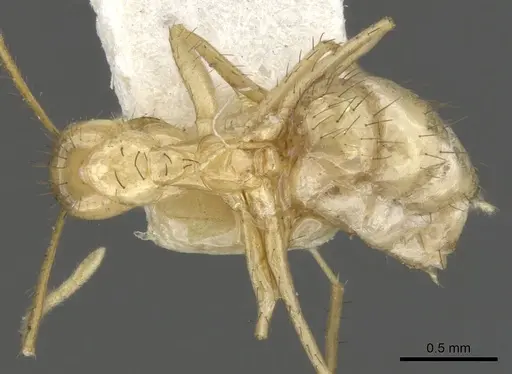
Literature
Loading distribution map...Loading products...