
Nylanderia silvestrii
- Sci. Name
- Nylanderia silvestrii
- Tribe
- Lasiini
- Subfamily
- Formicinae
- Author
- Emery, 1906
- Distribution
- Found in 1 countries
Introduction
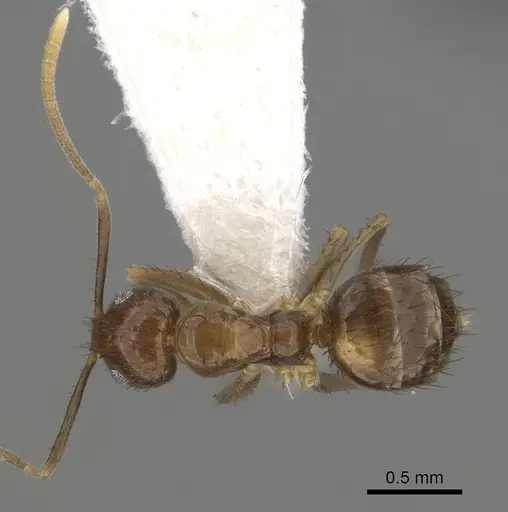
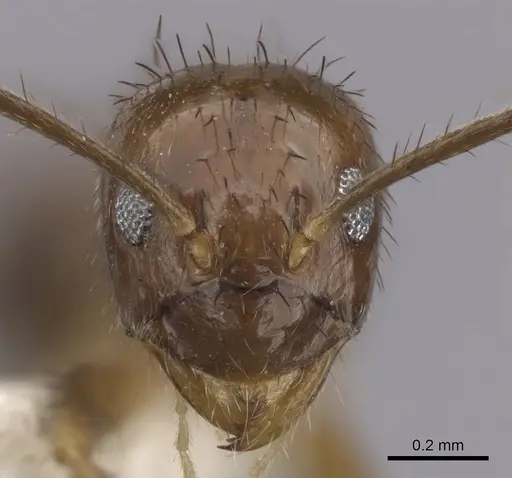
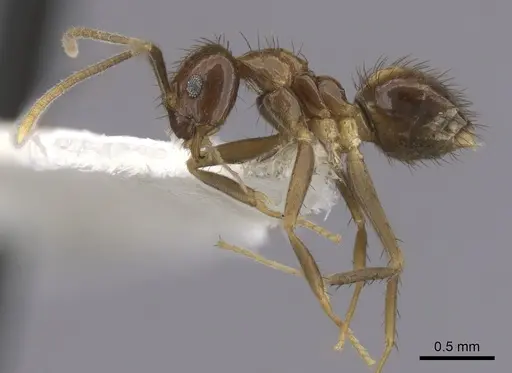
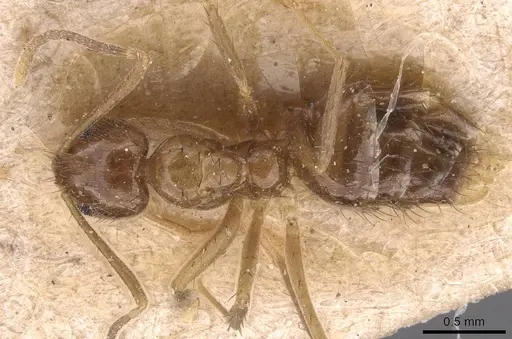
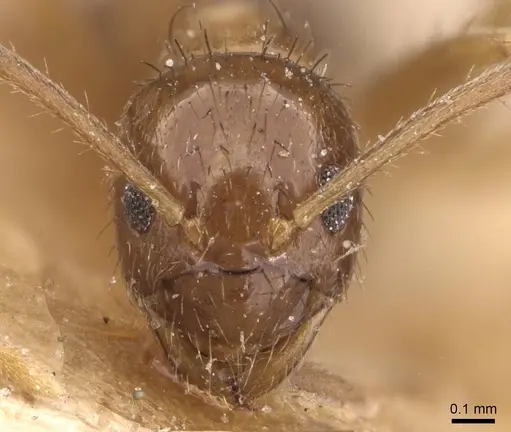
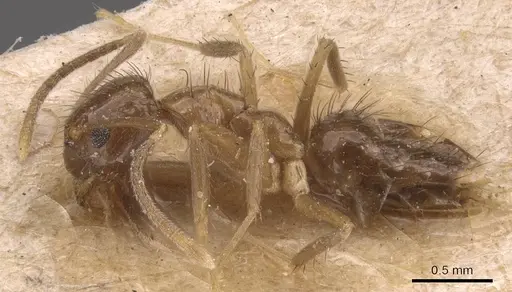
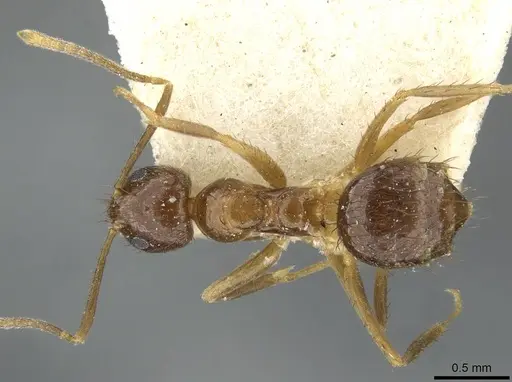
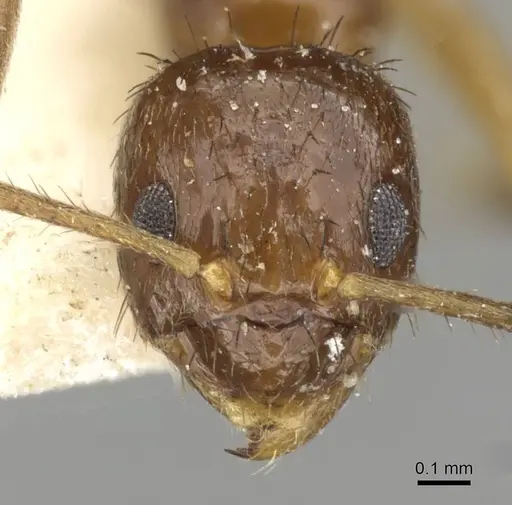
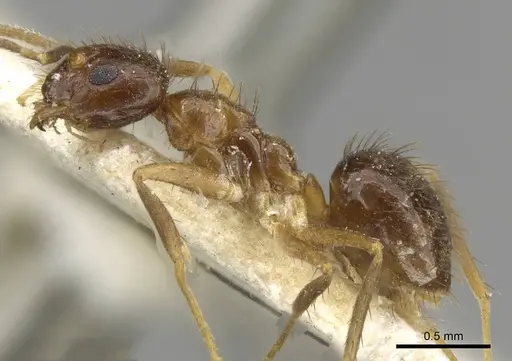
Nylanderia silvestrii is a tiny ant species native to Argentina and Uruguay . Workers measure 2.4-2.6 mm, queens 4 mm . They have yellow-brown coloration with darker head and gaster, and a shiny body due to sparse pubescence . Queens have yellowish wings . Winged reproductives are collected from June to August, suggesting nuptial flights during winter in their native range .
Quick Summary
- Difficulty: Medium
- Origin & Habitat: Native to Argentina and Uruguay, found in ground nests in temperate to subtropical areas [1][2].
- Colony Type: Colony structure is unconfirmed. No specific data on queen number available.
- Size & Growth:
- Antkeeping:
- Temperature: Keep at room temperature, roughly 20-26°C. Based on temperate origin, they can tolerate cooler conditions but prefer warmth [2][1].
- Humidity: Keep nest substrate consistently moist but not waterlogged. Based on ground-nesting habitat, provide a humidity gradient [1].
- Diapause: Unknown, no specific data, but based on temperate origin, likely requires winter diapause [2][1].
- Nesting: Ground-nesting species. In captivity, use test tubes with moist cotton or small plaster nests. Their tiny size requires appropriately scaled chambers [1].
- Behavior: These ants are small, non-aggressive, and active foragers. They likely flee rather than fight when threatened. Their tiny size makes them excellent escape artists, use fine mesh and tight barriers. Winged reproductives have been collected June-August, suggesting winter nuptial flights [2].
- Common Issues: escape prevention is critical due to very small worker size (2.4-2.6 mm), founding phase may be slow, with no data on development timeline, diapause requirements are unknown but likely needed for temperate species, limited availability in hobby means established colonies are rare, small colony size makes them sensitive to disturbance during founding
Housing and Nest Setup
For such tiny ants, scale your setup appropriately. Test tubes work well for founding colonies, use a small water reservoir with cotton to maintain humidity. The tube should be narrow enough for the queen and workers to move easily. Once the colony grows, connect a small outworld for feeding. Use plaster nests or 3D-printed nests with narrow chambers. Ensure all connections are tight, these ants will find any gap. A small outworld allows observation and feeding without disturbing the nest [1].
Feeding and Diet
Based on related Nylanderia species, these ants are omnivorous. Offer sugar water, honey, or diluted maple syrup as a constant carbohydrate source. For protein, provide small prey like fruit flies or pinhead crickets 2-3 times per week. Remove uneaten prey after 24 hours to prevent mold.
Temperature and Seasonal Care
Nylanderia silvestrii comes from temperate Argentina and Uruguay, so they experience seasonal changes. Keep them at 20-26°C during active seasons, room temperature is suitable. During winter, they likely need a cooler period around 10-15°C for 2-3 months to simulate natural diapause. Avoid sudden temperature swings [2][1].
Colony Development and Growth
The founding phase is likely slow, as with most small ants. The queen is 4 mm and may seal herself in to raise first workers, living off stored reserves. Workers are 2.4-2.6 mm, so nanitics will be very small. Growth rate is unknown but likely slow compared to larger ants. Be patient during founding, disturbance often leads to failure [2].
Behavior and Temperament
These are small, non-aggressive ants that prefer to flee rather than fight. They are active foragers and fast-moving. Their tiny size means they can be overlooked as pests, but in captivity they are interesting observation subjects. They do not have a painful sting. Winged reproductives have been collected June-August, suggesting winter nuptial flights [2].
Frequently Asked Questions
How long does it take for Nylanderia silvestrii to produce first workers?
No direct data available. Development timing is unknown for this species.
What do Nylanderia silvestrii ants eat?
They are omnivorous. Offer sugar water or honey constantly, and protein sources like fruit flies 2-3 times per week.
Do Nylanderia silvestrii ants need hibernation?
Unknown, but based on temperate origin, they likely require winter diapause [2][1].
Are Nylanderia silvestrii good for beginners?
They are moderately difficult due to tiny size and escape risk. Better for keepers with experience with small species.
How big do Nylanderia silvestrii colonies get?
Colony size is not documented, unknown.
What temperature is ideal for Nylanderia silvestrii?
Keep at 20-26°C during active seasons. Room temperature is suitable [2].
Can I keep multiple Nylanderia silvestrii queens together?
Colony structure is unconfirmed, combining queens is not recommended without data.
When do Nylanderia silvestrii have nuptial flights?
Winged reproductives are collected June-August, suggesting winter flights in their native range [2].
Why are my Nylanderia silvestrii escaping?
Their tiny size (2.4-2.6 mm) means they can squeeze through small gaps. Use fine mesh and seal all connections [2].
Report an Issue
The current care sheet is based fully on literature. See inconsistencies, or something that's incorrect? Please , it will be resolved after review from an admin. Contributing to the blogs tab also helps providing information, to make us be able to further improve the caresheets. Thank you for your support!
References

This caresheet is licensed under CC BY-SA 4.0 .
Community Blogs
Literature
Loading distribution map...Loading products...